Letter recognition Tracing Letters Worksheets for 7-Year-Olds - Page 2
26 filtered results
-
From - To
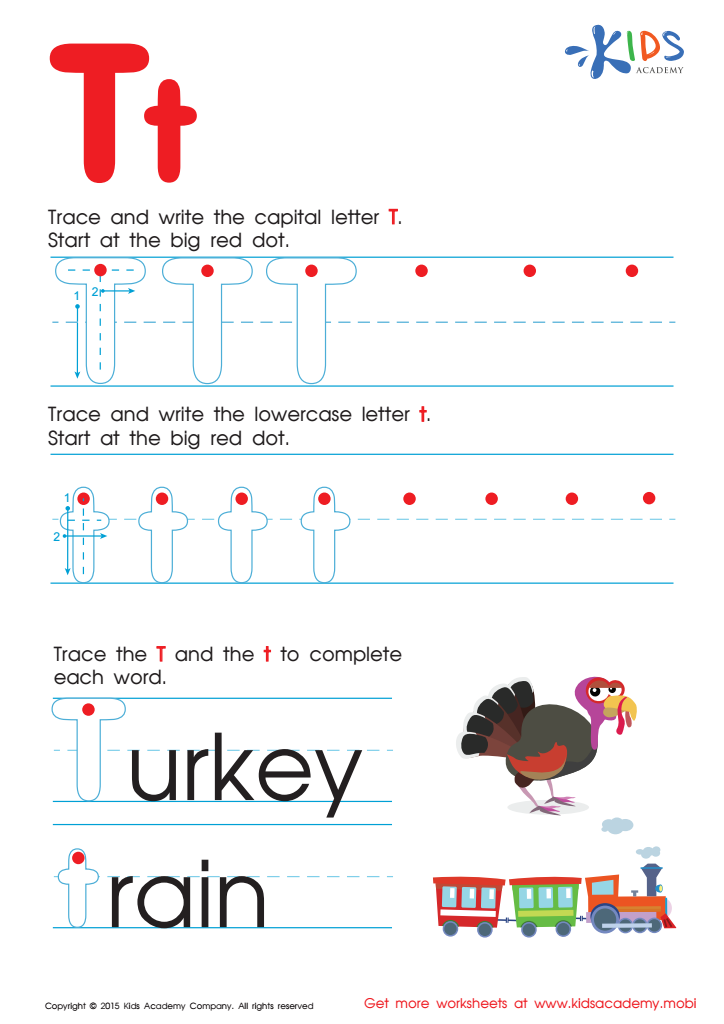
Letter T Tracing Page
 Assign to My Students
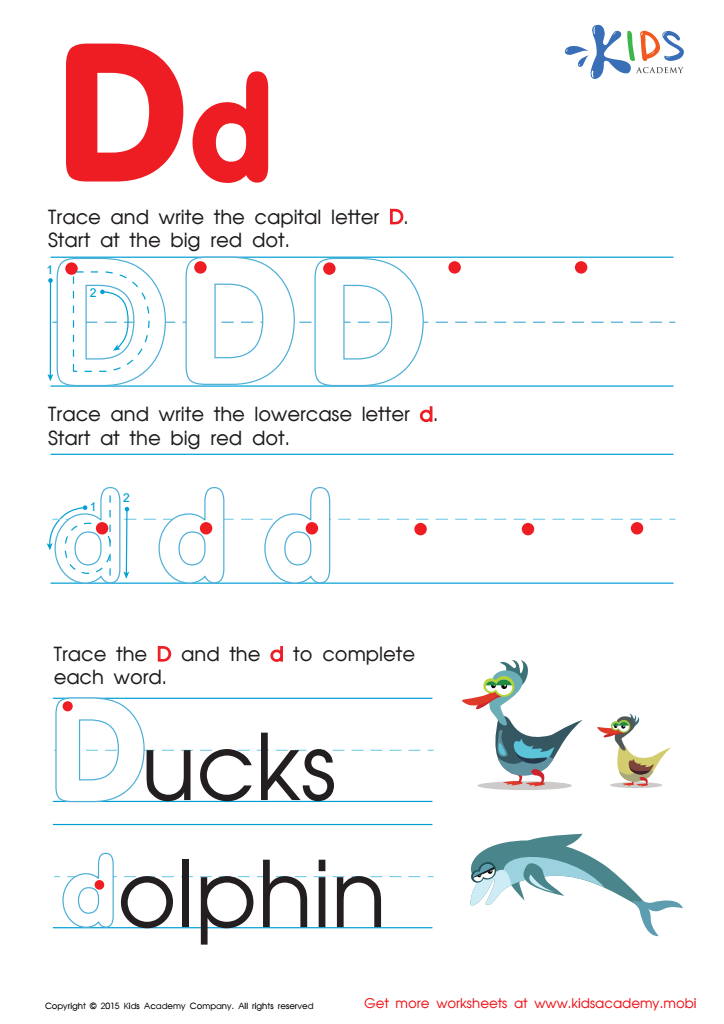
Letter D Tracing Page








Letter recognition and tracing are critical skills for 7-year-olds, combining foundational literacy with fine motor development. At this age, children are building on their understanding of letters and starting to read and write independently. When parents and teachers focus on letter recognition, they are helping children identify letters and understand their associated sounds, which is essential for reading fluency. Tracing letters reinforces hand-eye coordination and improves fine motor skills, enabling children to write with greater control and form correct letter shapes.
Additionally, these activities promote cognitive and neural development, fostering focus, patience, and dexterity. Young learners benefit from the tactile experience of tracing letters, making abstract concepts more concrete. This kinesthetic approach caters to diverse learning styles and can help enhance a child's enthusiasm for literacy.
Moreover, letter recognition and tracing provide a platform for building self-confidence. As children master letter shapes and sounds, they gain a sense of achievement that motivates them to tackle more complex literacy tasks. Involving parents and teachers in this process creates a supportive environment essential for effective learning, reinforcing the importance of collaboration in education. By prioritizing letter recognition and tracing, parents and educators lay the groundwork for lifelong reading success.








