Word Recognition Two Letter Phonics Worksheets for 7-Year-Olds
6 filtered results
-
From - To
Discover our engaging Word Recognition Two Letter Phonics Worksheets designed specifically for 7-year-olds! These worksheets provide a fun and interactive way to help young learners improve their reading skills by focusing on two-letter phonics. With a variety of activities that include matching letters, completing words, and identifying sounds, children will build confidence as they enhance their word recognition abilities. Our resources cater to different learning styles, ensuring that each child finds joy in exploring language. Perfect for classroom use or homeschooling, these worksheets pave the way for early literacy success and a love for reading. Start your child's phonics journey today!
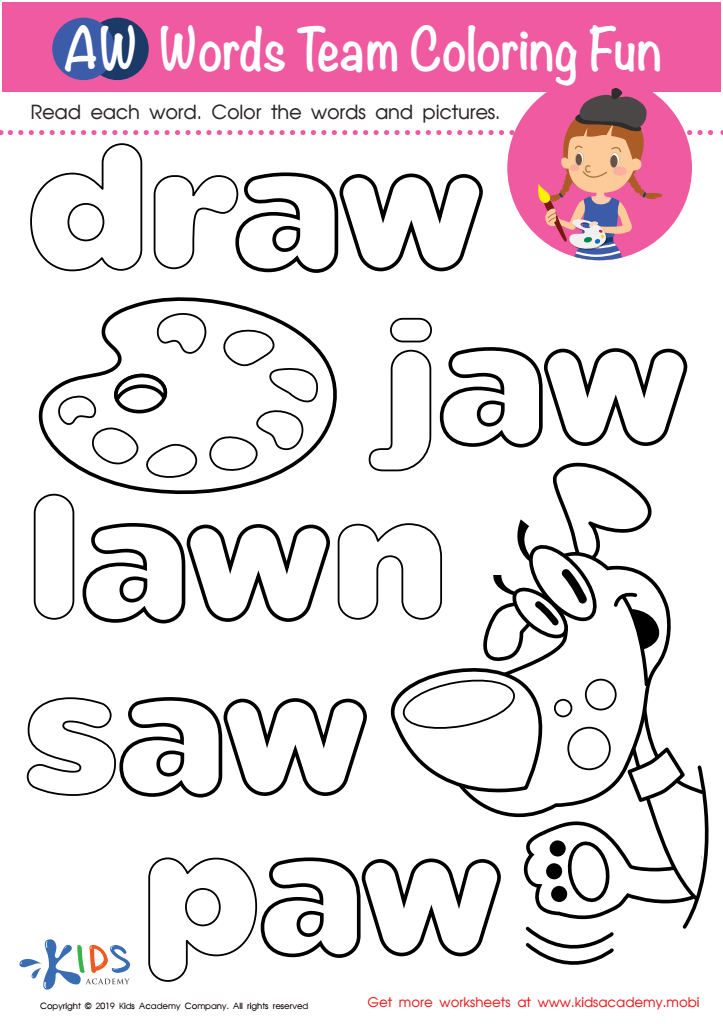
AW Words Team Coloring Fun Worksheet
 Assign to My Students
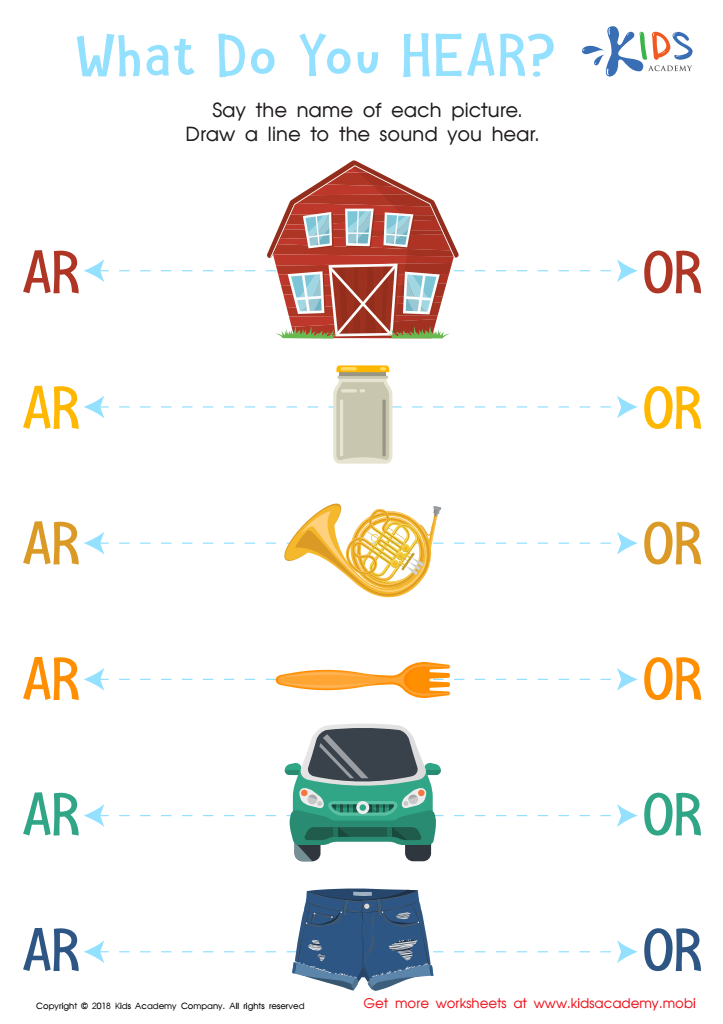
What do you hear Worksheet
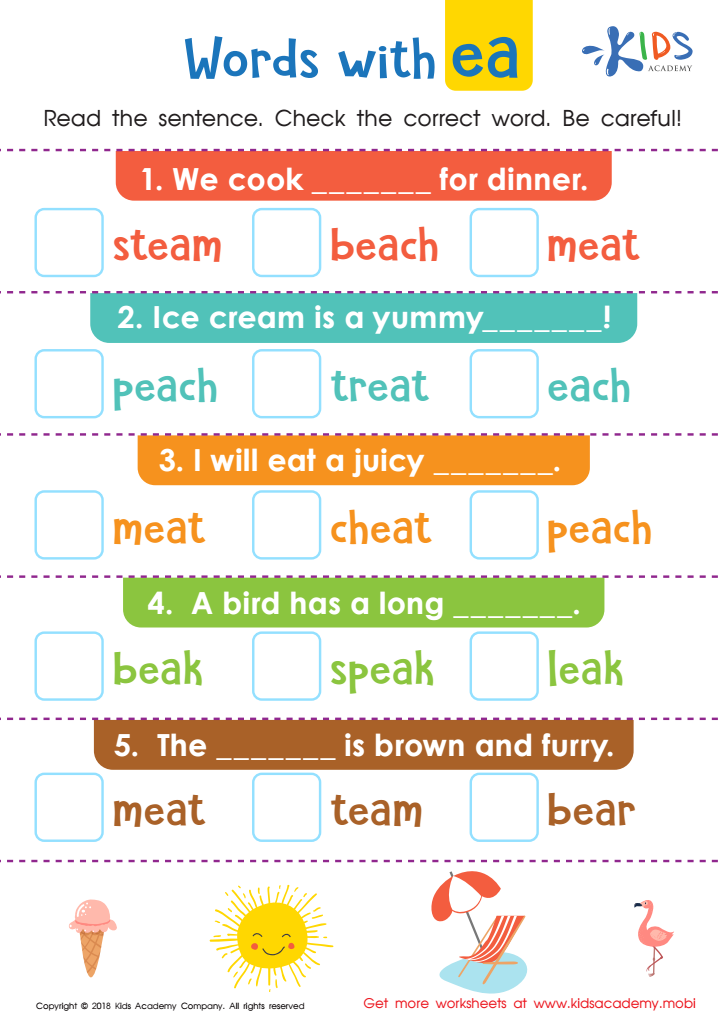
Words with ea Worksheet
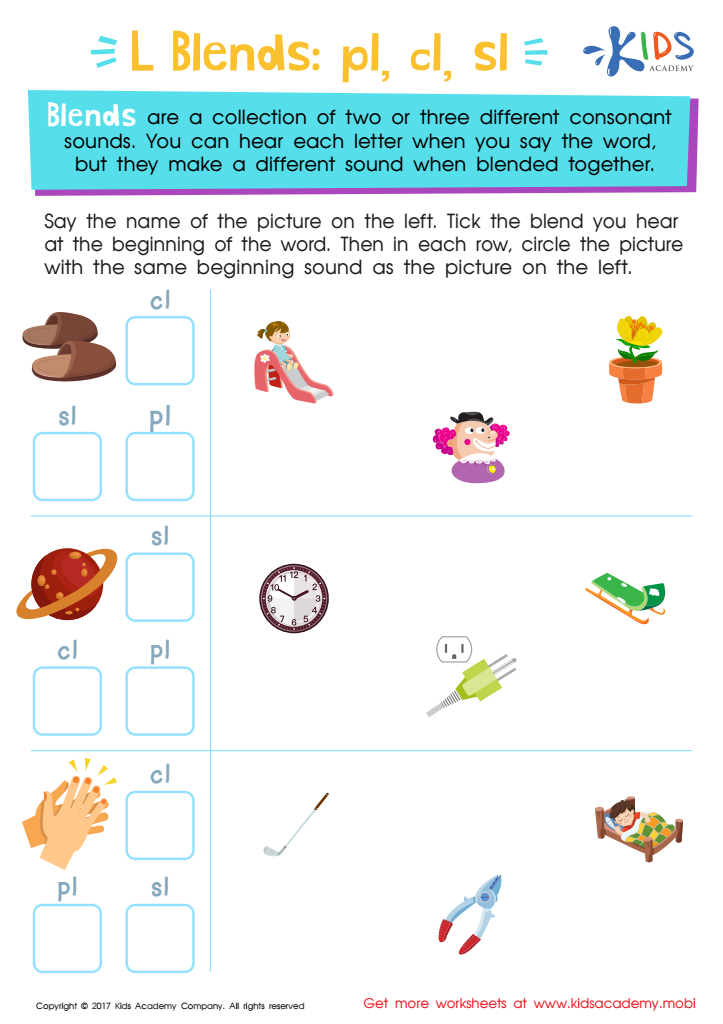
L Blends: "Pl", "Cl" and "Sl" Printable
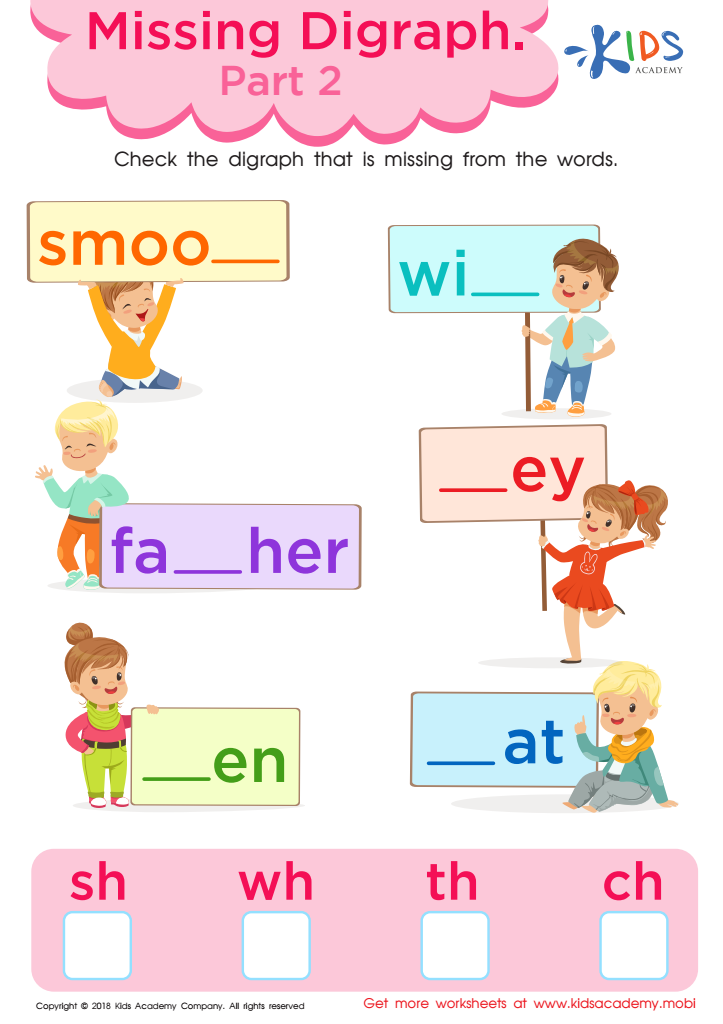
Missing Digraph: Part 2 Worksheet
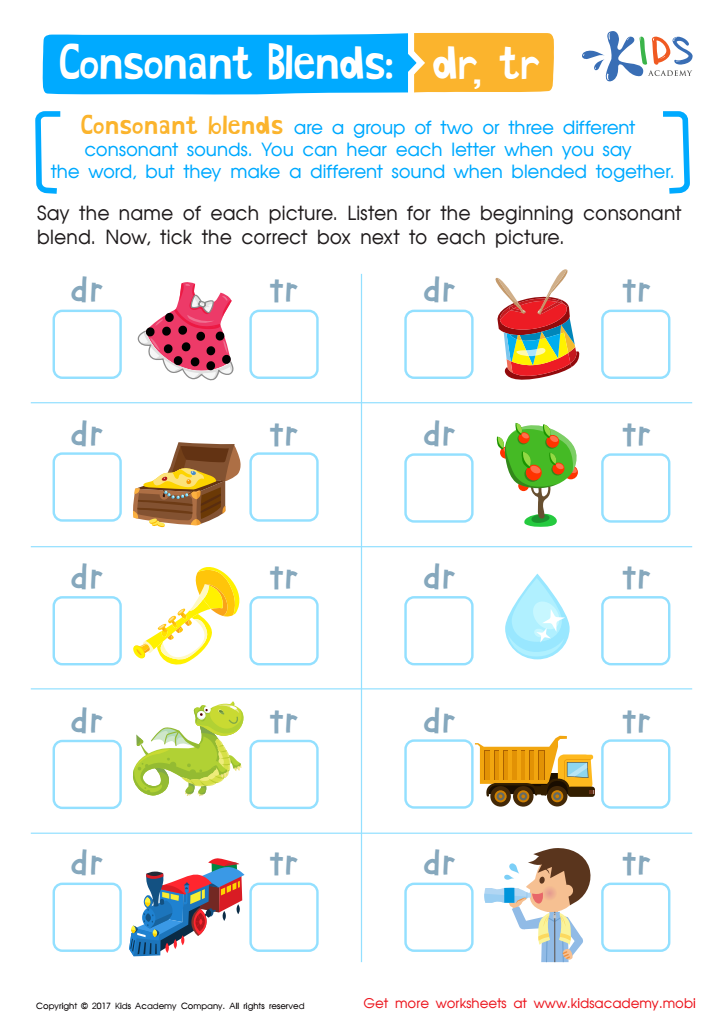
Consonant Blends: "Dr" and "Tr" Printable



Word recognition through two-letter phonics is crucial for 7-year-olds as it lays the foundation for literacy skills essential for academic success. At this age, children are typically becoming more independent readers, and understanding phonics—particularly the sounds and blends of two-letter combinations—empowers them to decode new words. This skill not only boosts reading fluency but also enhances comprehension, enabling children to grasp the meaning of what they read.
Parents and teachers should prioritize two-letter phonics because early mastery leads to better reading confidence and reduced frustration. When children can easily recognize phonetic combinations like "sh," "ch," "th," or "wh," they become more inclined to tackle books on their own, fostering a love for reading. Additionally, strong word recognition supports writing skills, as children apply their understanding of these sounds when spelling.
Engaging children in fun activities that focus on two-letter phonics can make learning enjoyable and interactive, enhancing their enthusiasm for language arts. Ultimately, investing in word recognition skills sets a positive trajectory for literacy development, equipping children with the essential tools needed for more complex reading and writing tasks in their educational journey. For both parents and teachers, supporting this learning underscores a commitment to the child’s overall academic growth.







