Filters

7 filtered results

Clear all filters
Favorites
With answer key
Interactive

7 filtered results

Difficulty Level

Grade


Discover our engaging Phonics Skills: Vowels and Consonants Worksheets tailored for 7-year-olds, available at Kids Academy! Designed to enhance reading and writing abilities, these worksheets introduce young learners to the essential building blocks of language. Through fun activities and exercises, children will master vowel and consonant sounds, ensuring a strong phonics foundation. Ideal for both classroom and home use, our printable resources make learning interactive and enjoyable. Dive into our collection today and support your child's journey to literacy with Kids Academy's expertly crafted phonics worksheets.

Check out this FREE Trial Lesson on Vowels and Consonants for age 7!

Distinguish between Long U and Short U

Favorites
With answer key
Interactive
  • 7
  • Phonics Skills
  • Vowels and Consonants
Reading: Long O Digraphs Worksheet

Reading: Long O Digraphs Worksheet

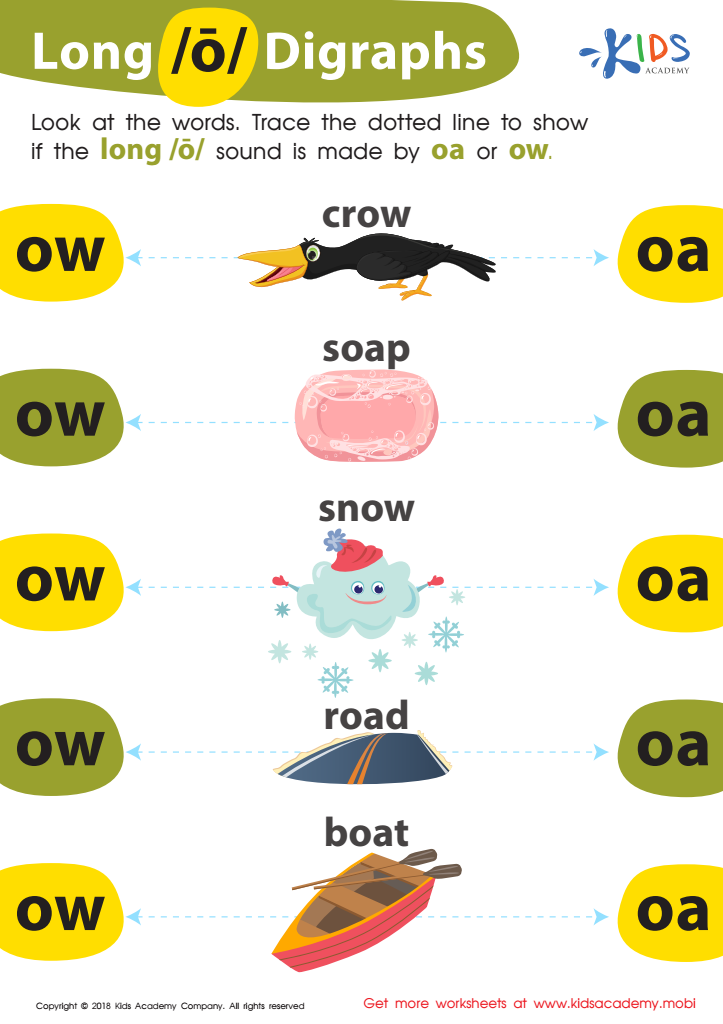
Reading and decoding words can be complex for learners when they start studying digraphs, two letters that make one sound. This worksheet focuses on the long O sound, /oa/ and /ow/. With the understanding of digraphs, students can decode more words and build their reading confidence.
Reading: Long O Digraphs Worksheet
Worksheet
Short Vowels /e/, /i/, and /u/ Worksheet

Short Vowels /e/, /i/, and /u/ Worksheet

Your emergent reader can have fun while practicing their short vowel sounds with this free, brightly colored worksheet. They'll identify one-syllable words by their pictures, then match the correct ending for each. They'll gain an understanding of how short vowel sounds vary in closed syllables with different endings, without even realizing it!
Short Vowels /e/, /i/, and /u/ Worksheet
Worksheet
Reading: OW and OU Words Worksheet

Reading: OW and OU Words Worksheet

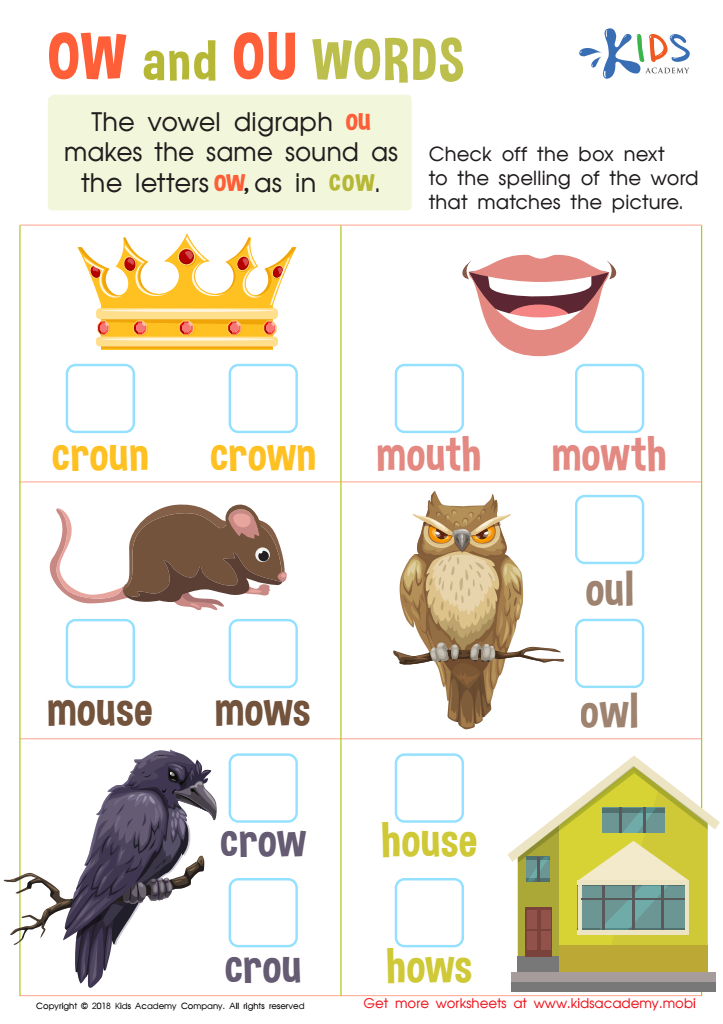
Help your kids learn phonetics! Explain the different sounds and long/short variations. Emphasize that some vowel sounds are the same, e.g. ou = ow in cow. For practice, have them read aloud the words in the worksheet and check the box next to the spelling that matches the picture.
Reading: OW and OU Words Worksheet
Worksheet
Reading: AW and AU Words Worksheet

Reading: AW and AU Words Worksheet

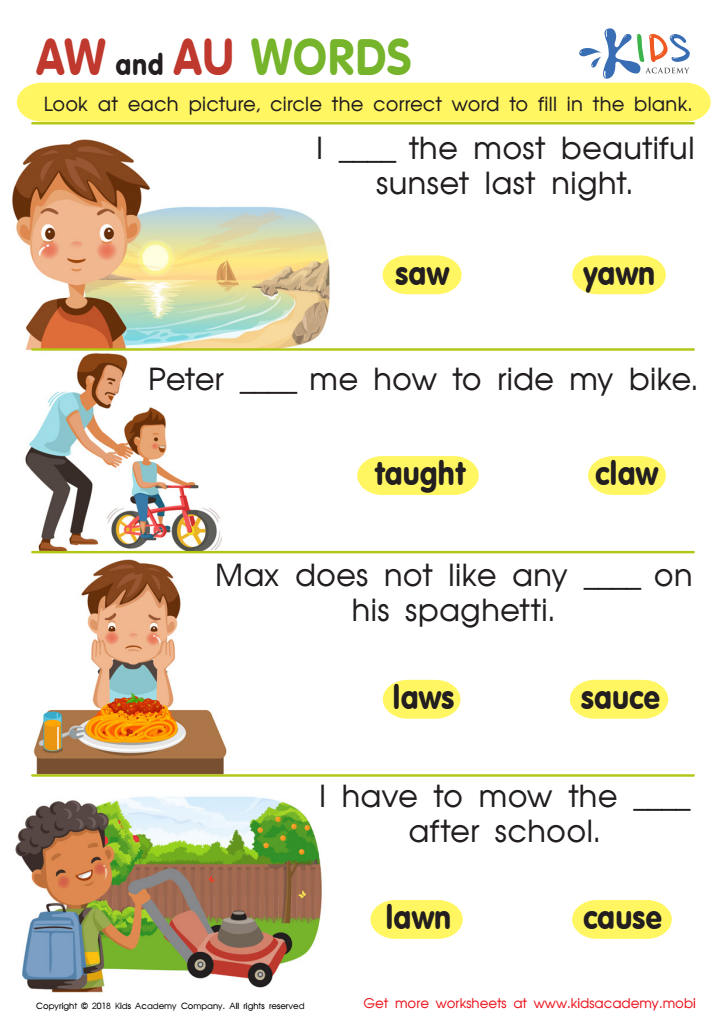
This worksheet helps kids recognize that /au/ and /aw/ can make the same sound. Students read sentences and pick the correct word with one of the digraphs. Understanding digraphs improves decoding and reading fluency. Perfect for reading and phonics classes.
Reading: AW and AU Words Worksheet
Worksheet
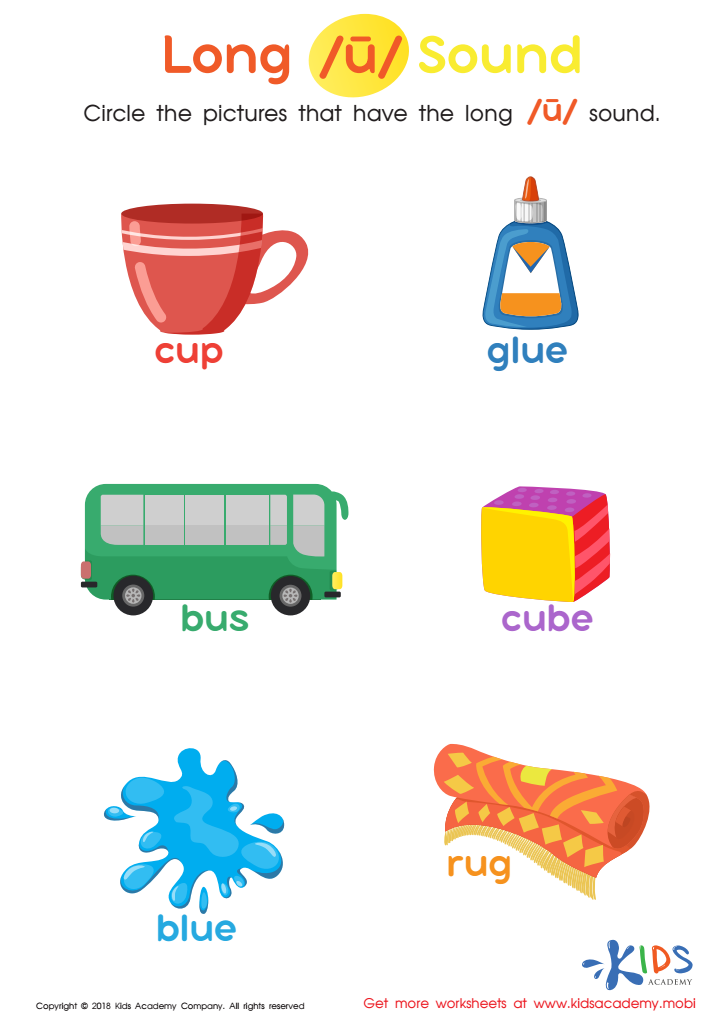
Long «u» Sound Worksheet

Long «u» Sound Worksheet

This fun and engaging free PDF worksheet teaches kids to differentiate between long and short «u» sounds. Through tracing circles around the correct words, they'll practice their fine motor skills while also recognizing patterns (silent-e for «ū» sound) in closed-syllable words. Bright and cheery pictures make it a great confidence booster for new readers!
Long «u» Sound Worksheet
Worksheet
Reading: AW Words Worksheet

Reading: AW Words Worksheet

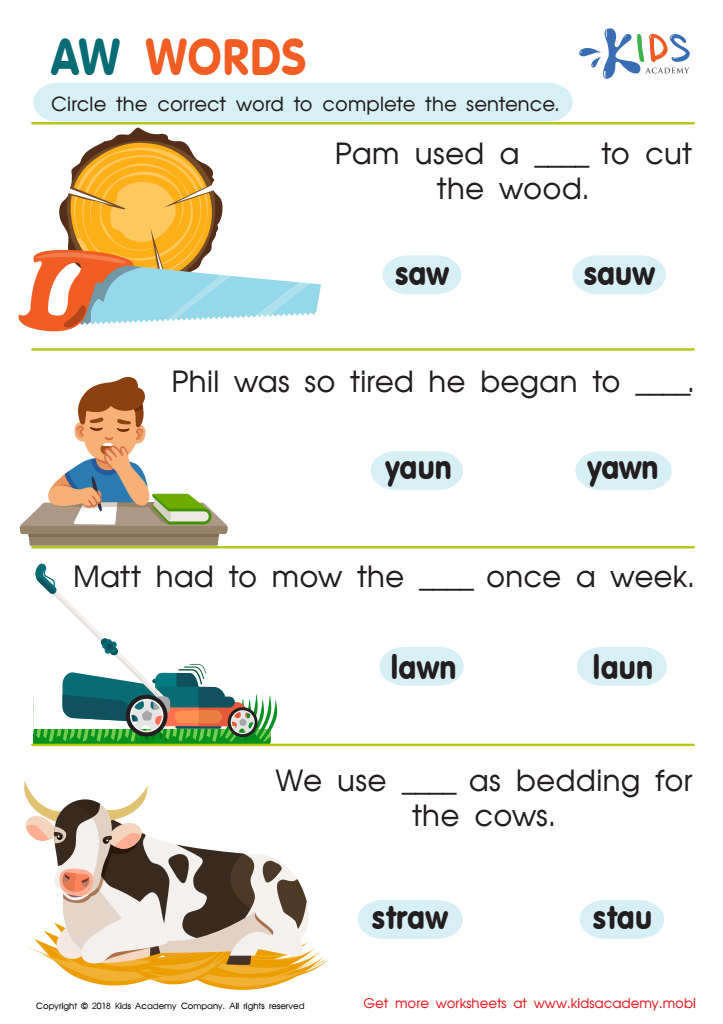
Practice decoding the /aw/ digraph with this printable. Students read sentences and select the word with the correct spelling to complete each one. Note, /aw/ is sometimes spelled /au/, so this worksheet helps prevent confusion. Have fun, and practice hard!
Reading: AW Words Worksheet
Worksheet
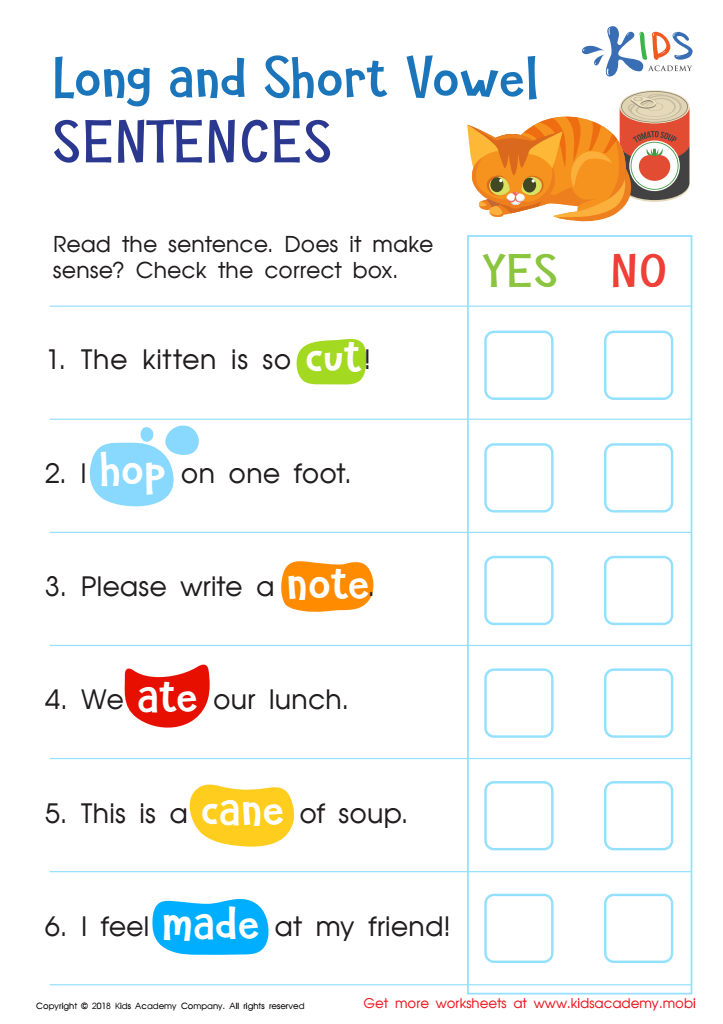
Long and Short Vowel Sentences: Assessment Worksheet


Long and Short Vowel Sentences: Assessment Worksheet

This printable worksheet helps kids practice differentiating between short and long vowel sounds. They'll use context clues to figure out which words make sense in simple sentences. A great way to build reading and writing skills!
Long and Short Vowel Sentences: Assessment Worksheet
Worksheet


Phonics skills, especially vowels and consonants, form the bedrock of a child’s reading and writing abilities, which are crucial at the age of seven. At this pivotal age, children transition from recognizing letters to understanding their sounds, allowing them to decode words, read fluently, and comprehend text. Phonics helps in demystifying language, making it easier for children to approach unfamiliar words with confidence.

When parents and teachers emphasize phonics, they equip children with tools to unlock literacy. Understanding vowels and consonants develops a solid phonemic awareness, which is critical for spelling and word recognition. This foundational knowledge enhances a child’s ability to read smoothly and with understanding, rather than merely memorizing words. Proficient reading skills are linked to success across all academic subjects, boosting a child's self-esteem and intellectual curiosity.

Furthermore, phonics education bridges the gap for children struggling with learning difficulties. Students who grasp phonics early can tackle more complex texts sooner, fostering a lifelong love for reading. Engaging parents in this learning process ensures continuity and reinforcement at home, creating a supportive environment essential for academic success. Thus, prioritizing phonics lays a tangible pathway toward a brighter, more literate future.