Addition Practice Worksheets for 7-Year-Olds - Page 5
104 filtered results
-
From - To




.jpg)


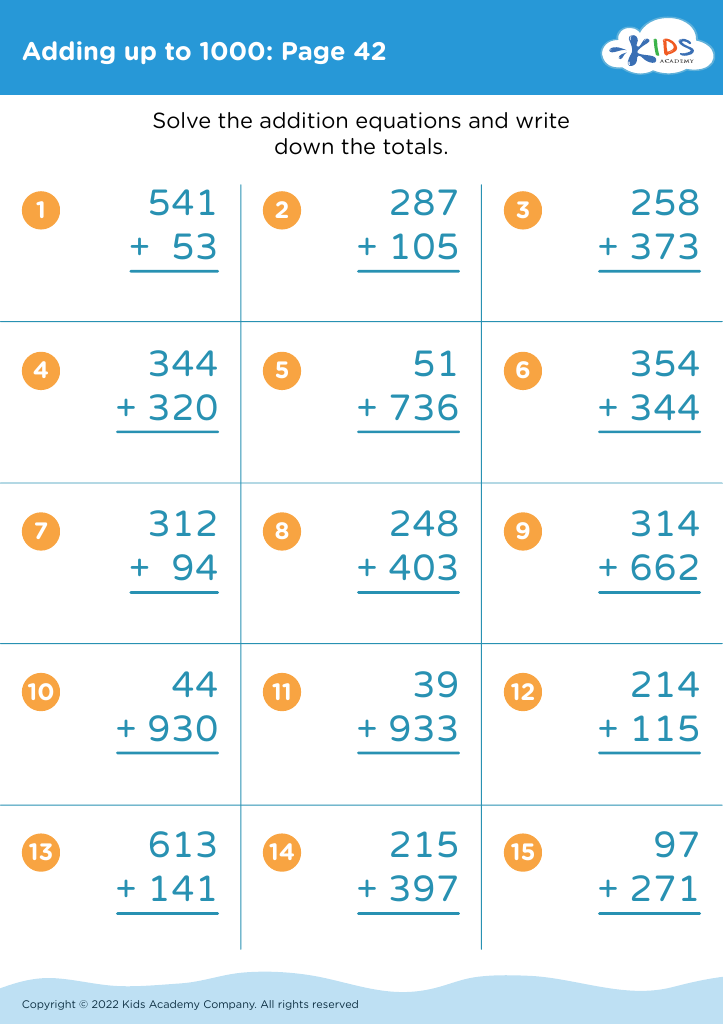
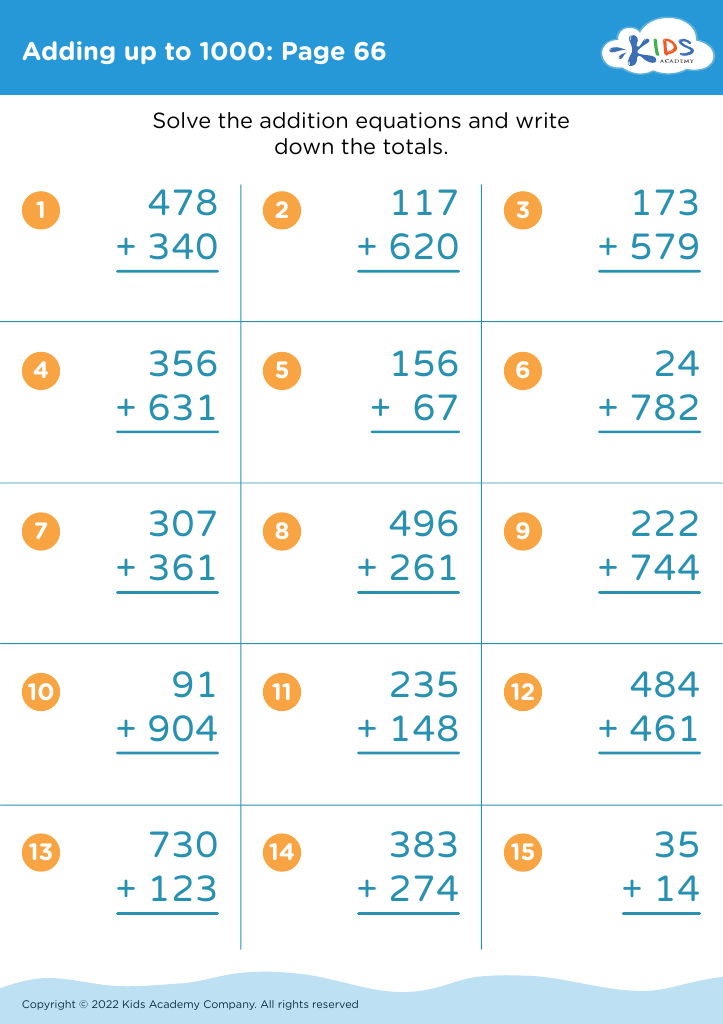
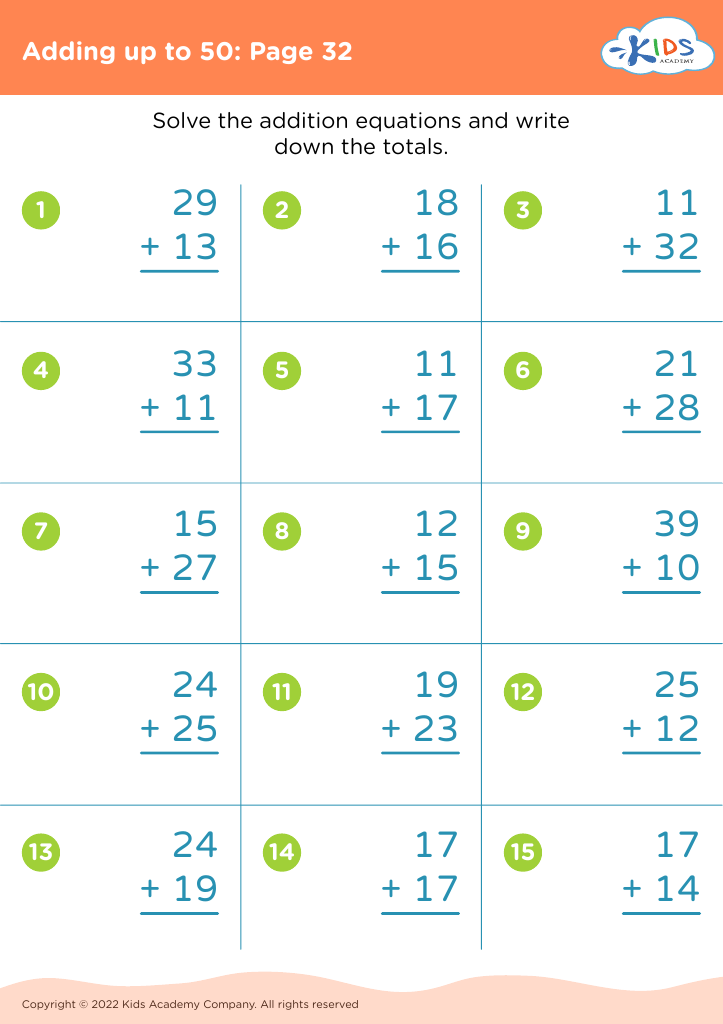
Addition practice for 7-year-olds is crucial for several reasons. At this age, children are typically in second grade, where they solidify foundational math skills that will support their future academic success. Mastery of addition sets the stage for more complex mathematical concepts such as subtraction, multiplication, and division. When children regularly practice addition, they build number sense—a fundamental understanding of how numbers work together.
Moreover, confident math skills enhance a child's problem-solving abilities and cognitive development. Encountering and solving addition problems fosters critical thinking, enabling students to apply these skills in various real-life situations, from managing money to organizing objects.
Frequent addition practice also benefits emotional development, as children experience a sense of accomplishment when they grasp new concepts. For parents and teachers, encouraging positive interactions with math can help combat anxiety surrounding the subject, fostering a lifelong appreciation for learning.
Lastly, parental involvement, such as engaging in fun, interactive addition activities, strengthens the child-parent bond while demonstrating the value of education. In summary, emphasizing addition practice not only equips children with essential academic tools but also promotes overall growth, confidence, and a positive learning experience.








