Arithmetic practice Worksheets for 7-Year-Olds
3 filtered results
-
From - To
Introduce your 7-year-old to the world of numbers with our engaging Arithmetic Practice Worksheets! These worksheets are specifically designed to challenge and excite young minds, paving the way for strong math skills. Each worksheet includes a variety of fun and interactive exercises that make learning arithmetic enjoyable. Kids can practice addition, subtraction, multiplication, and division in a colorful and stimulating format. Our worksheets also help enhance problem-solving abilities and build confidence in math. Ideal for both classroom use and at-home practice, our neatly organized resources ensure a comprehensive arithmetic foundation. Download today and watch your child’s math abilities soar!
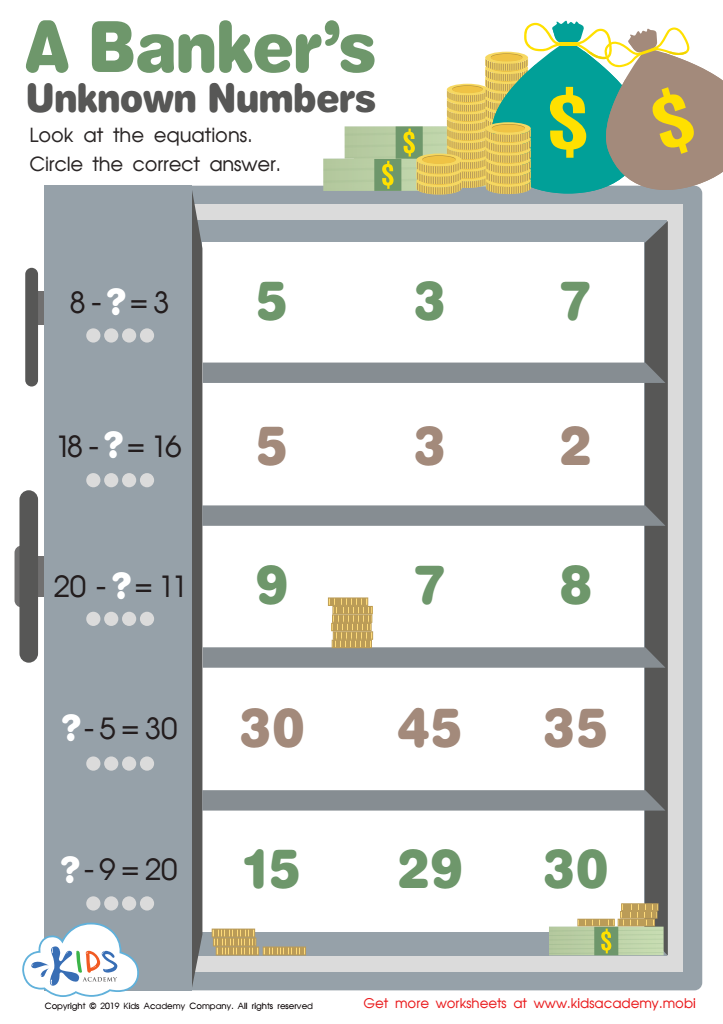
A Banker's Unknown Numbers Worksheet
 Assign to My Students
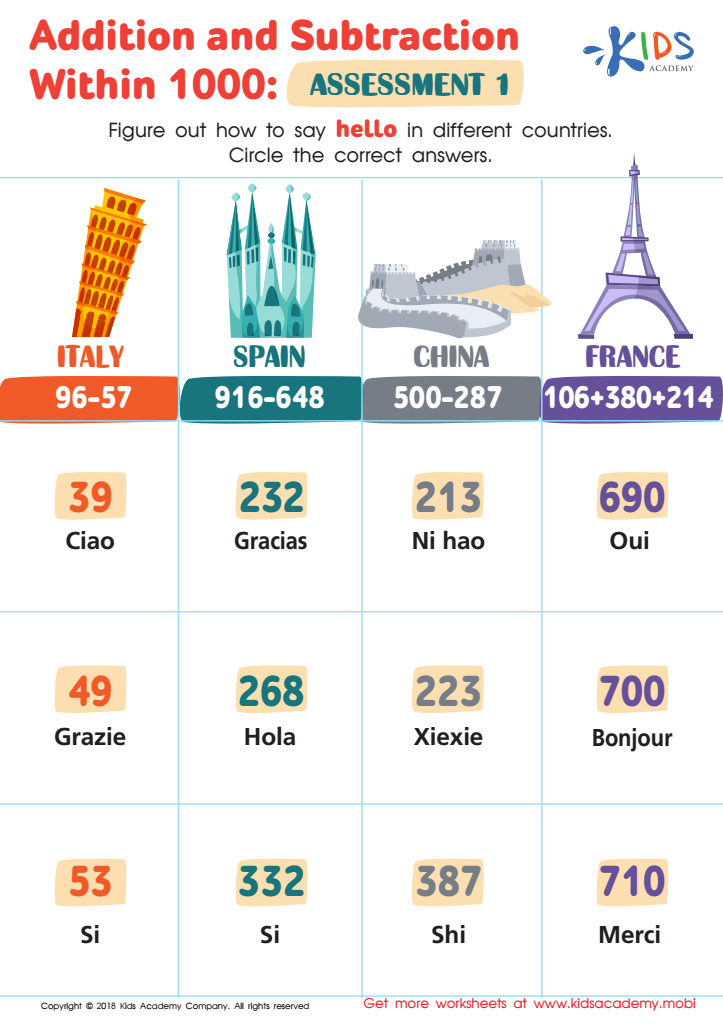
Addition and Subtraction Within 1000: Assessment 1 Worksheet




.jpg)



Arithmetic practice for 7-year-olds is foundational for their overall cognitive development and academic success. At this age, children are transitioning from basic counting to more complex mathematical operations, such as addition and subtraction. Mastery of these skills is essential for tackling more advanced mathematical concepts in later grades.
Engaging in regular arithmetic practice helps strengthen neural connections in the brain, enhancing problem-solving skills and logical thinking. It builds a solid number sense, making it easier for children to grasp higher-order concepts like multiplication and division. This foundational knowledge supports academic achievement not just in math, but in science, technology, and even reading comprehension, as many subjects incorporate mathematical reasoning.
Furthermore, arithmetic fluency boosts confidence and reduces math anxiety. When children are comfortable with numbers, they are more likely to enjoy and succeed in math-related tasks. Consistent practice also fosters discipline and a sense of accomplishment, contributing to a growth mindset.
Involving parents in arithmetic practice provides additional emotional support and reinforces learning outside the classroom. Teachers can use various tools and techniques to make arithmetic fun and engaging, ensuring that children view math as an exciting part of their daily routine. By prioritizing arithmetic practice, parents and teachers equip children with crucial skills for their academic journey and beyond.








