
Capitalization rules Worksheets for 7-Year-Olds
3 filtered results
Difficulty Level
Grade
Age
-
From - To
Subject
Activity
Standards
Welcome to our engaging Capitalization Rules Worksheets for 7-Year-Olds! Designed to help young learners master the essential rules of capitalization, these worksheets make learning fun and interactive. With colorful illustrations and easy-to-follow exercises, your child will gain confidence in identifying the proper cases for capital letters, such as names, places, and beginnings of sentences. Each worksheet encourages independent practice while reinforcing essential writing skills. Perfect for homeschooling or classroom use, these resources guide early readers in developing strong literacy foundations. Download our worksheets today and watch your child's skills soar as they discover the world of capitalization!
Favorites
With answer key
Interactive
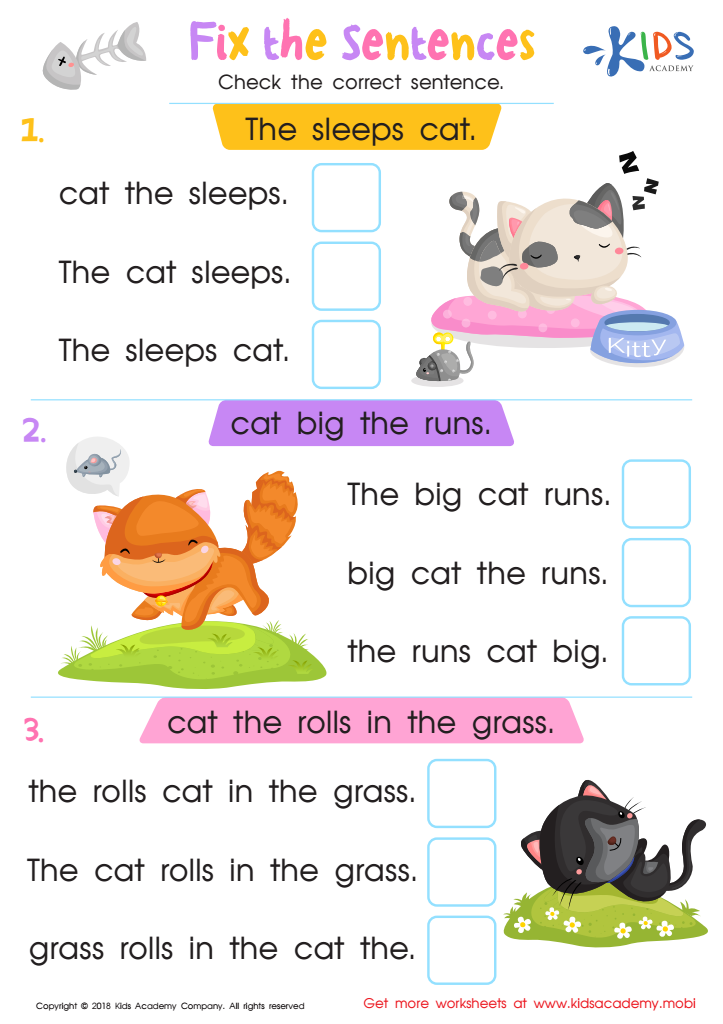
Fix the Sentences Worksheet
Once your students know the alphabet, teach them words. Then move on to constructing sentences. If they have a handle on sentence structure, give them this worksheet. Ask them to read the sentences and check the correct one.
 Assign to My Students
Fix the Sentences Worksheet
Worksheet
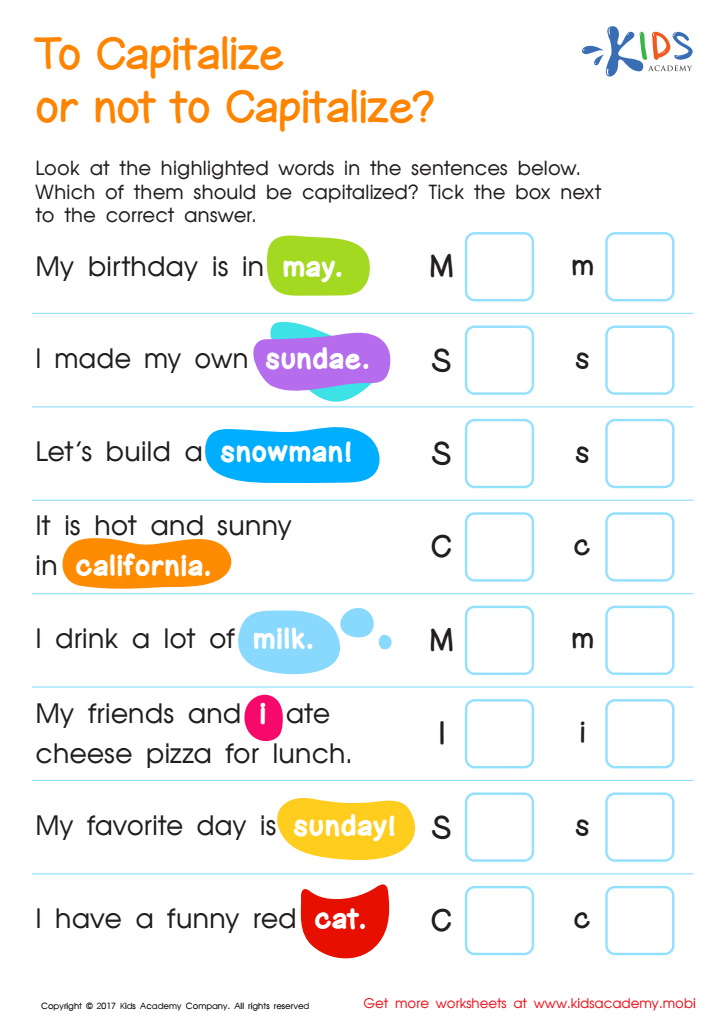
Capitalization: To Capitalize or Not? Printable
Have them answer the questions in "To Capitalize or Not to Capitalize" to check their understanding.
Capitalization: To Capitalize or Not? Printable
Worksheet
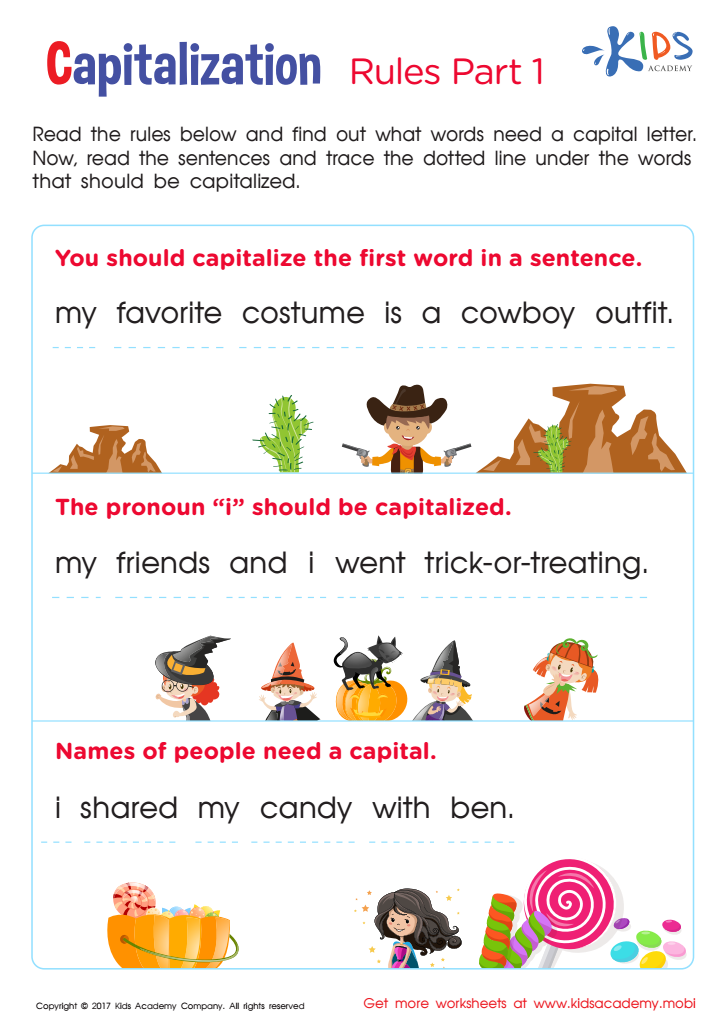
Capitalization Rules: Part 1 Worksheet
Kids entering high school with poor capitalization skills? Equip your 1st grader with the tools to combat this now! This capitalization worksheet will give them the knowledge they need to understand the importance of proper grammar rules and get their writing up to scratch.
Capitalization Rules: Part 1 Worksheet
Worksheet
Join Kids Academy for Free
Who is primarily going to use this learning content?








Parents and teachers should care about capitalization rules for 7-year-olds because mastering these conventions is essential for young learners' development in reading and writing. Capitalization helps convey meaning and indicates the beginning of sentences, the importance of names, and specific places, thereby improving comprehension. When children understand when to use capital letters, their writing becomes clearer and more professional, allowing them to express their ideas effectively.
Teaching capitalization rules fosters attention to detail and enhances overall language skills. It encourages children to take pride in their work and builds their confidence as they craft stories and essays. Additionally, comprehension of these rules helps in reading, allowing children to easier identify proper nouns and the start of new sentences.
Moreover, consistency in capitalization also supports strong foundational skills necessary for future education. As they progress through school, mastery of such rules becomes crucial for their academic success, impacting standardized testing and classroom participation. By instilling these rules early, parents and teachers lay a groundwork that nurtures effective communication and critical thinking—skills fundamental not only to academic achievement but also to life beyond the classroom.








