
Chess piece identification Worksheets for 7-Year-Olds
3 filtered results
Difficulty Level
Grade
Age
-
From - To
Subject
Activity
Standards
Discover our engaging Chess Piece Identification Worksheets designed for 7-year-olds! Enhance your child's learning skills with fun and interactive activities that introduce them to the fascinating world of chess. These printable worksheets are perfect for young learners, helping them to recognize and name each chess piece while developing their critical thinking and concentration. Whether your child is a beginner or already familiar with the game, these exercises will provide valuable practice in a playful format. Boost their cognitive development and spark an interest in this classic strategy game by downloading our innovative chess worksheets today!
Favorites
With answer key
Interactive
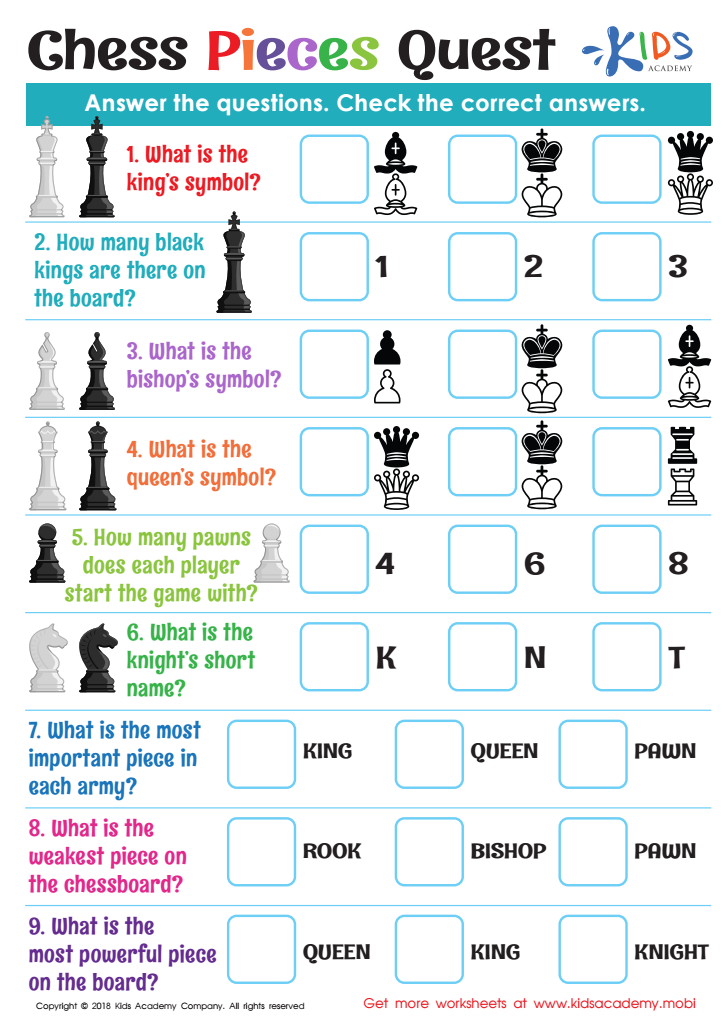
Chess Pieces Quest Worksheet
Help your child prepare for the chess quest by refreshing their knowledge of the symbols and characteristics of each chess piece. Then, have them try the 9 questions on this worksheet. These questions will assess their understanding of the symbols and how many pieces each player starts with.
 Assign to My Students
Chess Pieces Quest Worksheet
Worksheet
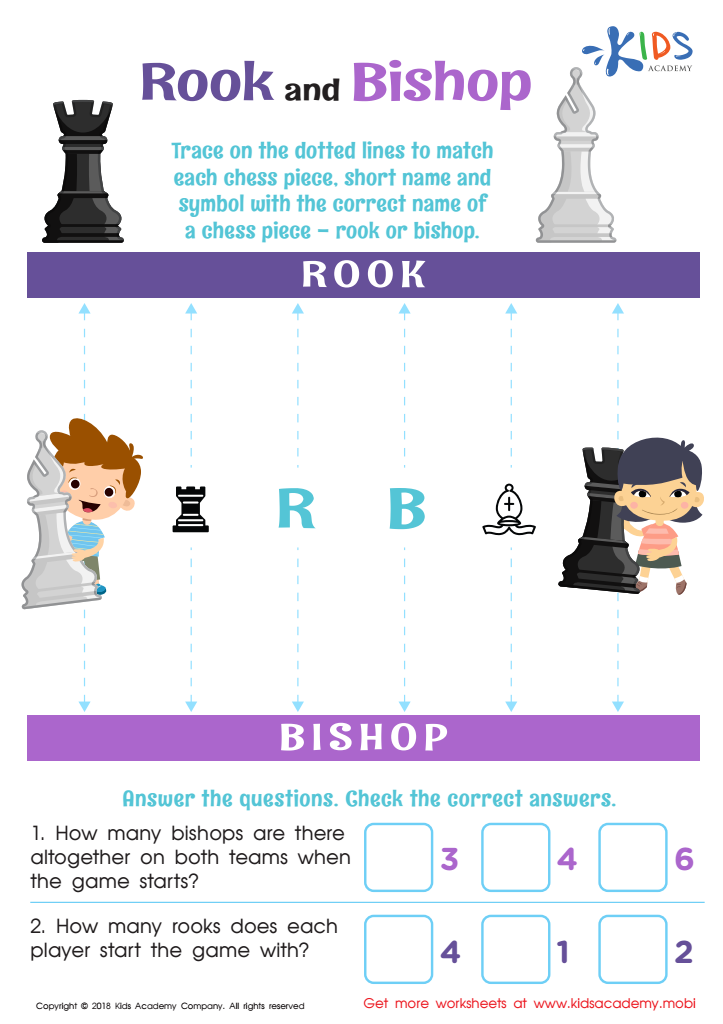
Rook and Bishop Worksheet
This tracing sheet helps your child learn chess pieces by matching each piece, short name and symbol to the correct name. After tracing, have them answer the questions and check their answers. It's a great way for them to become familiarized with chess.
Rook and Bishop Worksheet
Worksheet
Join Kids Academy for Free
Who is primarily going to use this learning content?







Chess piece identification for 7-year-olds is highly beneficial for their cognitive and emotional development. Learning to identify chess pieces helps develop critical thinking, problem-solving skills, and memory. By remembering different pieces and their unique movements, children enhance their pattern recognition and strategic planning abilities, laying a solid foundation for advanced mathematical and logical reasoning.
Moreover, understanding chess pieces encourages patience, concentration, and attention to detail. These are essential skills not only in academics but in everyday tasks where focused effort and careful observation are required. The game teaches children to think ahead, anticipate consequences, and make informed decisions—all valuable life skills.
Chess promotes a sense of achievement and boosts self-esteem. As children grasp the game’s concepts, they experience pride in their abilities, which fosters a growth mindset. Engaging in chess also teaches social skills such as following rules, taking turns, and graceful handling of winning and losing, which are pivotal in personal and social development.
Finally, chess is a universal game, breaking down barriers of age, language, and culture. Parents and teachers supporting chess education can create valuable bonding moments and book a child’s academic and emotional pathways toward a well-rounded future. Thus, caring about chess piece identification enriches a child’s terminal skills repertoire.








