
Constellation identification Worksheets for 7-Year-Olds
3 filtered results
Difficulty Level
Grade
Age
-
From - To
Subject
Activity
Standards
Discover the wonders of the night sky with our engaging Constellation Identification Worksheets for 7-Year-Olds! Designed to spark curiosity and promote learning, these worksheets help young explorers recognize and understand popular constellations. Featuring colorful illustrations and simple, age-appropriate activities, children will have fun connecting stars and learning fascinating facts about each celestial formation. Perfect for classroom use or at-home learning, these printable sheets encourage critical thinking, creativity, and a love for astronomy. Inspire your child’s journey through the galaxy today and watch their knowledge and confidence soar as they identify the constellations that light up the night sky!
Favorites
With answer key
Interactive
 Assign to My Students
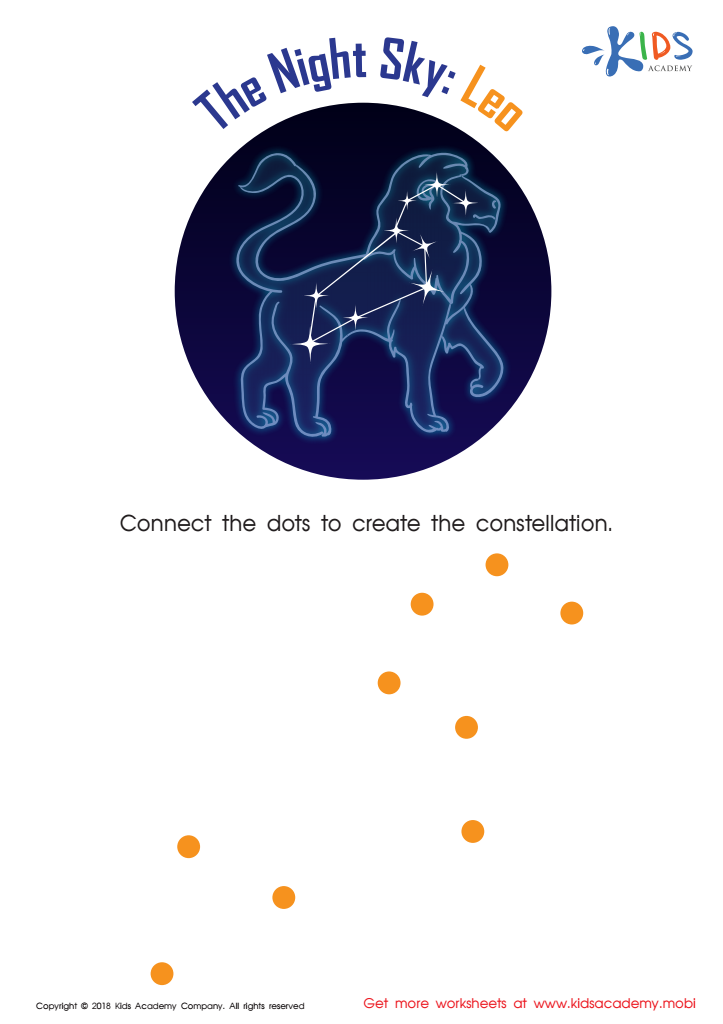
The Night Sky: Leo Worksheet
Let your kids explore the wonders of the stars with this fun worksheet! They'll connect the dots to create the constellation Leo. Night gazing instruments, a telescope or this printout can help your kids learn about constellations and horoscopes. Download the worksheet and let the star watching begin!
The Night Sky: Leo Worksheet
Worksheet
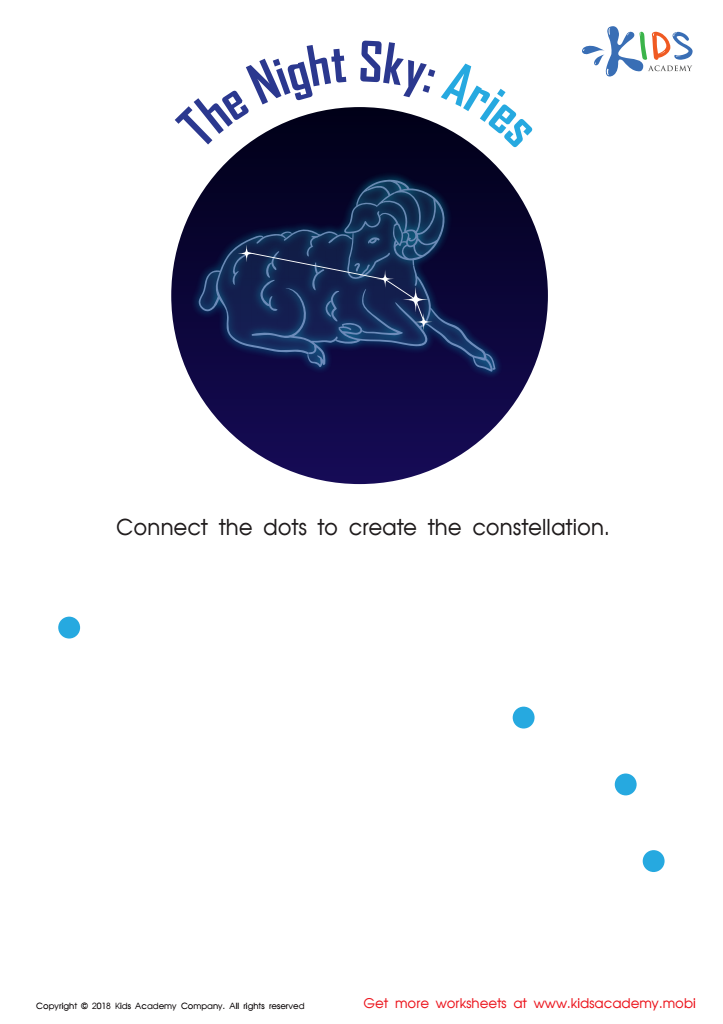
The Night Sky: Aries Worksheet
Does your child know constellations and horoscope? If you've got them interested in horoscope readings and star gazing, the Aries constellation in the pdf should be familiar. Have them look at the picture and identify it. If they can't, tell them it's Aries. Then, help them connect the dots to form the constellation.
The Night Sky: Aries Worksheet
Worksheet
Join Kids Academy for Free
Who is primarily going to use this learning content?








Constellation identification is a valuable educational activity for 7-year-olds, fostering a connection to the universe while nurturing essential skills. By engaging children in this exploration, parents and teachers can enhance scientific curiosity and observation skills, encouraging young learners to look beyond their immediate surroundings and appreciate the vastness of the night sky.
Learning about constellations aids in developing spatial awareness as children begin to recognize patterns and relationships between different stars. This practice boosts critical thinking, as they use reasoning to map constellations and understand their origins and cultural significance. Furthermore, exploring constellations ties into STEM education, reinforcing concepts in science, technology, engineering, and mathematics.
Socially and emotionally, constellation identification can spark bonding moments between children, parents, and educators. Stargazing encourages outdoor activity and family engagement, providing opportunities for shared experiences that enrich interpersonal relationships.
In addition, this knowledge nurtures imagination and creativity as children weave stories and myths around constellations from various cultures. By caring about constellation identification, parents and teachers can inspire lifelong learners who appreciate nature, culture, and scientific inquiry, ultimately fostering well-rounded individuals ready to explore and understand the world.








