Develop problem-solving abilities Worksheets for 7-Year-Olds
3 filtered results
-
From - To
Unlock the potential of your 7-year-old with our engaging Problem-Solving Abilities Worksheets! Designed to challenge and inspire young minds, these worksheets promote critical thinking and enhance analytical skills through fun, age-appropriate activities. Children will tackle puzzles, scenarios, and real-life challenges, helping them to develop effective problem-solving strategies. Each worksheet is crafted to foster creativity and encourage independent thinking, making learning enjoyable and rewarding. Perfect for home or classroom use, these resources not only build foundational skills but also boost confidence in young learners. Equip your child with the tools they need to thrive academically and beyond! Explore our collection today!
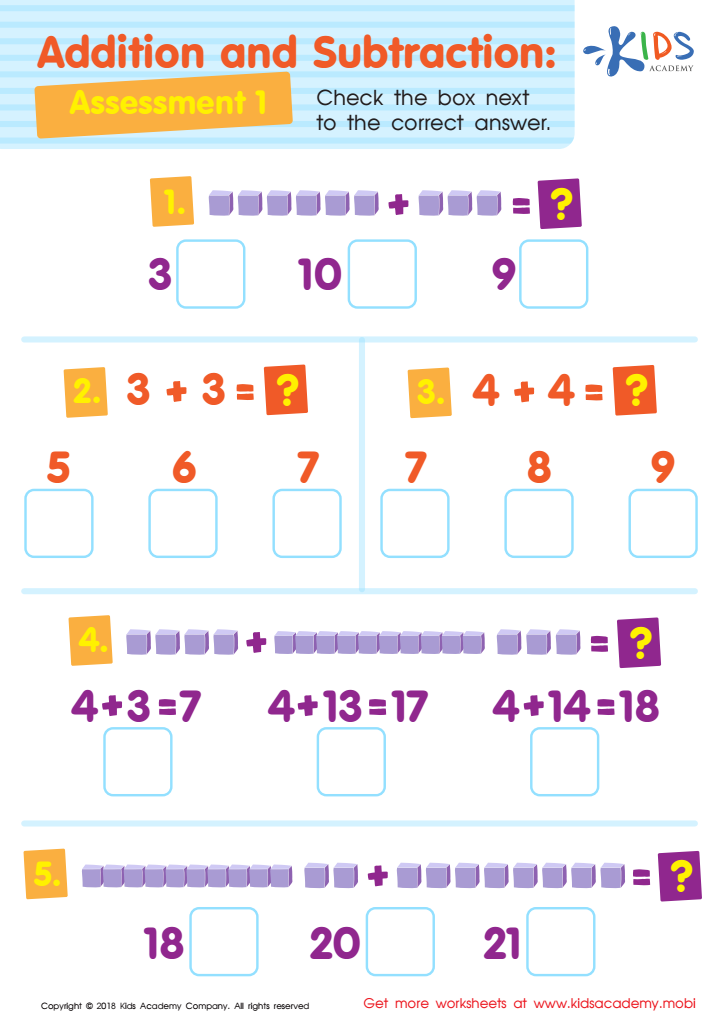
Addition and Subtraction Assessment 1 Worksheet
 Assign to My Students
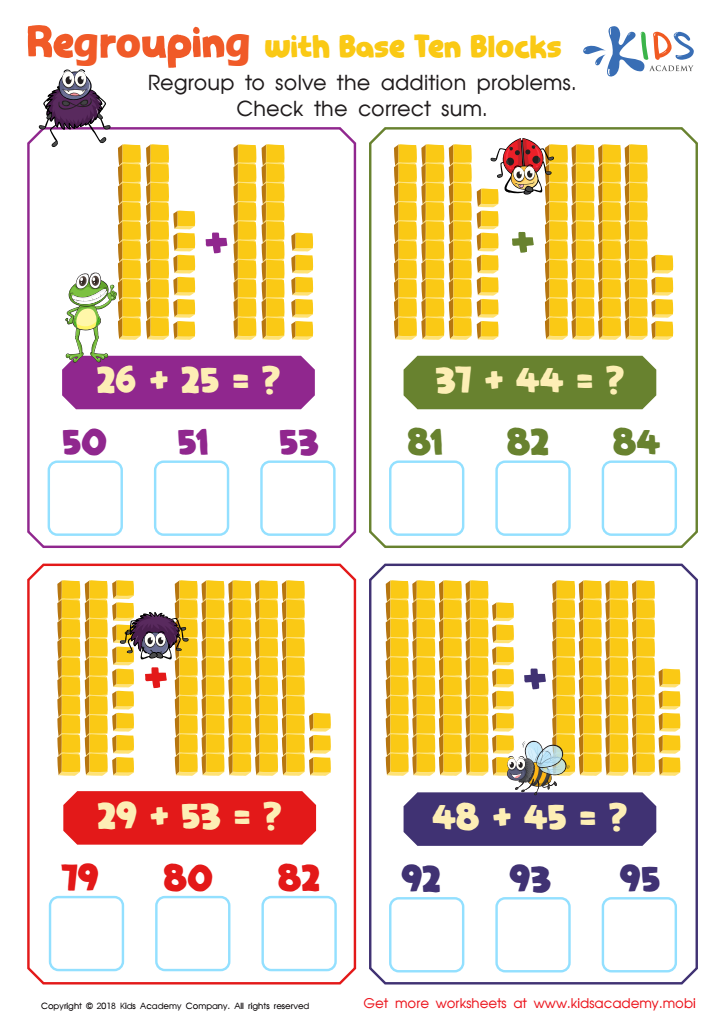
Regrouping With Base Ten Blocks Worksheet
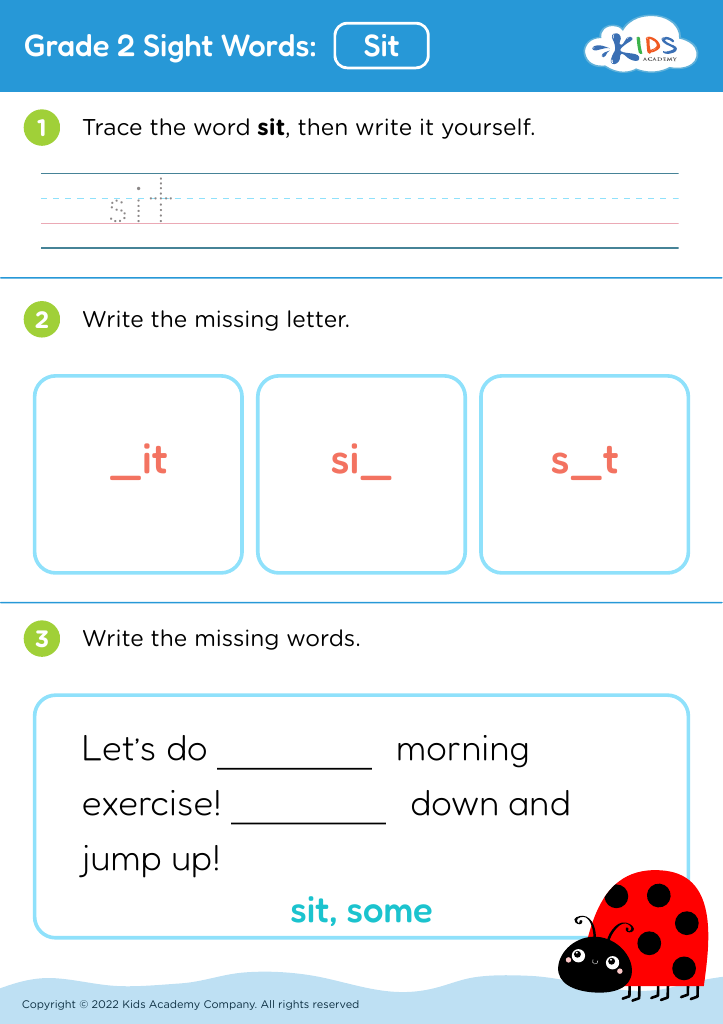







Developing problem-solving abilities in 7-year-olds is crucial for several reasons, and both parents and teachers play vital roles in this process. At this age, children are beginning to think more abstractly, and fostering their problem-solving skills equips them to tackle challenges independently. These abilities not only enhance their academic performance but also promote creative thinking, analytical reasoning, and resilience.
When children engage in problem-solving activities, they learn to explore multiple perspectives and develop critical thinking skills, preparing them for more complex tasks in the future. Moreover, acquiring strong problem-solving skills helps them navigate social interactions, fostering collaboration and empathy as they work through conflicts with peers.
Teachers and parents facilitate this development through guided discovery, encouragement, and constructive feedback, making it an engaging learning experience. By supporting problem-solving practice at home and in school, adults can help children build confidence in their abilities and a growth mindset, where failure is seen as an opportunity to learn. Ultimately, investing in problem-solving skills fosters essential life skills that will benefit children throughout their education and beyond, empowering them to become adaptable and successful adults.








