Developing problem-solving skills Worksheets for 7-Year-Olds
8 filtered results
-
From - To
Unlock your child's potential with our engaging problem-solving skills worksheets designed specifically for 7-year-olds. These educational resources encourage critical thinking and creativity while making learning fun. Each worksheet presents relatable scenarios and challenges that stimulate your child's mind, guiding them to explore multiple solutions. Our carefully crafted activities are aligned with grade-level standards, promoting both academic growth and real-life application. Perfect for at-home learning or classroom use, these worksheets will empower young learners to tackle problems with confidence and curiosity. Dive into our collection today and watch your child's problem-solving abilities flourish through play and practice!
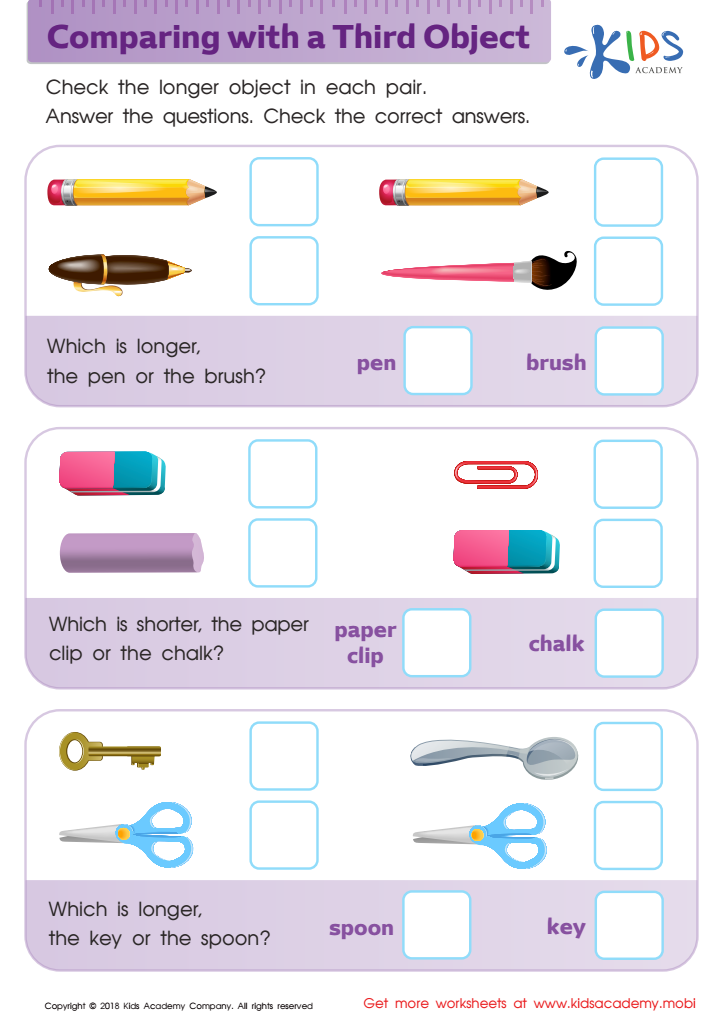
Comparing with a Third Object Worksheet
 Assign to My Students
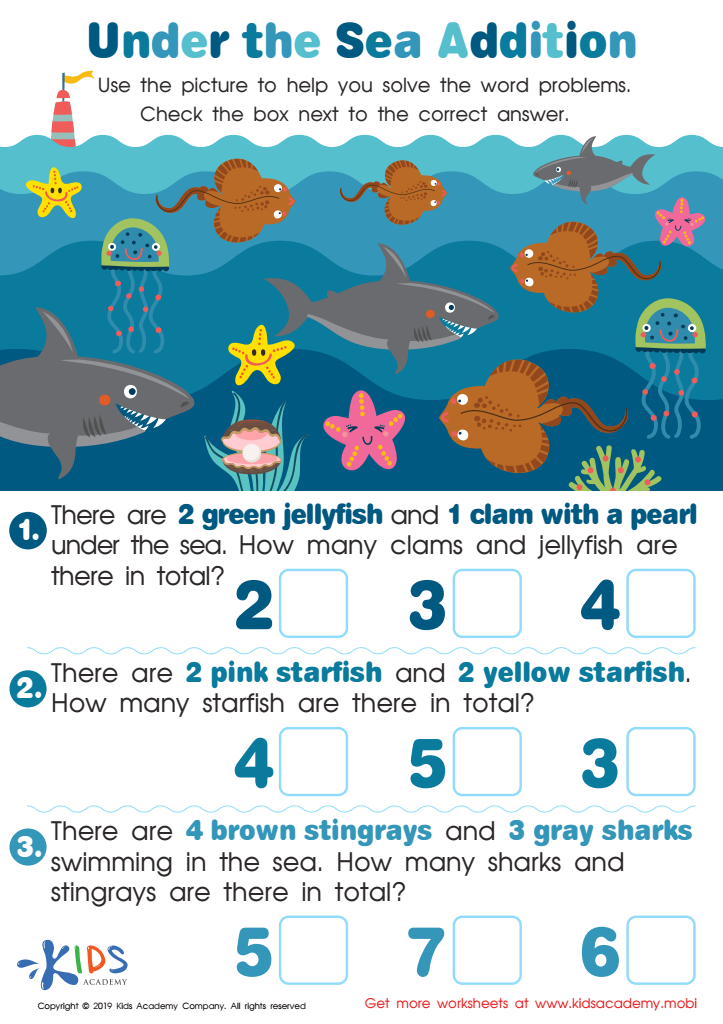
Under the Sea Addition Worksheet
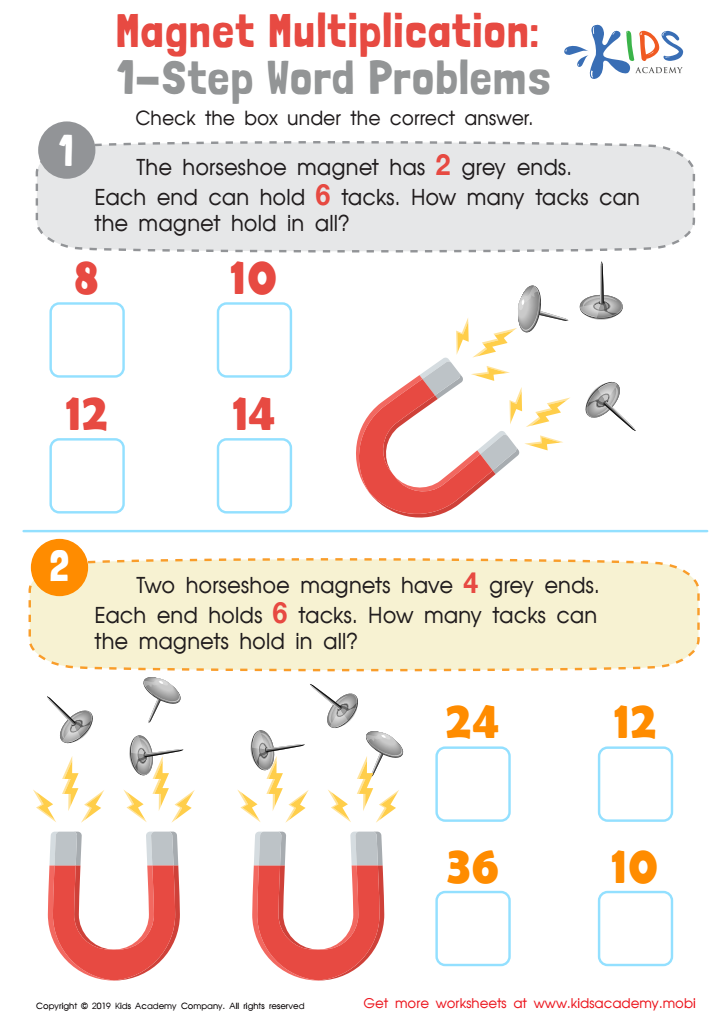
Magnet Multiplication: 1-Step Word Problems Worksheet
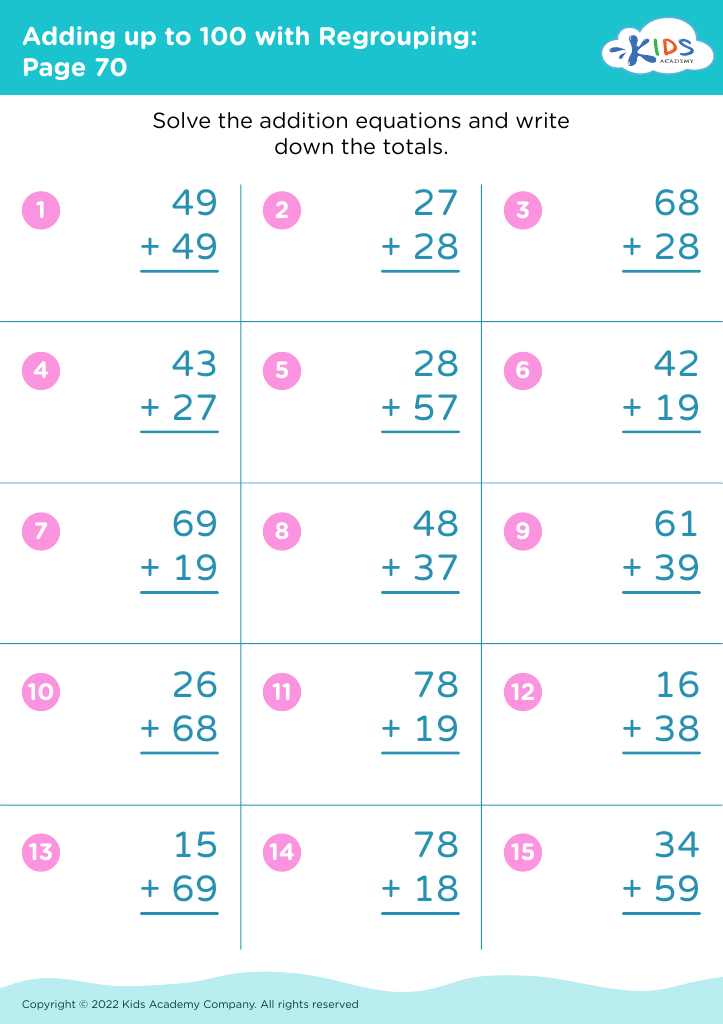
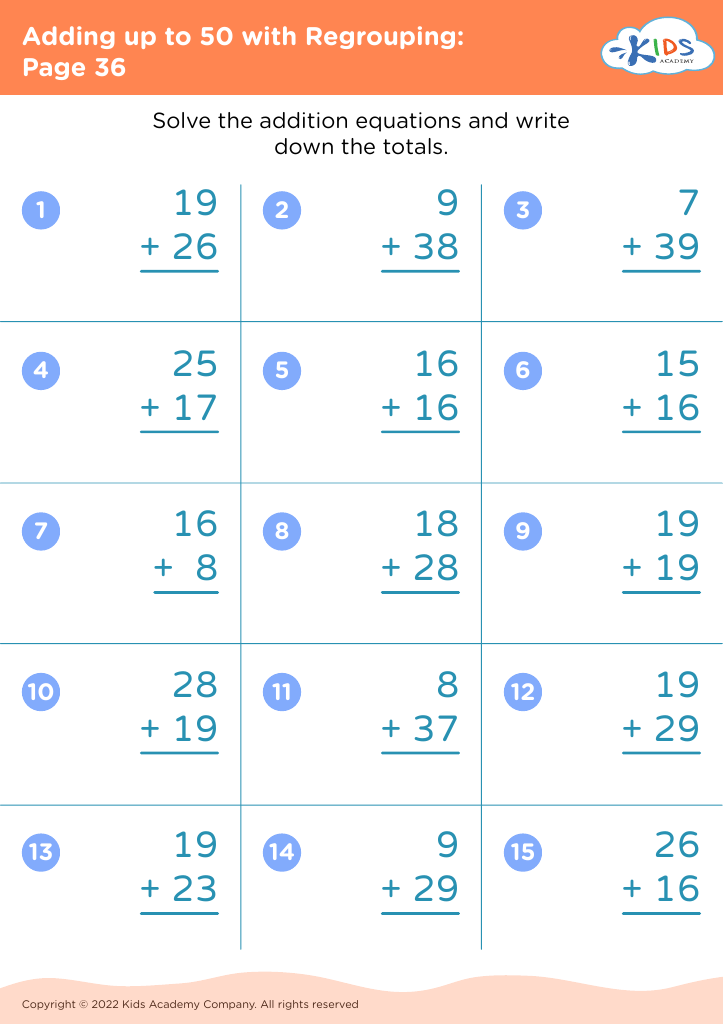
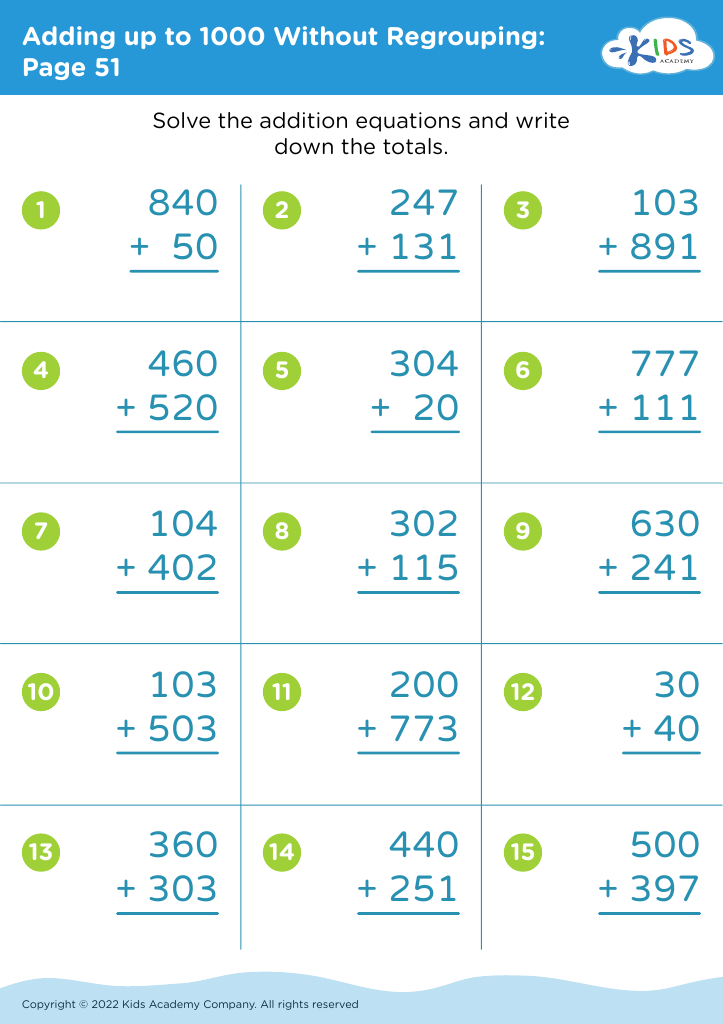








Developing problem-solving skills in 7-year-olds is crucial for their cognitive and emotional growth. At this age, children begin to think critically and logically, laying the foundation for future learning. Problem-solving helps them navigate challenges independently, boosting their confidence and encouraging resilience. When parents and teachers foster these skills, they equip children with the tools to analyze situations, think creatively, and explore multiple solutions.
Additionally, problem-solving is essential for academic success. It enhances a child's ability to understand subjects like math and science, where logical reasoning and analytical thinking play significant roles. Furthermore, these skills extend beyond academics; they are vital for social interactions. Helping children learn to resolve conflicts and communicate effectively supports their social development and emotional intelligence.
Moreover, nurturing problem-solving abilities prepares children for a rapidly changing world. In an era where adaptability and innovation are critical, those who can think critically and solve problems will excel. By emphasizing problem-solving both at home and in the classroom, parents and teachers can foster an environment of curiosity and growth, ultimately enhancing a child’s ability to thrive in all aspects of life. Thus, cultivating these skills should be a priority for both educators and caregivers.








