Graph reading skills Worksheets for 7-Year-Olds
3 filtered results
-
From - To
Unlock your child's potential in data interpretation with our engaging Graph Reading Skills Worksheets, meticulously crafted for 7-year-olds. At Kids Academy, we focus on simplifying complex concepts through fun, interactive activities. Our worksheets cover fundamental skills such as reading bar graphs, line plots, and pie charts, enhancing critical thinking and analytical abilities. Designed by educational experts, these exercises make learning enjoyable and impactful. Ideal for both classroom and at-home practice, our worksheets offer a solid foundation in understanding and interpreting graphical data, paving the way for future success in math and science. Start boosting your child's skills today!
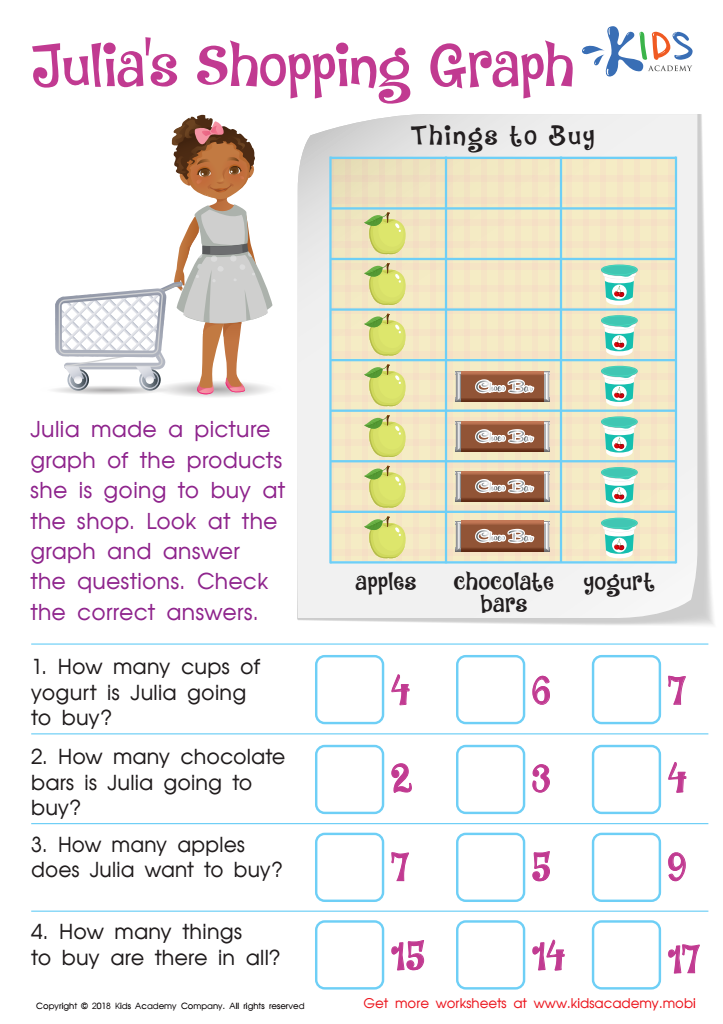
Julia's Shopping Graph Worksheet
 Assign to My Students
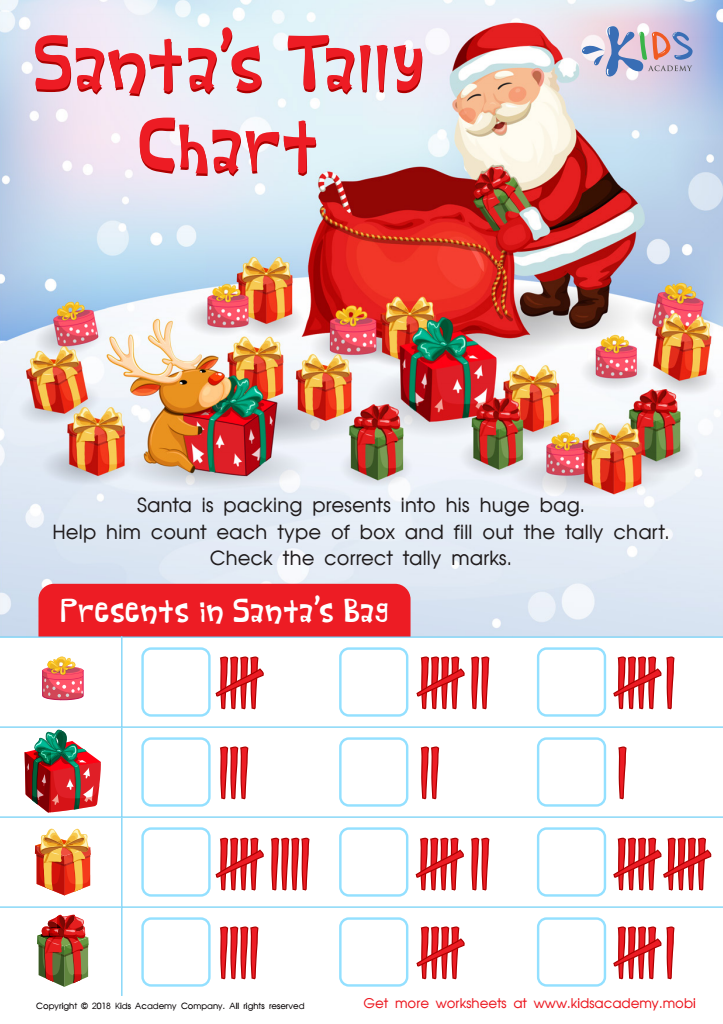
Santa Tally Chart Worksheet
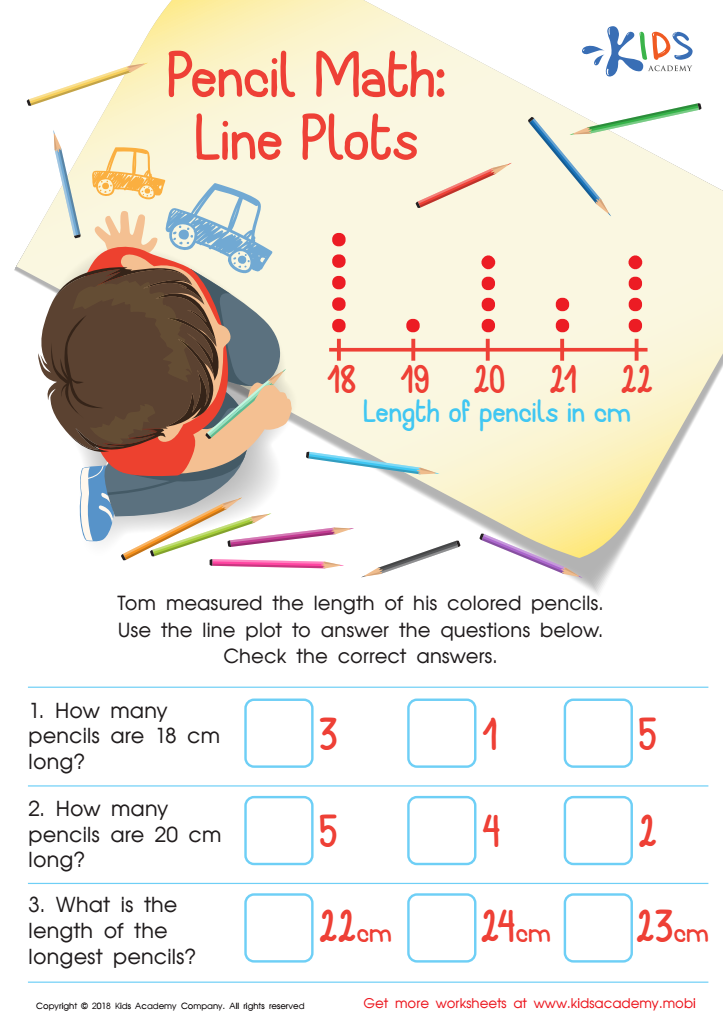
Pencil Math: Line Plots Worksheet








Graph reading skills are foundational for 7-year-olds and can significantly impact their overall academic development. First and foremost, these skills enhance critical thinking and analytical abilities. By interpreting graphs, young children learn to compare quantities, recognize patterns, and draw conclusions based on visual data, which strengthens their problem-solving skills. Additionally, graph reading is a key component of math literacy. Understanding bar graphs, line graphs, and pie charts helps students grasp essential concepts in math, such as addition, subtraction, and basic statistics.
Graphs also serve as practical tools for understanding information in day-to-day life. Whether planning a school event based on a tally of students' preferences or interpreting weather forecasts, the ability to read graphs makes children more adept at navigating real-world situations.
From an interdisciplinary perspective, graph reading skills are crucial not just in math but across various subjects such as science, social studies, and even language arts. For instance, in science classes, children often encounter data presented in graphic form, aiding in the comprehension of experimental results. In social studies, trends and historical data are frequently illustrated through graphs.
Finally, fostering graph reading skills in early childhood sets the stage for more complex data handling in later years, enabling students to become competent, informed members of society. Parents and teachers investing in this skill can provide their children with the tools needed for lifelong learning and practical daily living skills.








