
Identifying Animals Worksheets for 7-Year-Olds
6 filtered results
Difficulty Level
Grade
Age
-
From - To
Subject
Activity
Standards
Explore our "Identifying Animals Worksheets for 7-Year-Olds" designed to engage young learners in the fascinating world of animals. These fun and educational worksheets will help your children recognize and classify various animals, enhancing their vocabulary and observation skills. Activities include matching, coloring, and simple quizzes, all tailored specifically for 7-year-olds to ensure they are both challenged and entertained. Perfect for classroom use or at-home learning, these worksheets provide a solid foundation in animal identification and biology, fostering a love for nature and the natural world in your budding explorers.
Favorites
With answer key
Interactive
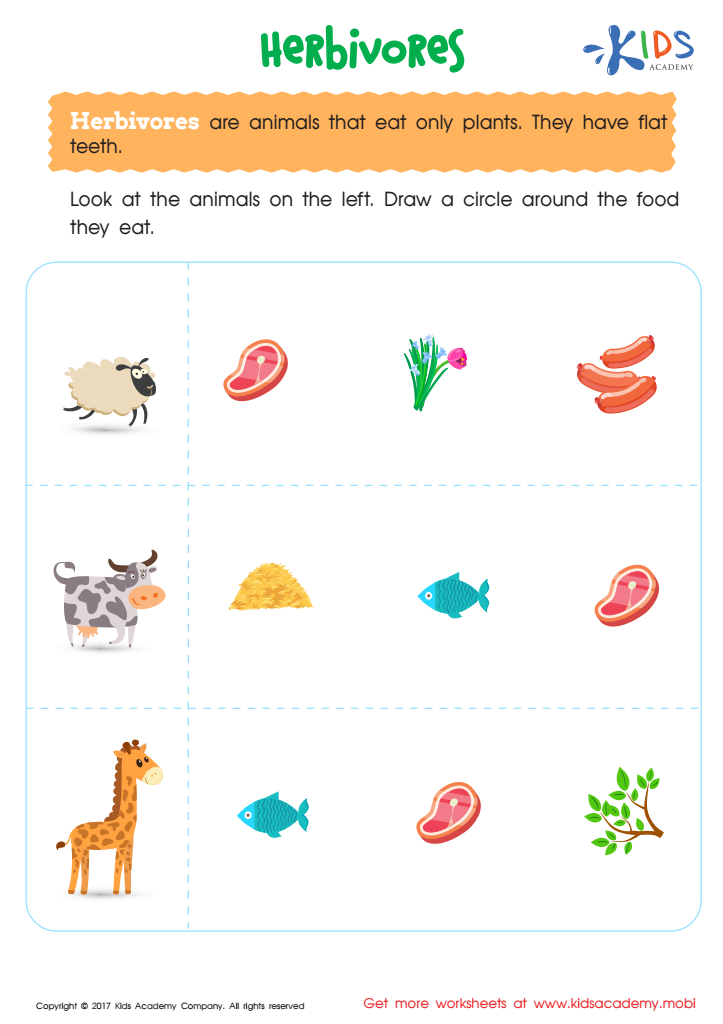
Herbivores Printable
Strengthen their vocab with these fascinating creatures, as they explore an intriguing aspect of beloved animals.
 Assign to My Students
Herbivores Printable
Worksheet
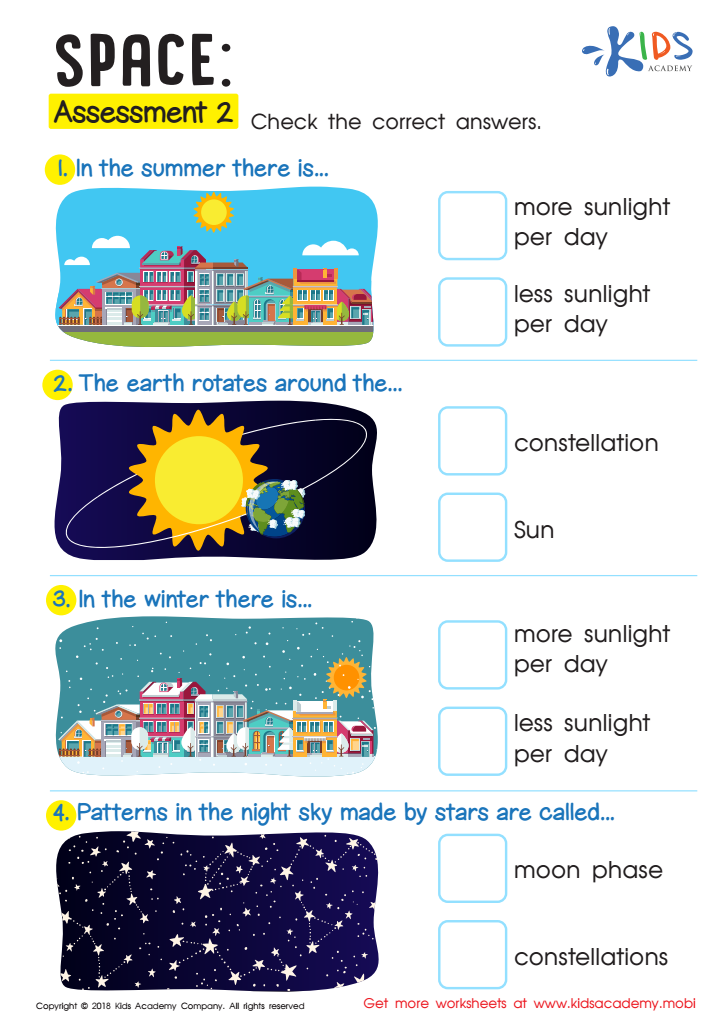
Space: Assessment 2 Worksheet
Test your kids' knowledge of the weather, constellations and Earth with this worksheet. Show them the 4 images and ask what's happening; then read the questions and options and help them pick the right answers. This printout is a helpful and fun way to learn!
Space: Assessment 2 Worksheet
Worksheet
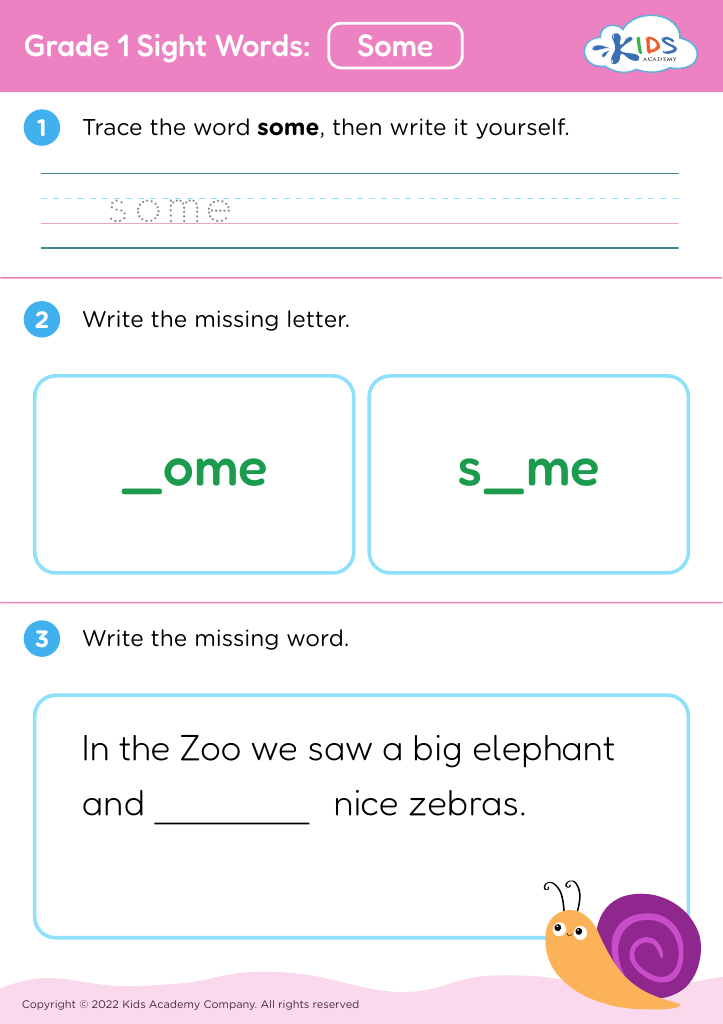
Join Kids Academy for Free
Who is primarily going to use this learning content?








Identifying animals is an essential skill for 7-year-olds as it fosters a myriad of educational and developmental benefits. For parents and teachers, emphasizing this activity supports cognitive growth, language development, and environmental awareness in children. Recognizing various animals enhances memory and categorization skills; as children learn to discern between species, they engage in critical thinking and observational tasks that ultimately sharpen their mental faculties.
Furthermore, this knowledge significantly enriches vocabulary. Naming and describing different animals introduces new words and concepts, which strengthens language skills and encourages expressive communication. An understanding of animal habitats and behaviors also cultivates an early appreciation for biodiversity and conservation. By identifying animals, children learn about ecosystems and the interdependence of living beings, fostering a sense of responsibility towards nature.
Engaging with animals, whether through books, documentaries, or hands-on activities, also nurtures empathy and curiosity. Children often feel a natural bond with animals, and learning about them can inspire passion for wildlife and science. This wholesome connection stimulates exploration and questions, allowing young minds to thrive in curiosity-driven learning environments.
Thus, for both parents and teachers, instilling the ability to identify animals in 7-year-olds is fundamental for academic growth, emotional development, and environmental stewardship.








