Knowledge application Worksheets for 7-Year-Olds
3 filtered results
-
From - To
Discover our engaging Knowledge Application Worksheets designed specifically for 7-year-olds! These worksheets help young learners apply their skills in real-world scenarios, enhancing critical thinking and problem-solving abilities. Covering various subjects, the exercises encourage kids to connect their knowledge with everyday situations, fostering deeper understanding and retention. Each worksheet is carefully crafted to align with educational standards, ensuring that your child develops essential skills in a fun and interactive way. Perfect for homeschooling or supplementary learning, our printable resources make learning enjoyable and effective. Empower your child’s learning journey today with our thoughtfully designed Knowledge Application Worksheets!
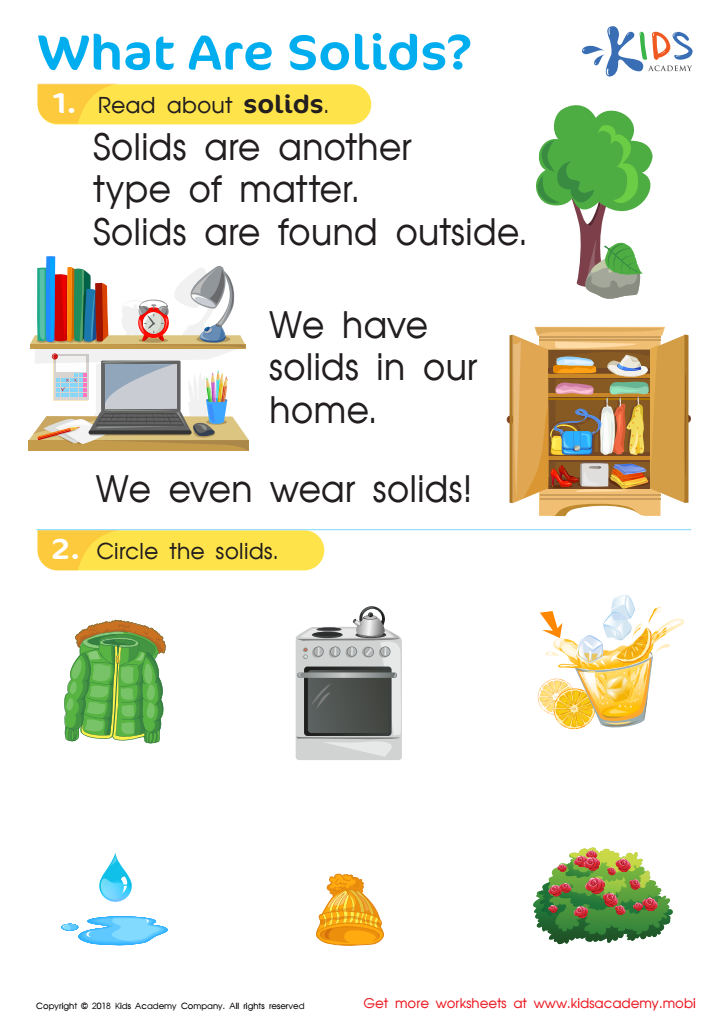
What Are Solids? Worksheet
 Assign to My Students
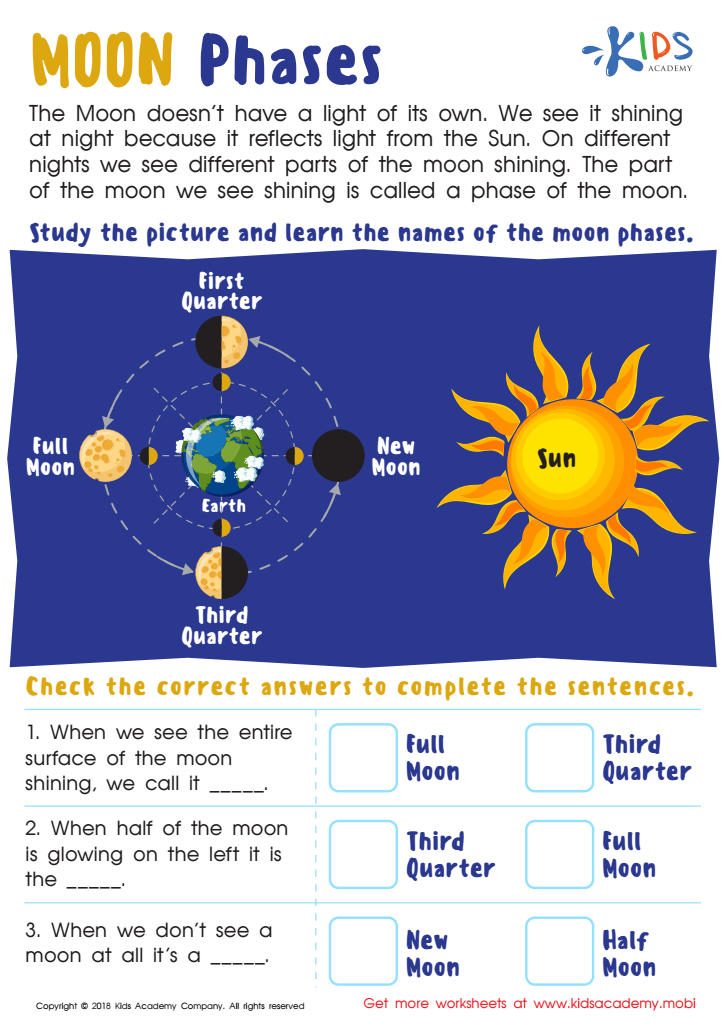
Moon Phases Worksheet
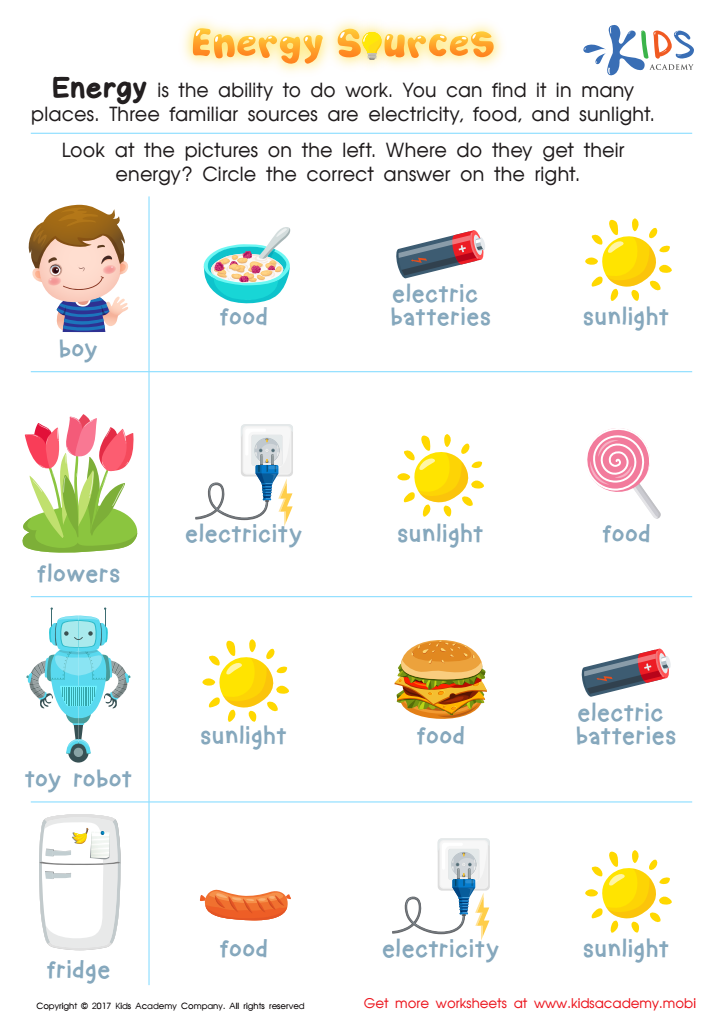
Energy Sources Printable








Knowledge application is crucial for 7-year-olds, as it transforms learned information into practical skills relevant to their daily lives. This age marks a significant stage in cognitive and social development, where children begin to connect theoretical knowledge with real-world experiences. When parents and teachers emphasize knowledge application, they help foster critical thinking, problem-solving abilities, and creativity.
Engaging children in activities where they can apply what they've learned encourages deeper understanding and retention. For example, rather than simply memorizing math facts, encouraging children to use those facts while cooking or budgeting for a toy enhances their grasp of mathematics in a meaningful context.
Furthermore, knowledge application promotes confidence and independence in young learners. As they navigate challenges, children develop resilience—an essential life skill. It also cultivates a love of learning, as they see the relevance and fun in applying knowledge to new situations.
In collaborative settings, knowledge application helps improve social skills, as children work together to solve problems. Ultimately, when parents and teachers prioritize this approach, they equip children with the necessary tools to succeed academically and in life, laying a solid foundation for future learning and personal development.








