Practice counting Worksheets for 7-Year-Olds
6 filtered results
-
From - To
Explore our engaging "Practice Counting Worksheets for 7-Year-Olds," designed to make learning numbers fun! These worksheets help children enhance their counting skills through interactive exercises, including counting objects, number patterns, and engaging puzzles. Tailored to the developmental needs of 7-year-olds, our worksheets foster math fluency while building confidence in their counting abilities. Parents and teachers can easily incorporate these printable resources into daily learning routines or classroom activities. Encourage your child's mathematical growth with these visually appealing and age-appropriate worksheets, ensuring they enjoy the journey of mastering numbers at their own pace! Dive in and make counting a joyful experience today!
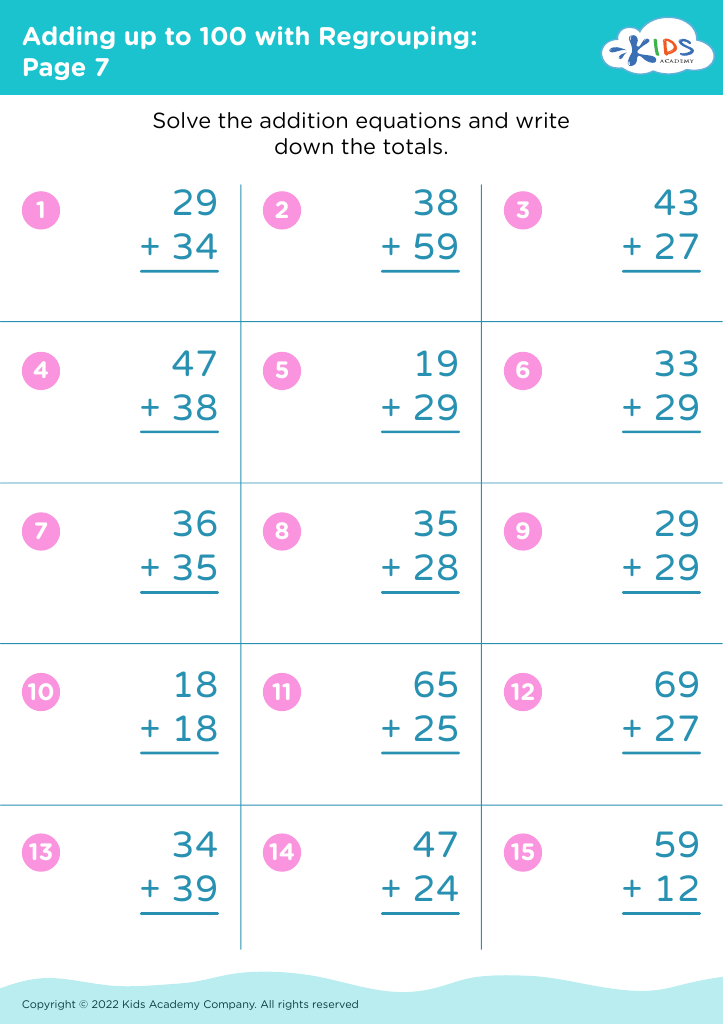
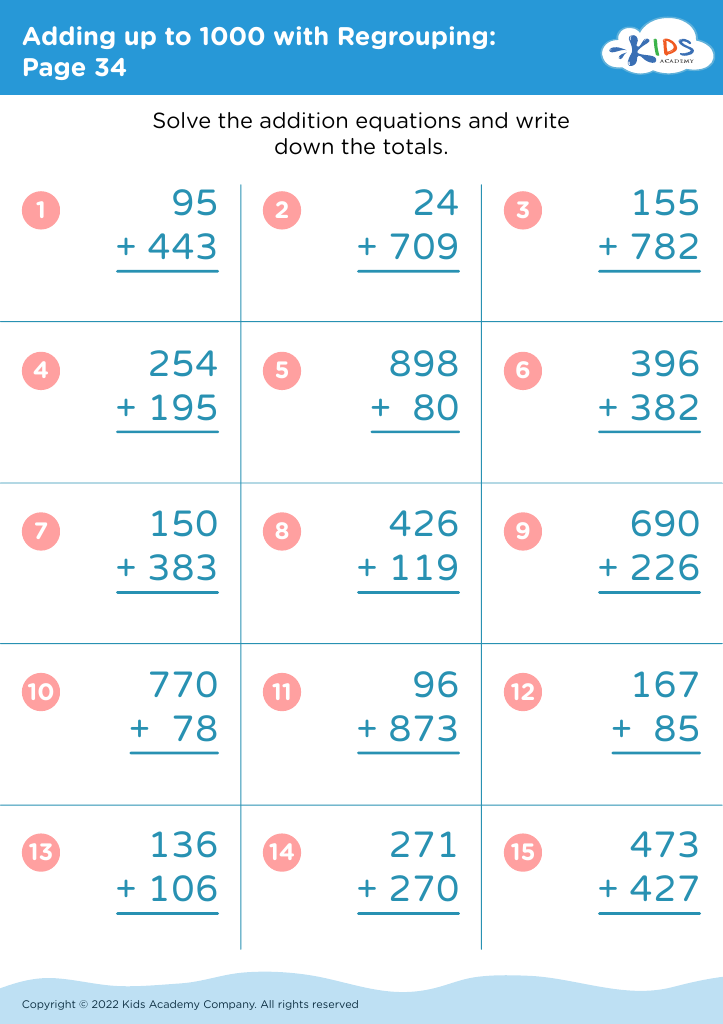
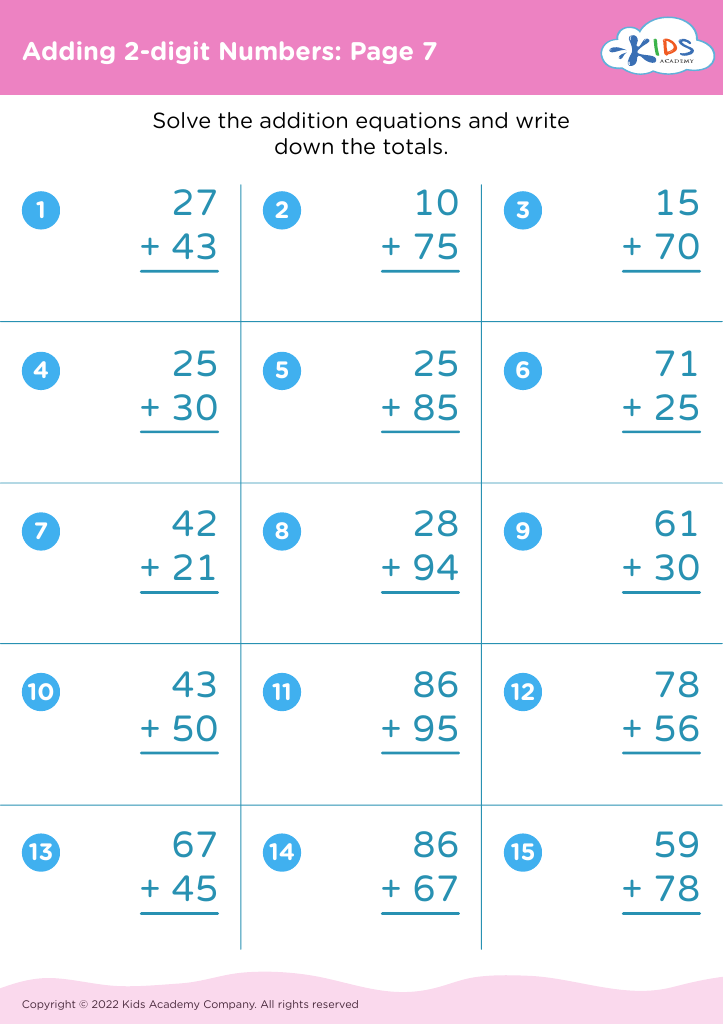
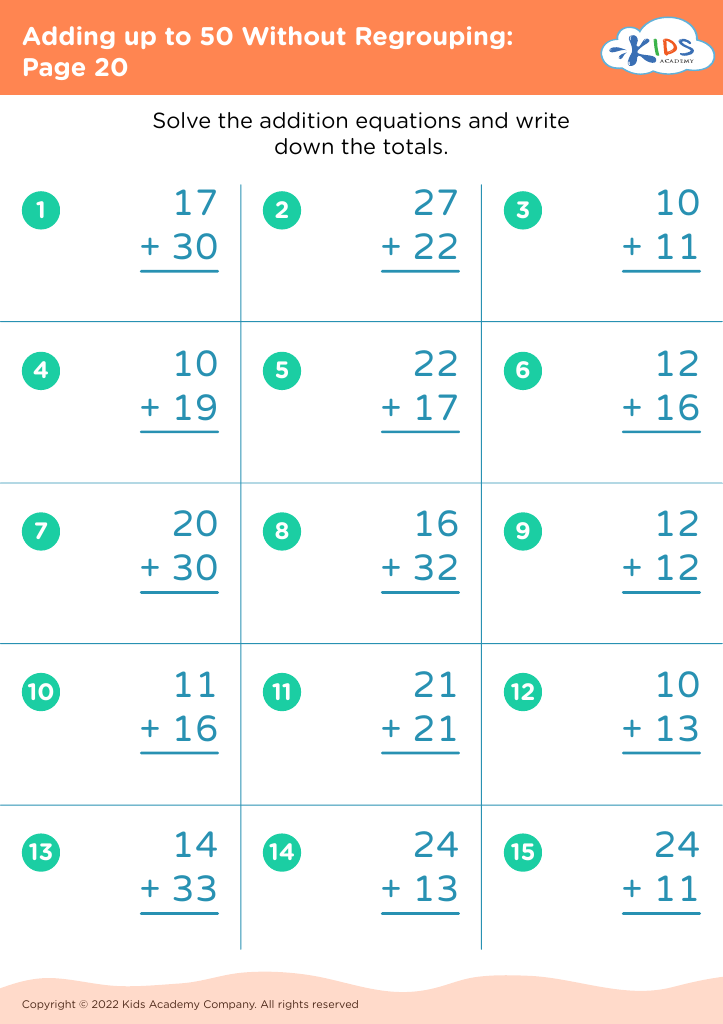
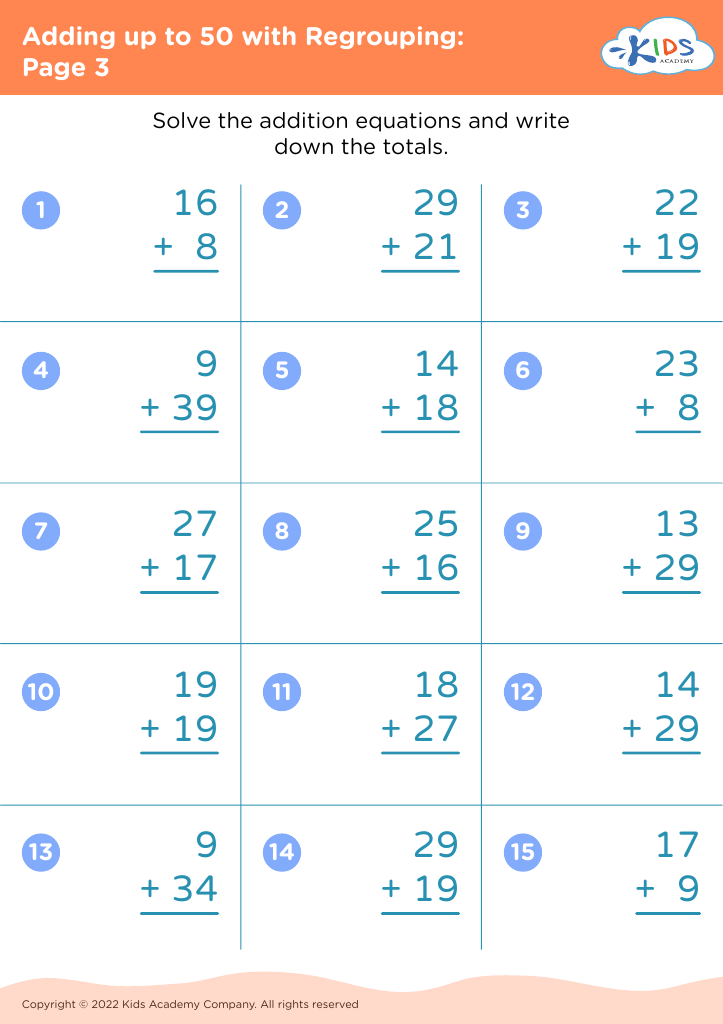
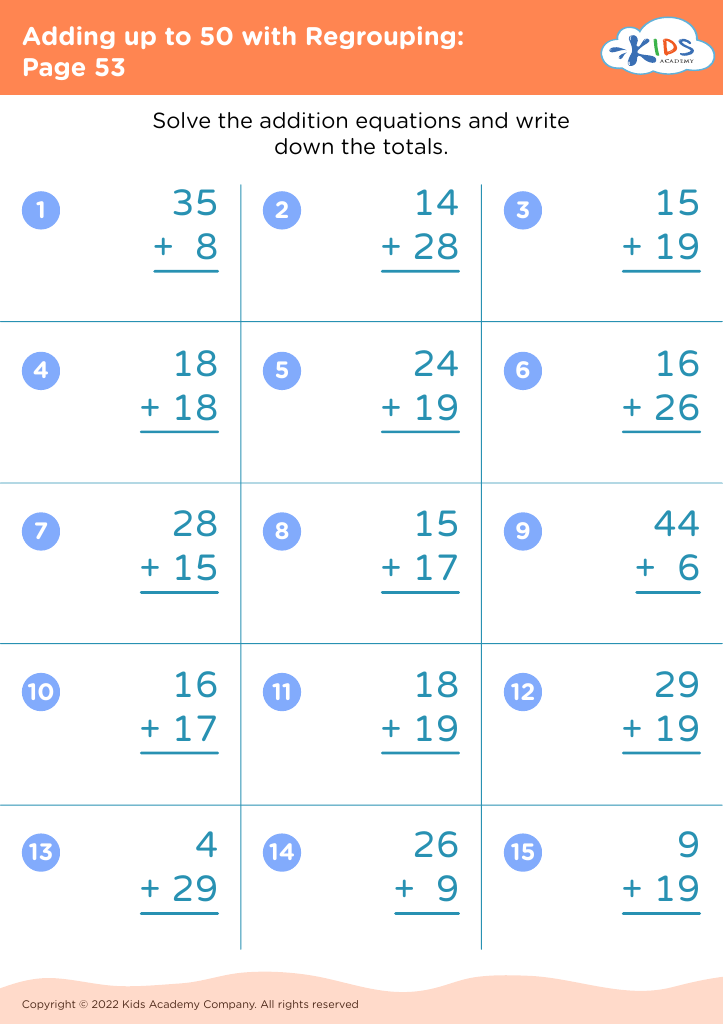







Practicing counting is crucial for 7-year-olds as it forms the foundation of their math skills. At this age, children transition from basic counting to understanding more complex mathematical concepts, such as addition, subtraction, and even early multiplication. A solid grasp of counting helps them recognize patterns, which is essential for problem-solving and critical thinking.
Moreover, counting encourages cognitive development. Engaging in counting activities enhances a child's memory and concentration, fostering their overall academic success. It builds their confidence in their mathematical abilities, empowering them to tackle challenges head-on.
Socially, counting can also facilitate group activities and games, teaching cooperation and teamwork. It nurtures a sense of accomplishment when children achieve their counting milestones, enhancing their self-esteem.
For parents and teachers, reinforcing counting at home and in the classroom not only strengthens a child's math foundation but also promotes a love for learning. By incorporating fun counting games, songs, and everyday counting activities, caregivers can make learning enjoyable, ensuring children view math as an engaging subject rather than a chore. In essence, counting practice lays the groundwork for lifelong skills that benefit children academically and personally.








