Recognizing number patterns Worksheets for 7-Year-Olds
5 filtered results
-
From - To
Discover our engaging “Recognizing Number Patterns Worksheets for 7-Year-Olds,” designed to enhance your child's mathematical skills in a fun way! These worksheets focus on identifying and extending number sequences, helping young learners grasp the concept of patterns in numbers. With interactive exercises that cater to different learning styles, your child will improve critical thinking and problem-solving abilities. Perfect for use at home or in the classroom, our printable resources encourage independent learning and build a strong foundation for future math success. Explore our collection today and watch your child's confidence soar as they master number patterns effortlessly!
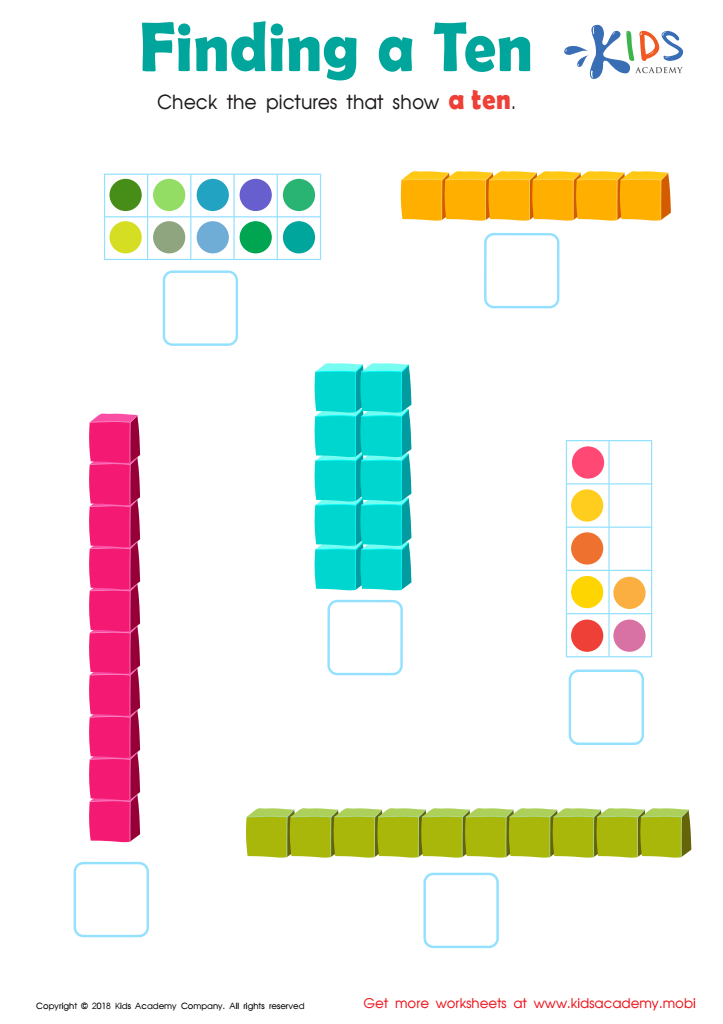
Finding a Ten Worksheet
 Assign to My Students
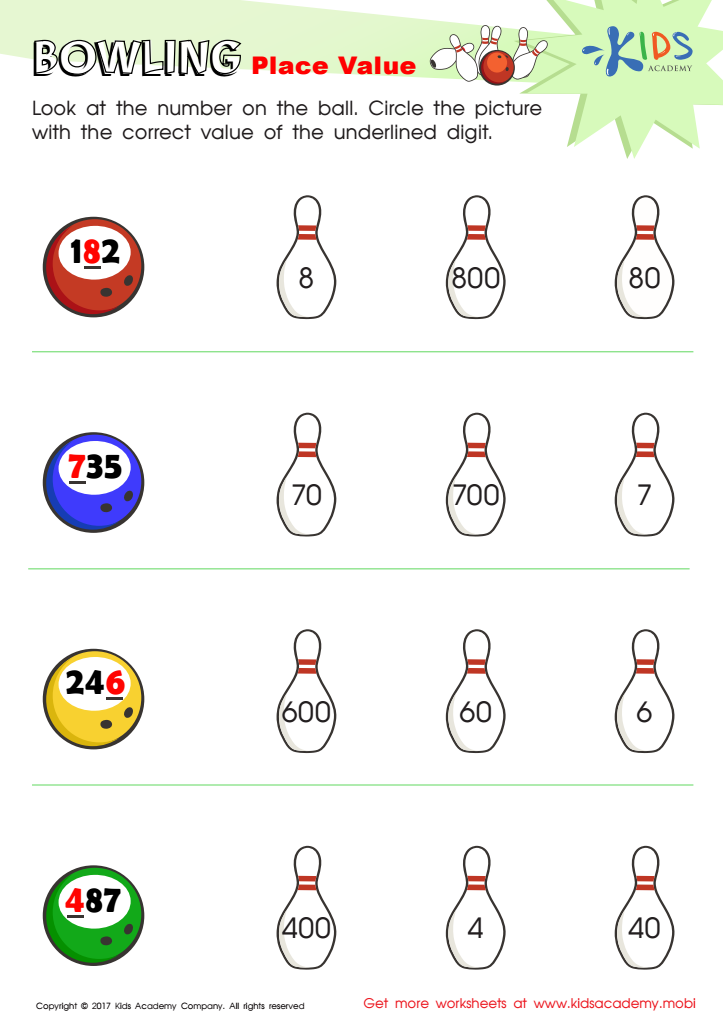
Place Value Worksheet
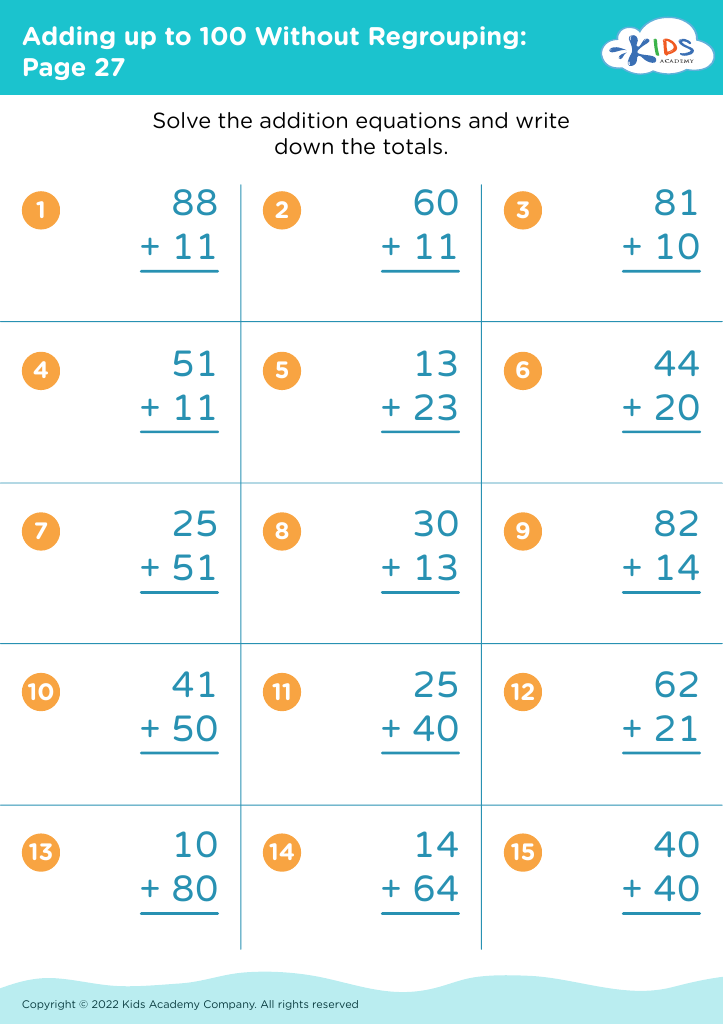
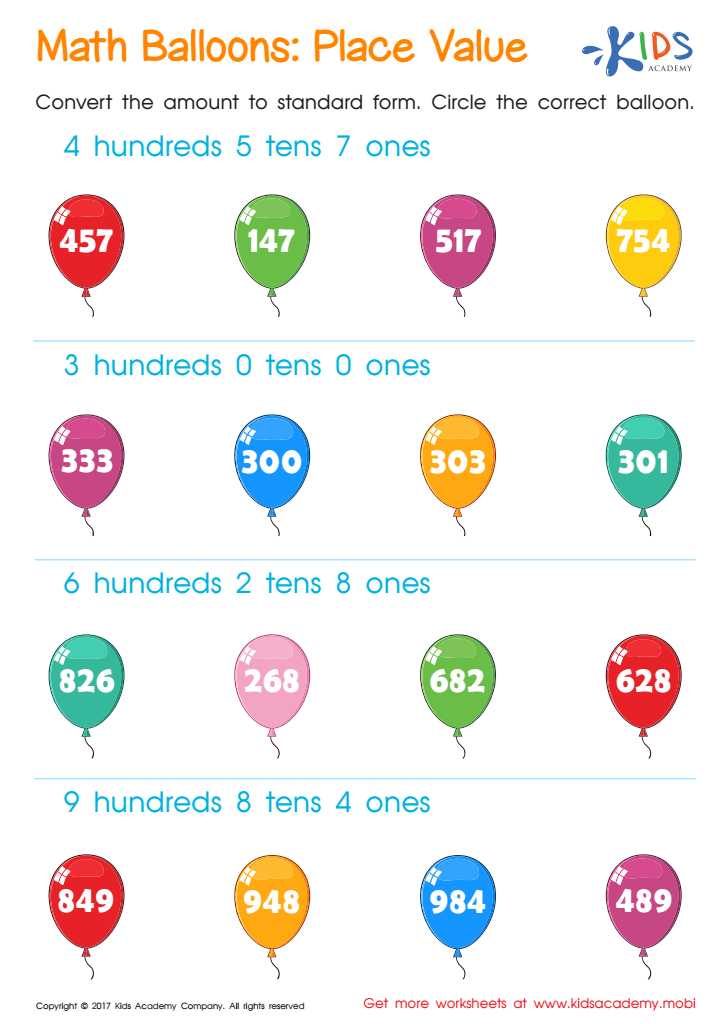
Place Value Printable Worksheet
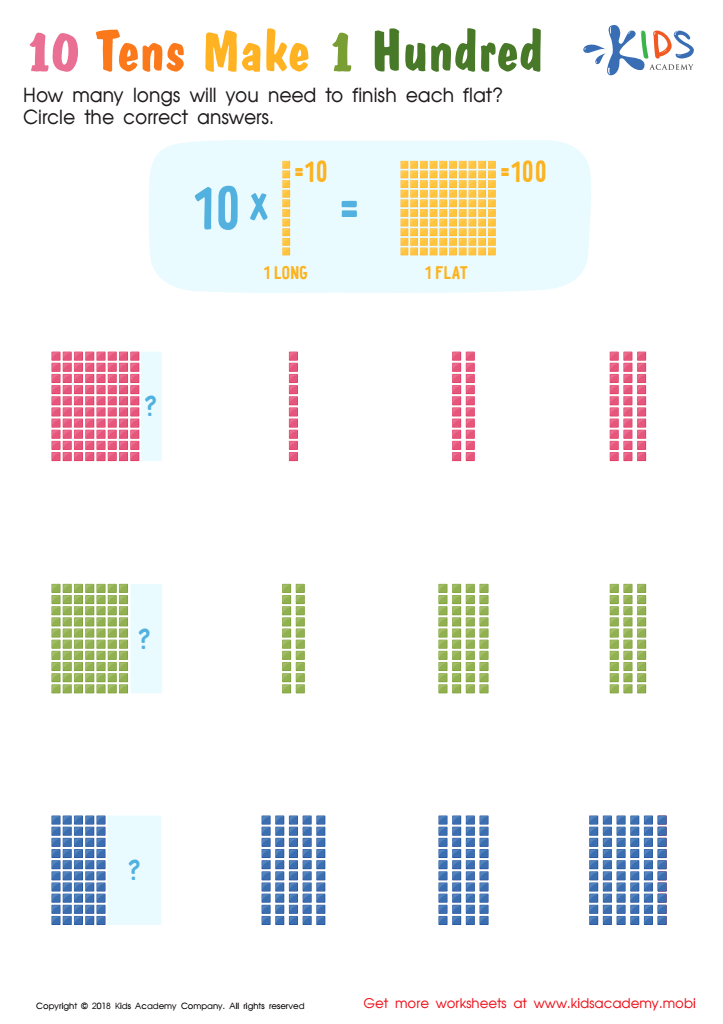
10 Tens Make 1 Hundred Worksheet






.jpg)

Recognizing number patterns is crucial for 7-year-olds as it lays the foundation for advanced mathematical concepts and problem-solving skills. At this age, children are transitioning from basic arithmetic to more complex operations. Understanding number patterns helps them develop logical thinking, enabling them to identify relationships between numbers and predict outcomes, which is essential for future math proficiency.
Moreover, recognizing patterns fosters critical cognitive skills such as reasoning, analysis, and synthesis. As children explore sequences like odd and even numbers or skip counting, they enhance their ability to see connections, which can aid in other subjects like science and language arts. For parents and teachers, cultivating this skill can boost a child’s confidence and mindset towards math, transforming apprehension into curiosity.
Additionally, number patterns enrich daily life skills such as budgeting, time management, and recognizing patterns in nature, all of which are important lessons outside the classroom. By encouraging children to look for patterns in their environment and in their learning, parents and teachers not only strengthen their mathematical aptitude but also their overall analytical abilities and enthusiasm for lifelong learning. Thus, recognizing number patterns is integral in shaping well-rounded, confident young learners.








