Sorting skills Worksheets for 7-Year-Olds
4 filtered results
-
From - To
Enhance your 7-year-old's sorting skills with our engaging worksheets designed to make learning fun! Our collection features a variety of colorful and interactive activities that encourage children to categorize objects based on attributes such as size, shape, color, and type. These worksheets not only promote critical thinking and organizational abilities but also support early math and science skills. Perfect for home or classroom use, our sorting skills worksheets are a valuable resource for teachers and parents looking to enrich their child's educational journey. Download and explore the world of sorting today, where learning meets excitement!
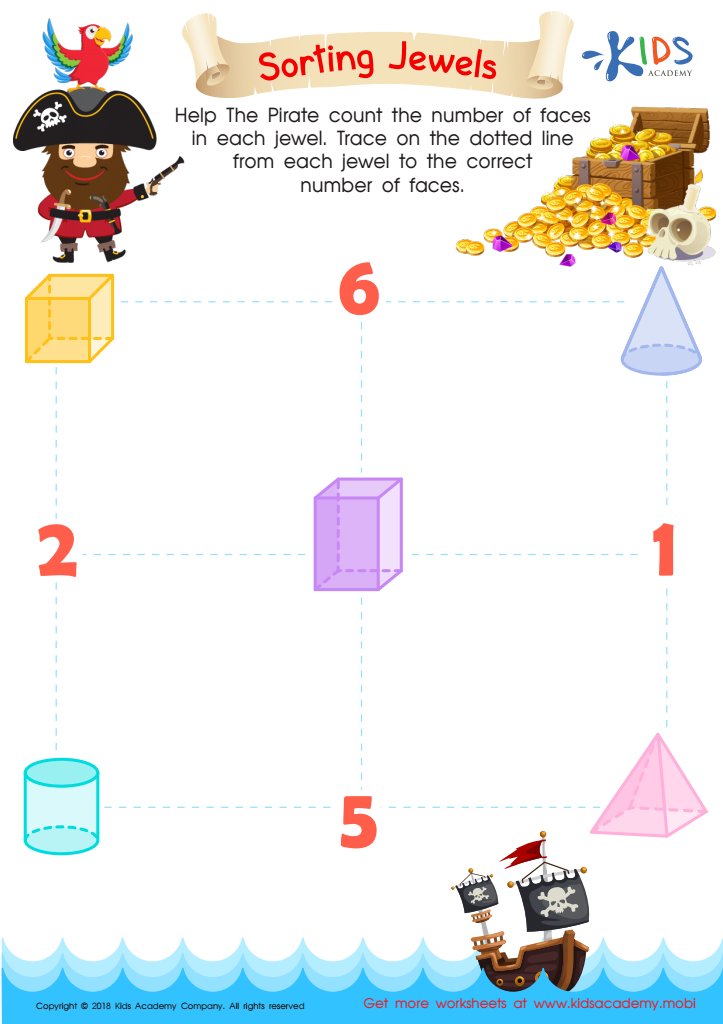
Sorting Jewels Worksheet
 Assign to My Students
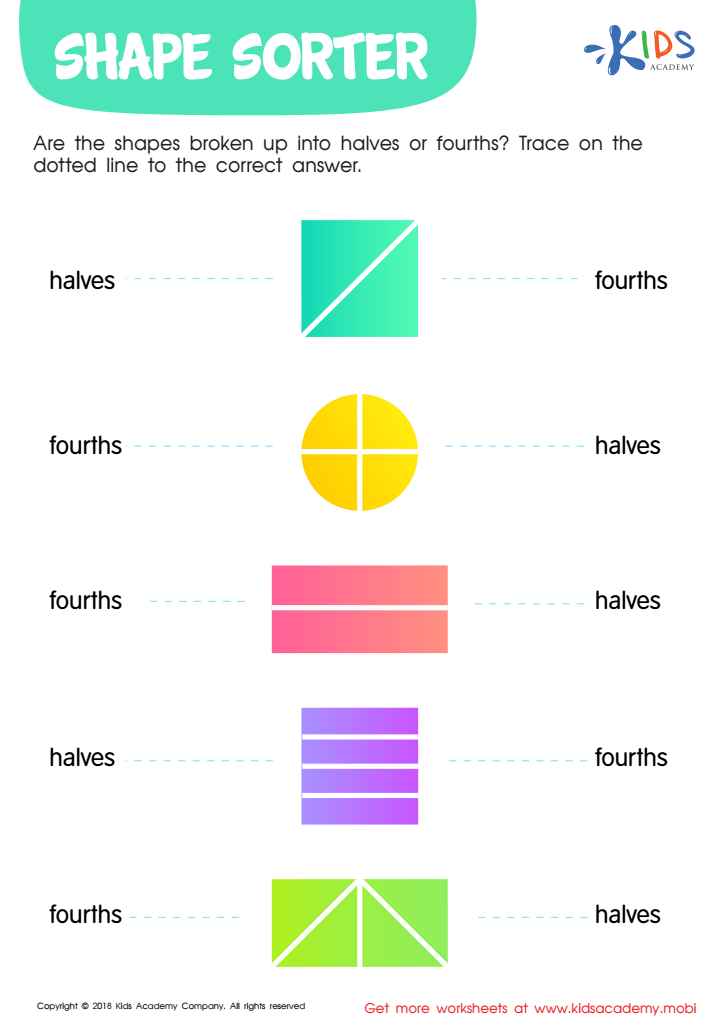
Shape Sorter Worksheet





Sorting skills are fundamental for 7-year-olds as they lay the groundwork for critical thinking and cognitive development. By categorizing objects, children not only learn about similarities and differences but also hone their analytical abilities. These skills foster organization and help them make sense of the world around them—whether it’s sorting toys by color or categorizing animals by habitat.
Moreover, sorting enhances a child’s understanding of mathematical concepts such as grouping, patterns, and classification, all of which are essential for foundational math skills. As children engage in sorting activities, they develop problem-solving strategies, which are vital for academic success and daily decision-making.
From a social perspective, sorting skills also promote cooperative play and collaboration. When kids work together to sort items, they practice communication and negotiation, essential skills for interpersonal relationships.
Ultimately, parents and teachers should prioritize sorting activities to support overall development. These foundational skills cultivate a sense of order, encourages creativity, and transforms abstract concepts into tangible knowledge, setting the stage for lifelong learning and adaptability in an ever-changing world.








