Spatial reasoning Worksheets for 7-Year-Olds
6 filtered results
-
From - To
Unlock your child's potential with our Spatial Reasoning Worksheets designed specifically for 7-year-olds! These fun and engaging activities help young learners develop critical thinking and problem-solving skills through visual-spatial challenges. Your child will enjoy tasks like shape matching, maze navigation, and pattern recognition, which promote cognitive development while keeping learning enjoyable. Our worksheets are easy to download and printable, making it convenient for parents and teachers. Help your child build a strong foundation in spatial reasoning, crucial for mathematics and everyday life. Explore our collection now and support your child's learning journey with exciting and interactive exercises!
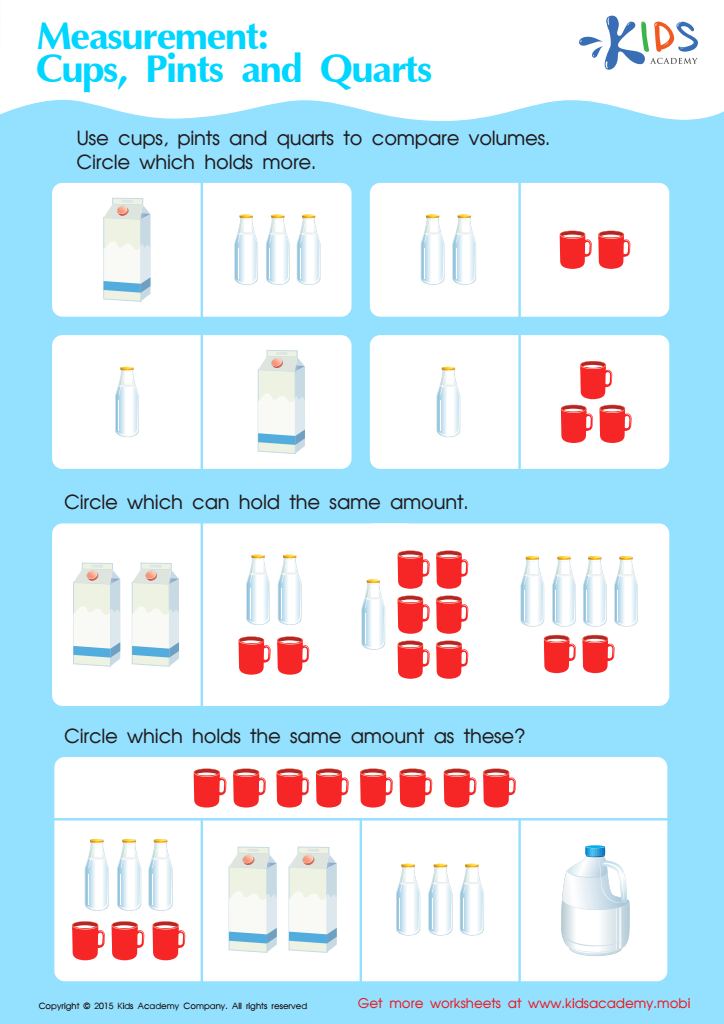
Measurement: Compare Volumes Worksheet
 Assign to My Students
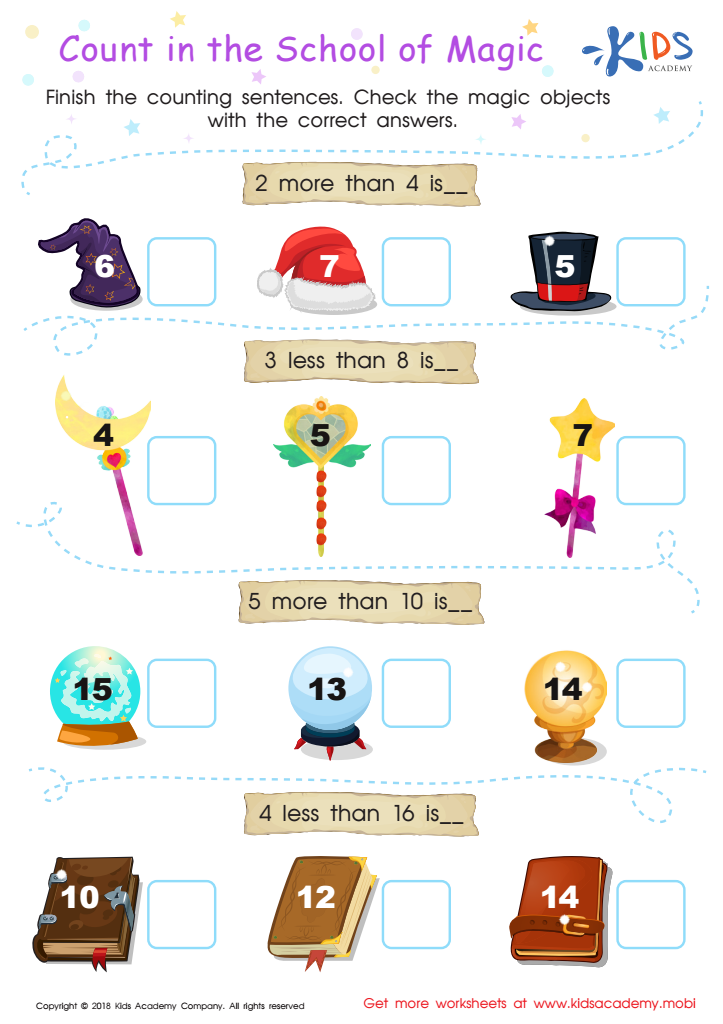
Count in the School of Magic Worksheet
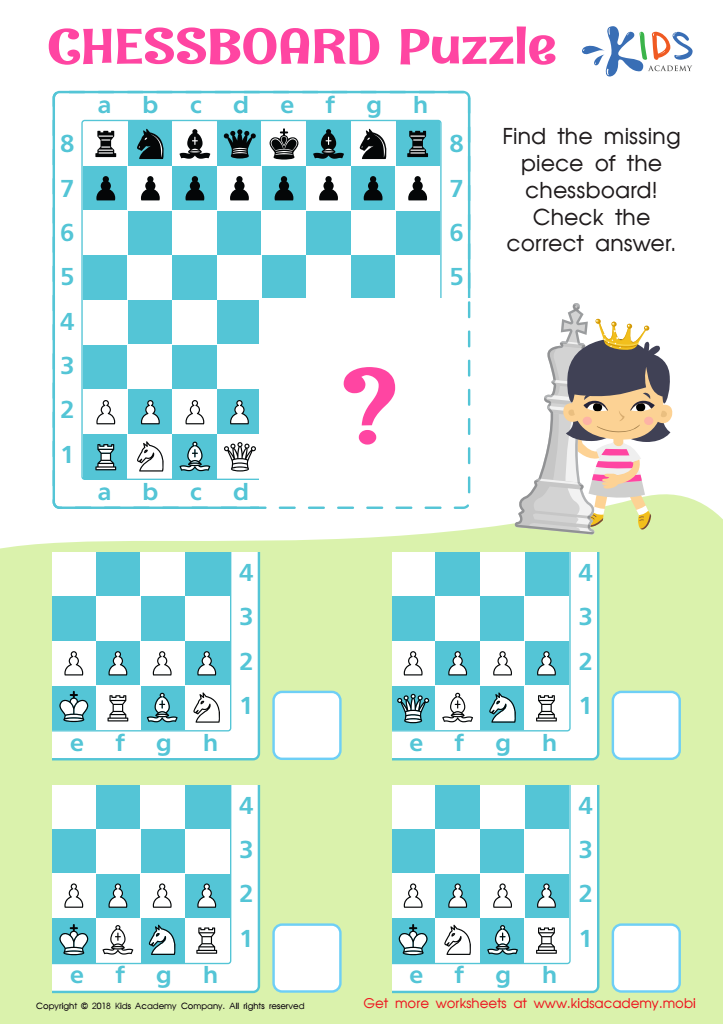
Chessboard Puzzle Worksheet
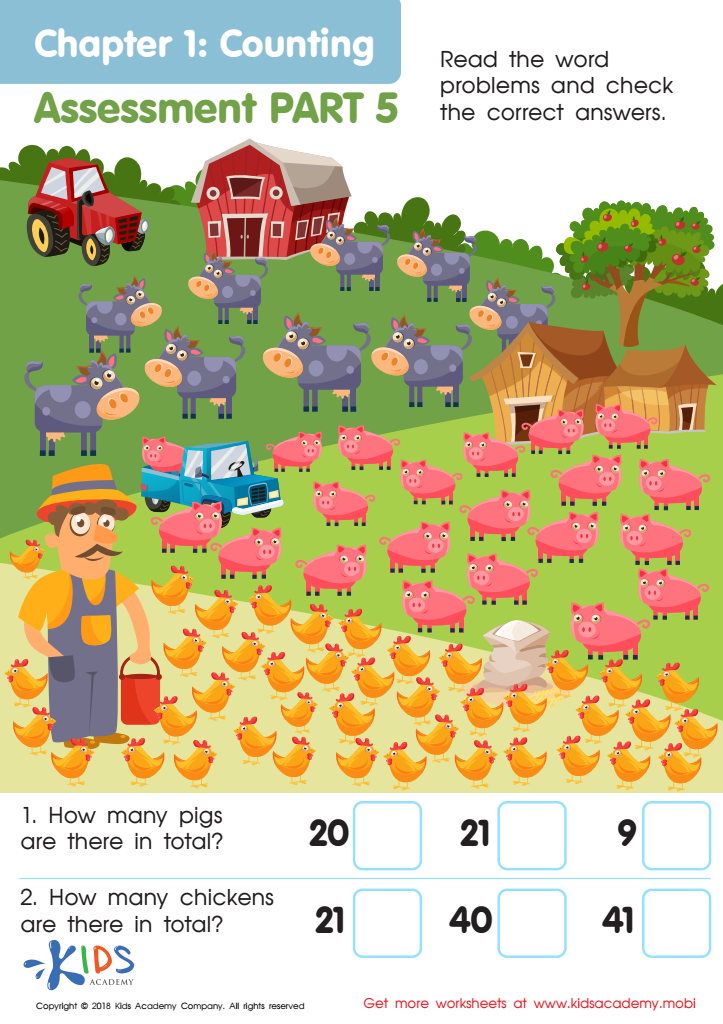
Counting: Assessment 5 Worksheet
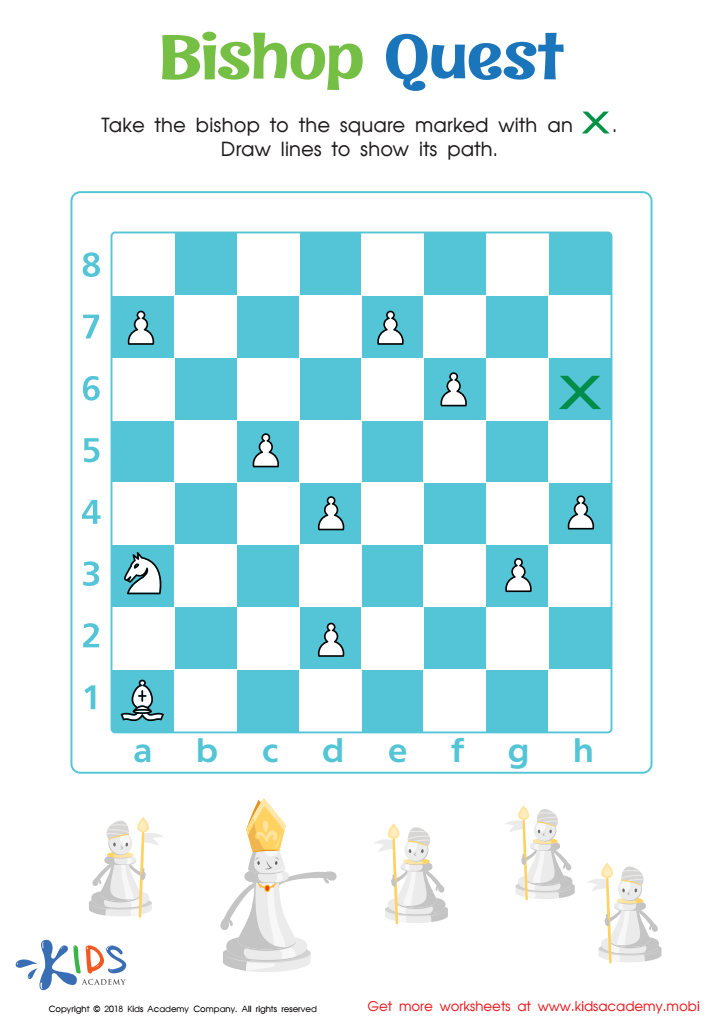
Bishop Quest Worksheet







Spatial reasoning is a critical cognitive skill that significantly influences a child's ability to understand and interact with the world around them. For 7-year-olds, fostering spatial reasoning is essential, as it lays the foundation for various academic fields, including mathematics, science, art, and even reading. In these formative years, children's brains are highly adaptable, making it the perfect time to cultivate these skills.
Improved spatial reasoning can enhance problem-solving abilities, enabling children to visualize and manipulate objects mentally. This not only supports tasks like geometry and measurements but also promotes STEM (Science, Technology, Engineering, and Mathematics) proficiency vital for future career opportunities. Additionally, spatial reasoning is linked to fine motor skills and physical coordination, aiding in activities like drawing, building, and sports.
Moreover, engaging children in activities and games that require spatial reasoning, such as puzzles, mazes, and construction play, not only encourages cognitive development but also promotes teamwork and social skills. Teachers and parents should prioritize this aspect of learning, as it equips children with essential tools for academic success and fosters a lifelong interest in exploration and creativity. Cultivating spatial reasoning in early education helps shape well-rounded, capable individuals prepared for various challenges ahead.








