Time calculation skills Worksheets for 7-Year-Olds
3 filtered results
-
From - To
Enhance your 7-year-old's time calculation skills with our engaging worksheets! Designed to develop essential time-telling abilities, these activities make learning fun and interactive. Our printables cover key concepts like reading clocks, understanding AM/PM, and calculating elapsed time. Each worksheet features colorful illustrations and age-appropriate exercises that encourage hands-on practice and critical thinking. Perfect for both classroom use and at-home learning, these resources help instill confidence in your child's time management skills. Access our time calculations worksheets today and watch your child master the art of telling time with ease and enjoyment! Boost their learning experience now!
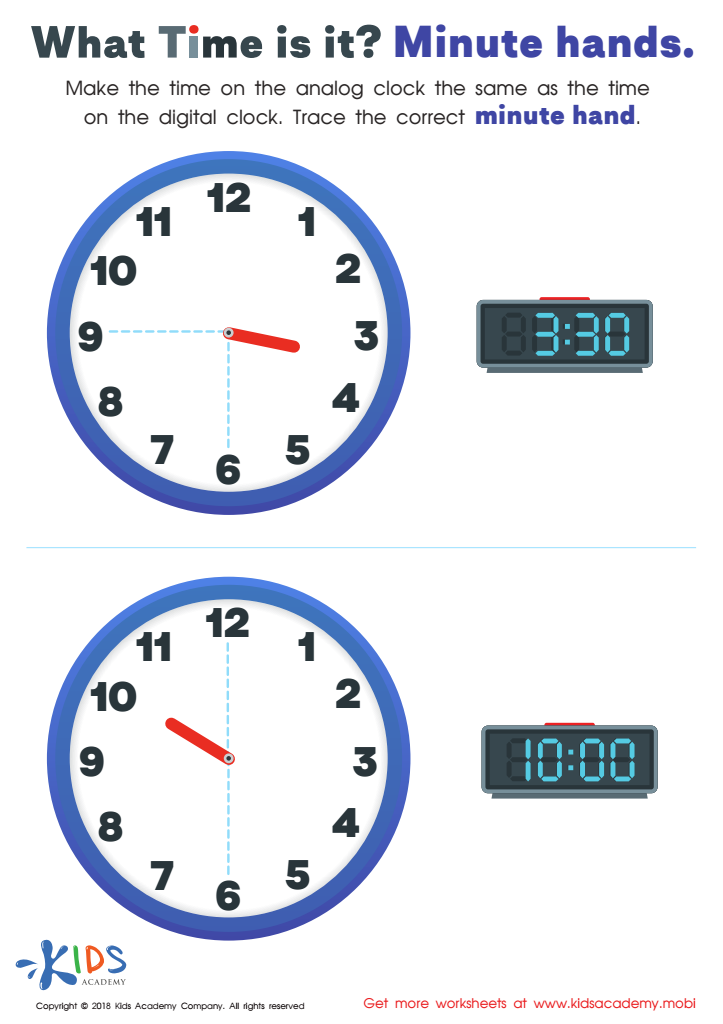
What Time Is it? Minute Hands Worksheet
 Assign to My Students
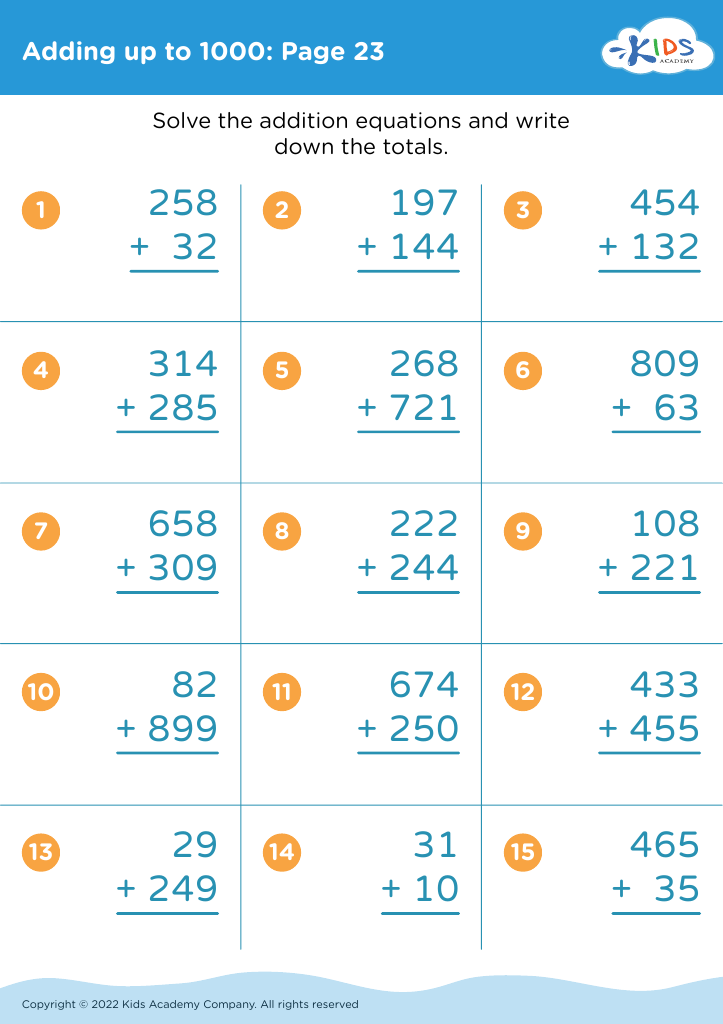
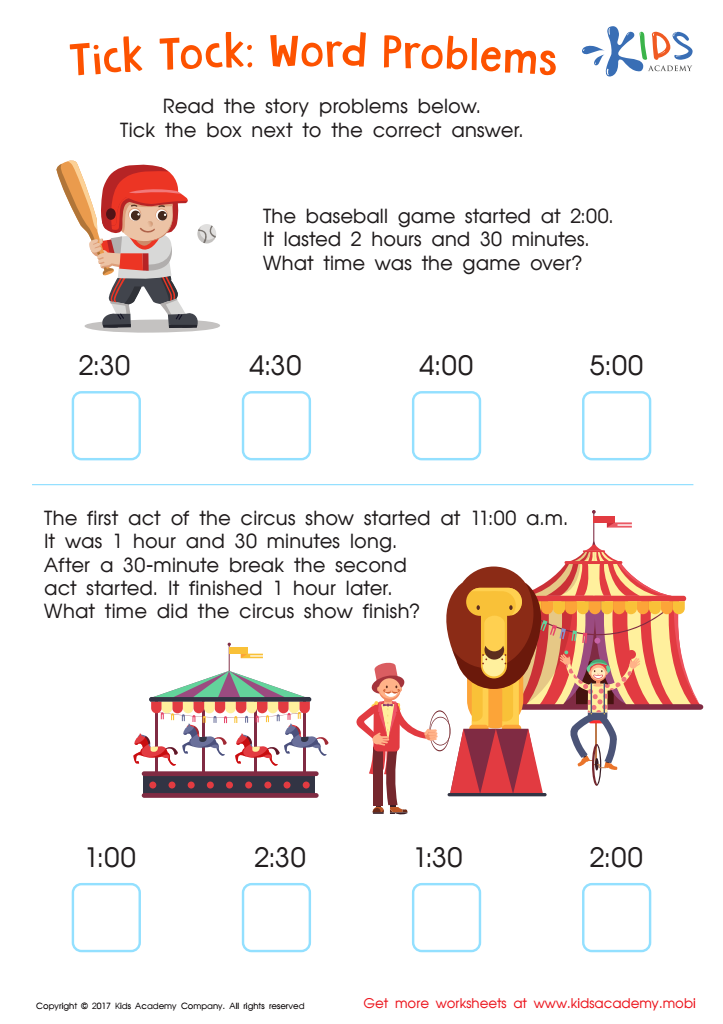
Tick Tock Word Problems Time Worksheet






.jpg)
Time calculation skills are essential for 7-year-olds, as they lay the foundation for various life skills and daily activities. First, understanding how to read clocks and estimate time helps children develop a sense of routine and responsibility. As they learn to manage their time better, they become more independent and capable of handling tasks like homework and daily chores, reducing reliance on parents or guardians.
Moreover, grasping time concepts fosters critical mathematical skills, such as addition and subtraction, which are foundational for more advanced math later on. Children learn to compare and measure intervals of time, which enhances their problem-solving abilities.
Additionally, awareness of time cultivates life skills such as punctuality and planning. Being on time for school, activities, and social events instills discipline and respect for others' time. This not only contributes to better relationships with peers and adults but also prepares them for future commitments.
For all these reasons, parents and teachers should prioritize fostering time calculation skills in 7-year-olds. It is not just about telling time; it's about providing children with tools for personal growth, accountability, and essential life skills that benefit them both in and out of school.








