Understanding biodiversity Worksheets for 7-Year-Olds
3 filtered results
-
From - To
Our "Understanding Biodiversity Worksheets for 7-Year-Olds" are designed to introduce young learners to the fascinating world of biodiversity. Through engaging activities and colorful illustrations, children will discover the importance of different species, ecosystems, and their roles in maintaining a balanced environment. These worksheets enhance critical thinking, observation, and analytical skills in a fun and interactive manner. Ideal for classroom use or at-home learning, each worksheet is crafted to align with educational standards, making science exploration an adventure. Empower your child with knowledge about nature's diversity and instill a lifelong appreciation for the environment.
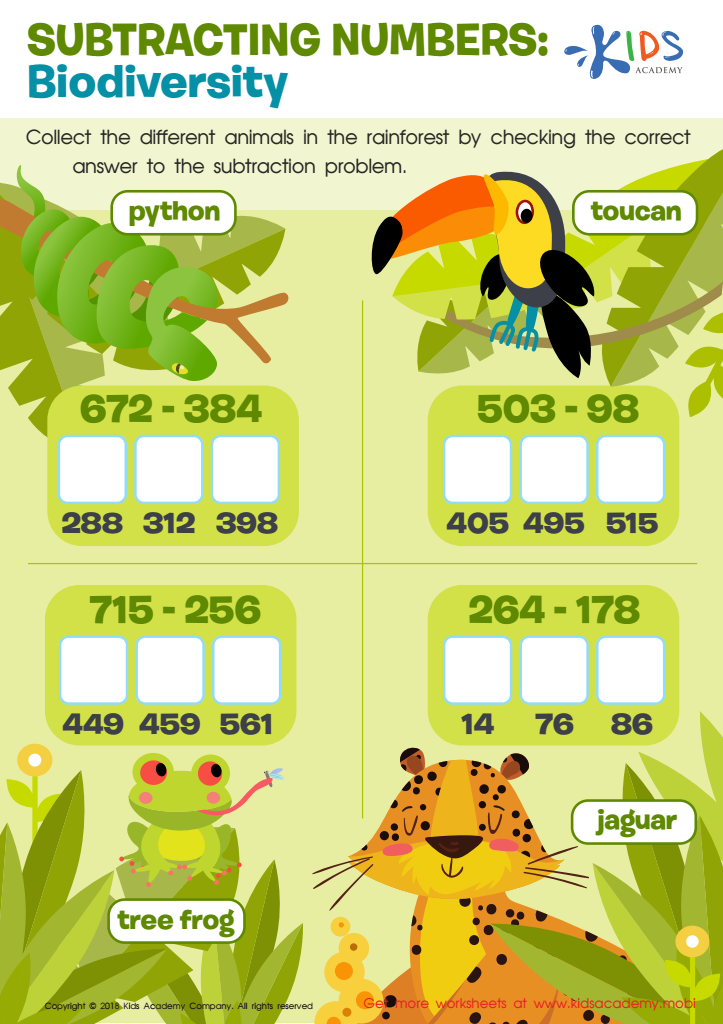
Subtracting Numbers: Biodiversity Worksheet
 Assign to My Students
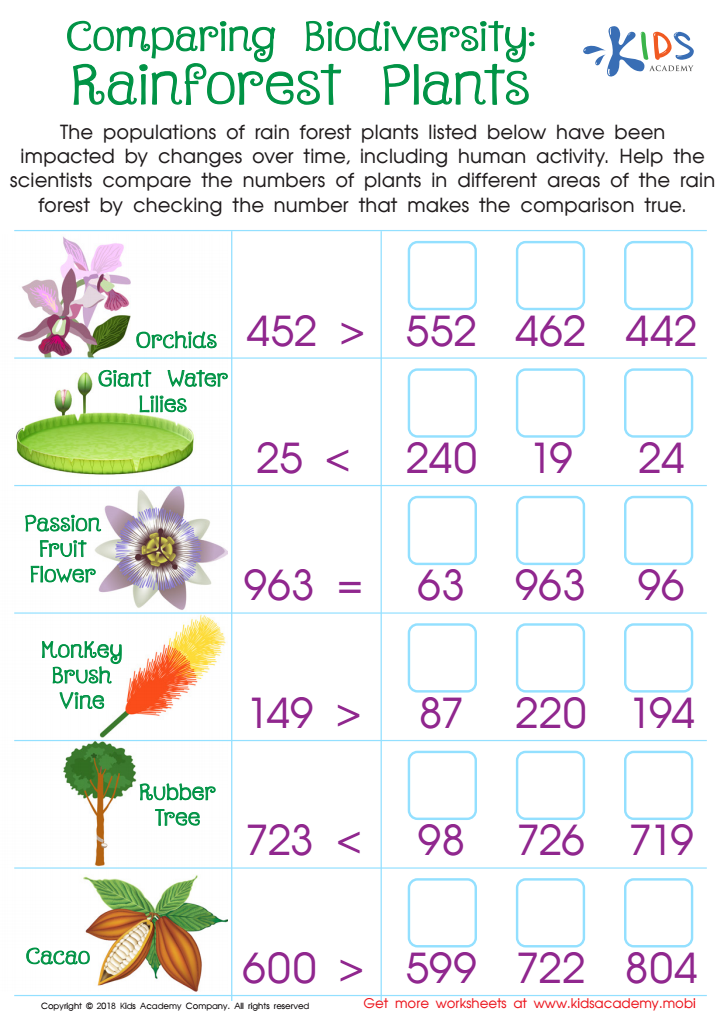
Comparing Biodiversity: Rainforest Plants Worksheet
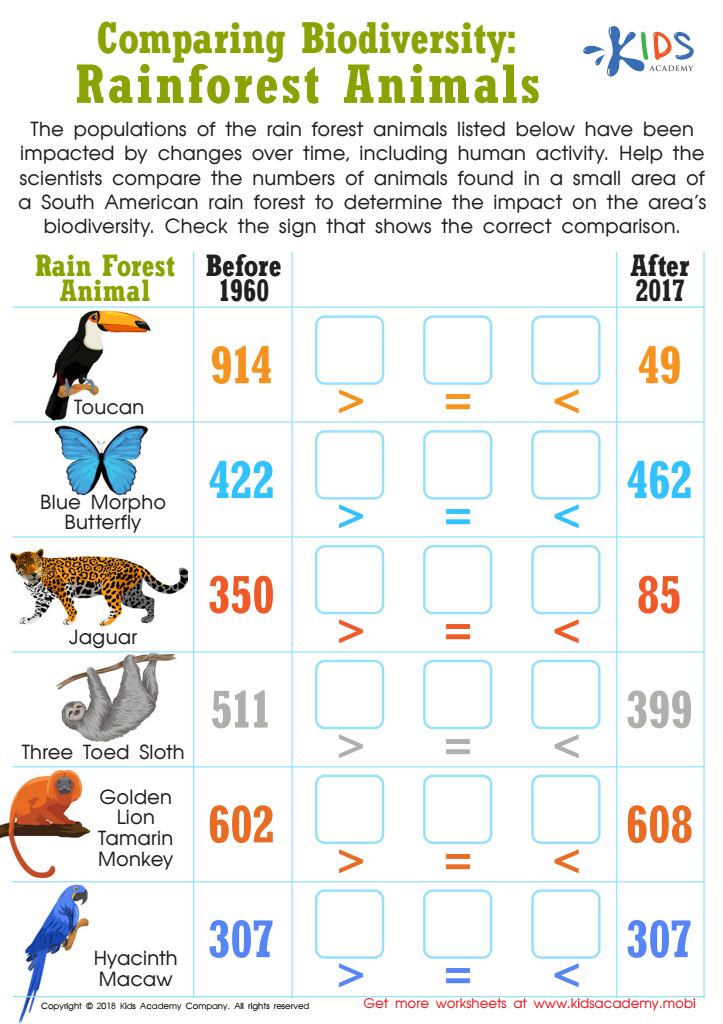
Comparing Biodiversity: Rainforest Animals Worksheet






Understanding biodiversity at a young age is essential because it lays the foundation for respect and appreciation for the natural world. For 7-year-olds, learning about the variety of plant and animal life fuels curiosity and sparks a sense of wonder. This early connection to nature is crucial in fostering environmental stewardship.
Parents and teachers should care because early education in biodiversity can help children grasp the importance of ecosystems and how all living things are interconnected. It teaches kids that every species, no matter how small, plays a vital role in the health of our planet. This understanding promotes empathy and encourages behaviors that protect the environment, such as recycling, conserving water, and protecting wildlife.
Moreover, introducing children to biodiversity aligns with developing critical thinking and observational skills. For example, when children learn how bees pollinate flowers, they're given a practical insight into biological processes, which enhances their overall scientific literacy. This foundational knowledge can spur lifelong enthusiasm for learning and possibly guide some towards careers in science or conservation.
In addition, early exposure to biodiversity reflects broader educational goals—encouraging a holistic understanding of the world, fostering a respectful and caring attitude towards living beings, and preparing them to become informed, responsible citizens who value and protect their environment.








