Understanding equality Worksheets for 7-Year-Olds
3 filtered results
-
From - To
Explore our engaging "Understanding Equality Worksheets" designed specifically for 7-year-olds! These interactive resources help young learners grasp fundamental concepts of equality in a fun and approachable way. Utilizing visual aids and practical examples, the worksheets encourage children to identify equal and unequal sets, recognize patterns, and apply basic mathematical principles. Each activity fosters critical thinking and promotes confidence in problem-solving, making learning enjoyable. Perfect for both classroom and home use, these worksheets aid teachers and parents in nurturing essential math skills while supporting children's cognitive development. Dive in and help your child discover the exciting world of equality today!
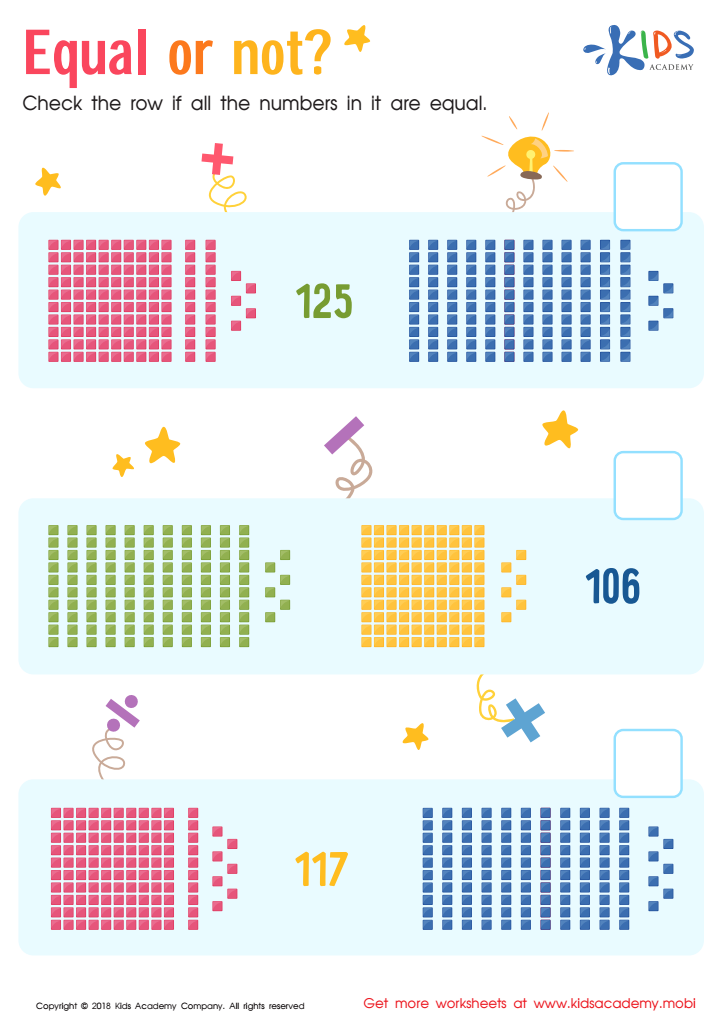
Equal or not Worksheet
 Assign to My Students
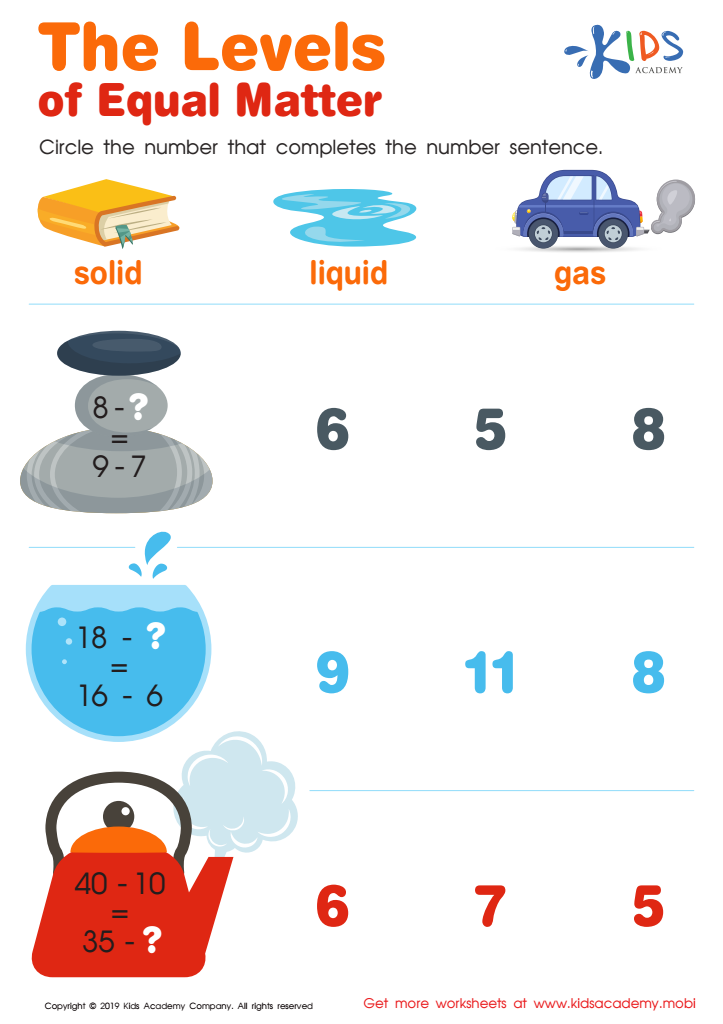
The Levels of Equal Matter Worksheet



.jpg)

Understanding equality is crucial for 7-year-olds as it lays the foundation for their social values and personal development. At this age, children are beginning to form their identities and understand their place in the world. Teaching them about equality fosters an inclusive mindset, helping them appreciate diversity in race, gender, abilities, and backgrounds.
Parents and teachers play a vital role in this learning process. By instilling the principles of fairness and respect, they encourage children to treat others with kindness, challenge biases, and develop empathy. Furthermore, these discussions can increase children's awareness of social issues, making them more socially responsible individuals in the future.
An early understanding of equality also promotes a positive classroom environment. When children recognize the equal worth of their peers, they are less likely to engage in bullying or discrimination. Consequently, this cultivates a space where everyone feels valued and safe, enhancing their emotional and academic growth.
In essence, teaching children about equality is not only about promoting fairness but also about nurturing informed and compassionate citizens. This lifelong understanding and commitment can lead to healthier communities and a more equitable society overall.








