Understanding graphs Worksheets for 7-Year-Olds
4 filtered results
-
From - To
Discover our "Understanding Graphs Worksheets for 7-Year-Olds" designed to make learning about data fun and engaging! These printable activities help young learners grasp essential graph concepts, including bar graphs, pictographs, and line graphs. Each worksheet is tailored to encourage critical thinking and enhance analytical skills through colorful visuals and relatable examples. Children will practice interpreting data, answering questions, and drawing their graphs, all while developing confidence in their mathematical abilities. Perfect for classroom or home use, our resources provide a great way to introduce key mathematical concepts while keeping learning enjoyable. Download and watch your child excel in understanding graphs!
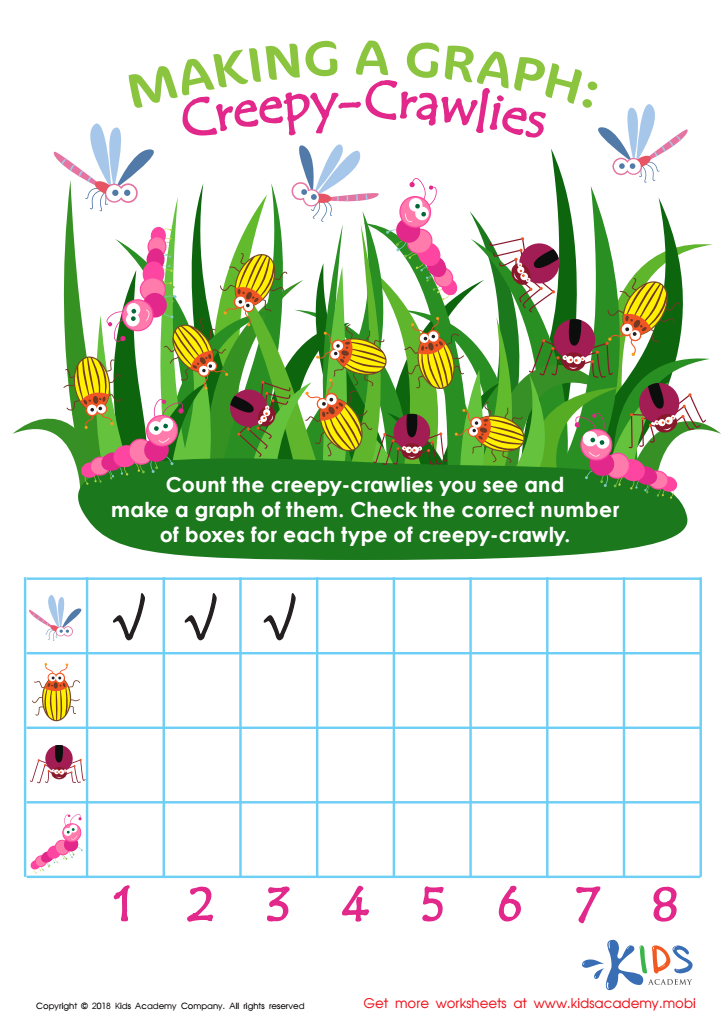
Making a Graph: Creepy Crawlies Worksheet
 Assign to My Students
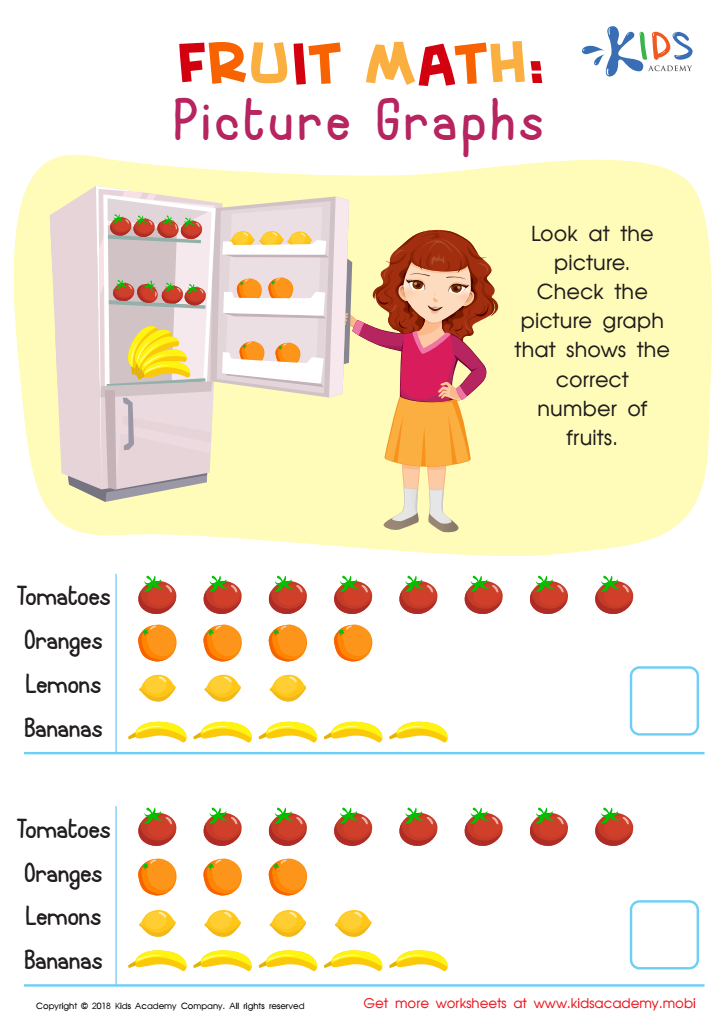
Fruit Math: Picture Graphs Worksheet
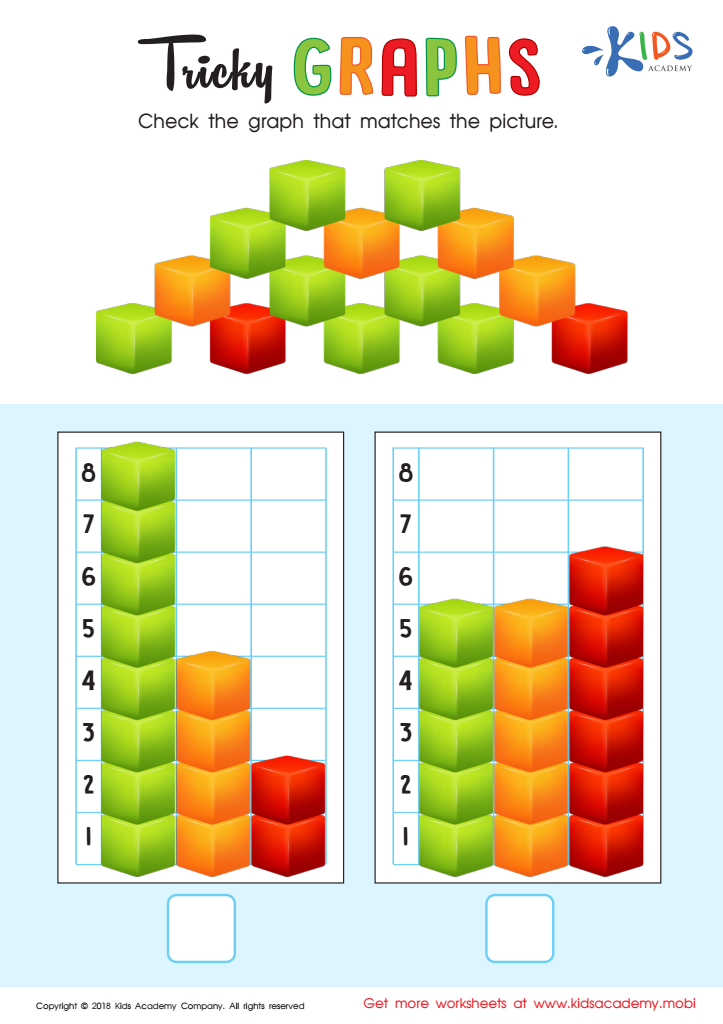
Tricky Graphs Worksheet
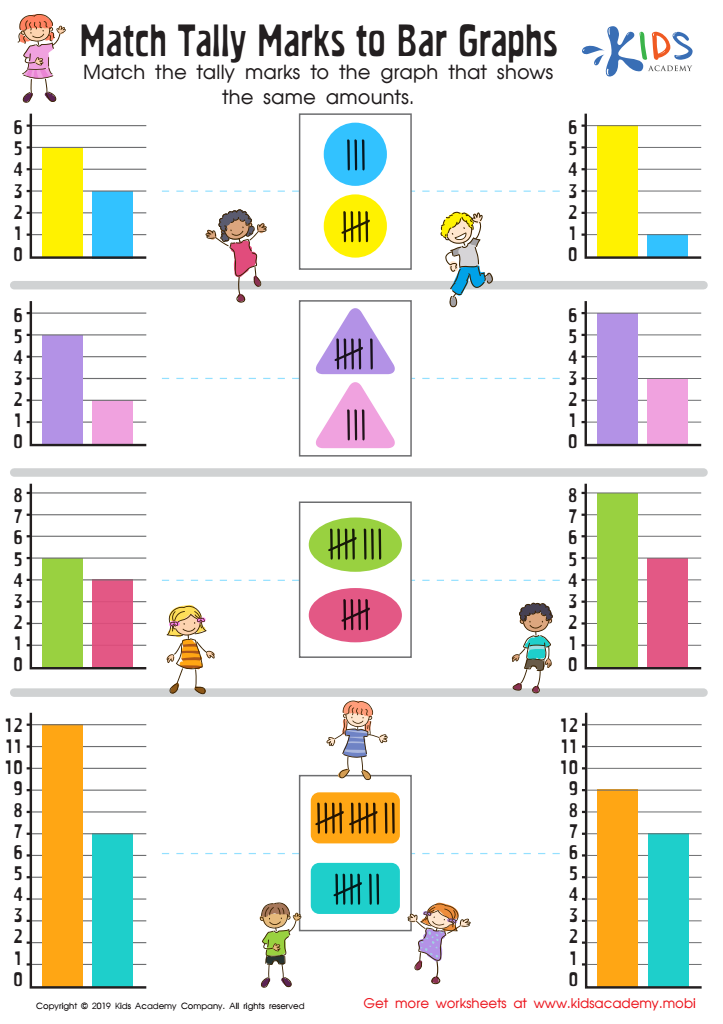
Match Tally Marks to Bar Graphs Worksheet







Understanding graphs is an essential skill for 7-year-olds, and parents and teachers should prioritize this learning for several reasons. First, graphs provide a visual way to represent information, making complex concepts easier for children to grasp. By interpreting graphs, kids learn to analyze data, recognize patterns, and draw meaningful conclusions—all fundamental skills in today's data-driven world.
Secondly, understanding graphs fosters critical thinking. As children learn to compare different sets of data, such as the temperatures on different days or the number of fruits in a basket, they enhance their ability to make informed decisions based on evidence. This skill extends beyond math; it is instrumental in science, social studies, and even daily life scenarios.
Moreover, graphs enhance communication skills. Through discussing and presenting graph-based findings, children learn to articulate their observations clearly and confidently. This ability is crucial as they transition into higher grades and engage in more collaborative learning experiences.
Lastly, promoting graph literacy can spark curiosity about real-world applications—such as tracking sports statistics or weather changes—that can make learning more relatable and enjoyable. Encouraging this understanding early lays a strong foundation for lifelong learning and engagement with mathematics and science.








