
Understanding quantity Worksheets for 7-Year-Olds
8 filtered results
Difficulty Level
Grade
Age
-
From - To
Subject
Activity
Standards
Elevate your child's math skills with our "Understanding Quantity Worksheets for 7-Year-Olds." These engaging, age-appropriate activities are designed to help first and second graders grasp essential concepts like counting, comparing, and ordering numbers. Each worksheet combines fun illustrations and practical exercises to make learning enjoyable and effective. Ideal for classroom use or at-home practice, these worksheets build a solid foundation for your child's numeracy development. Boost their confidence and make understanding quantity a breeze. Visit Kids Academy to access these valuable resources and support your child's journey to math mastery!
Favorites
With answer key
Interactive
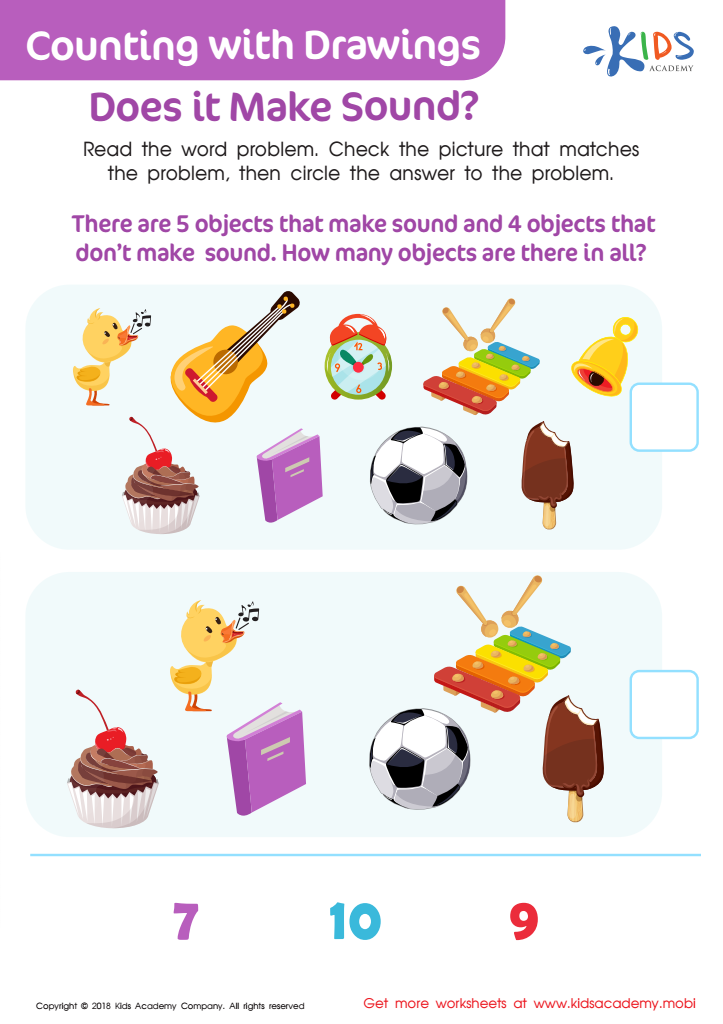
Counting With Drawings. Does It Make Sound? Worksheet
Introduce word problems with this simple worksheet. Ask your students to name the objects pictured, then read the word problem and ask them to circle the answer. With practice, it'll help them scale this challenging area of math.
 Assign to My Students
Counting With Drawings. Does It Make Sound? Worksheet
Worksheet
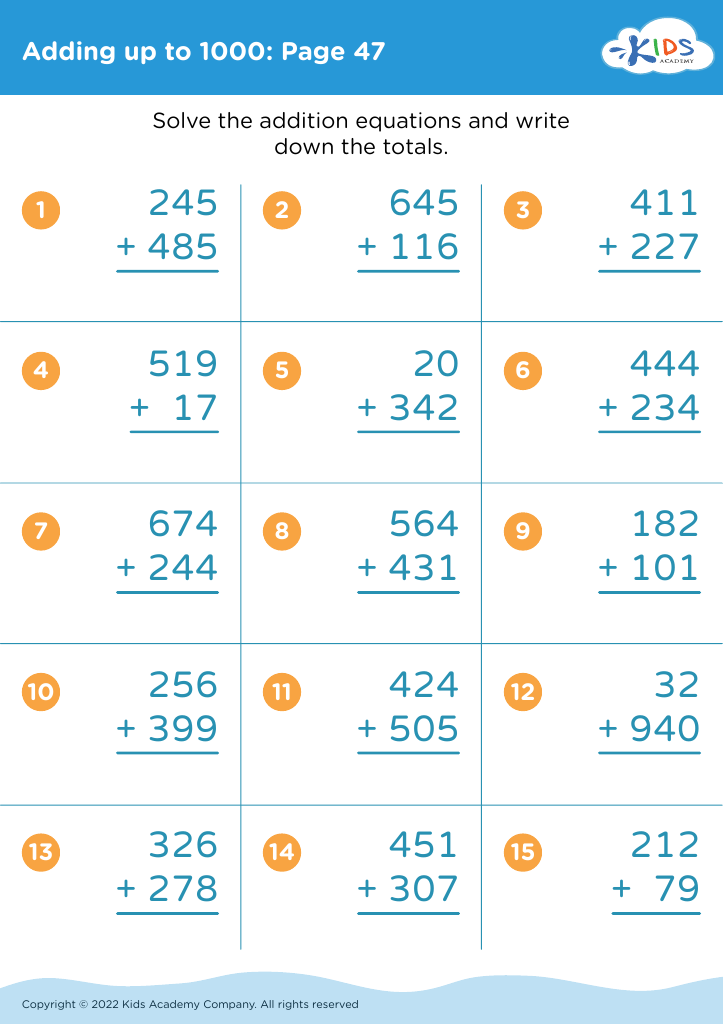
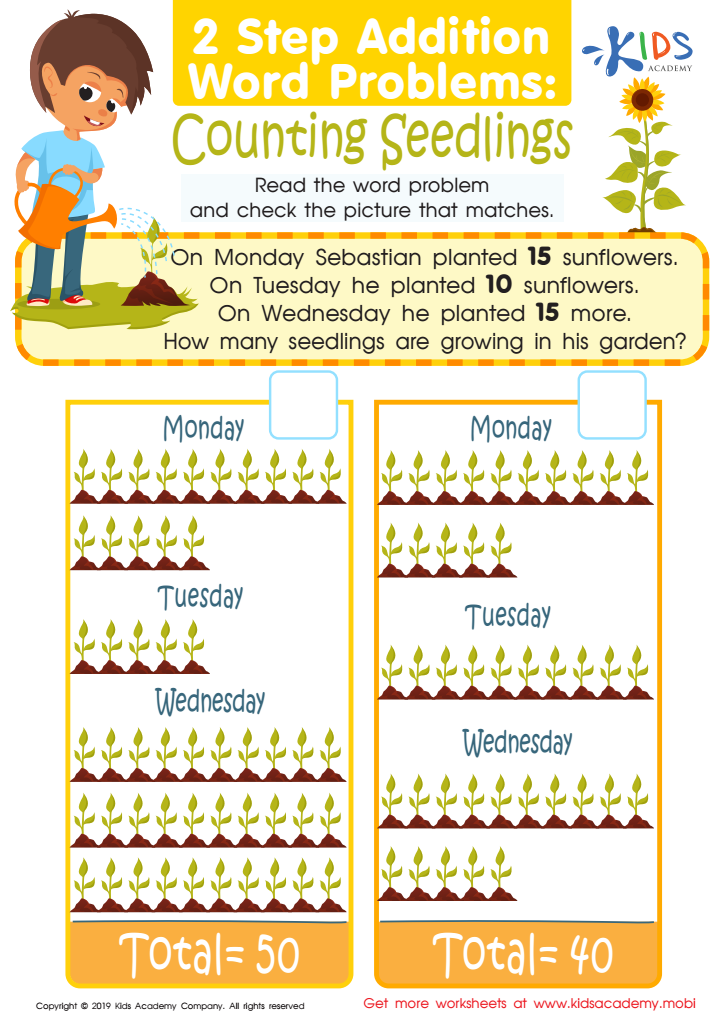
Counting Seedlings Worksheet
Understanding math word problems is key. Multiple steps can prove challenging - this free worksheet provides one-to-one picture representation to help kids solve multi-step addition word problems. Strengthen addition skills by choosing the matching picture to the answer.
Counting Seedlings Worksheet
Worksheet
Join Kids Academy for Free
Who is primarily going to use this learning content?





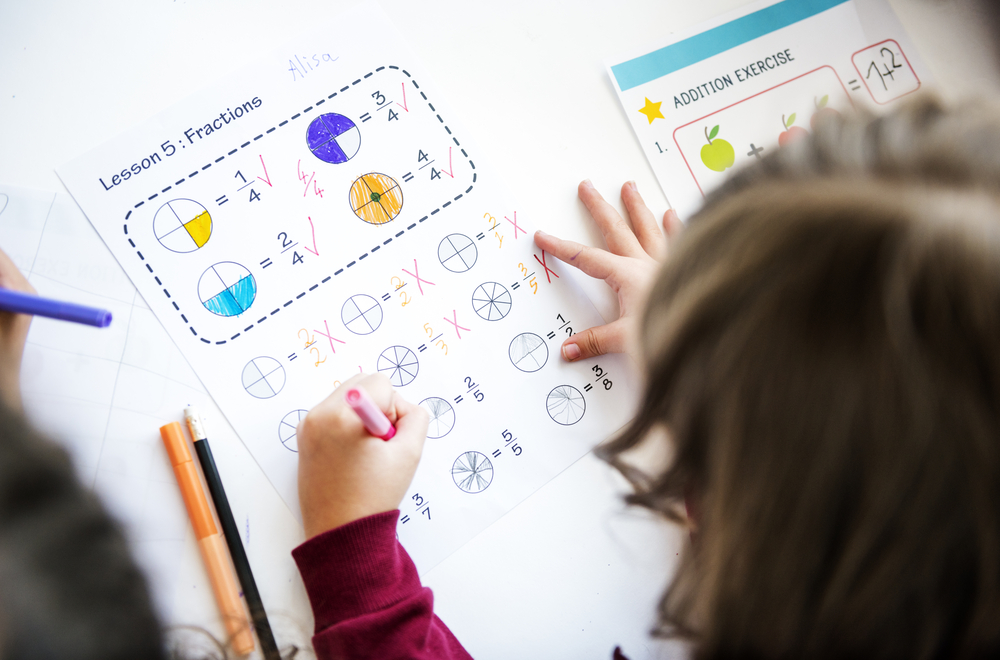


Understanding quantity is crucial for 7-year-olds because it lays the foundation for essential math skills and real-world problem solving. At this age, children are in a critical period of cognitive development where they refine their number sense. Grasping the concept of quantity helps them to better understand addition, subtraction, multiplication, and division, which are vital for more advanced mathematical concepts they'll encounter later.
When children comprehend quantity, they can make sense of the world around them. For instance, they can figure out how many apples are in a basket or how much time is left until recess. This skill enhances their ability to compare, measure, and make informed decisions, promoting logical and critical thinking.
For teachers, emphasizing quantity in their curriculum encourages active learning and engagement, making math more relatable and less intimidating. For parents, reinforcing these concepts at home provides consistent and supportive learning opportunities. Engaging in activities such as cooking, shopping, or playing games involving counting and measurement can make learning about quantity both fun and practical.
Overall, understanding quantity supports academic success and equips children with skills necessary for everyday life, building confidence and proficiency in their mathematical ability. This shared effort between parents and teachers creates a solid framework for lifelong learning and problem-solving.








