Understanding Rhymes Worksheets for 7-Year-Olds
3 filtered results
-
From - To
Unlock your child's potential with our "Understanding Rhymes Worksheets for 7-Year-Olds"! These engaging worksheets are designed to make learning fun and effective, helping young minds grasp the concepts of rhymes and phonics. Each worksheet includes interactive activities that facilitate phonemic awareness and enhance reading fluency. Perfect for home or classroom use, our resources stimulate critical thinking and creativity. Through vibrant visuals and captivating exercises, children will develop a love for reading and poetry. Foster a strong linguistic foundation for your child today with our expertly crafted rhyming worksheets!
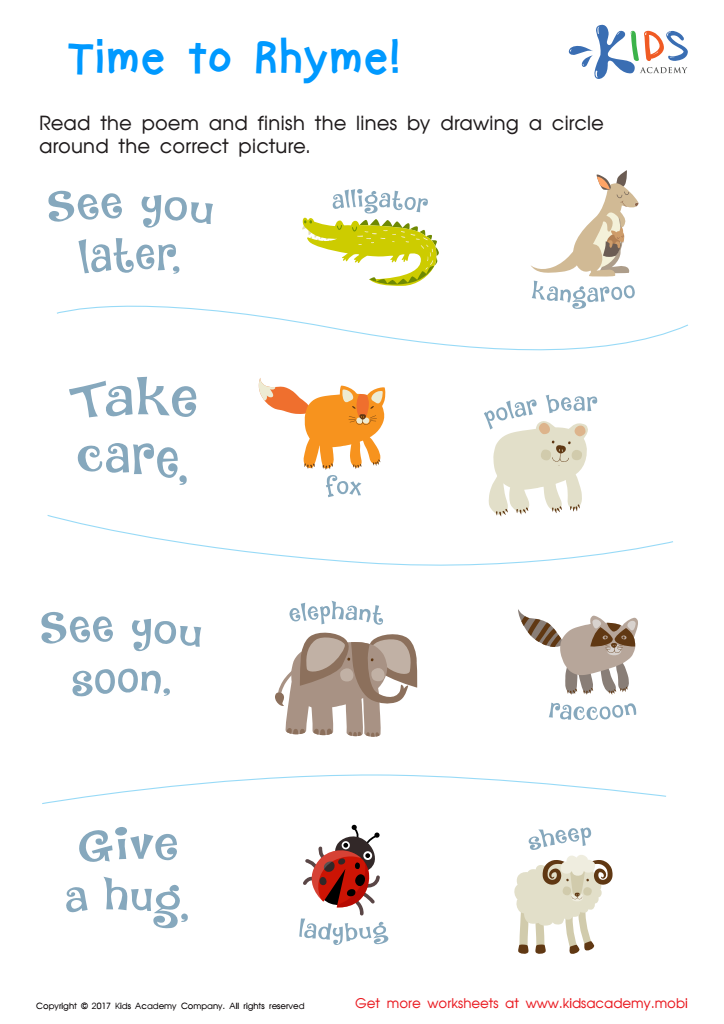
Time to Rhyme Rhyming Worksheet
 Assign to My Students
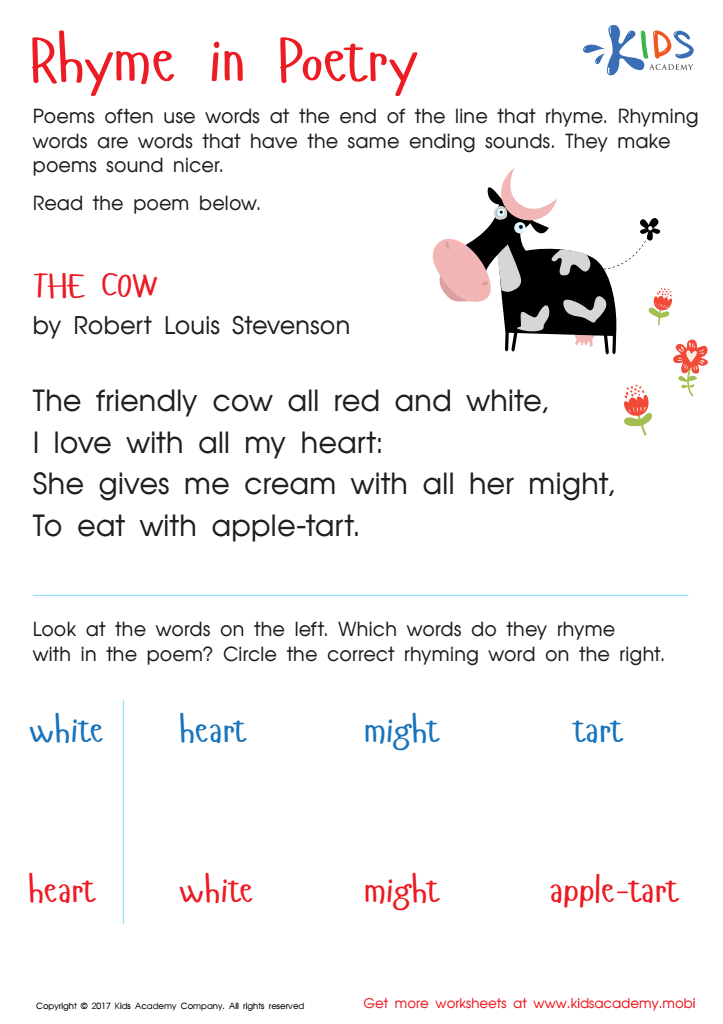
Rhyme In Poetry Worksheet




.jpg)


Understanding rhymes is vital for 7-year-olds and deserves the attention of both parents and teachers due to its profound impact on language development and cognitive growth. At this age, children are honing their phonological awareness skills, and engaging with rhymes can significantly enhance these abilities. Rhyming helps children tune into the sounds of words, making it easier for them to decode new words when reading and to spell words more accurately.
Rhymes also bolster memory and recall. The repetitive and rhythmic nature of rhyming stories, poems, and songs aids in reinforcing new vocabulary and concepts in a fun, memorable manner. This mnemonic aid can be particularly effective in helping children remember the sequence of events in a story or even mathematical facts and patterns.
Additionally, rhymes foster a love for reading and listening, as they often come in the form of engaging and enjoyable literary genres such as nursery rhymes, Dr. Seuss books, and playful songs. Cultivating this enjoyment early on encourages a lifelong interest in literature.
Moreover, the social interaction and bonding time gained during shared rhyming activities, whether at home or in the classroom, strengthen relationships and create a supportive learning environment. Thus, engaging with rhymes is not merely an academic exercise but a holistic developmental tool.








