Basic Math Skills Adding up to 100 Without Regrouping Worksheets for 7-Year-Olds
4 filtered results
-
From - To
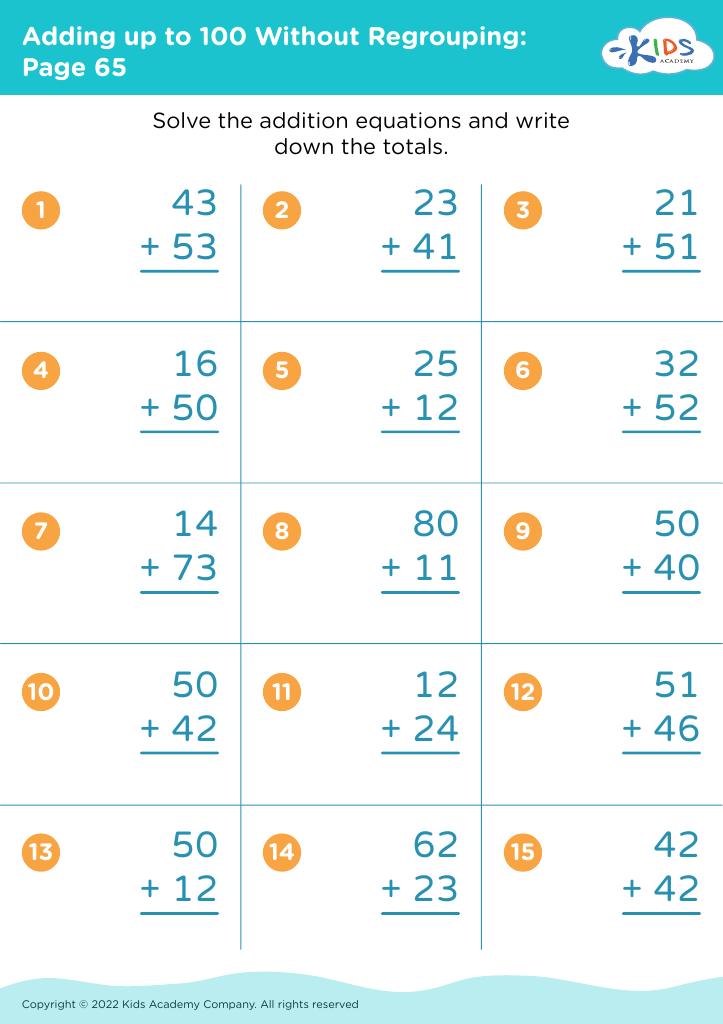
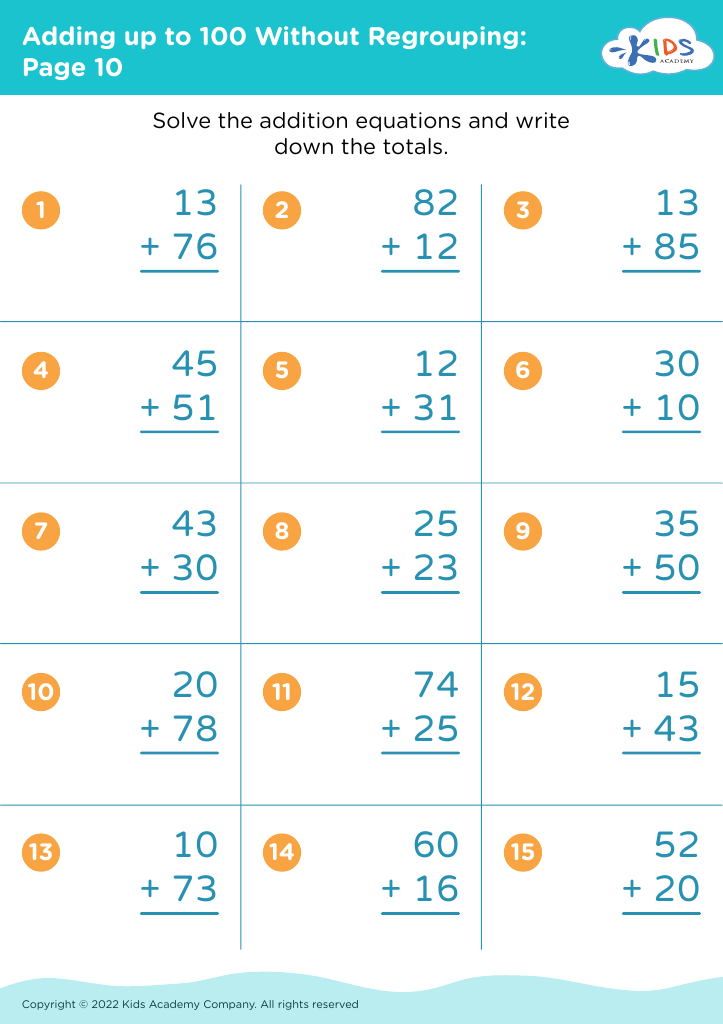
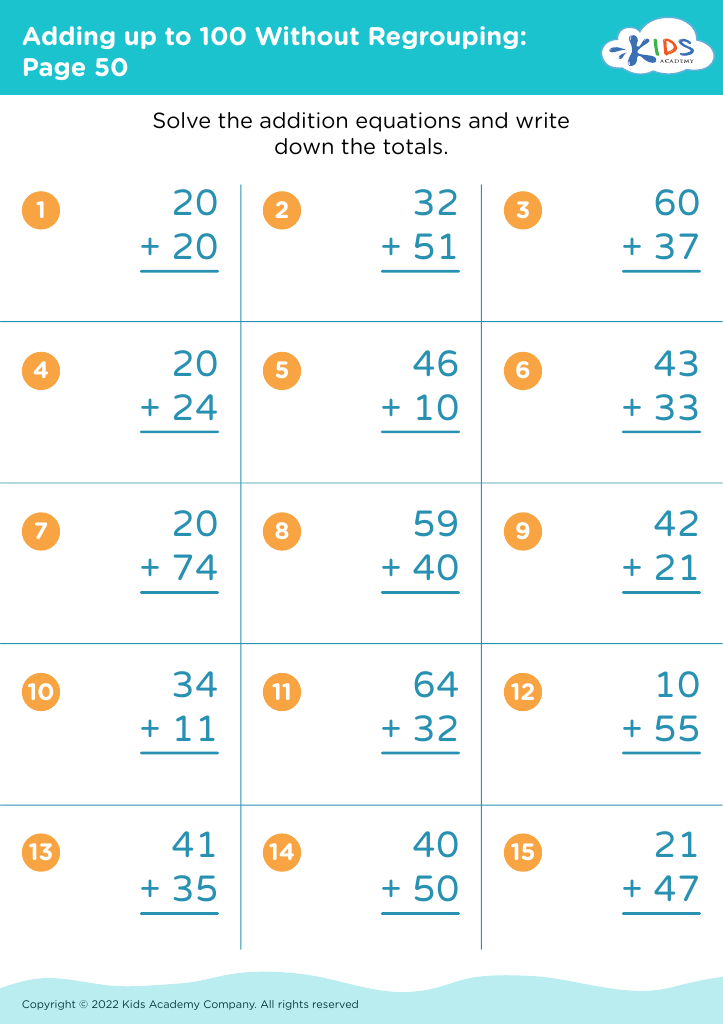
Unlock your child’s math potential with our "Basic Math Skills Adding Up to 100 Without Regrouping Worksheets" designed specifically for 7-year-olds. These engaging worksheets introduce young learners to fundamental addition skills, allowing them to practice sums up to 100 without the complexity of regrouping. Each worksheet is crafted to boost confidence and reinforce understanding through clear, age-appropriate exercises. With a mix of fun visuals and practical problems, children will enjoy enhancing their numerical fluency while building a strong foundation for future math concepts. Ideal for classroom practice or home learning, these worksheets will empower your child to add up with ease!
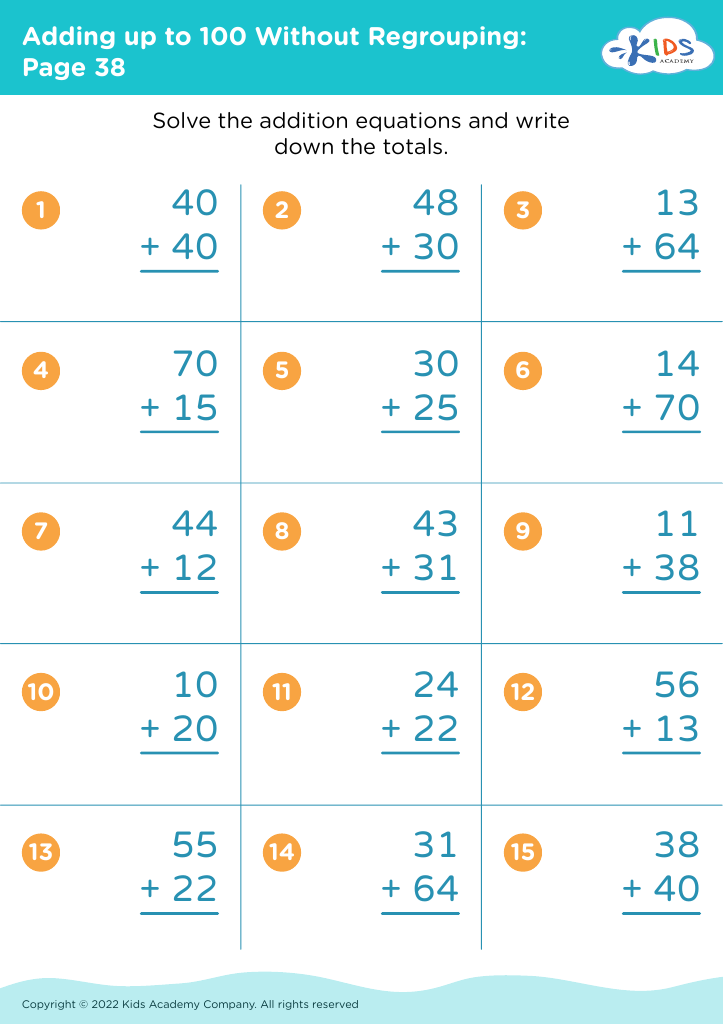




Teaching 7-year-olds basic math skills, particularly adding up to 100 without regrouping, is crucial for several reasons. First, mastering this foundational concept fosters confidence and an enthusiastic attitude toward math. Children at this age often become intimidated by mathematical concepts, so ensuring they can perform addition easily helps prevent math anxiety later in life.
Additionally, strong basic math skills serve as a stepping stone to more complex mathematical operations. By mastering simple addition, children improve their ability to solve word problems, understand the concepts of larger numbers, and grasp the intricacies of multiplication and division in future grades. Developing computational fluency enhances problem-solving skills and critical thinking, which are essential for academic success across subjects.
Furthermore, these skills impact everyday life. Understanding how to addup allows children to engage in practical situations, such as counting money, telling time, and estimating sums in real-world contexts. Lastly, parents and teachers play an integral role in creating supportive environments that facilitate learning. When they prioritize these basic math skills, they equip children with necessary tools for lifelong learning, fostering a love for mathematics and empowering them for future educational journeys.