Understanding fractions Adding up to 100 Without Regrouping Worksheets for 7-Year-Olds

Filters

19 filtered results

Clear all filters
Favorites
With answer key
Interactive

19 filtered results

Difficulty Level

Grade


Our "Understanding Fractions Adding up to 100 Without Regrouping Worksheets for 7-Year-Olds" are designed to build crucial math skills in young learners. These engaging worksheets help children grasp the concept of fractions and manage addition problems up to 100 without the need for regrouping. Each activity is crafted to reinforce understanding through fun, age-appropriate exercises that enhance their learning experience. Ideal for classroom use or additional practice at home, these worksheets guide 7-year-olds towards mastering both fractions and addition concepts in a supportive and enjoyable way. Build confidence and skills seamlessly with our expertly designed worksheets!
Check out this FREE Trial Lesson on Adding up to 100 Without Regrouping for age 7!

Exactly the Same, or Not

Favorites
With answer key
Interactive
  • 7
  • Understanding fractions
  • Adding up to 100 Without Regrouping
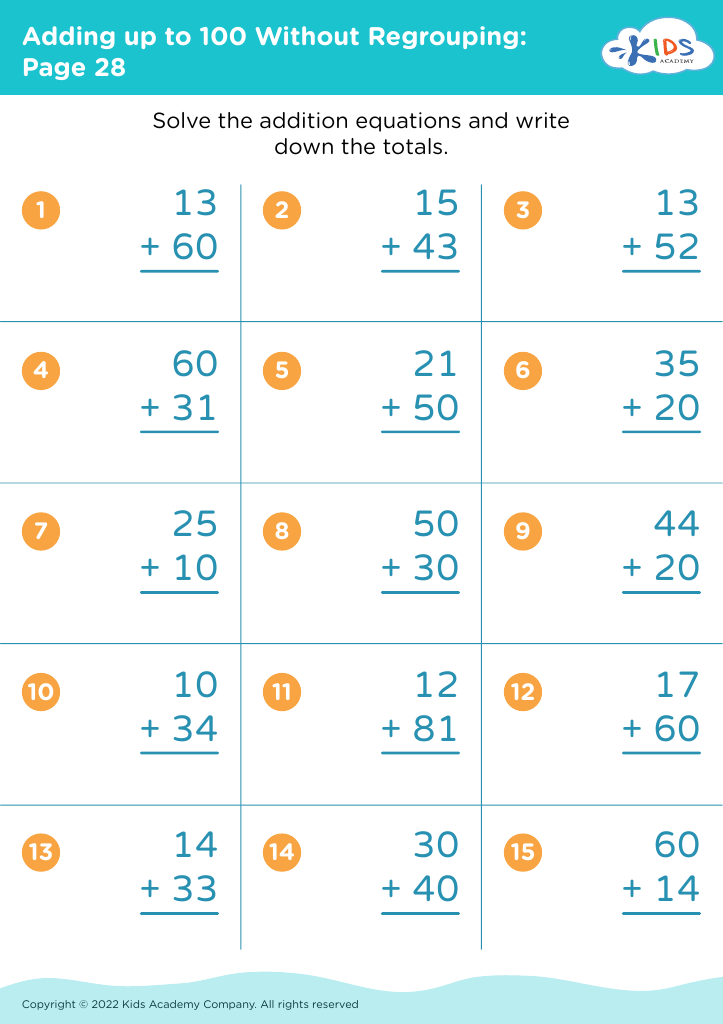
Adding up to 100 Without Regrouping: Page 28
Worksheet
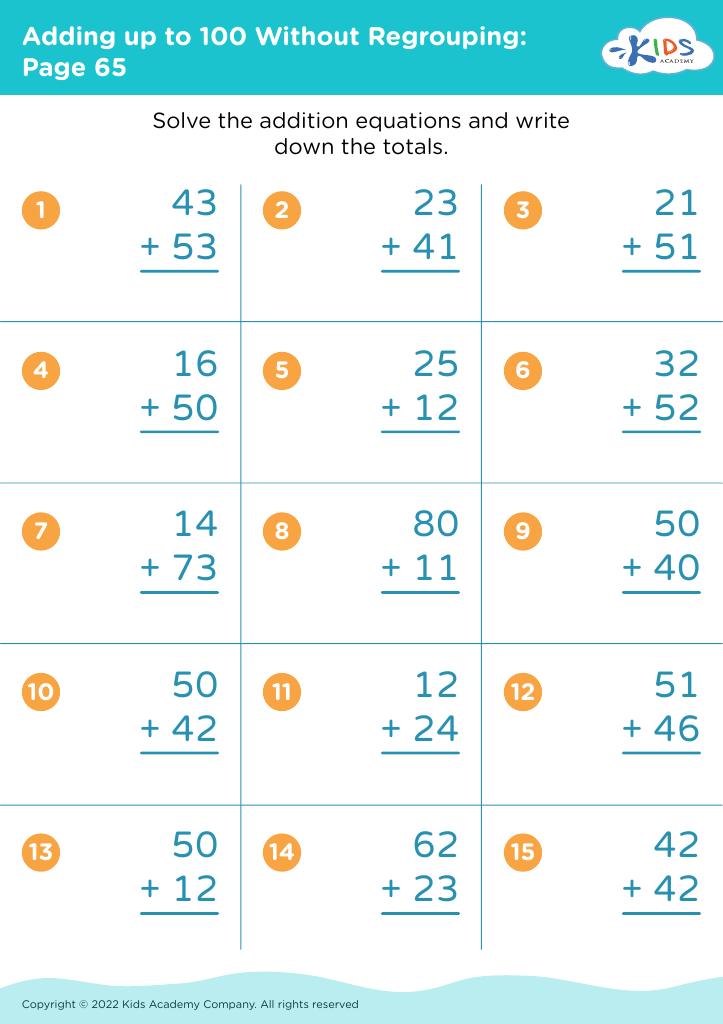
Adding up to 100 Without Regrouping: Page 65
Worksheet
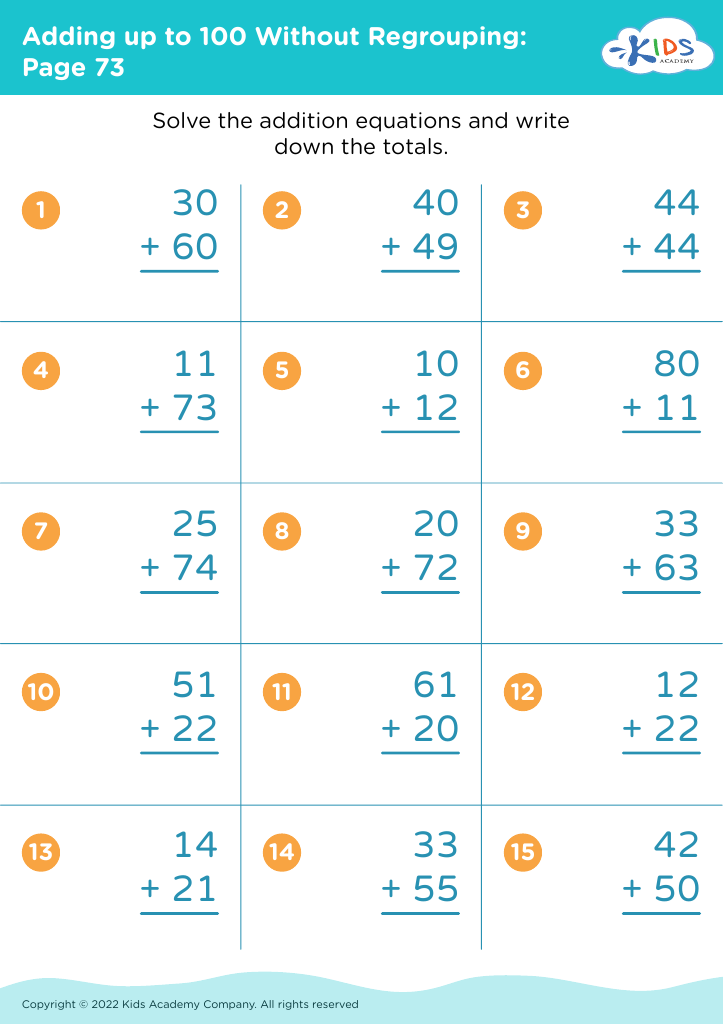
Adding up to 100 Without Regrouping: Page 73
Worksheet
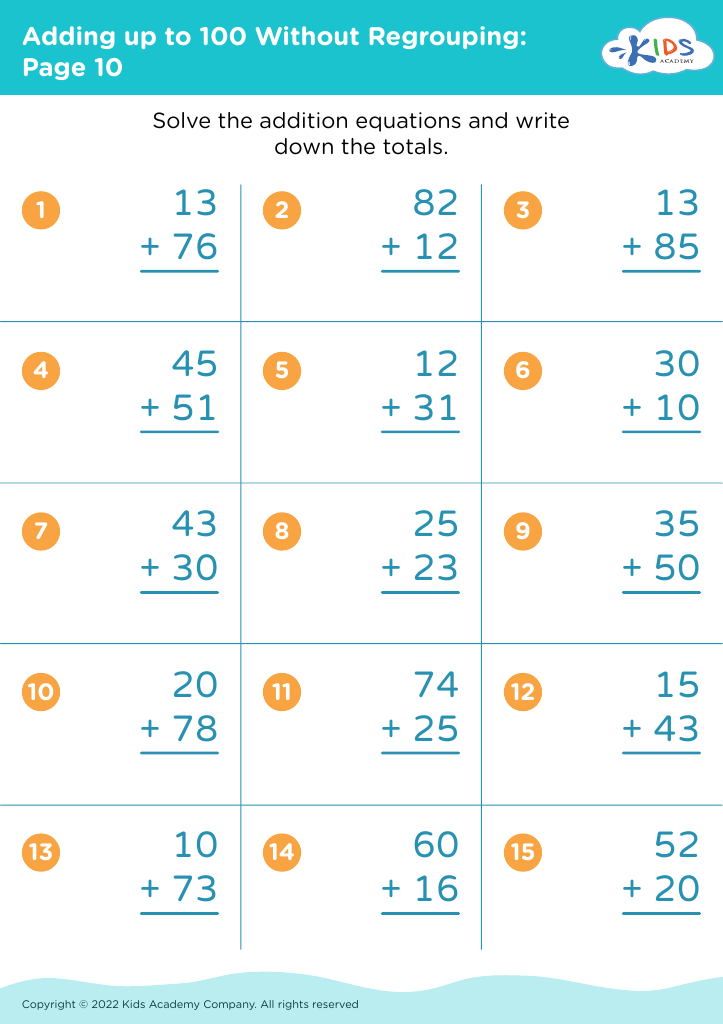
Adding up to 100 Without Regrouping: Page 10
Worksheet
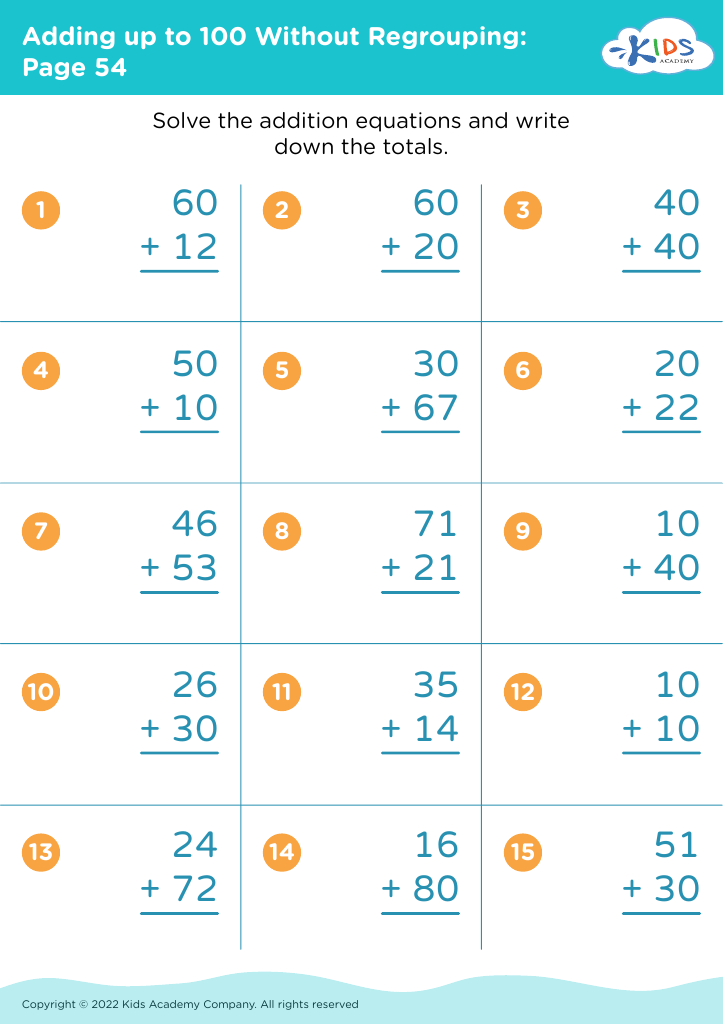
Adding up to 100 Without Regrouping: Page 54
Worksheet
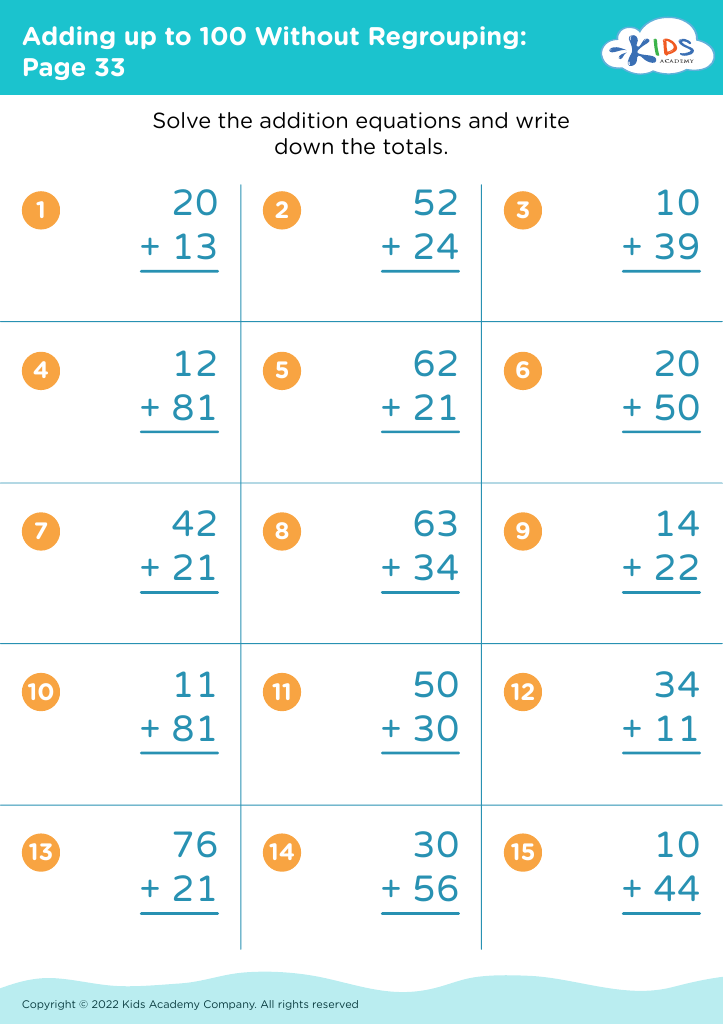
Adding up to 100 Without Regrouping: Page 33
Worksheet
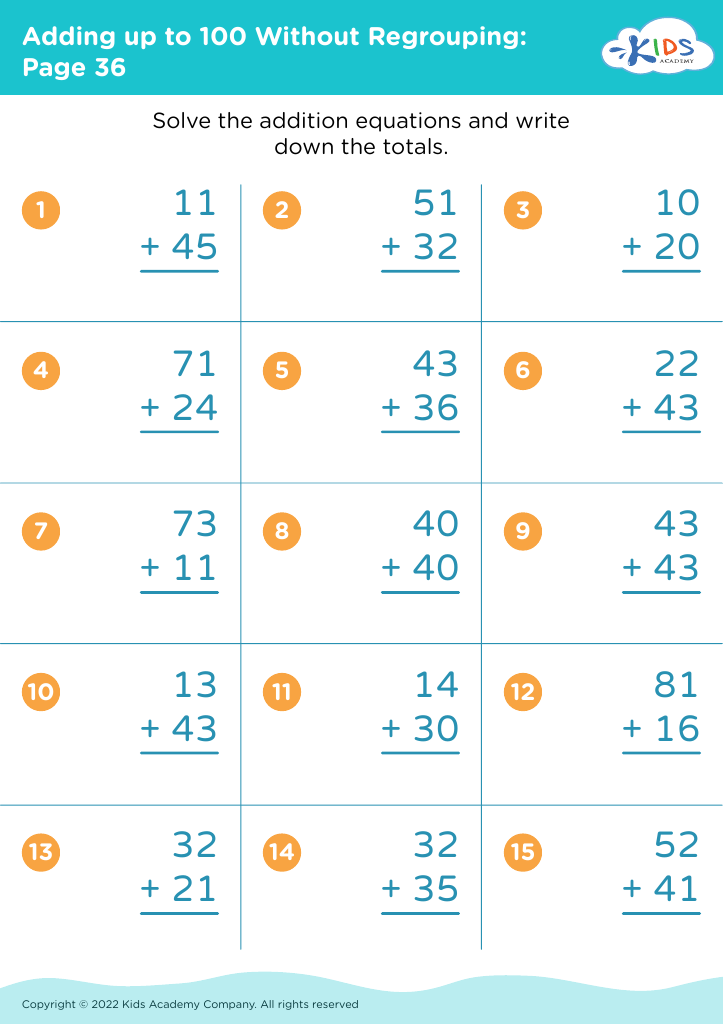
Adding up to 100 Without Regrouping: Page 36
Worksheet
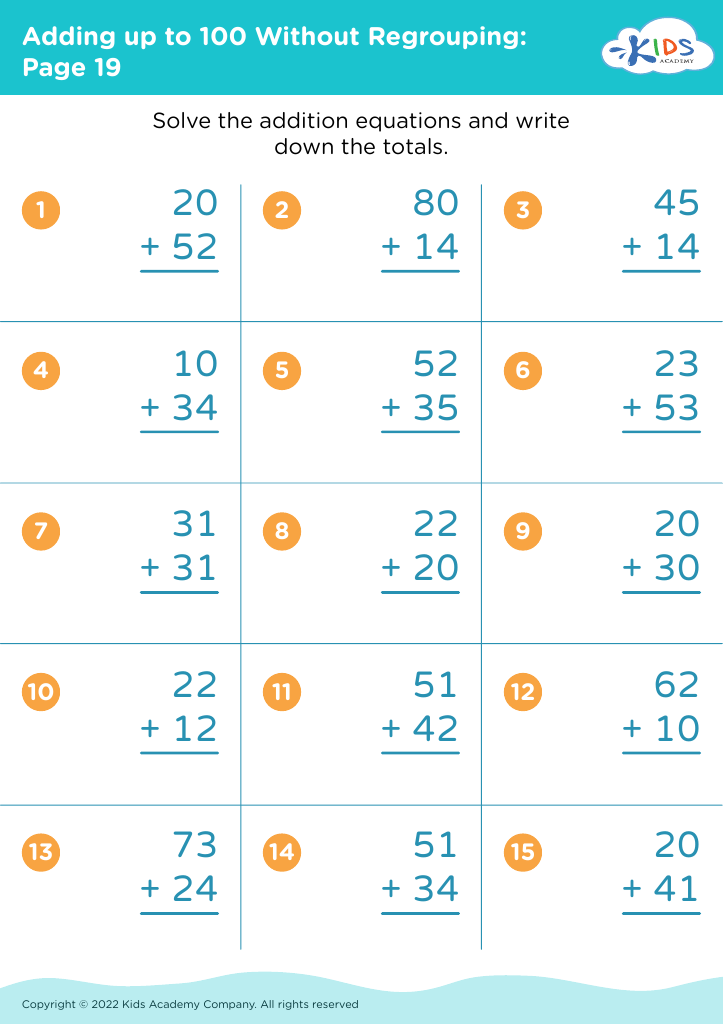
Adding up to 100 Without Regrouping: Page 19
Worksheet
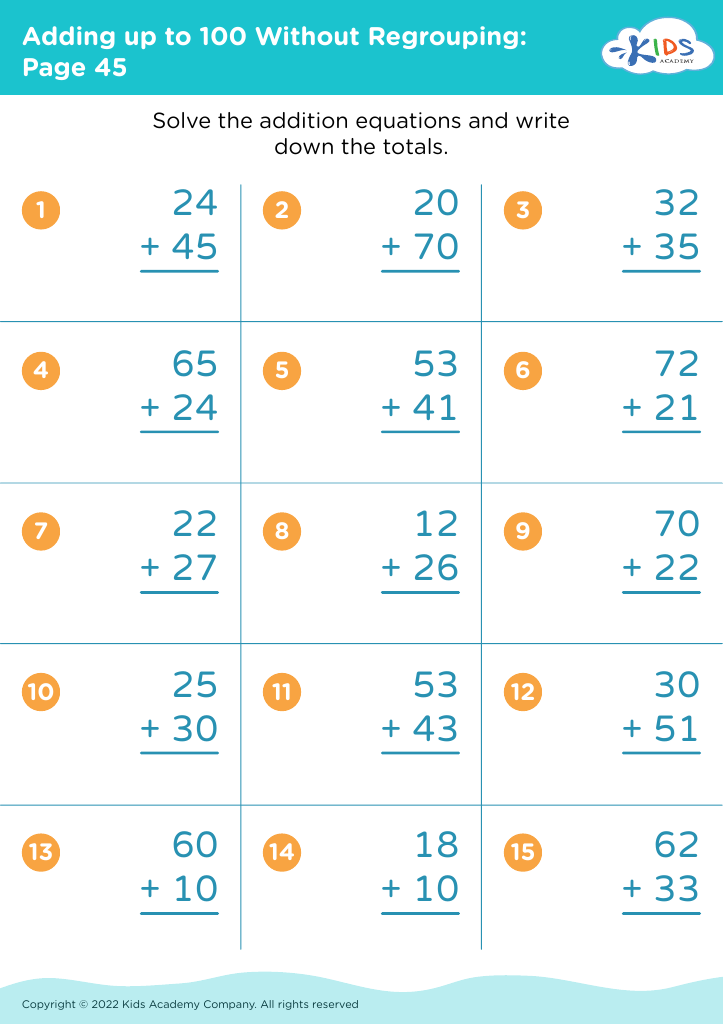
Adding up to 100 Without Regrouping: Page 45
Worksheet
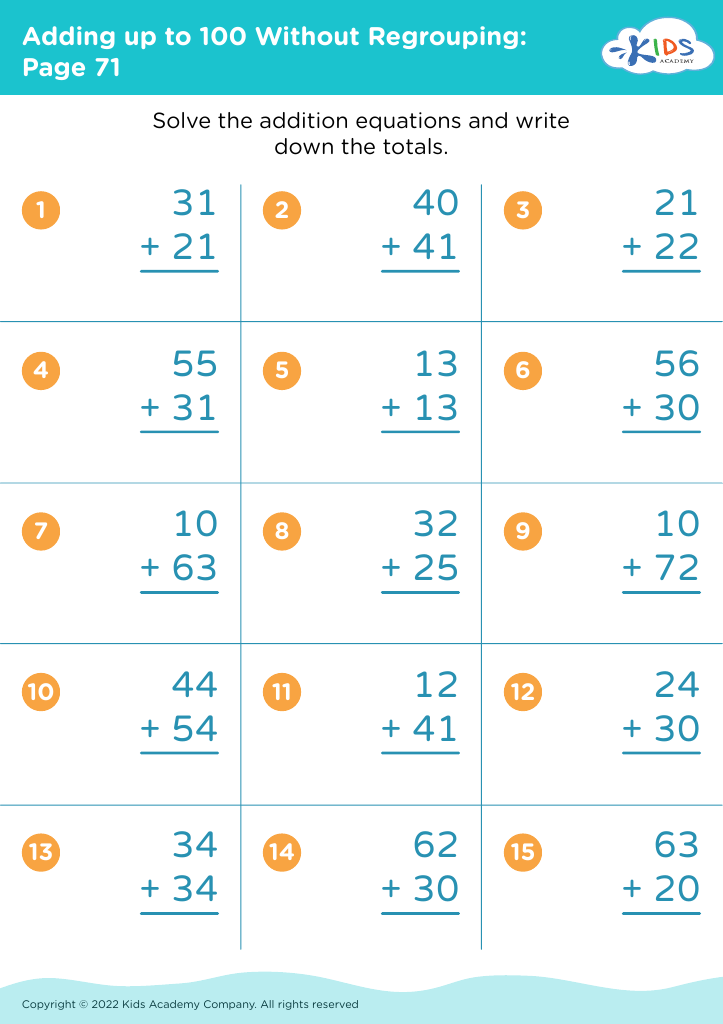
Adding up to 100 Without Regrouping: Page 71
Worksheet
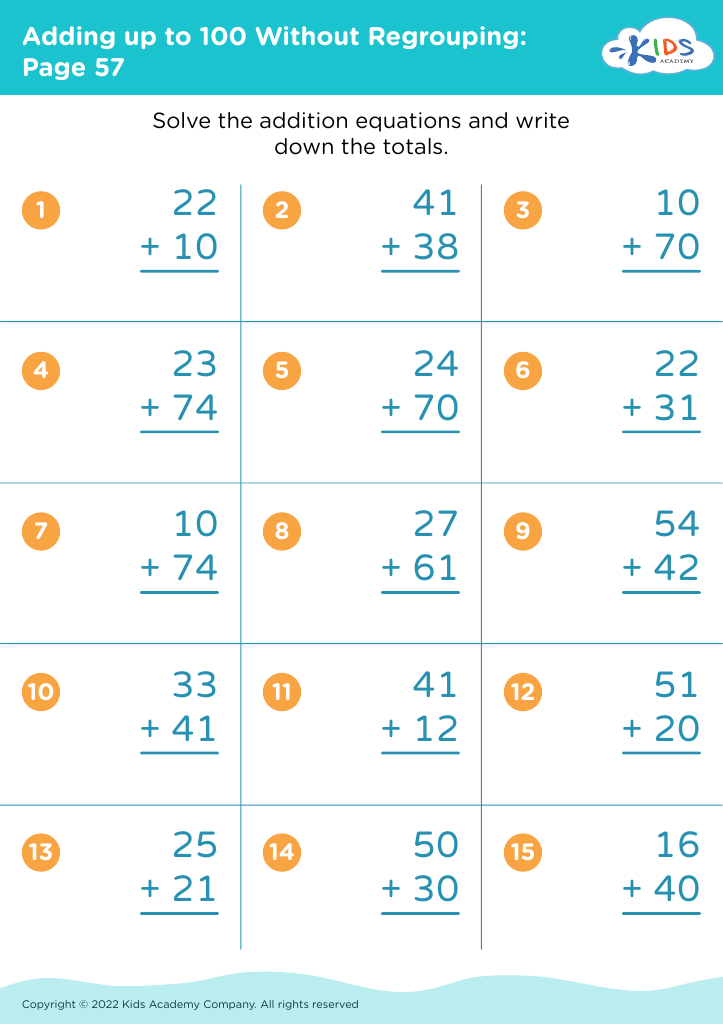
Adding up to 100 Without Regrouping: Page 57
Worksheet
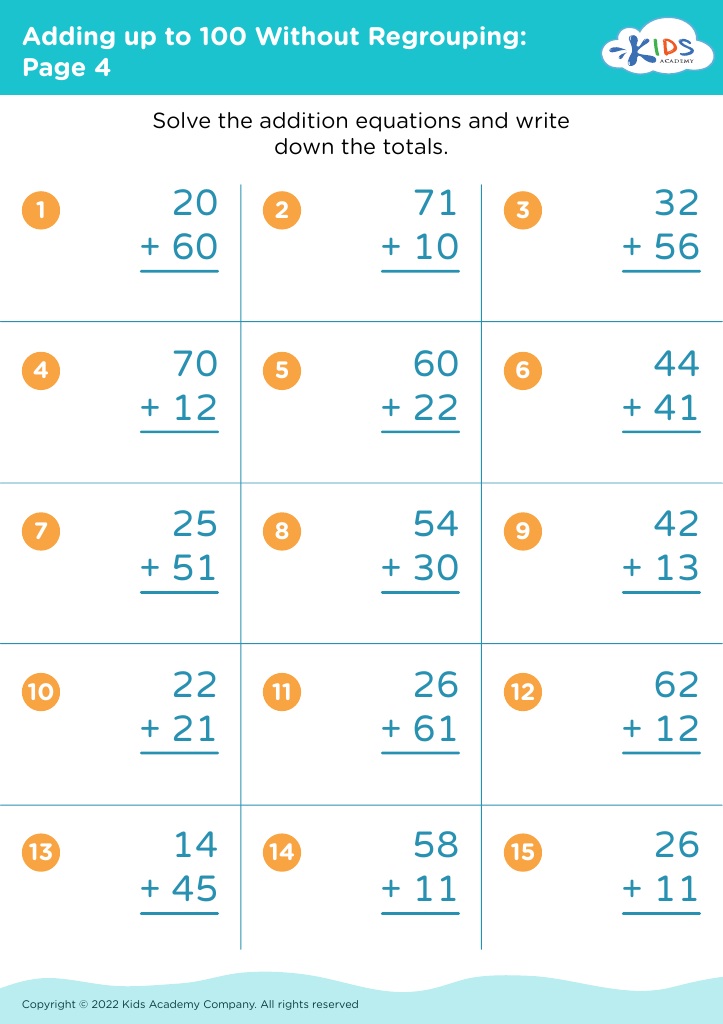
Adding up to 100 Without Regrouping: Page 4
Worksheet
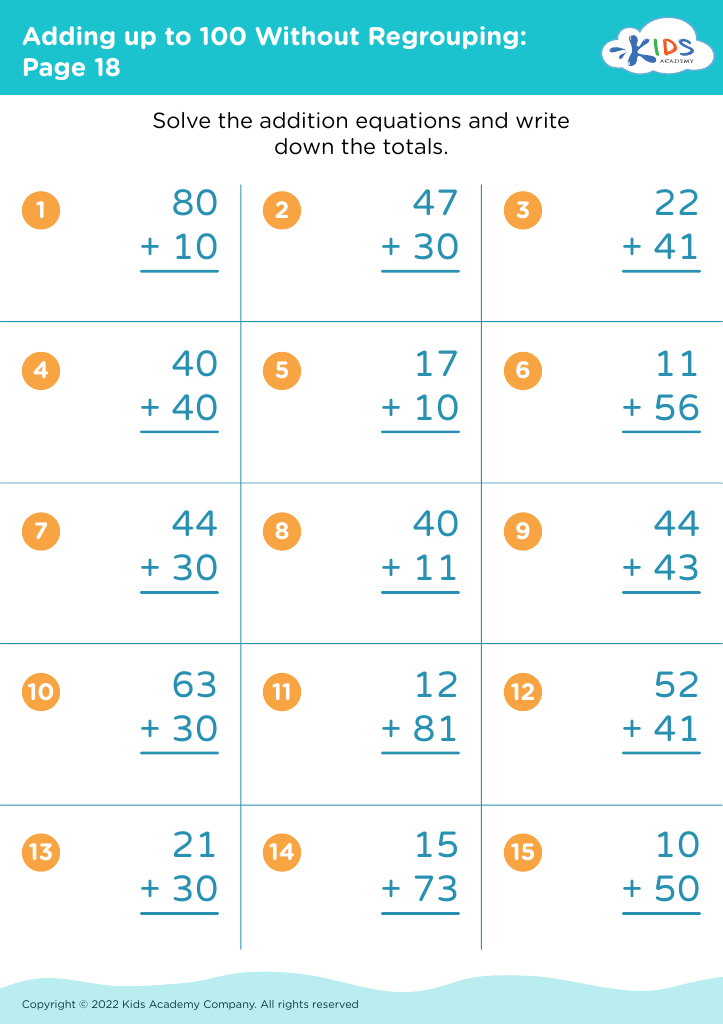
Adding up to 100 Without Regrouping: Page 18
Worksheet
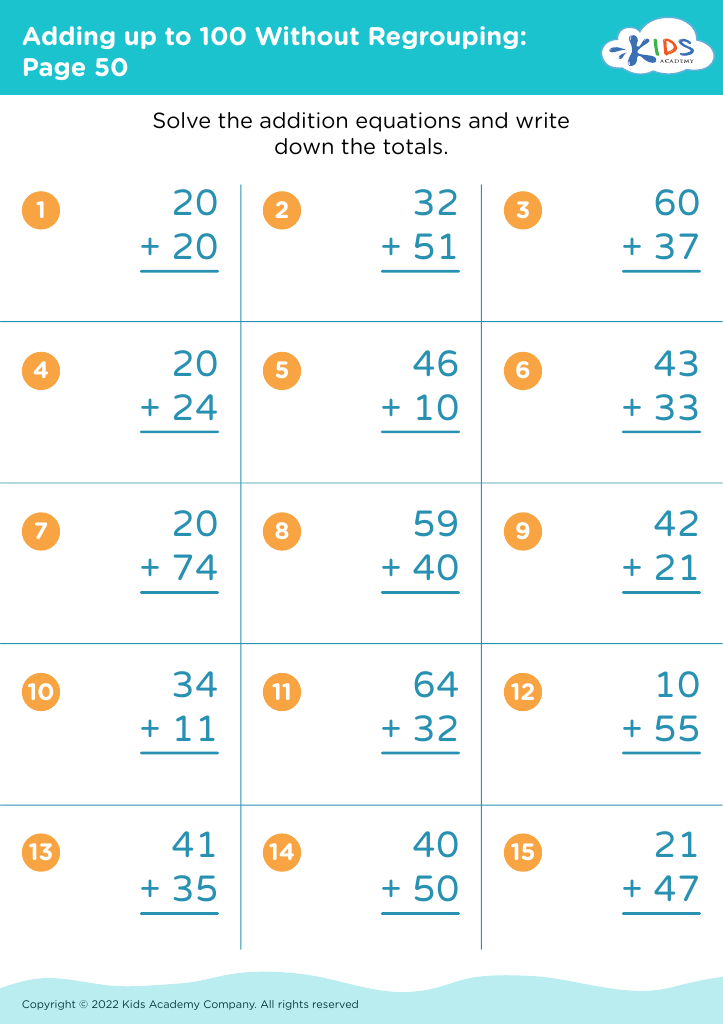
Adding up to 100 Without Regrouping: Page 50
Worksheet
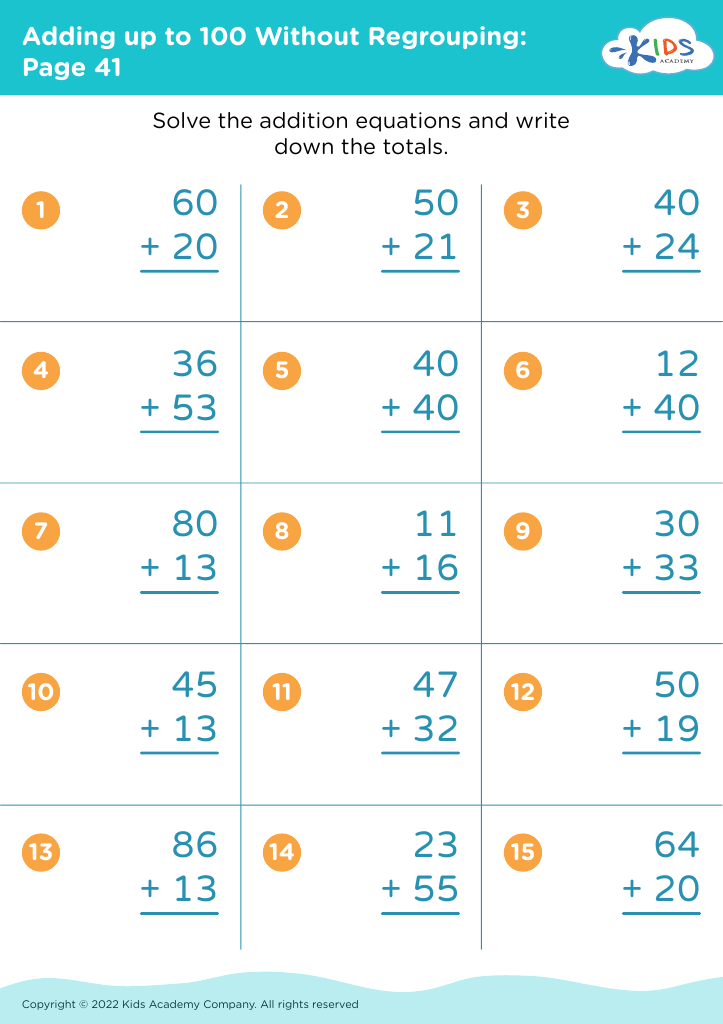
Adding up to 100 Without Regrouping: Page 41
Worksheet
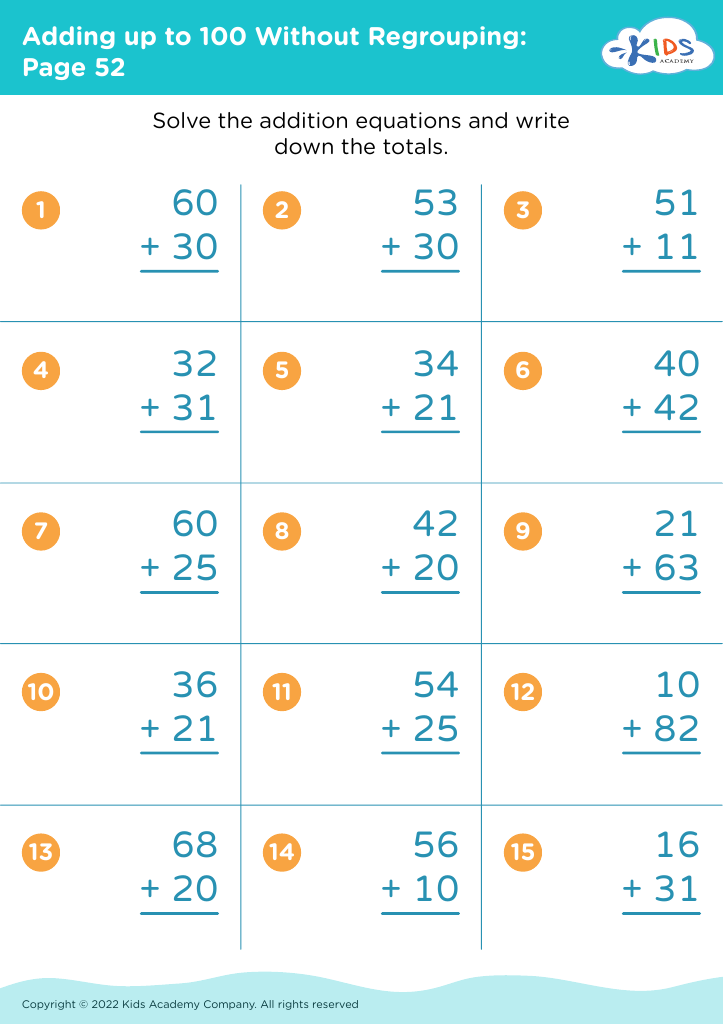
Adding up to 100 Without Regrouping: Page 52
Worksheet
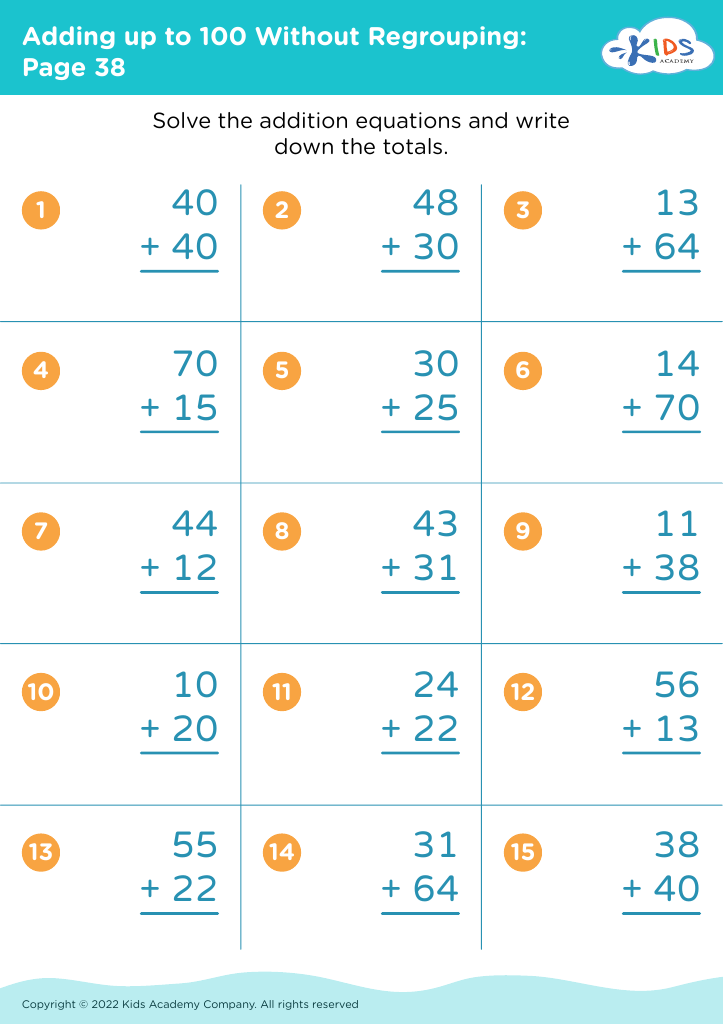
Adding up to 100 Without Regrouping: Page 38
Worksheet
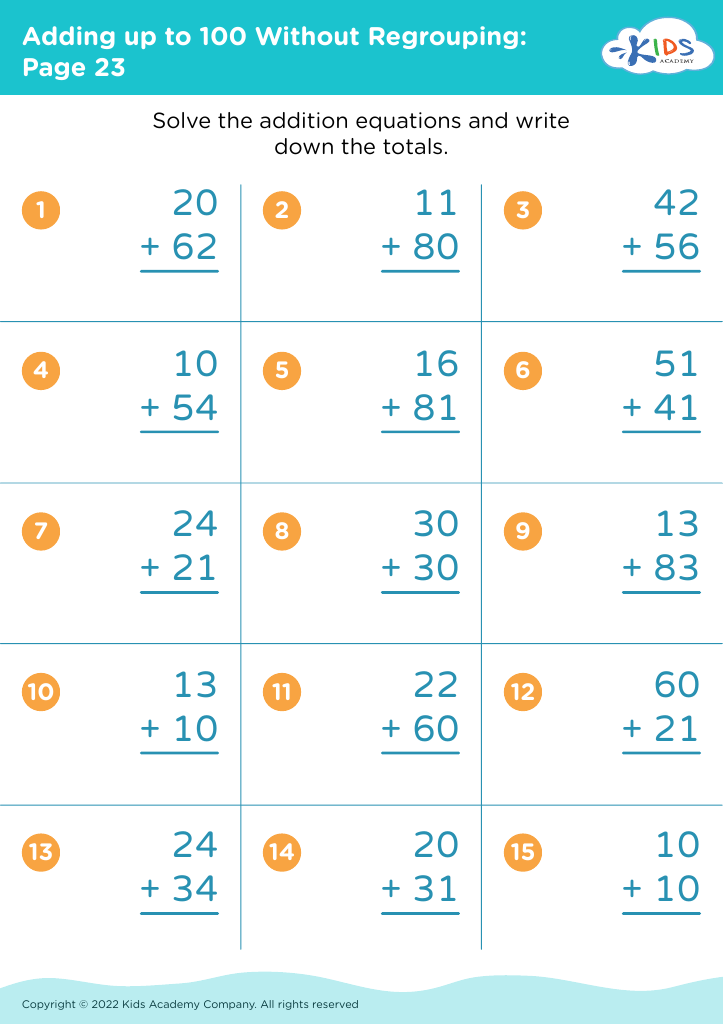
Adding up to 100 Without Regrouping: Page 23
Worksheet
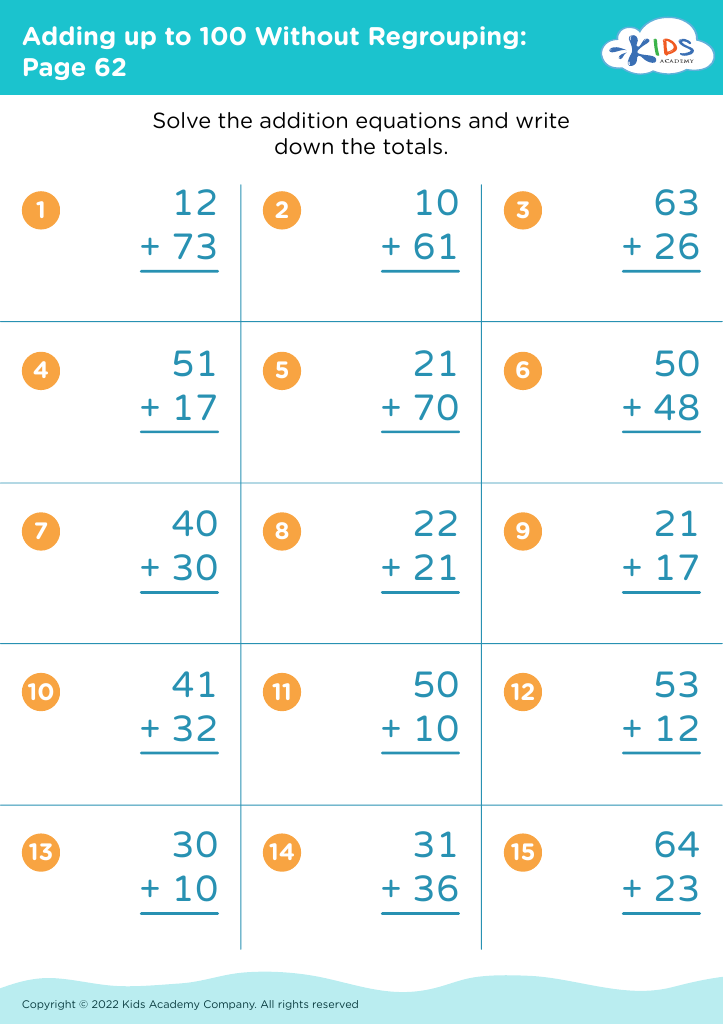
Adding up to 100 Without Regrouping: Page 62
Worksheet


Understanding fractions and simple addition are crucial foundational skills for 7-year-olds as they serve as building blocks for more complex mathematical concepts in the future. Parents and teachers should care about these because they promote number sense, which refers to a child’s fluidity and flexibility with numbers. When a child grasps the basics of fractions, they learn to see numbers in parts, enhancing their comprehension of division and proportion, skills that are essential in higher mathematics and everyday situations, such as cooking or budgeting.

Adding up to 100 without regrouping ensures children gain confidence and competence in basic arithmetic operations. This skill supports their ability to understand and perform more advanced calculations as they progress in their education. It also emphasizes place value understanding, which is critical in the comprehension of the decimal system. Mastery in these areas helps reinforce a child's ability to solve problems efficiently and accurately, promoting logical thinking and a positive attitude towards math.

In the broader sense, these skills are invaluable for fostering a growth mindset in young learners. Positive early experiences with math motivate children to approach new challenges with confidence and resilience, setting the stage for lifelong learning and curiosity.