Understanding patterns Adding up to 100 Without Regrouping Worksheets for 7-Year-Olds
3 filtered results
-
From - To
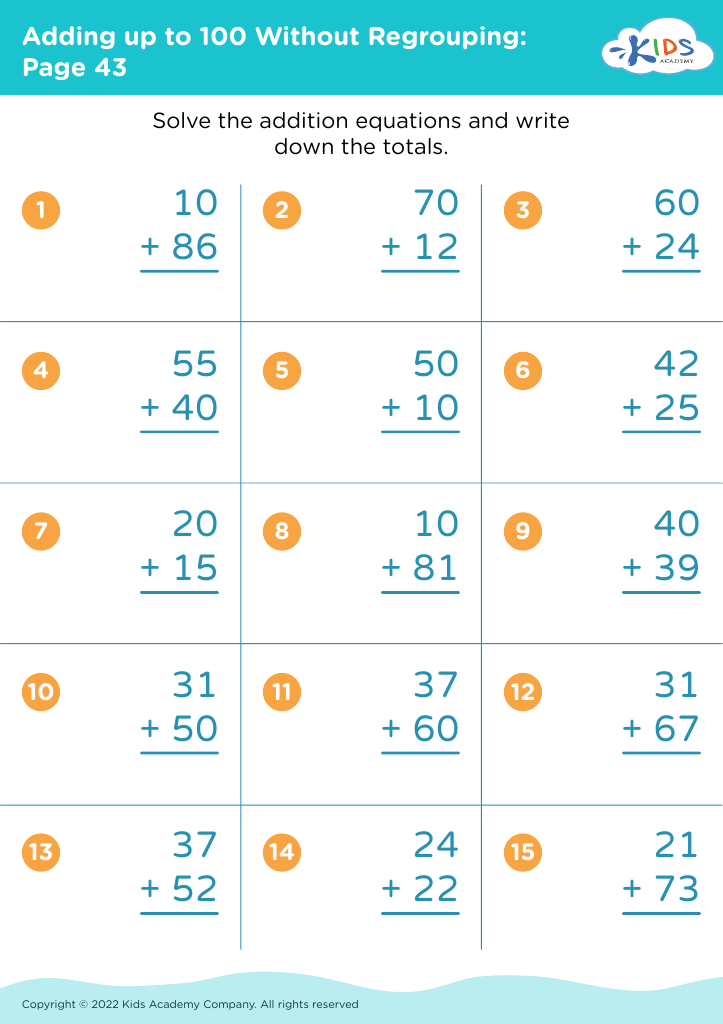
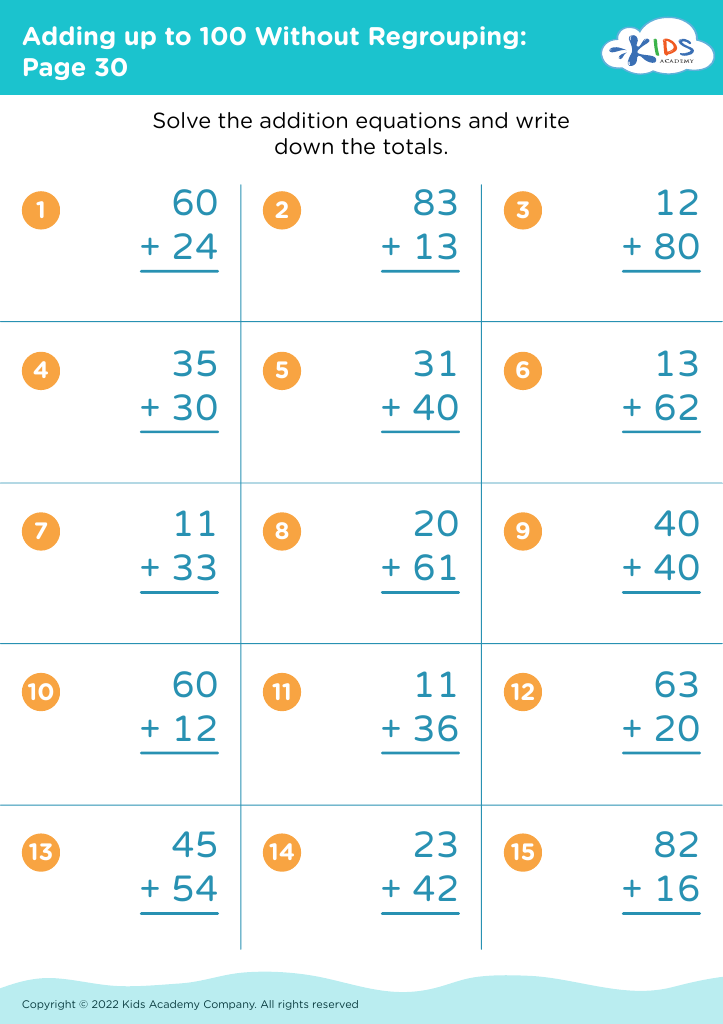
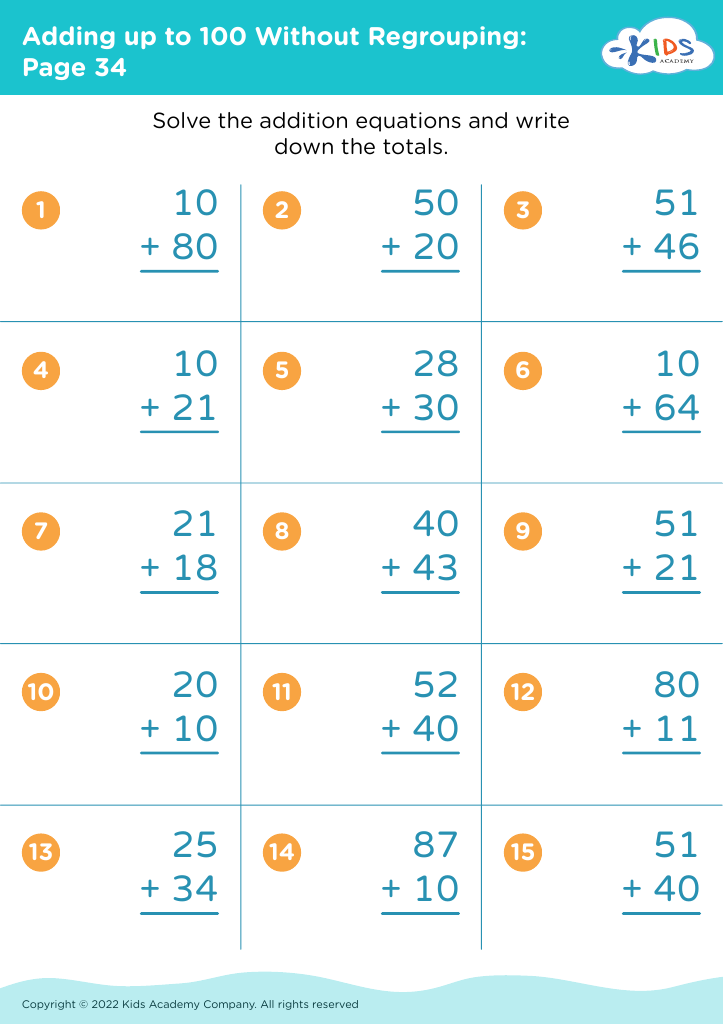
Dive into our "Understanding Patterns Adding up to 100 Without Regrouping Worksheets" tailored for 7-year-olds! These engaging printable worksheets are designed to help young learners grasp the principles of addition without the complexity of regrouping. Through fun patterns and intuitive exercises, students build confidence adding numbers up to 100. Perfect for homeschooling or supplementing classroom learning, our worksheets make math practice enjoyable and effective. Foster your child's growth in essential math skills and watch their understanding soar. Explore our collection today and make math a discovery-filled adventure!




Understanding patterns and adding up to 100 without regrouping for 7-year-olds is crucial for several reasons. Firstly, mastering basic mathematical patterns lays a foundational skill for more complex math later in their education. Recognizing and predicting patterns not only enhances a child's problem-solving skills but also aids in the development of logical thinking and reasoning.
Adding up to 100 without regrouping helps children grasp fundamental arithmetic concepts. This practice strengthens their number sense, reinforcing how individual digits and numbers relate to each other. It further supports mental math skills, paving the way for quicker and more accurate computations without always relying on calculators or written methods.
For teachers, focusing on these skills ensures that students gain confidence in their mathematical abilities early on. A strong grasp of early math concepts often correlates with better overall academic performance since these skills are used across various subjects. For parents, participating in or understanding their child's math learning supports out-of-school reinforcement, allowing for a consistent and supportive learning environment.
In sum, focusing on understanding patterns and basic addition skills sets young learners up for long-term success in math, boosts their overall confidence, and supports critical thinking abilities essential for their academic journey.