Basic Addition Skills Adding up to 100 Worksheets for 7-Year-Olds
5 filtered results
-
From - To
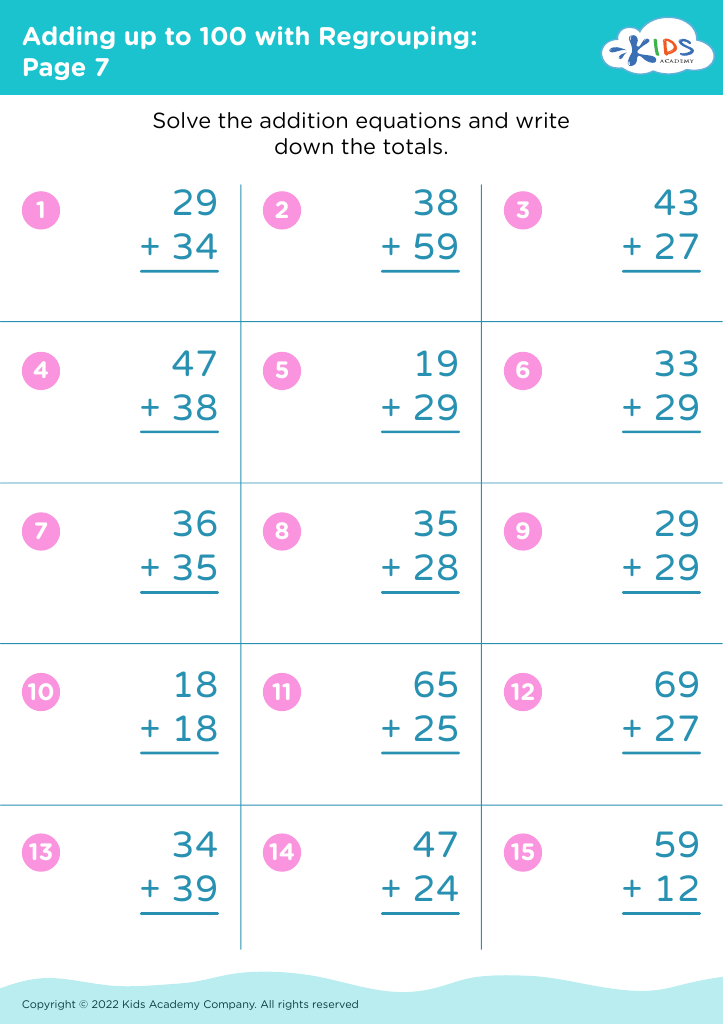
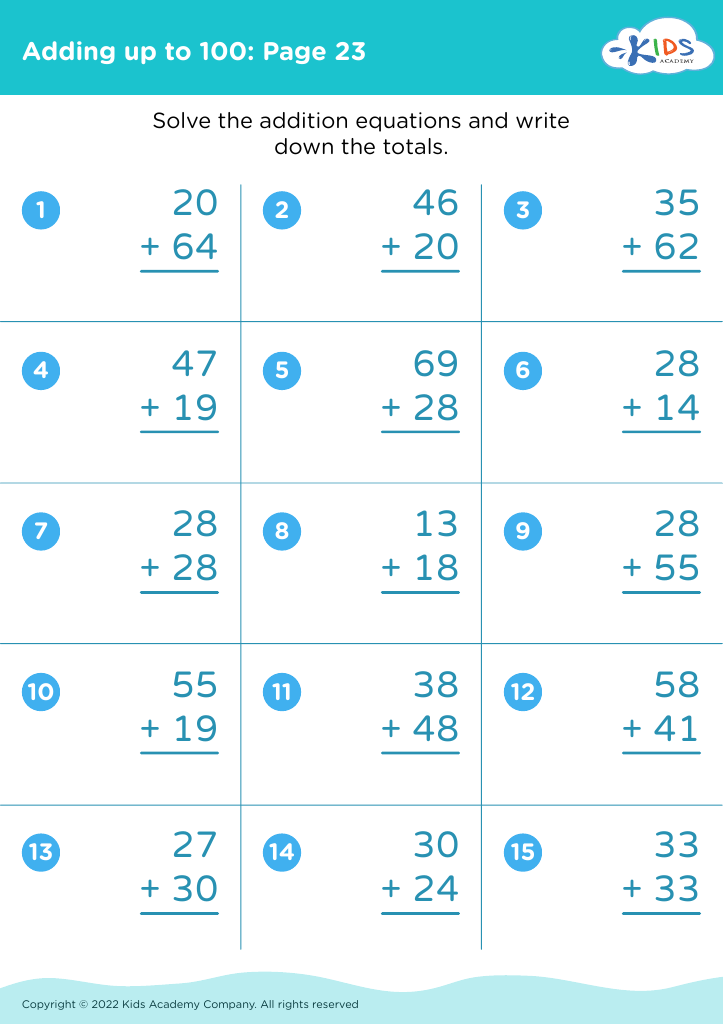
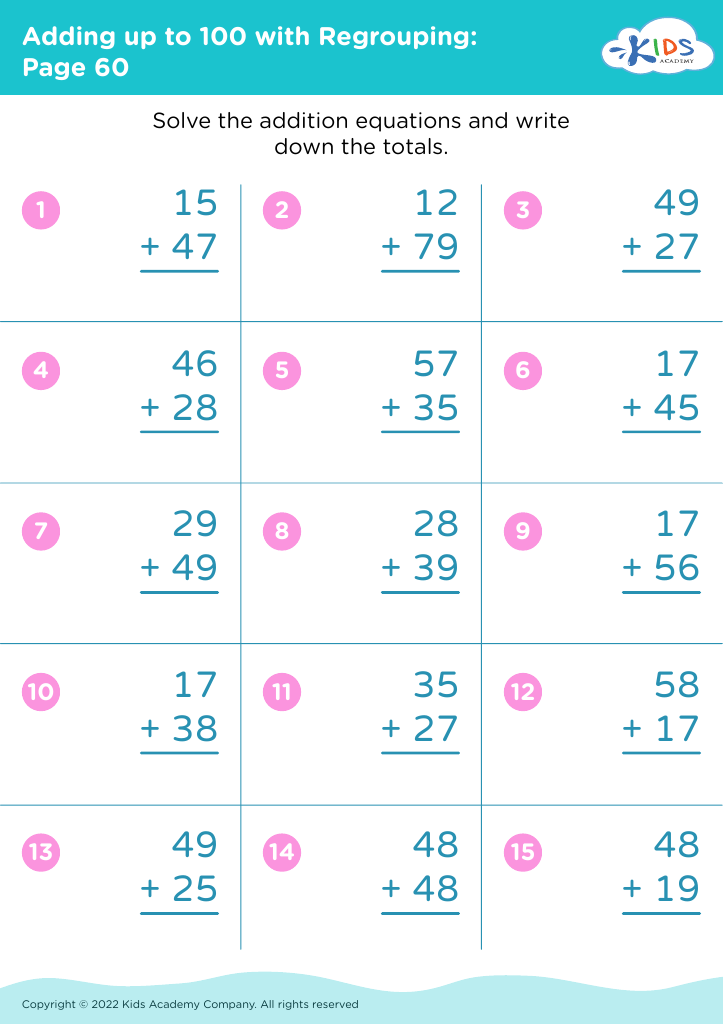
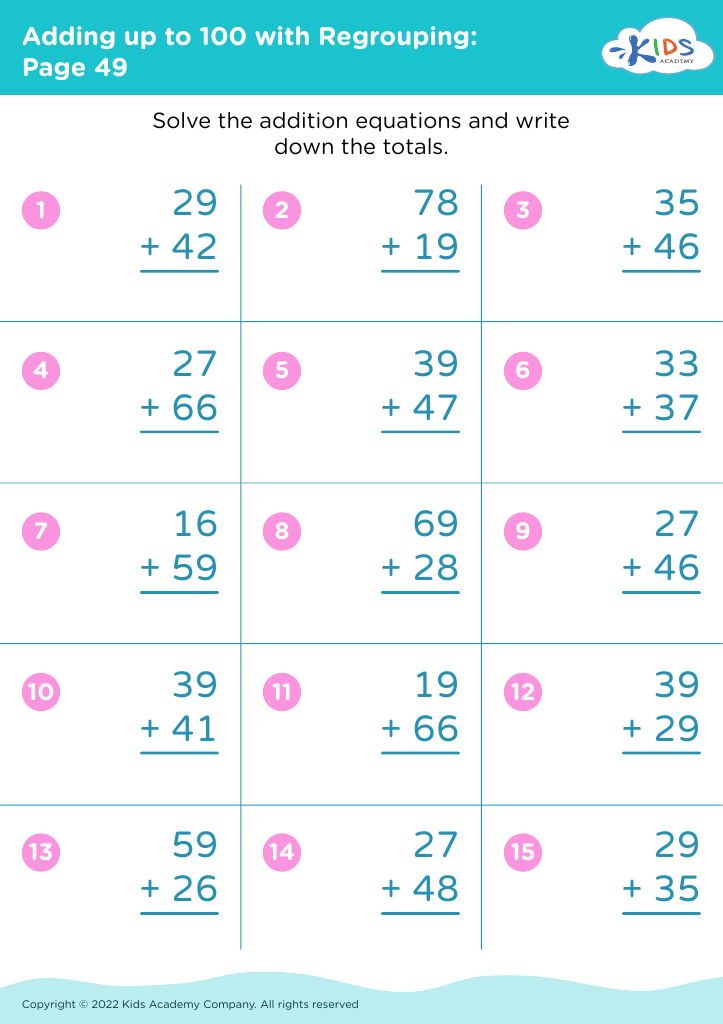
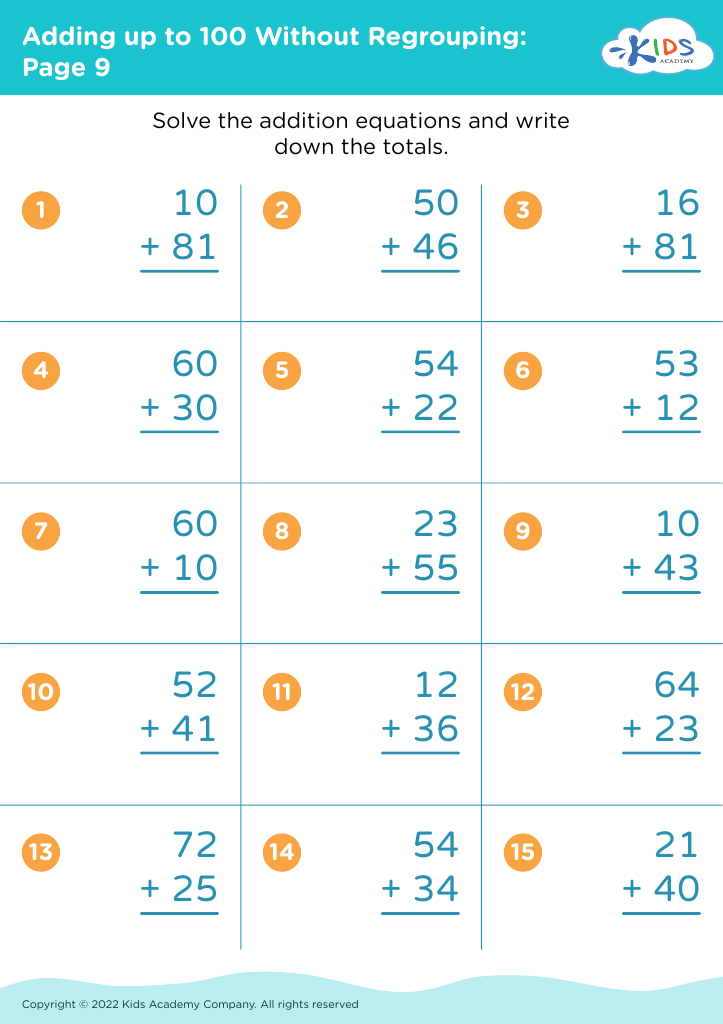
Boost your child's math confidence with our "Basic Addition Skills: Adding up to 100" worksheets designed for 7-year-olds. These engaging, printable activities from Kids Academy provide a fun and interactive way for young learners to master essential addition skills. Each worksheet combines colorful illustrations with simple problems, helping children practice adding numbers up to 100 effectively while strengthening their arithmetic foundations. Suitable for classroom use or homework, our resource aids in ensuring math fluency and accuracy. Enhance your child’s learning experience today with our expertly crafted addition worksheets – helping young minds add up to success!






%20(1).jpg)
Basic addition skills are foundational for mathematical literacy, which is crucial for academic success and daily life. For 7-year-olds, mastering addition up to 100 is significant because it enhances their number sense, confidence in handling numerical problems, and prepares them for more advanced math concepts such as subtraction, multiplication, and division.
When children are proficient in basic addition, they can solve problems more efficiently and develop critical thinking skills. This proficiency also translates to better performance in school, as many subjects rely on a student's ability to calculate and understand numbers. Furthermore, early competence in addition can encourage a positive attitude towards math, making students more likely to engage with and excel in the subject in the future.
Beyond academic benefits, basic addition is essential for practical tasks, such as managing money, understanding time, and measuring ingredients in cooking. Ensuring that 7-year-olds are proficient in adding numbers up to 100 equips them with valuable life skills they will use every day.
Parents and teachers play a pivotal role in supporting students through engaging activities, visual aids, and consistent practice, helping children not only succeed academically but also grow into confident, capable individuals in everyday situations.








