Color Identification Adding up to 100 Worksheets for 7-Year-Olds
8 filtered results
-
From - To
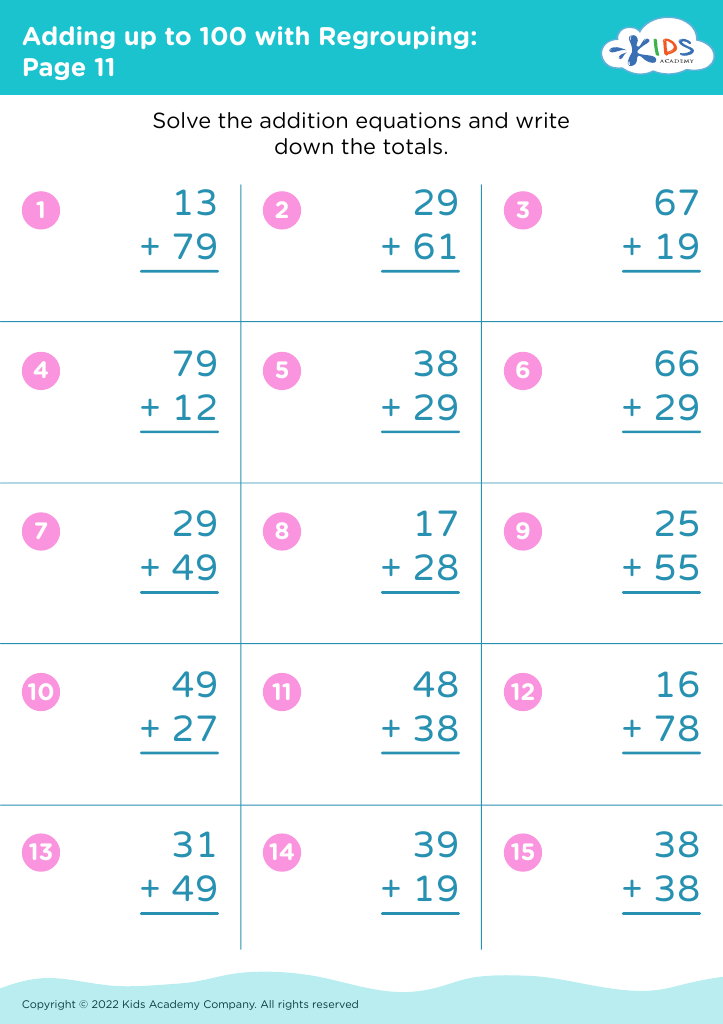
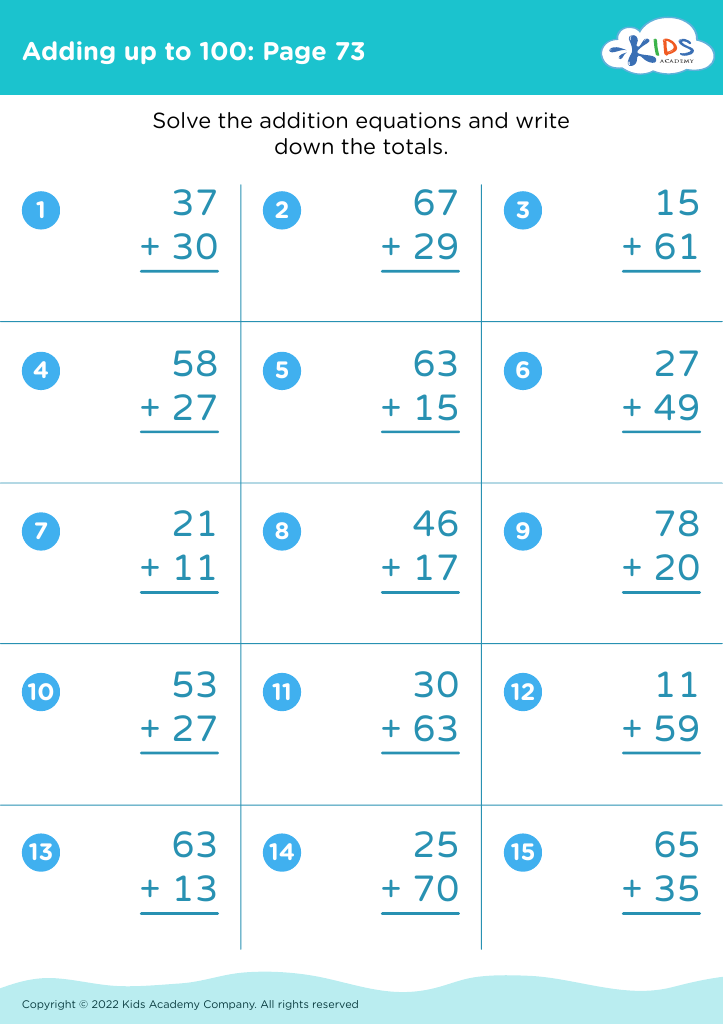
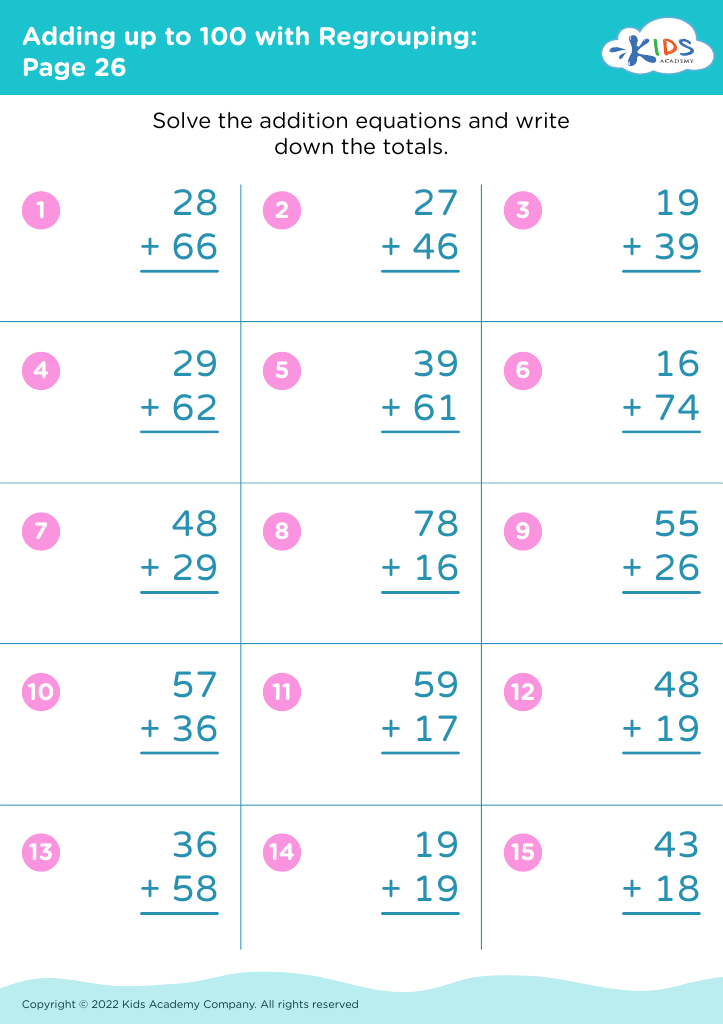
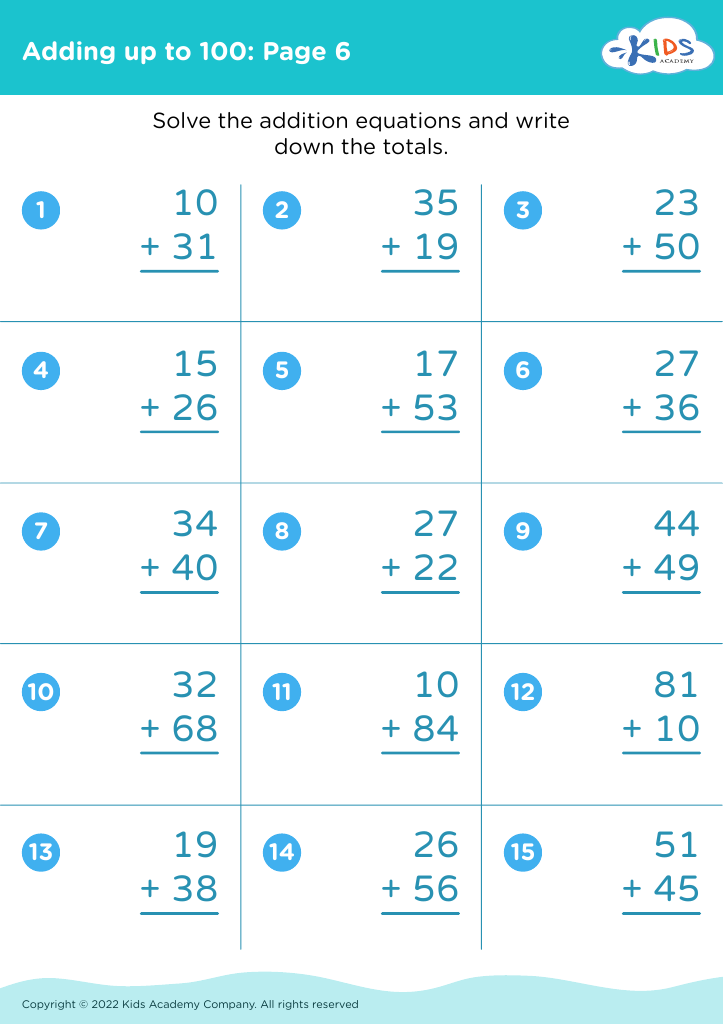
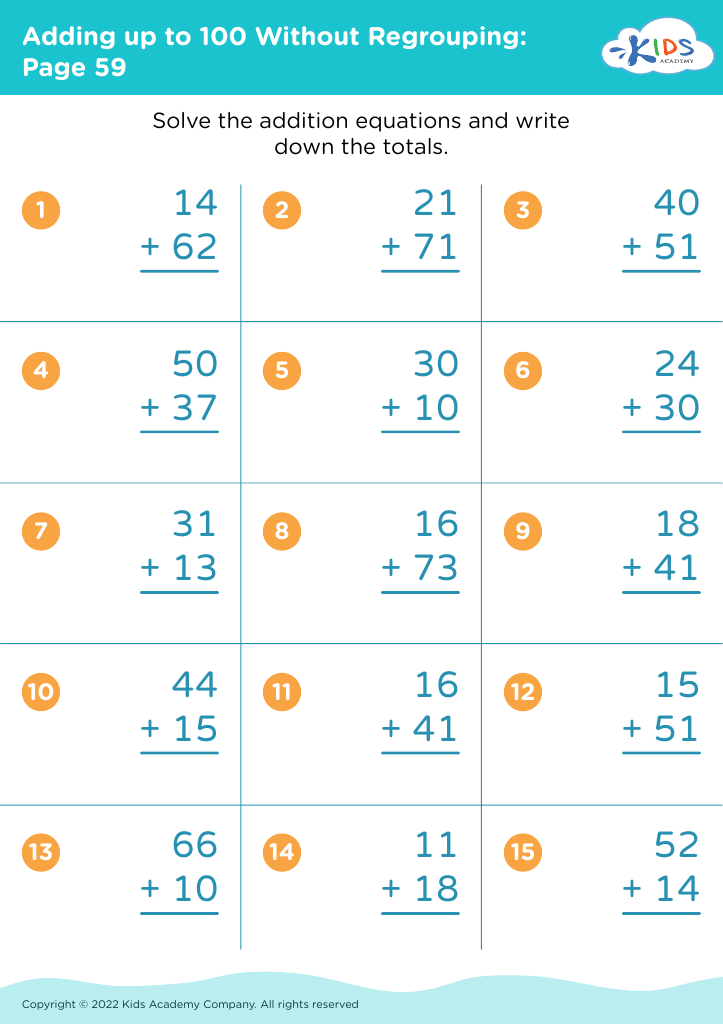
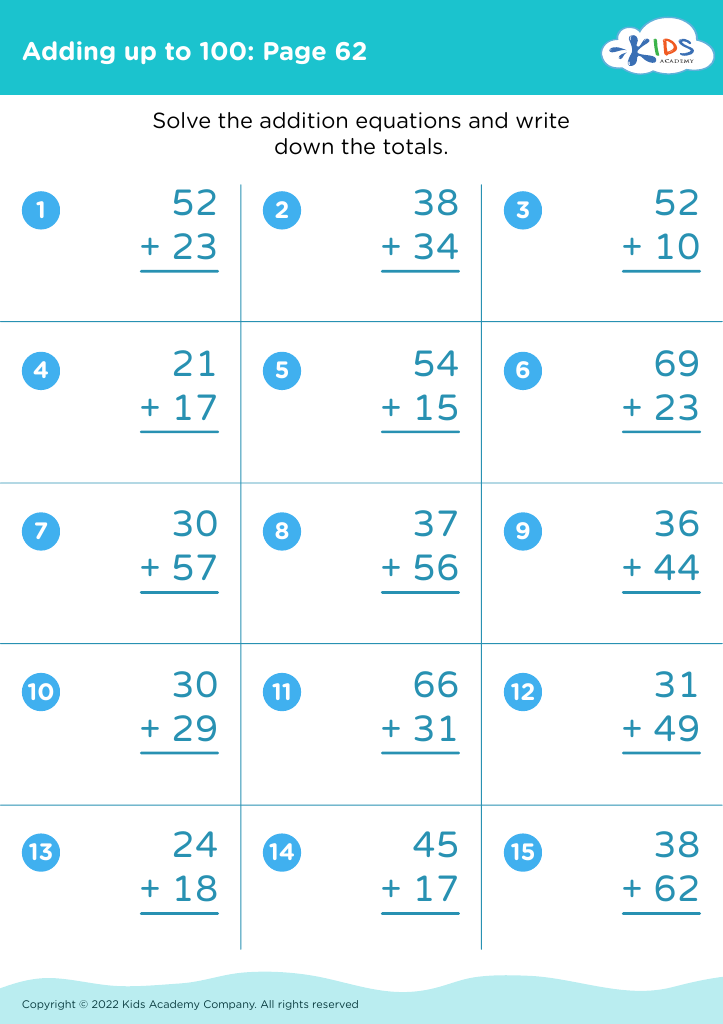
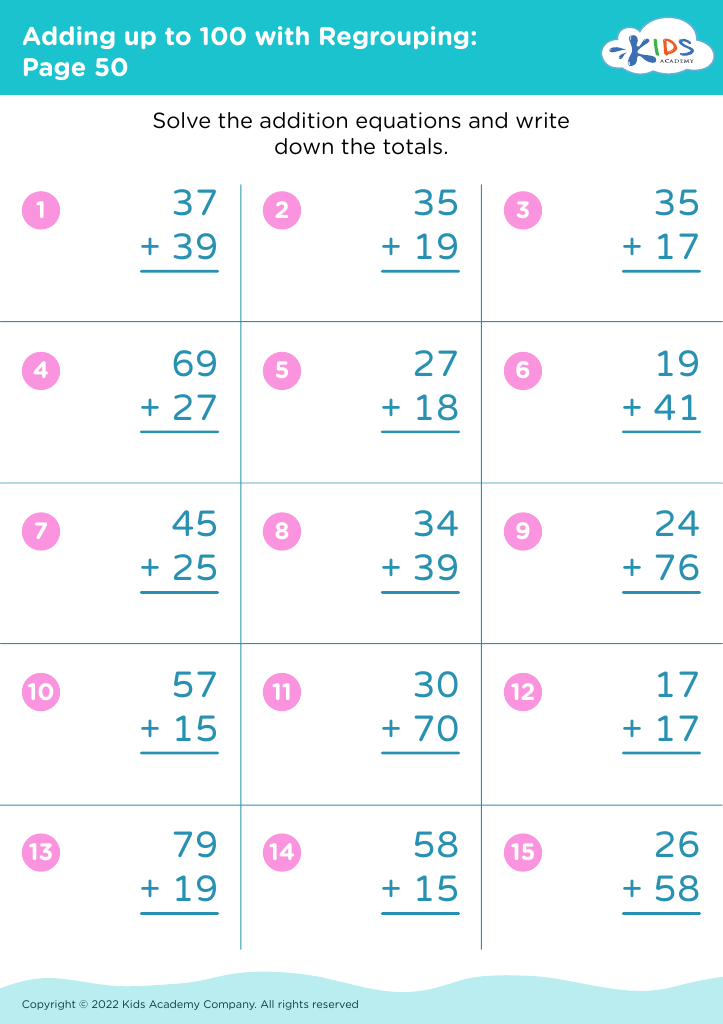
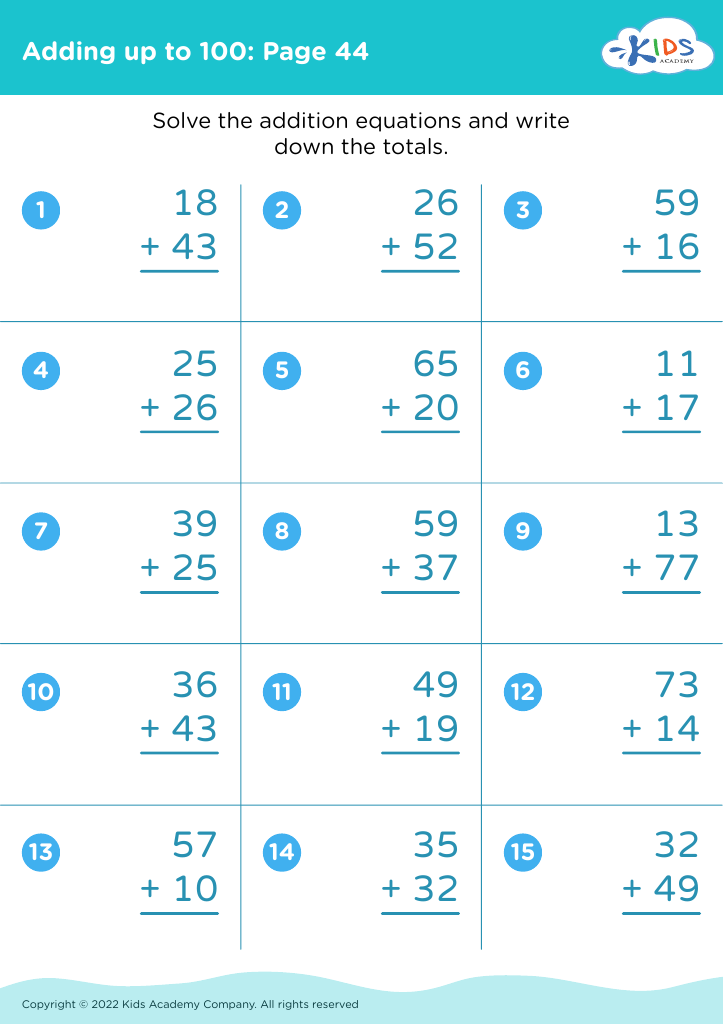
Discover vibrant learning with our "Color Identification Adding up to 100 Worksheets for 7-Year-Olds"! Tailored for young minds, these fun and engaging printable worksheets seamlessly integrate addition practice with color recognition activities. Through interactive exercises, children can enhance their math skills while reinforcing their knowledge of colors. Ideal for classroom or home use, these worksheets offer an enjoyable way to capture attention and make learning a joy. Strengthen essential skills while sparking creativity and curiosity. Explore our resources designed to support educators and parents in nurturing confident, capable young learners on their educational journey.






%20(1).jpg)
Color identification adding up to 100 for 7-year-olds is crucial because it combines fundamental learning concepts with fun, interactive play, accelerating a child's cognitive and developmental growth. Firstly, mastering basic arithmetic skills, especially understanding numbers up to 100, is foundational to future mathematical learning. By integrating colors, a visual and engaging element, children are more likely to stay interested and motivated. This multi-sensory approach enhances memory retention and makes abstract concepts more concrete.
Furthermore, integrating color with numbers supports cognitive skills such as differentiation, classification, and pattern recognition. For example, children can learn to recognize that combining a group of 20 red blocks with 80 blue ones equals 100, thereby reinforcing both color identification and numerical addition simultaneously. This dual focus also addresses diverse learning styles, appealing to visual, auditory, and kinesthetic learners.
Finally, early childhood success in mathematics fosters a positive attitude toward the subject, boosting self-esteem and encouraging a lifelong appreciation for learning. Parents and teachers who invest in these educational strategies are equipping children with critical skills that benefit them across various disciplines. By focusing on color identification that adds up to 100, they're building a robust foundation for complex problem-solving abilities and academic achievement.








