Comparing Fractions Adding up to 100 Worksheets for 7-Year-Olds
30 filtered results
-
From - To
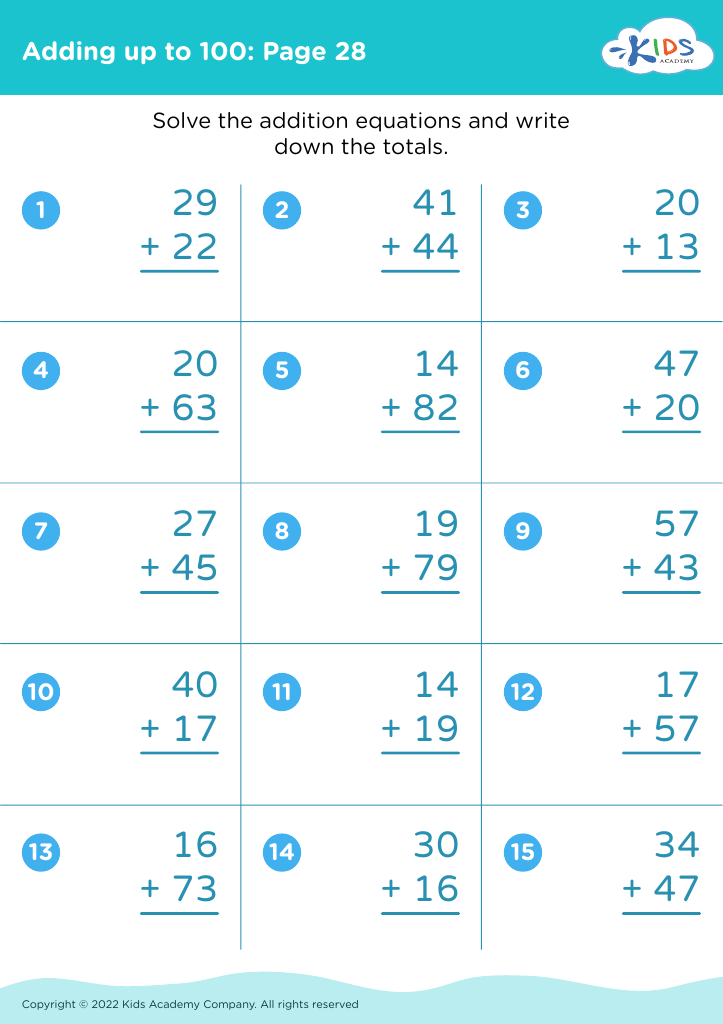
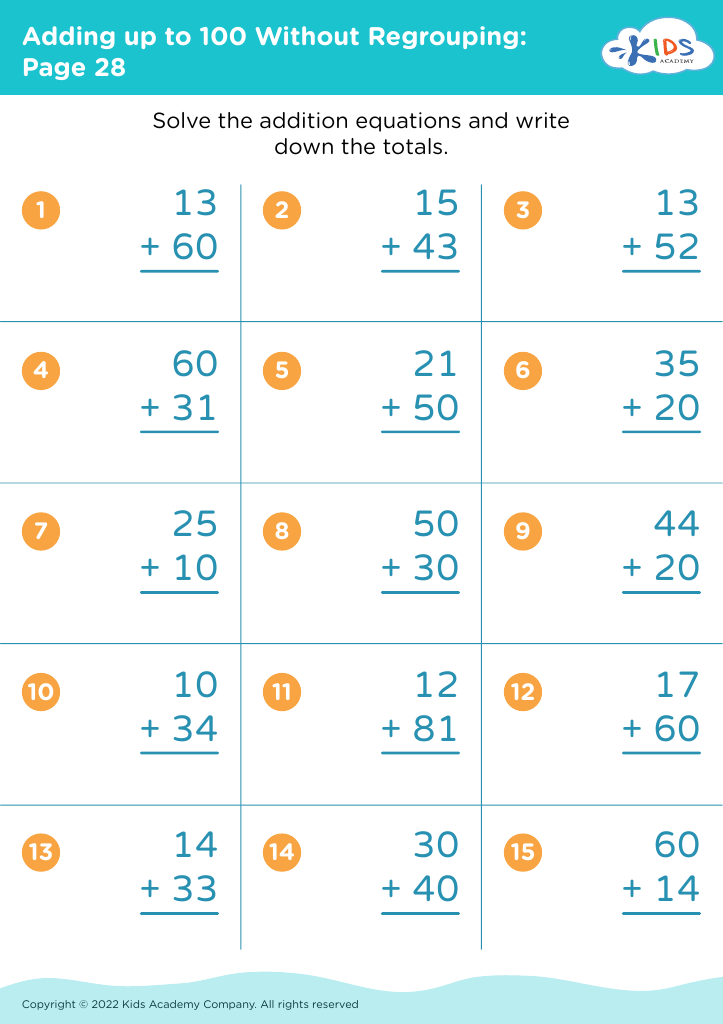
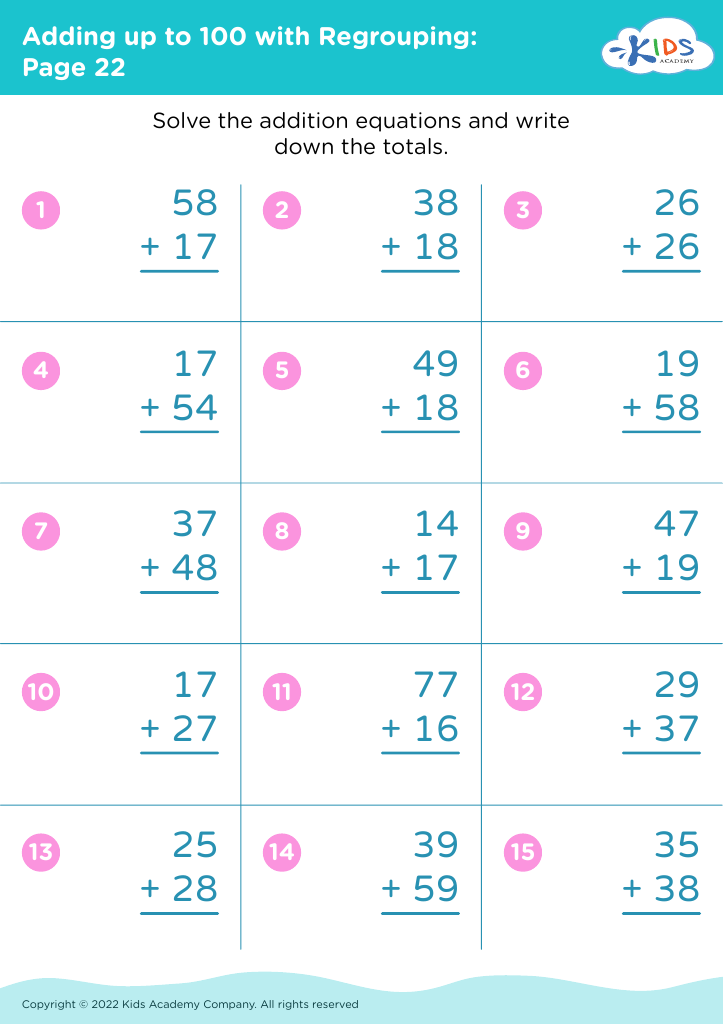
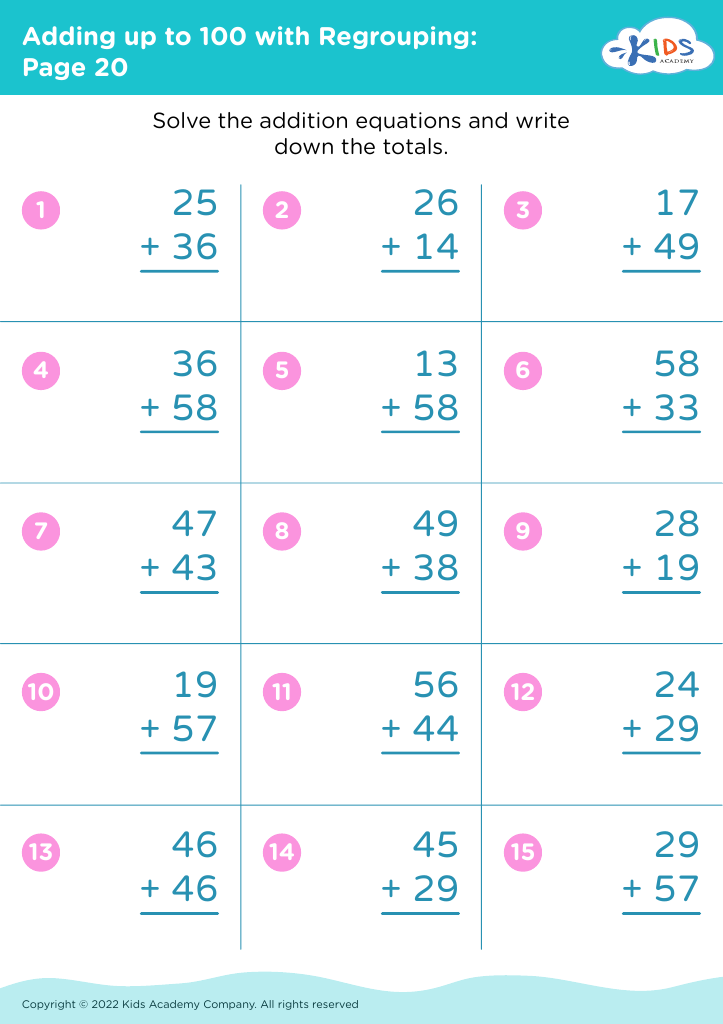
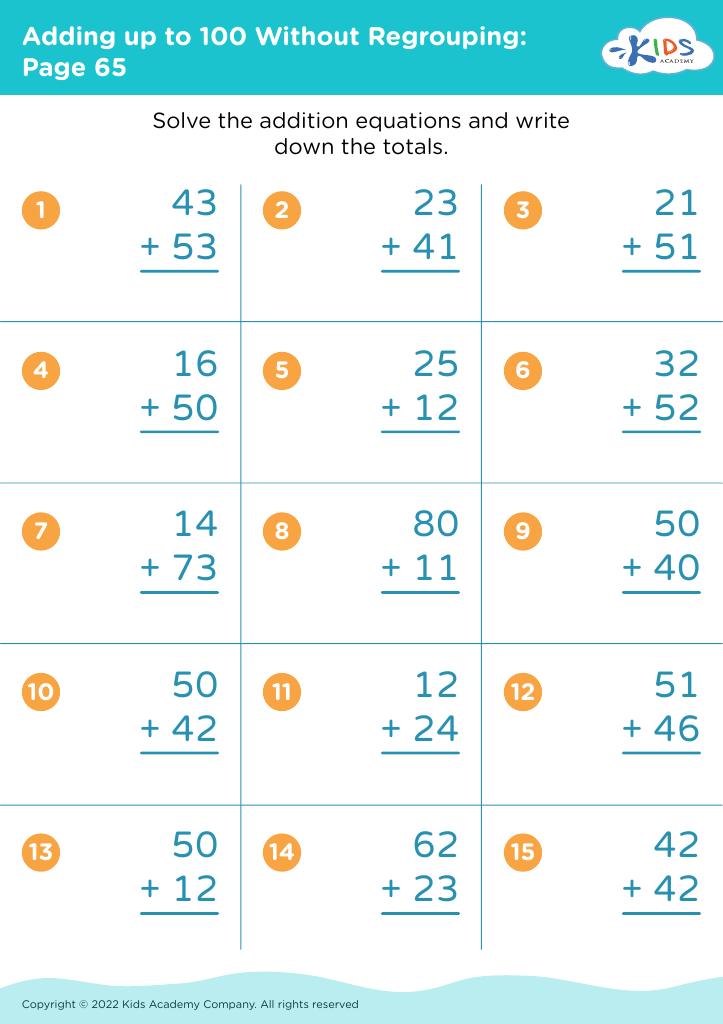
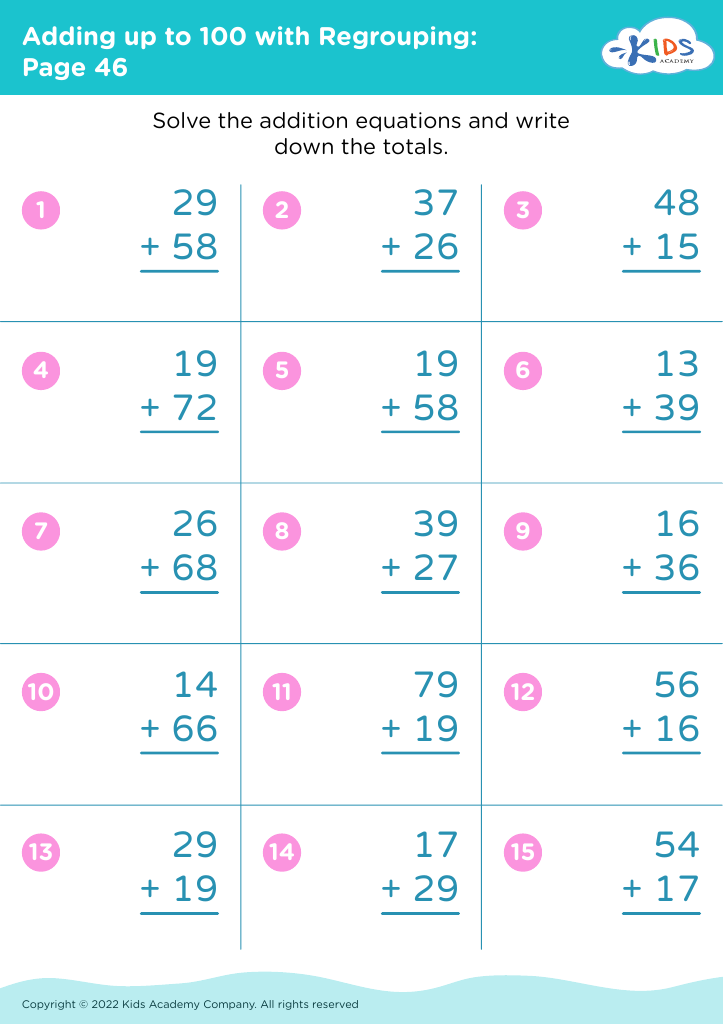
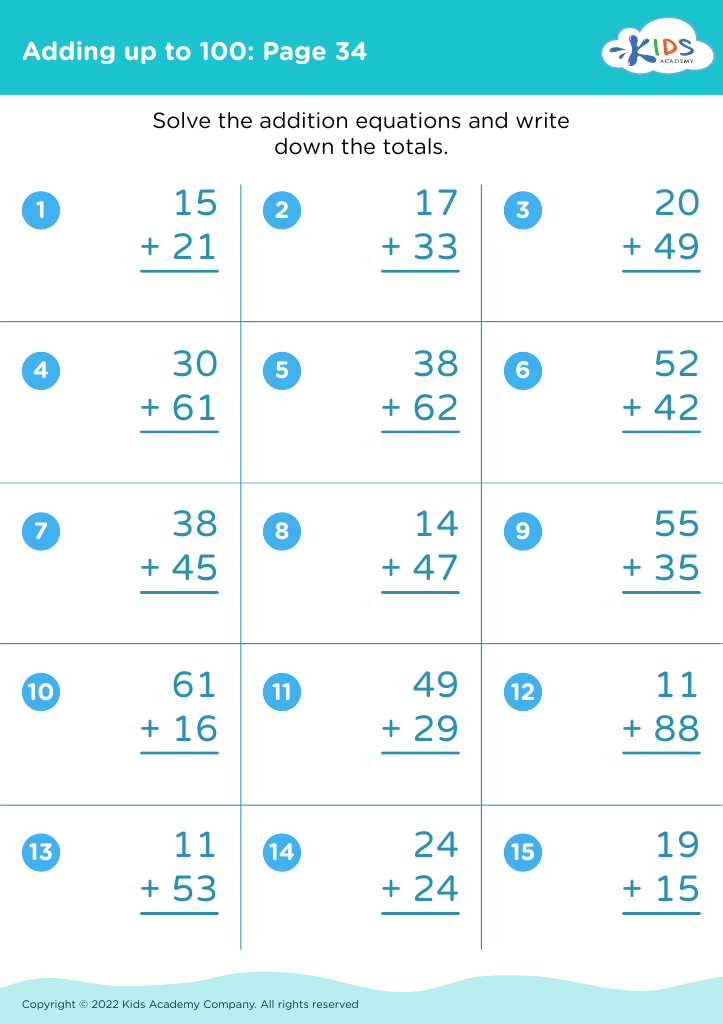
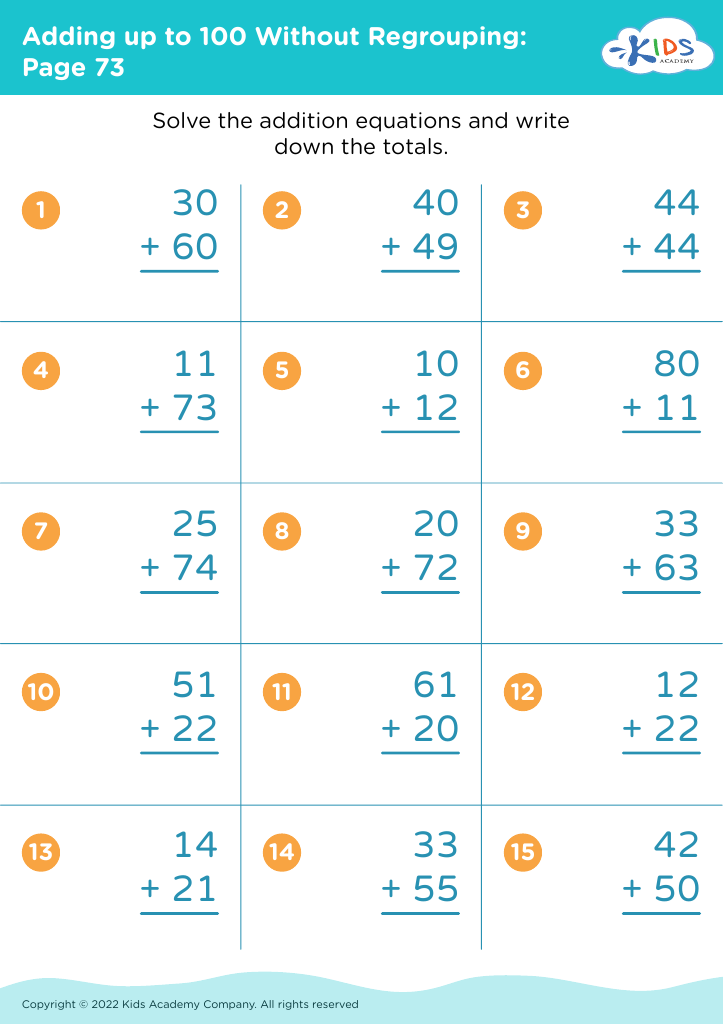
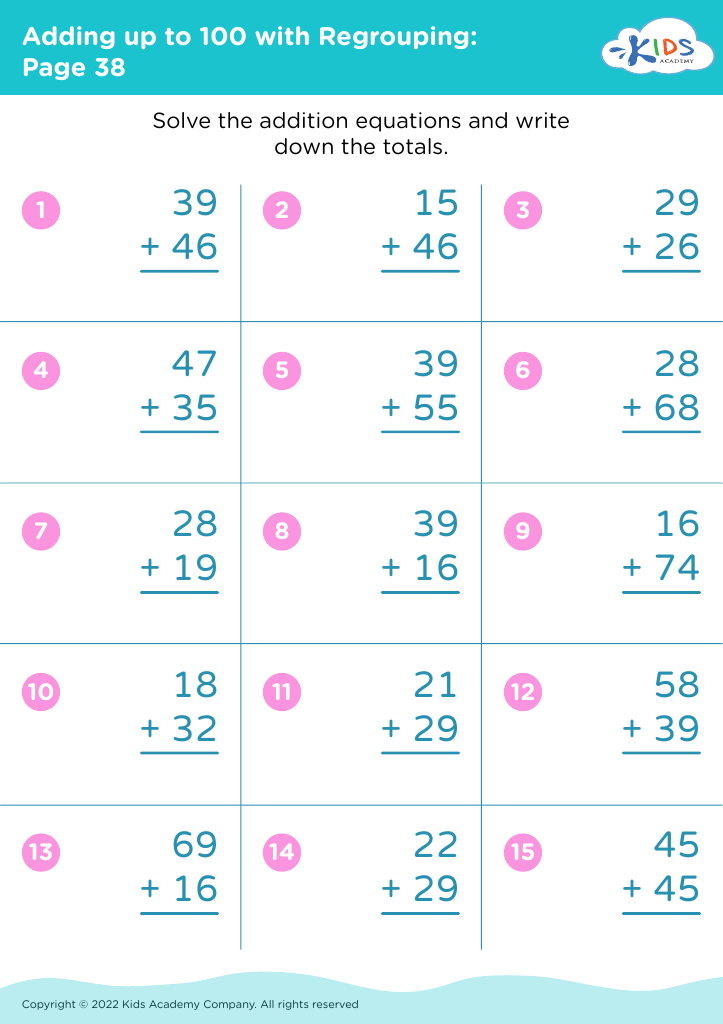
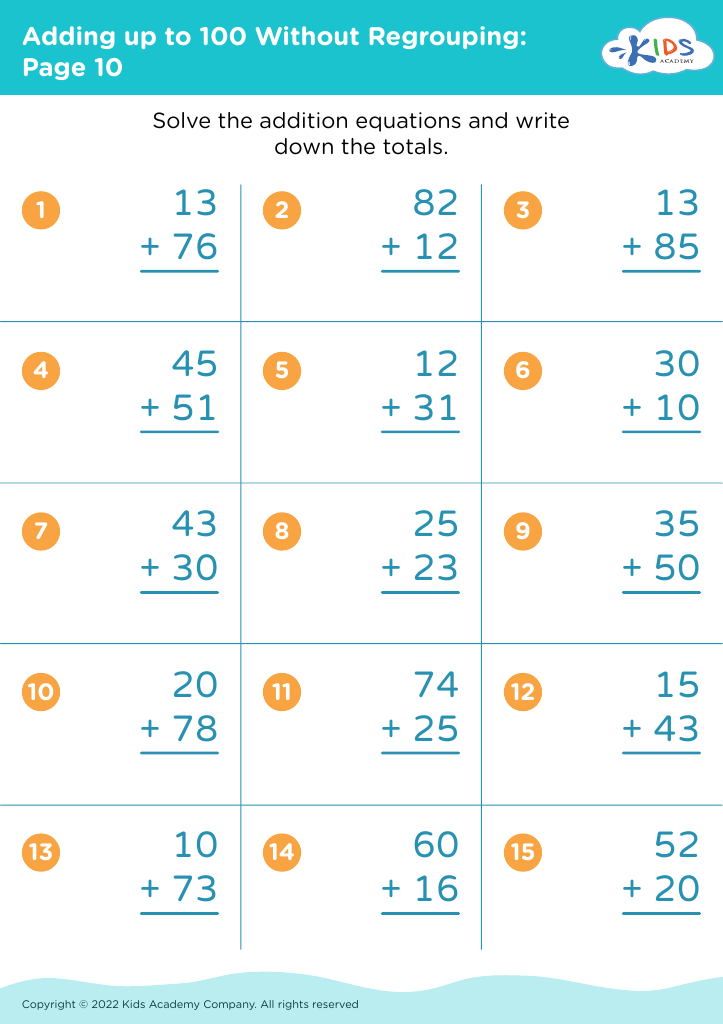
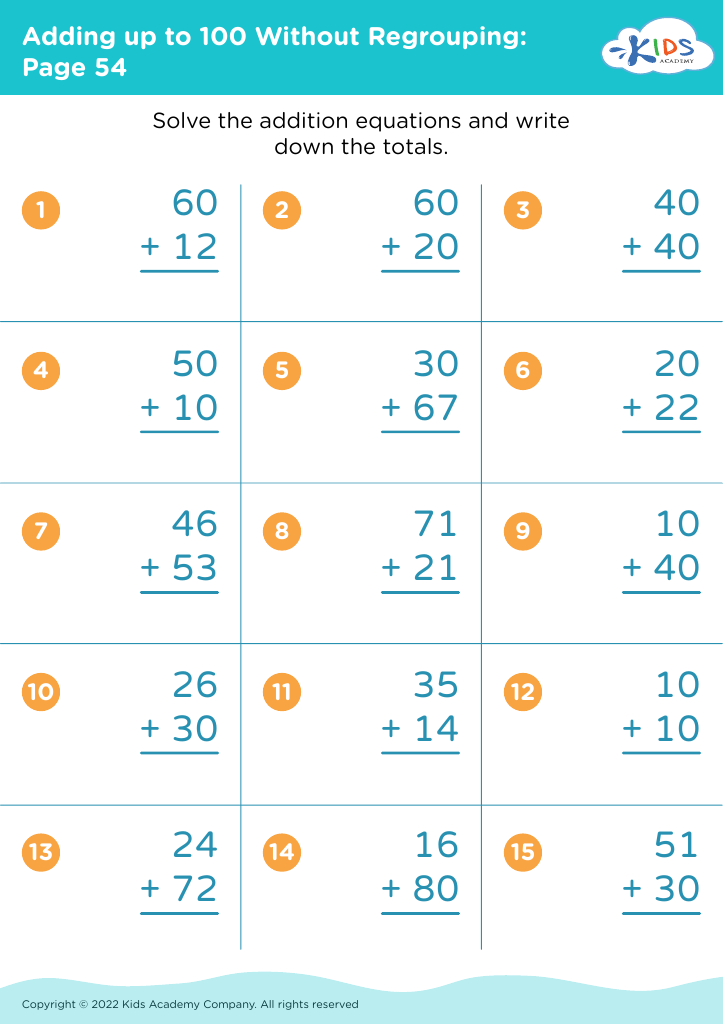
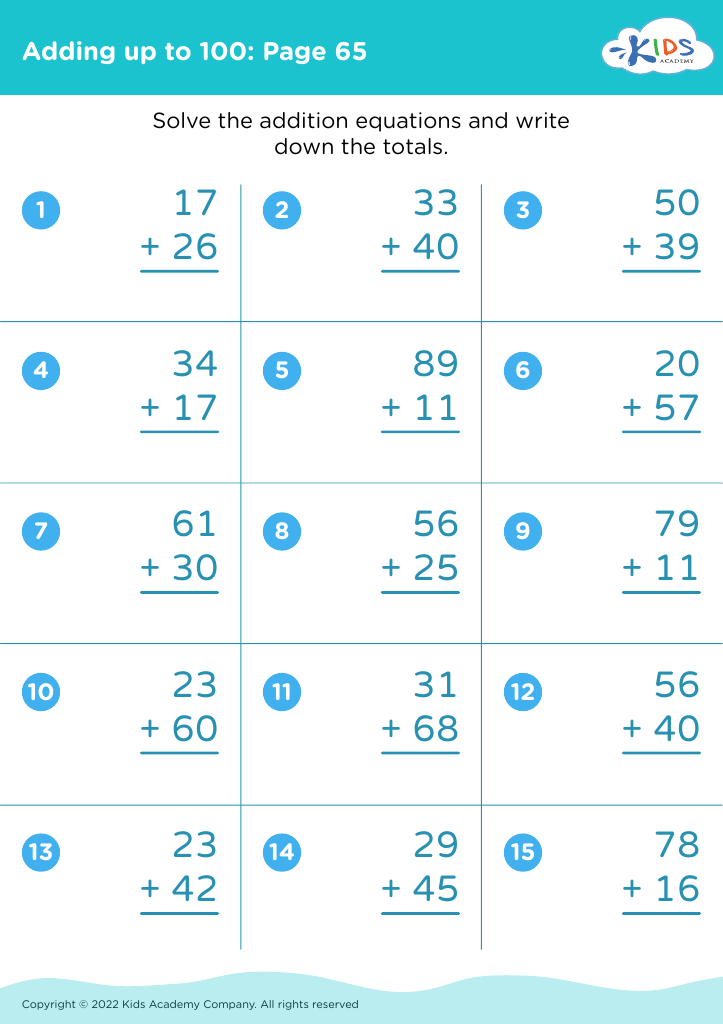
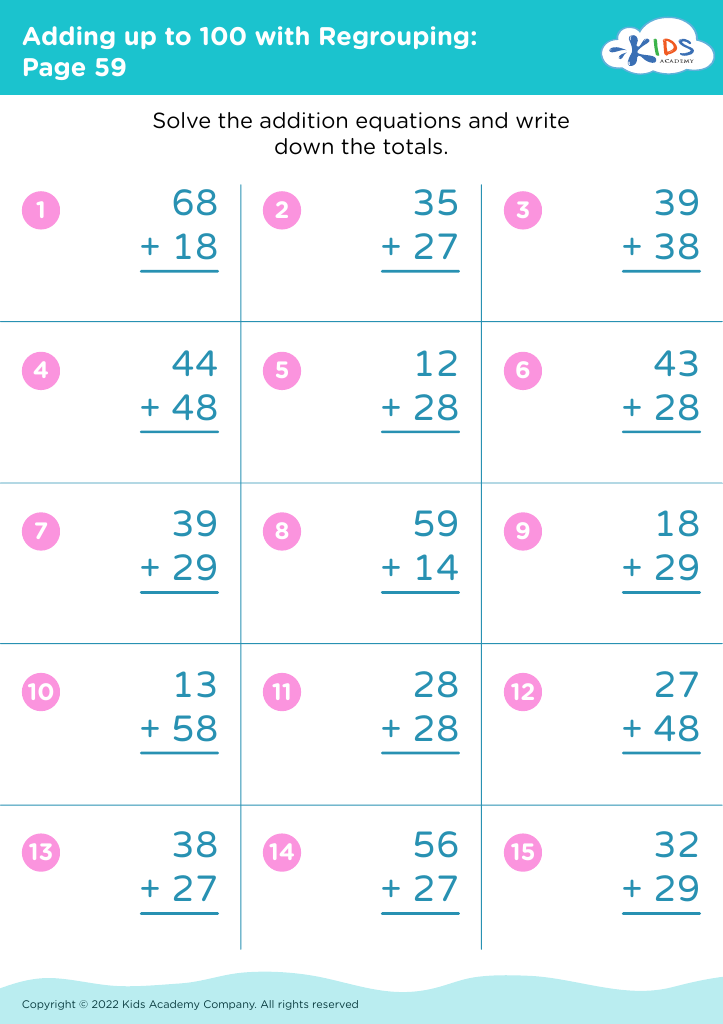
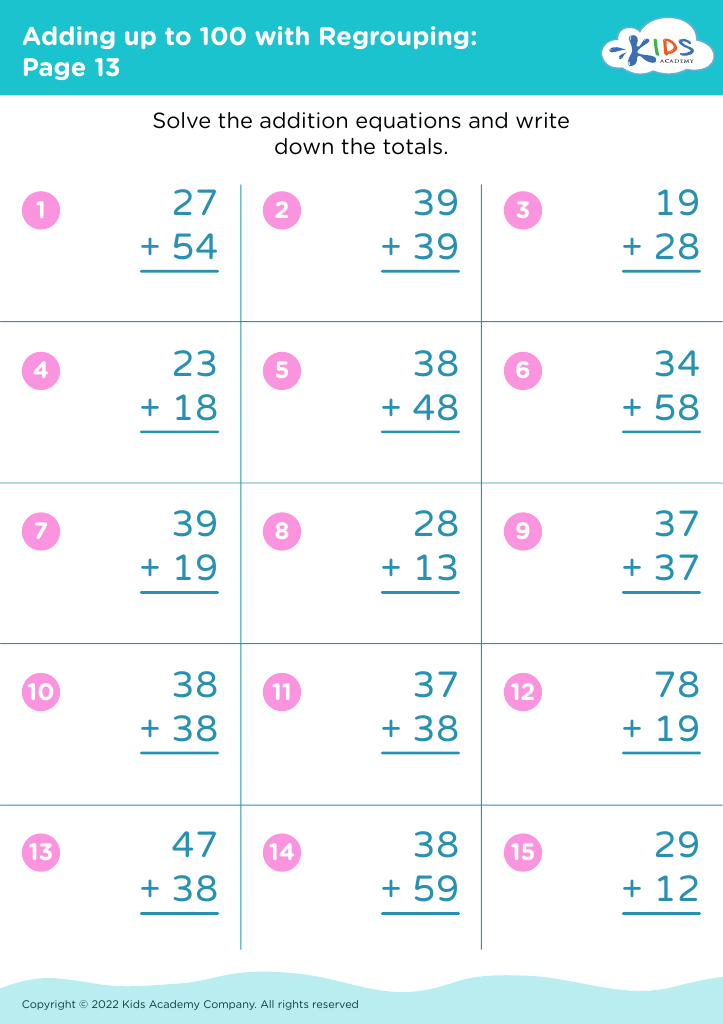
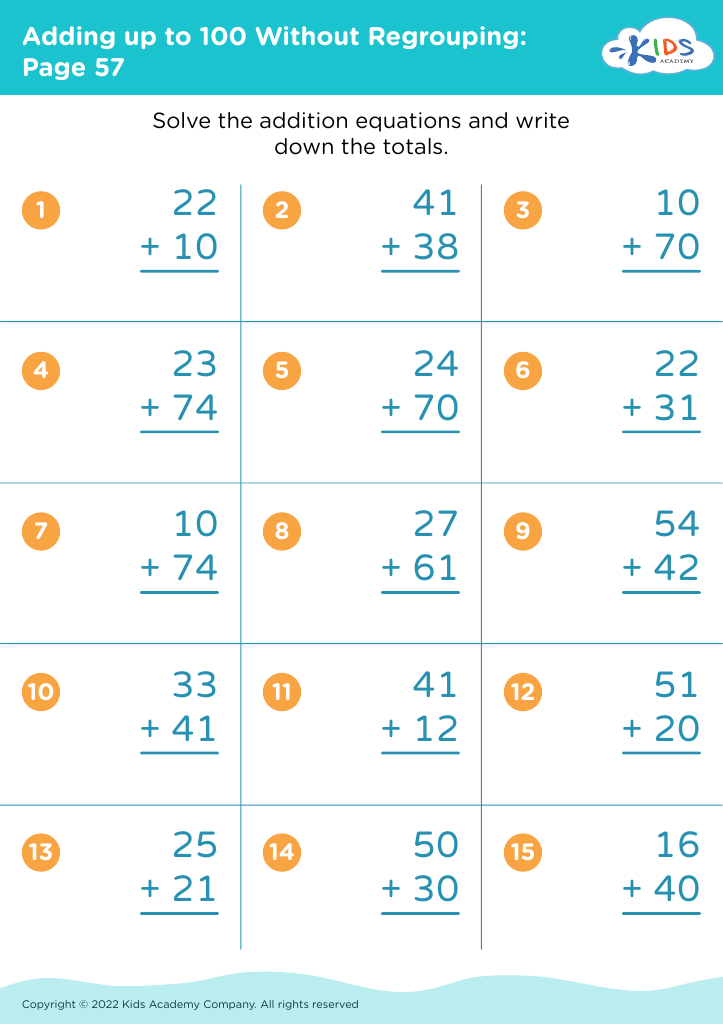
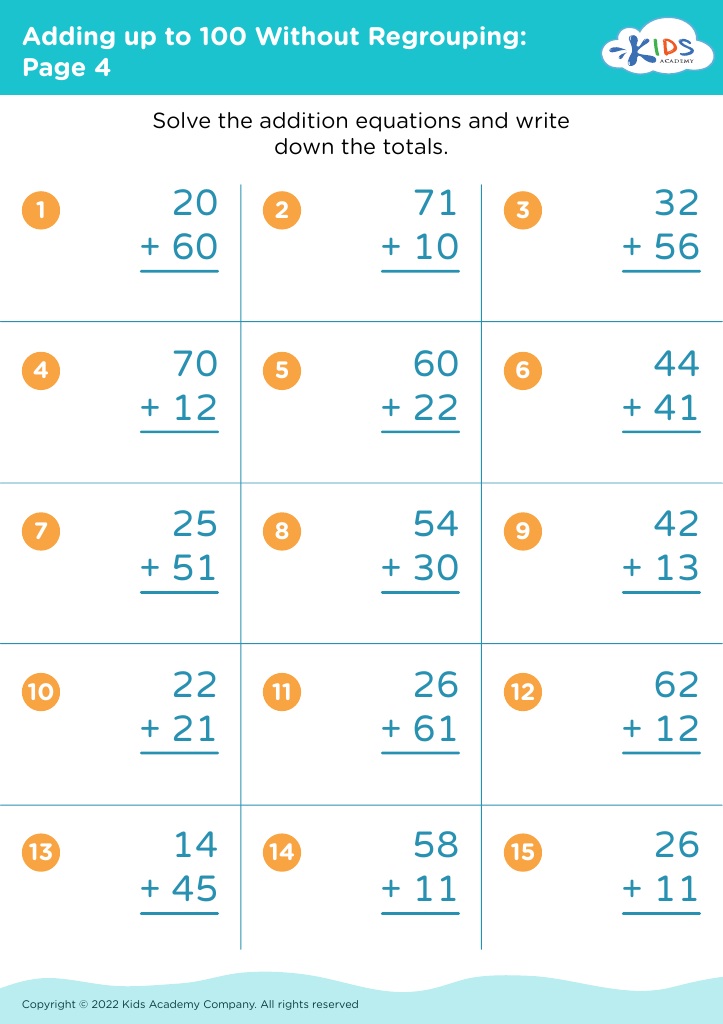
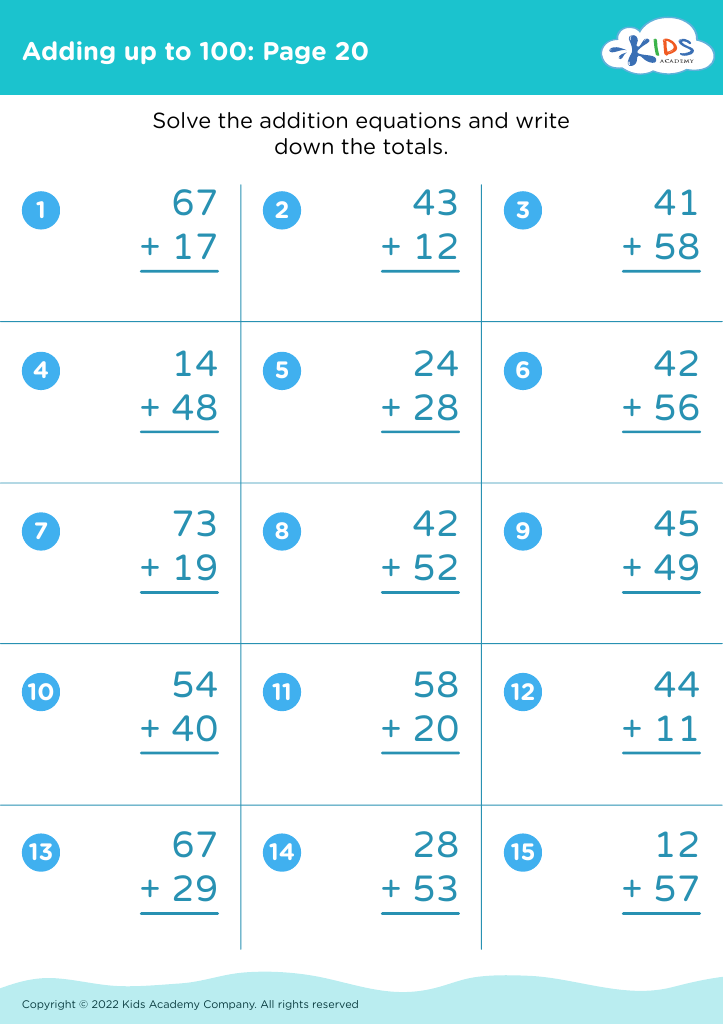
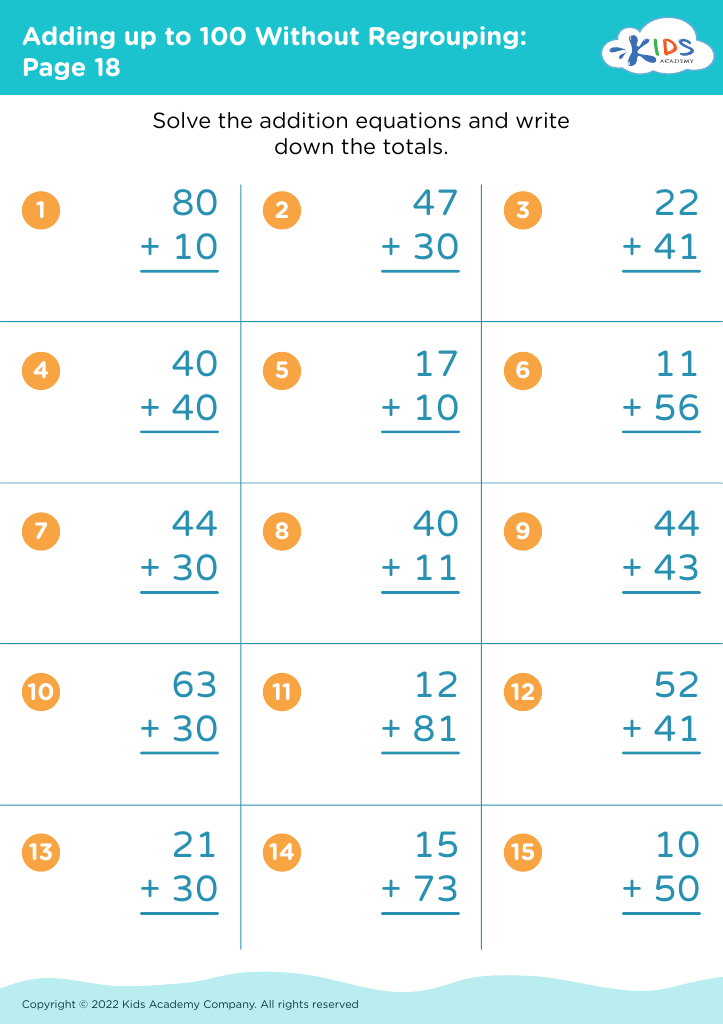
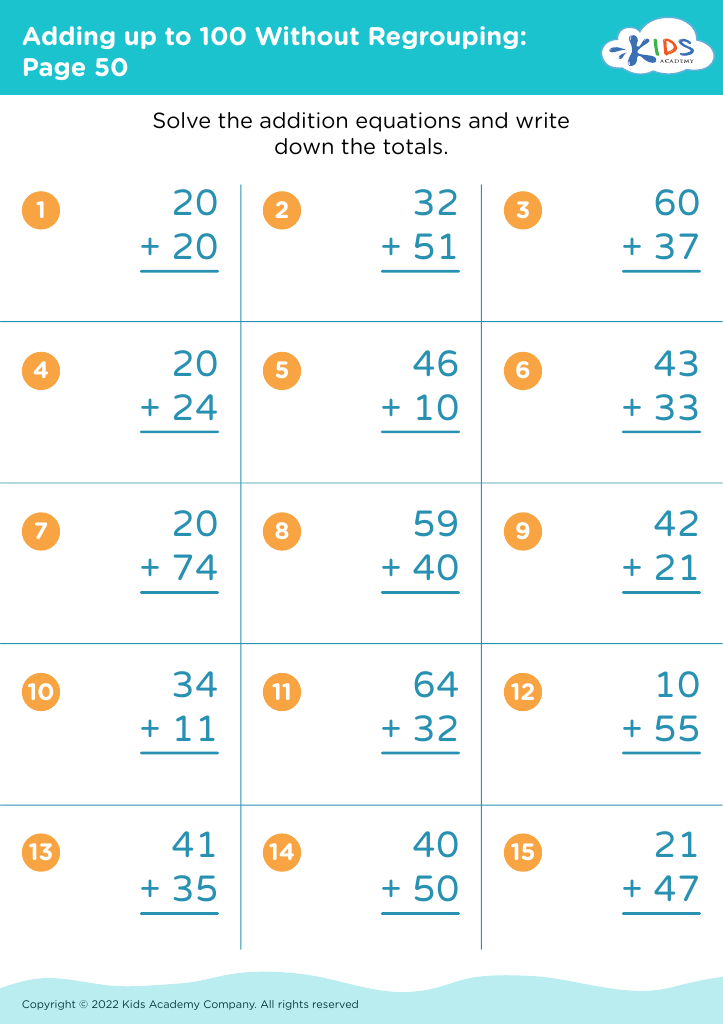
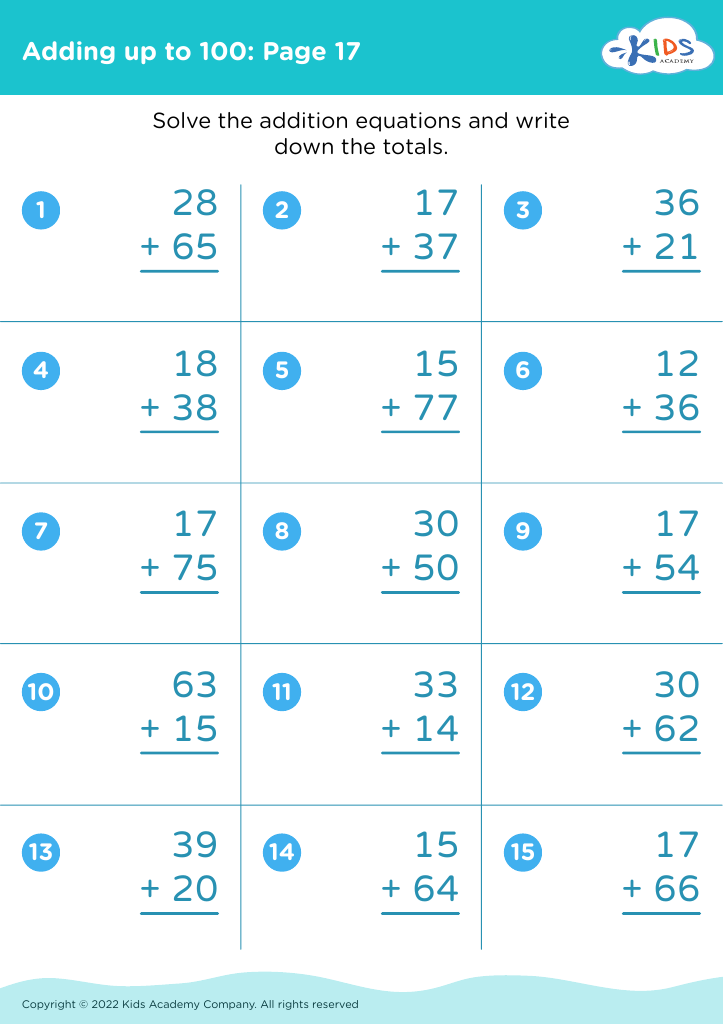
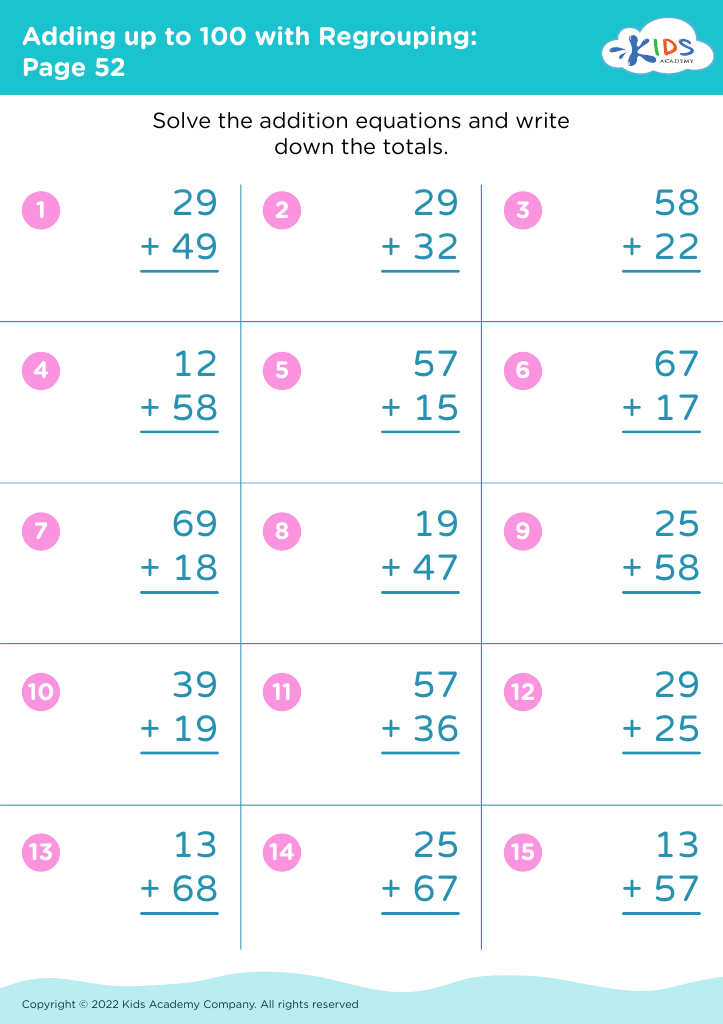
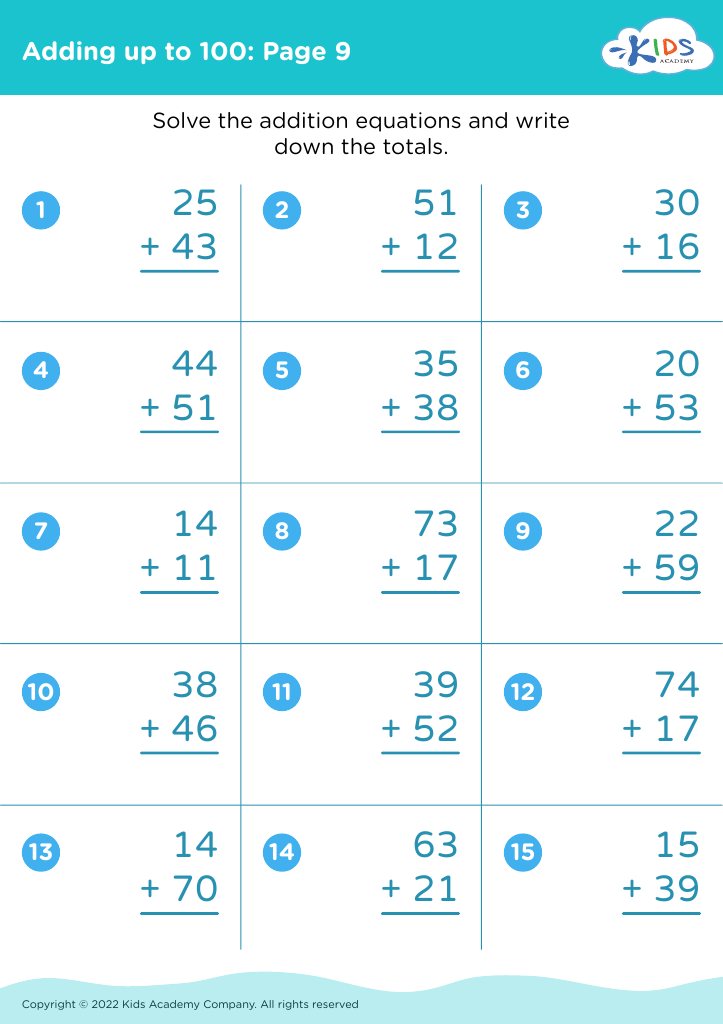
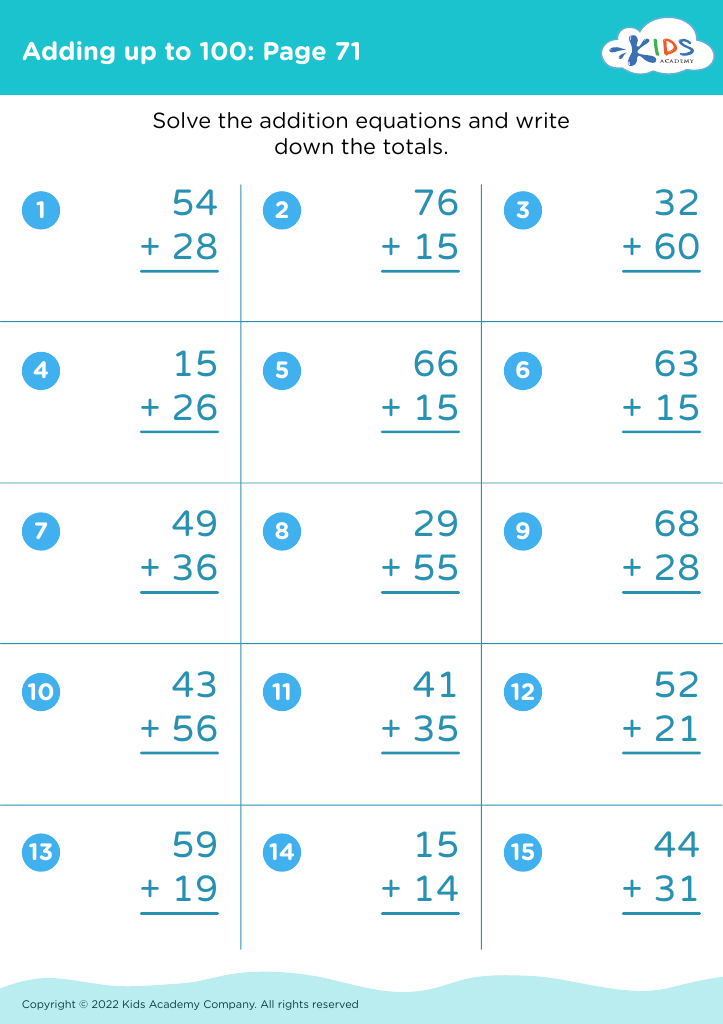
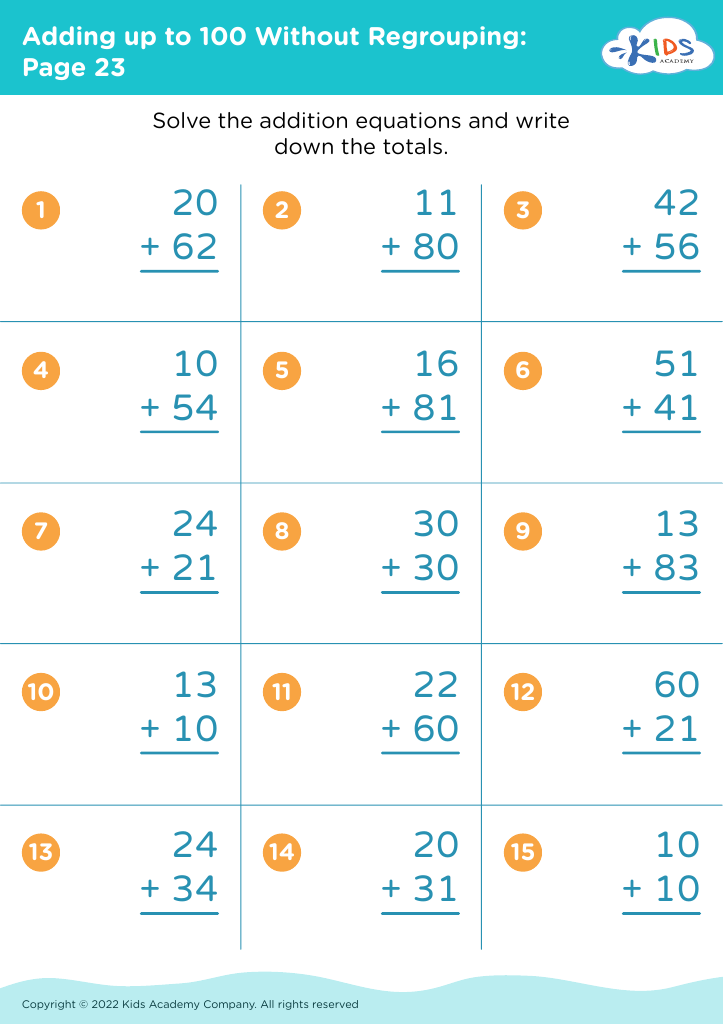
Enhance your 7-year-old's math skills with our "Comparing Fractions Adding up to 100" worksheets! Designed to make learning engaging, these worksheets will help children master the concept of comparing fractions in an enjoyable way. By visualizing fractions in relation to a whole, they will learn to identify which fractions are greater, less than, or equal to each other. Rich in colorful illustrations and fun exercises, our materials provide a perfect balance of education and entertainment. Perfect for classroom practices or home learning, these worksheets lay a strong foundation in fraction comparison while reinforcing addition skills up to 100. Start exploring today!


%20(1).jpg)




Comparing fractions that add up to 100 is a critical skill for 7-year-olds, as it lays the groundwork for their mathematical understanding and everyday problem-solving. This concept helps children grasp the idea that fractions represent parts of a whole and enhances their number sense.
Firstly, understanding how to compare fractions encourages logical thinking and analytical skills. Children learn to evaluate sizes of different fractions and how they relate to one another, fostering critical reasoning that extends beyond mathematics.
Secondly, this skill is essential for real-life applications. When children tackle word problems involving sharing, cooking, or managing resources, knowing how to compare and manipulate fractions becomes invaluable. For instance, they may need to divide a pizza or allocate time for various activities, and fractions provide a clear way to identify fair shares.
Moreover, comparing fractions instills a sense of confidence in young learners. Mastery of this skill makes subsequent topics, such as adding, subtracting, and simplifying fractions, easier to grasp, paving the way for continued success in mathematics.
In summary, parents and teachers should prioritize teaching young learners how to compare fractions, as it significantly enriches their understanding of math and enhances their cognitive development, preparing them for more complex concepts in the future.








