Develop number recognition Adding up to 100 Worksheets for 7-Year-Olds
4 filtered results
-
From - To
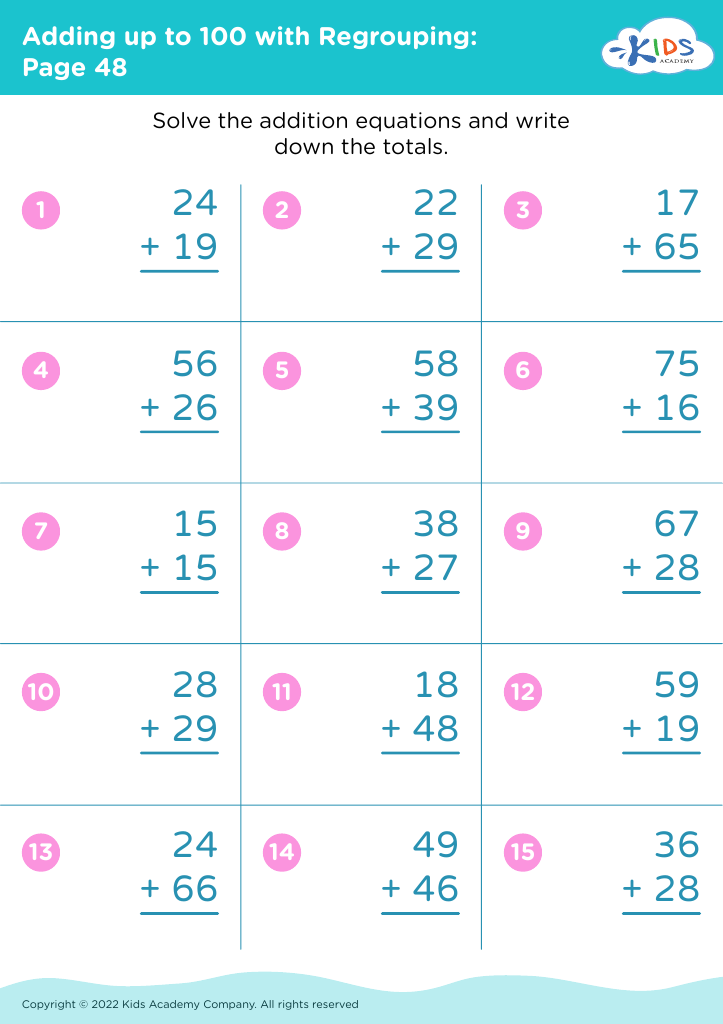
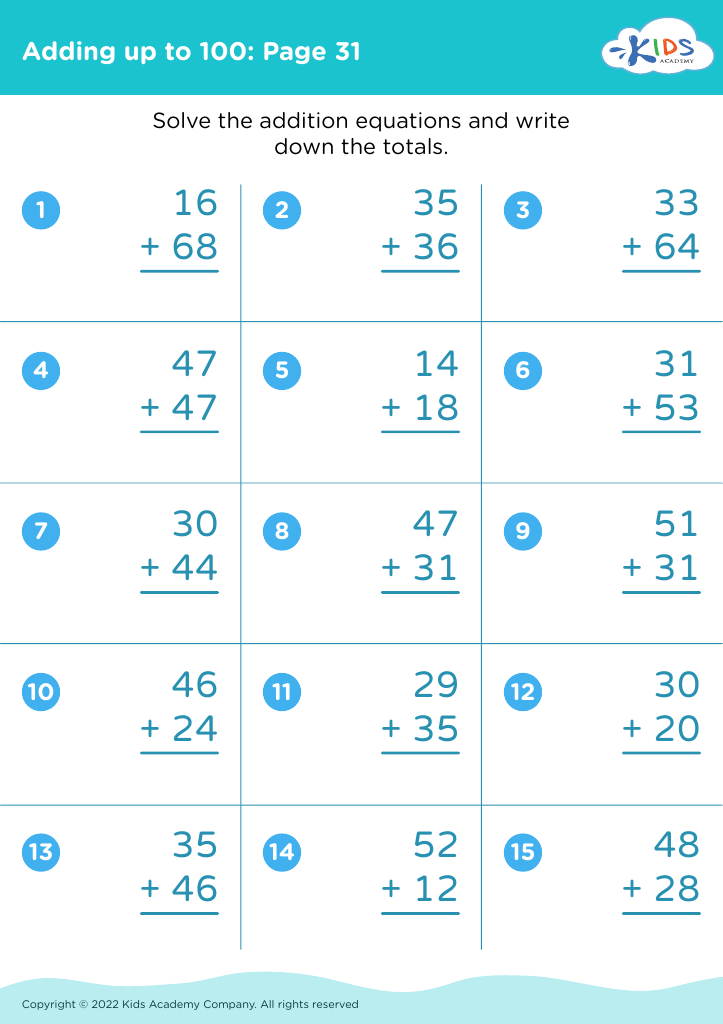
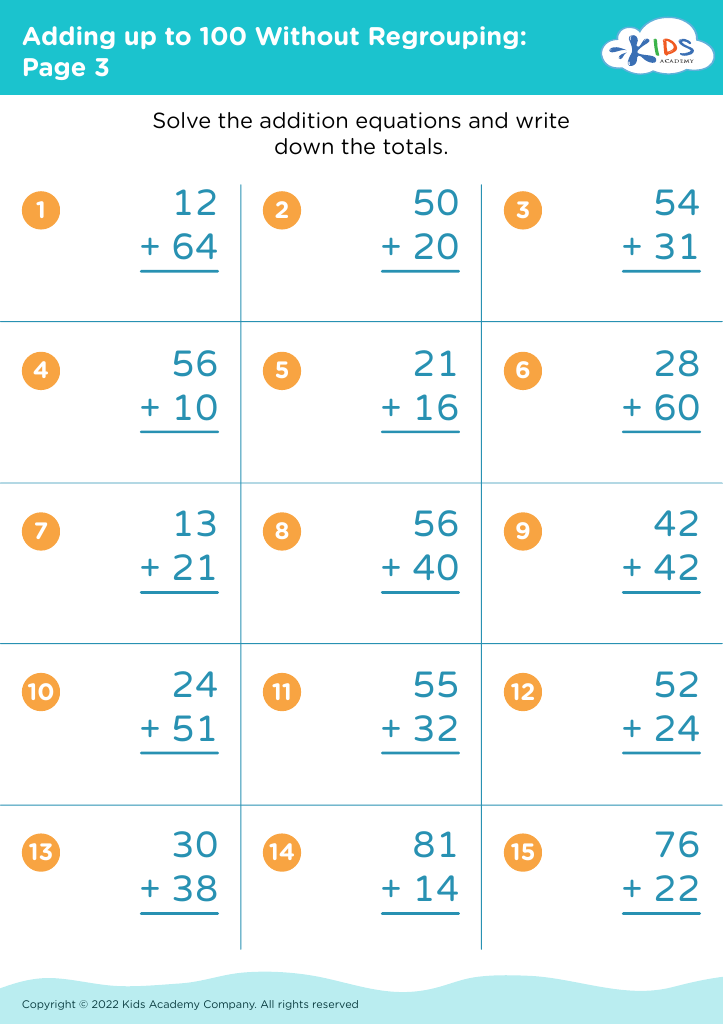
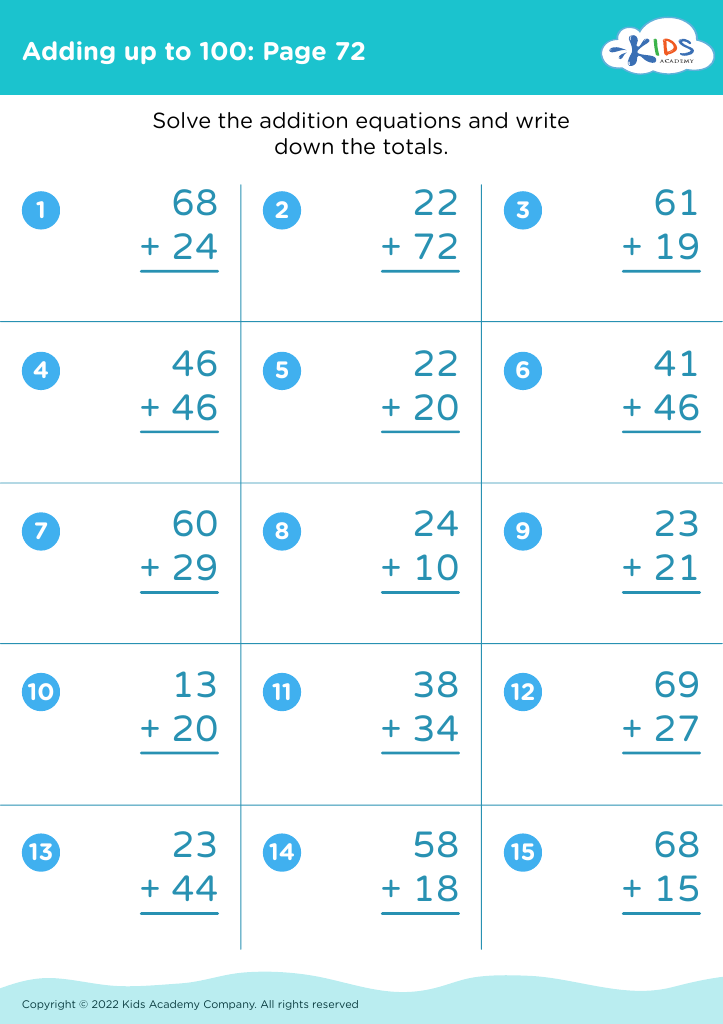
Enhance your 7-year-olds' number recognition skills with our engaging "Adding Up to 100" worksheets! Designed specifically for young learners, these printable resources offer a variety of fun exercises that help children identify numbers while mastering addition up to 100. Students will practice recognizing different number patterns, associating quantities, and building their confidence in math. Tailored for early grade learners, our worksheets utilize colorful illustrations and interactive questions to keep kids motivated and enthusiastic about learning. Perfect for classroom or home use, these worksheets not only reinforce essential math skills but also make learning a fun and enjoyable experience!





%20(1).jpg)

Number recognition is a foundational skill that plays a crucial role in a child's overall mathematical development, particularly for 7-year-olds learning to add up to 100. Parents and teachers should prioritize this skill because it enhances children's ability to understand and manipulate numbers, which is essential for more complex math concepts they will encounter in later grades.
Recognizing numbers allows children to identify quantity, understand number sequences, and build confidence in their mathematical abilities. By mastering number recognition, children can efficiently tackle addition problems, reinforcing their understanding of basic arithmetic principles. This skill also aids in developing problem-solving strategies, as recognizing relationships between numbers can lead to quicker and more accurate calculations.
Moreover, early intervention in developing number recognition can help mitigate future learning difficulties. Engaging activities—such as games, flashcards, and real-life counting scenarios—can make learning fun and impactful. By fostering number recognition skills, parents and teachers lay the groundwork for critical thinking and analytical skills, empowering children not just in math but in their approach to learning across subjects. Ultimately, supporting children’s number recognition sets them on a path to academic success and lifelong learning.








