Developing math skills Adding up to 100 Worksheets for 7-Year-Olds
3 filtered results
-
From - To
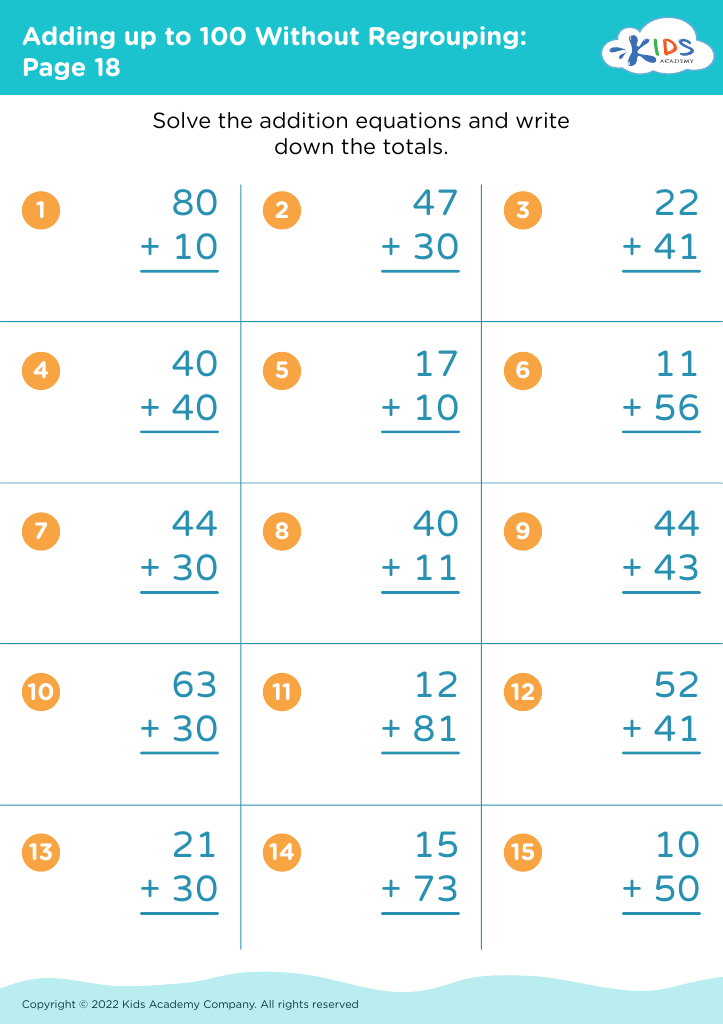
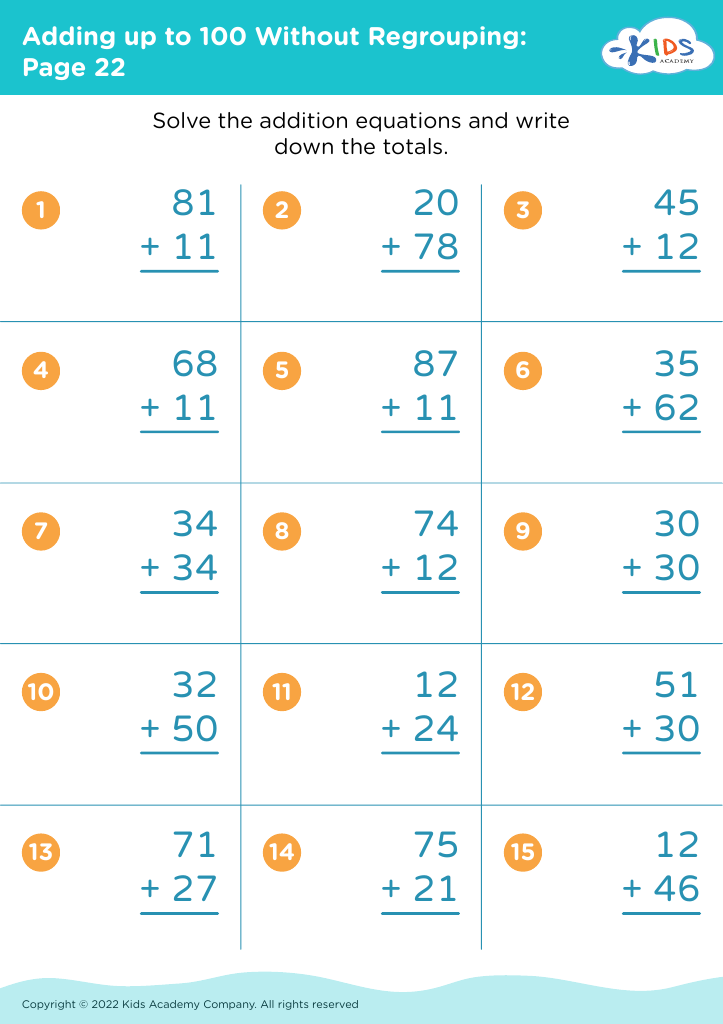
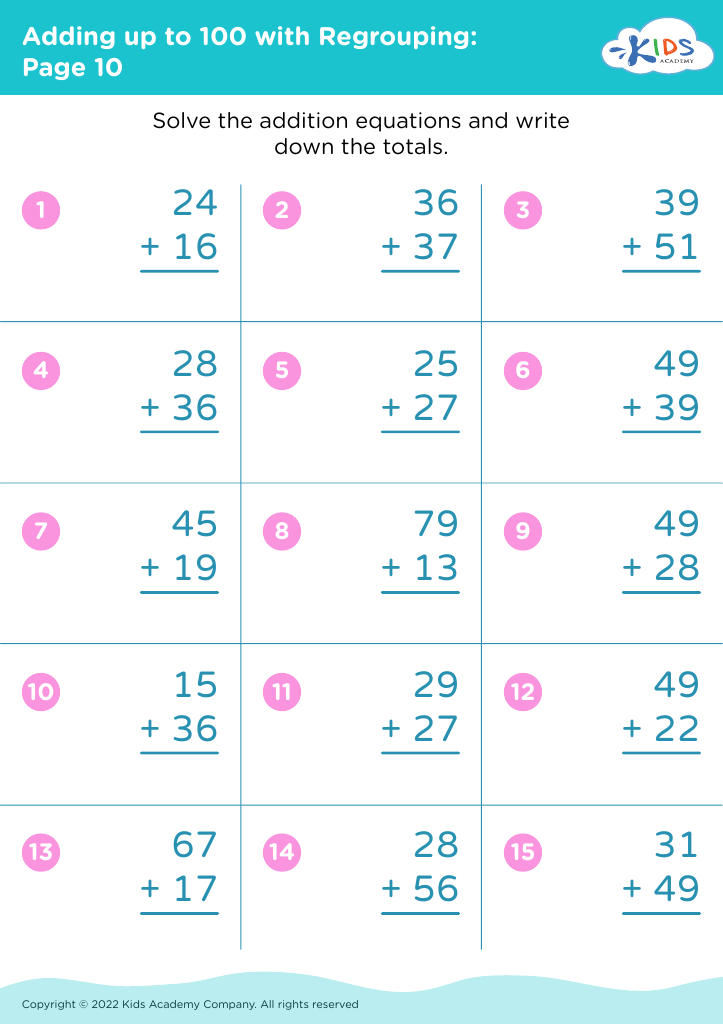
Cultivate your child's numeracy with our engaging "Developing Math Skills: Adding Up to 100" worksheets, tailored for 7-year-olds. Designed to enhance basic arithmetic, these worksheets help children master addition up to 100 through interactive exercises. Perfect for both classroom and home use, each sheet encourages critical thinking and problem-solving while making learning fun. Boost your child's confidence in math with this vital resource that supports continuous progress and fosters a positive attitude towards learning essential math concepts. Unlock your child's potential with our expertly developed educational materials and watch their skills flourish effortlessly.



%20(1).jpg)



Developing math skills in young children, specifically the ability to add numbers up to 100 by age 7, is crucial for several reasons. First, foundational math skills are the building blocks for future learning. Mastering basic operations like addition creates a strong base upon which more complex mathematical concepts, such as subtraction, multiplication, and division, can be built. Consequently, these skills are essential for academic success in later years, as math is a core subject within the curriculum.
For parents and teachers, fostering these skills also ensures the overall cognitive development of children. Math helps in developing critical thinking and problem-solving abilities. When children engage in solving addition problems, they learn to recognize patterns, think logically, and make decisions. These cognitive benefits extend beyond the math classroom, enhancing their learning capabilities across various subjects.
Furthermore, early success in math boosts confidence and a positive attitude towards the subject. This positive reinforcement encourages children to tackle new challenges with a growth mindset. Lastly, everyday activities, such as counting money, telling time, and even cooking, require basic addition skills. By focusing on developing these abilities early, parents and teachers are empowering children to navigate the world more efficiently and independently.








