Enhance number recognition Adding up to 100 Worksheets for 7-Year-Olds
8 filtered results
-
From - To
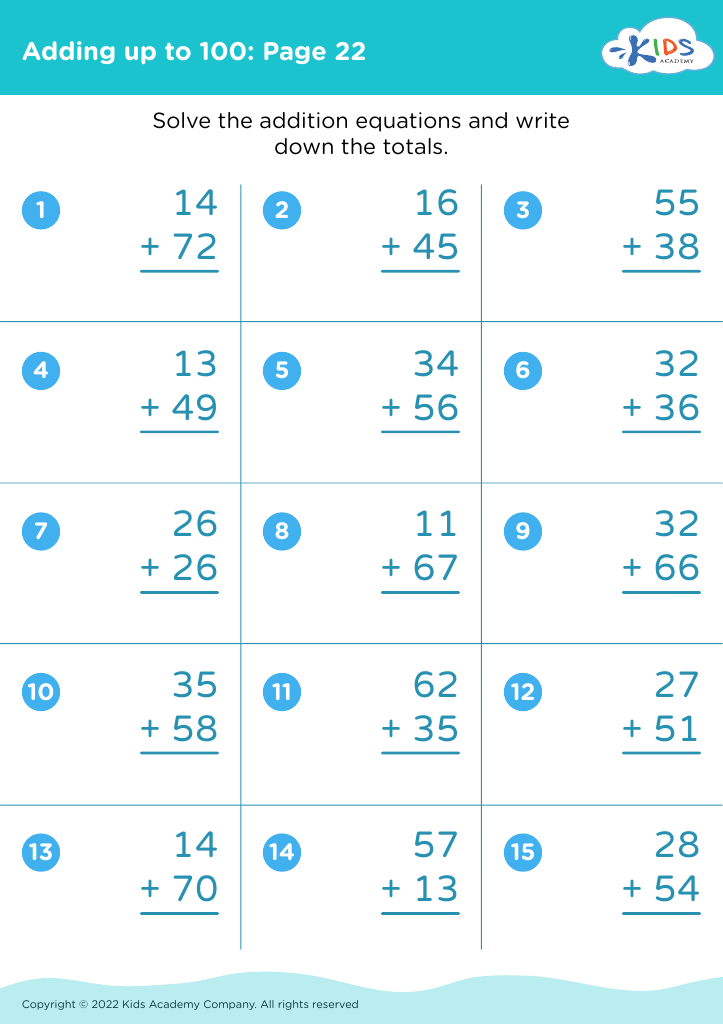
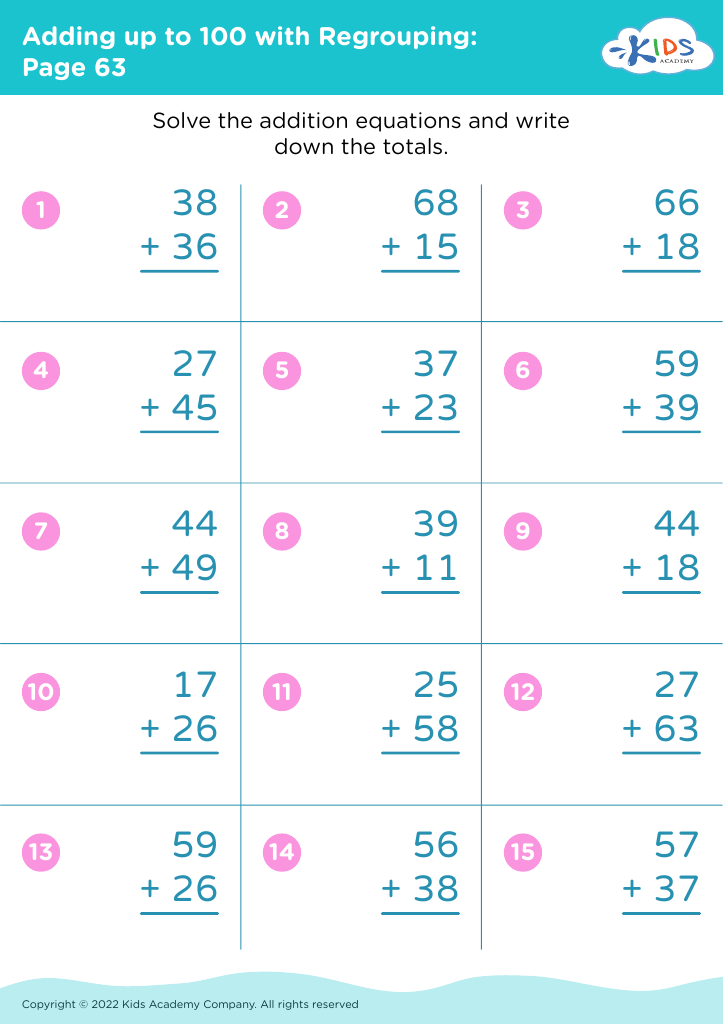
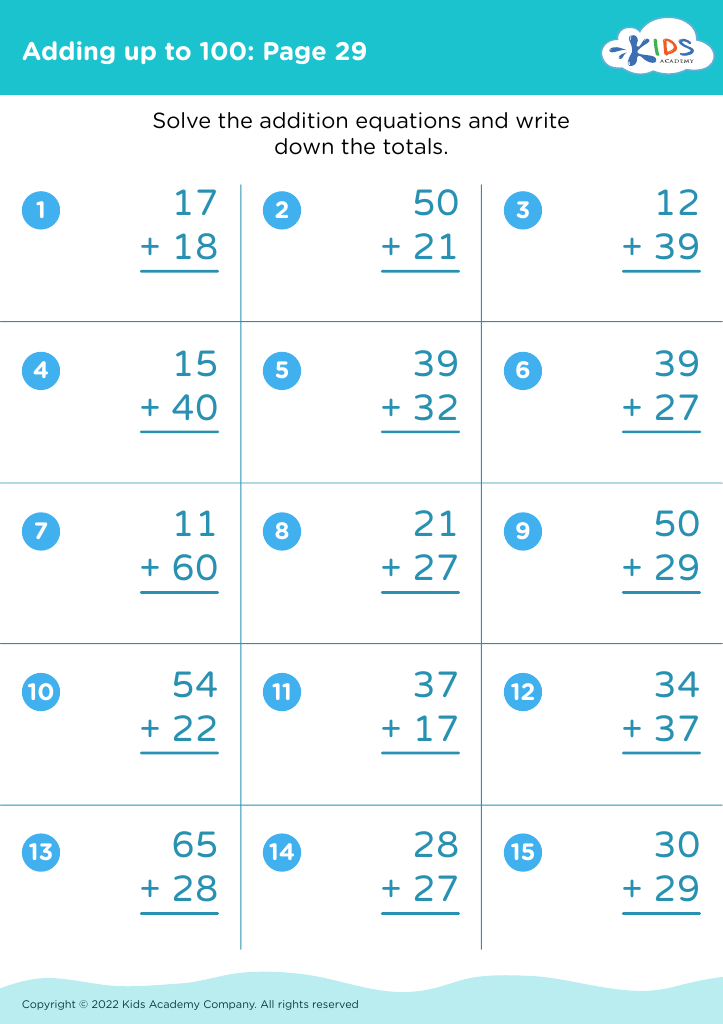
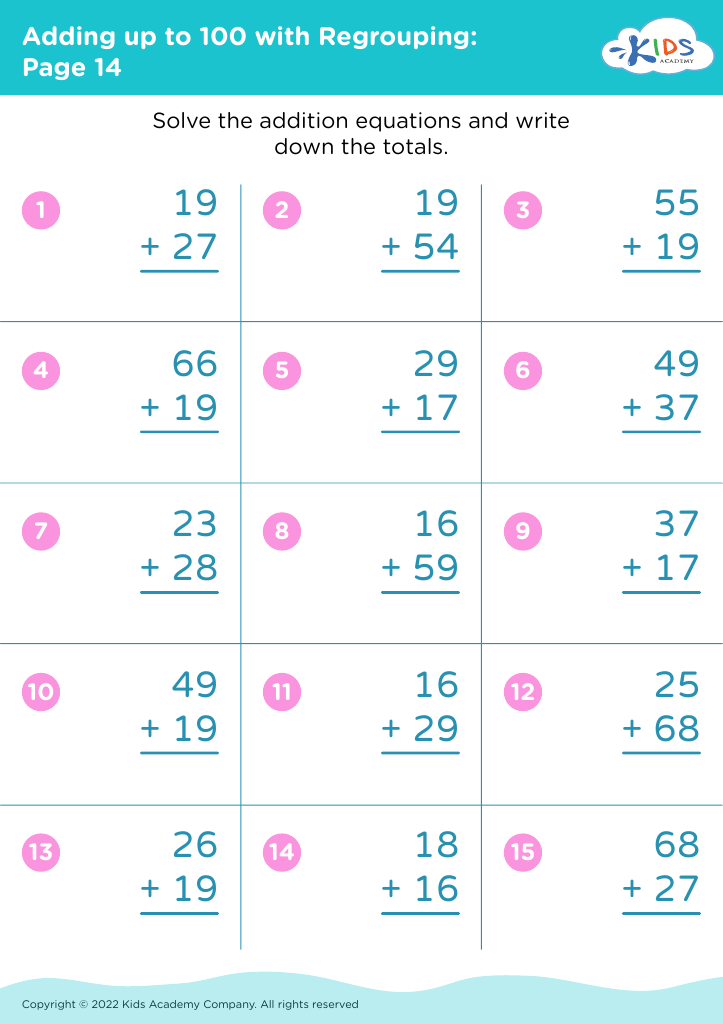
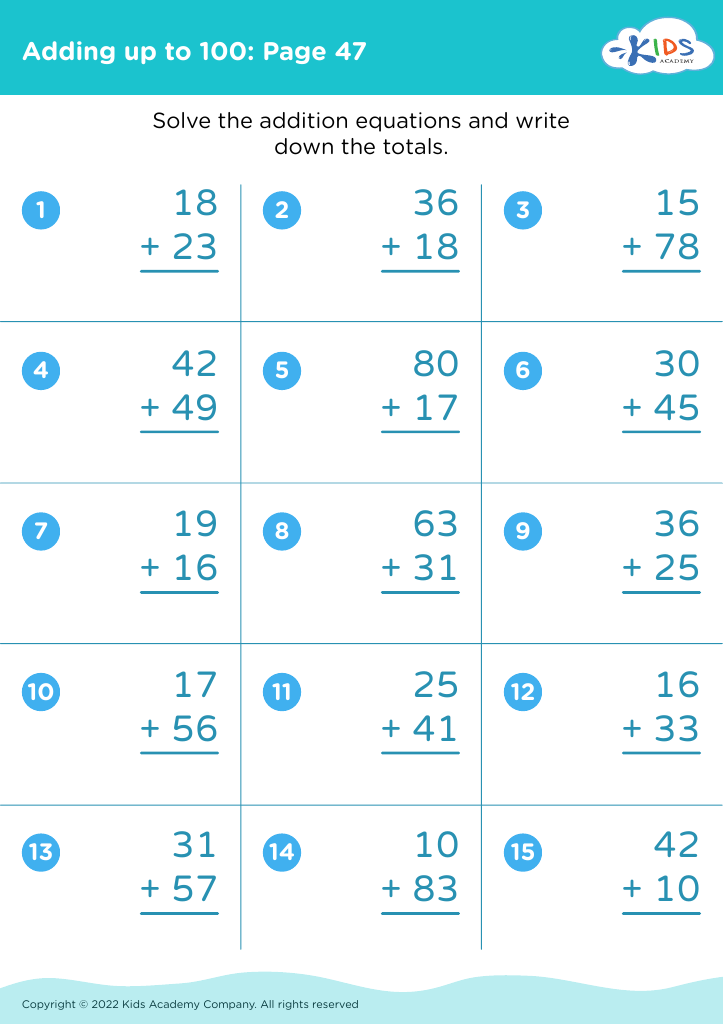
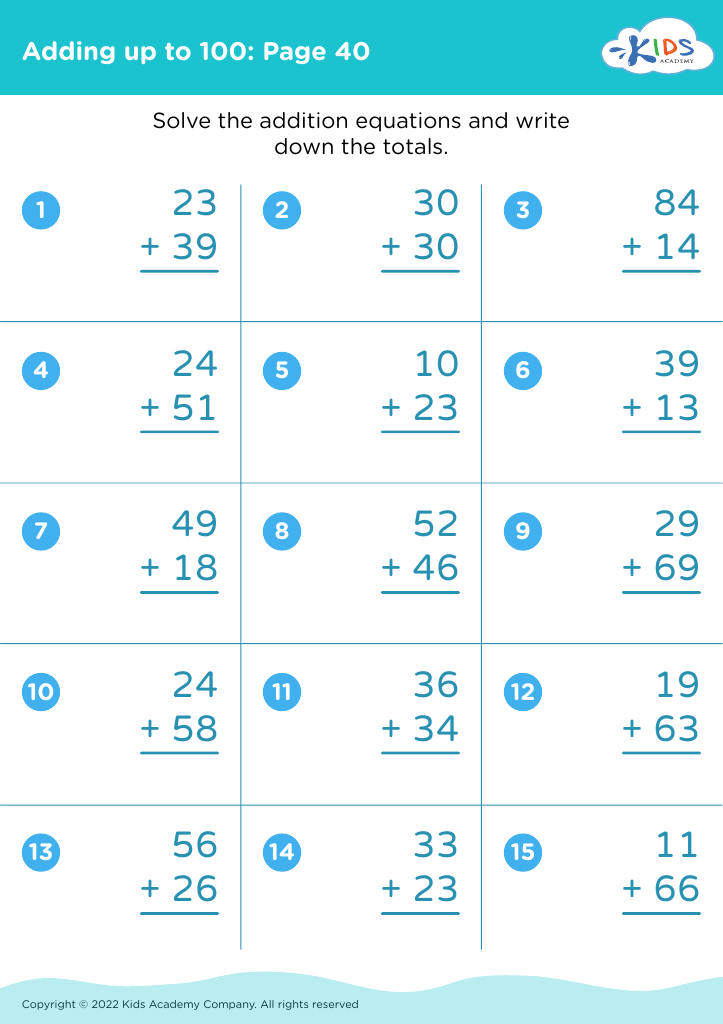
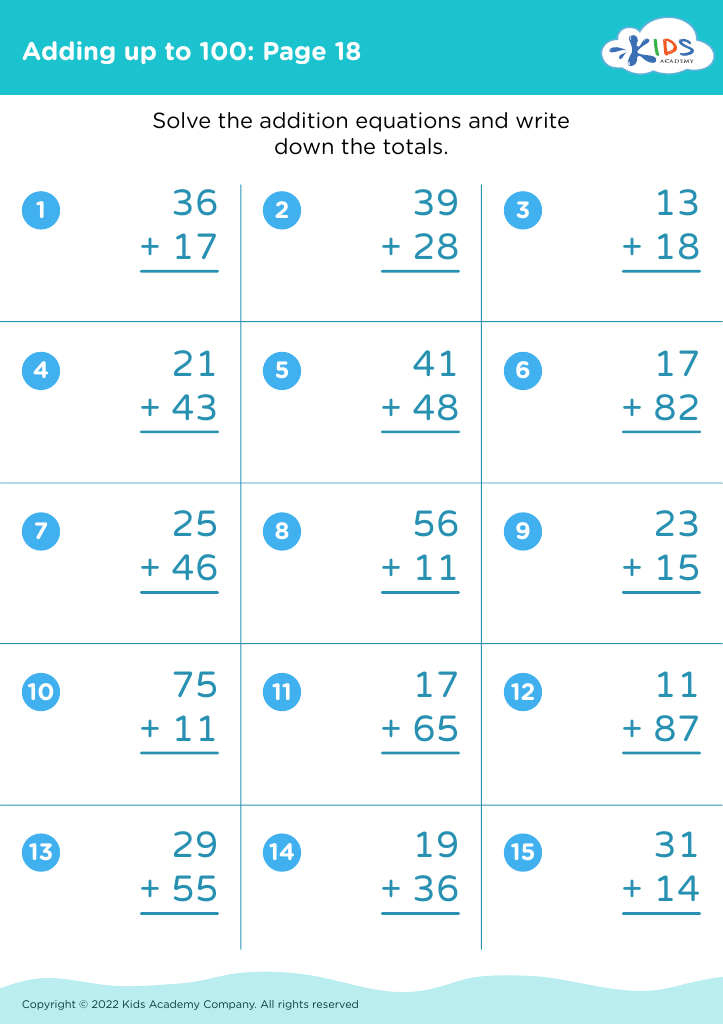
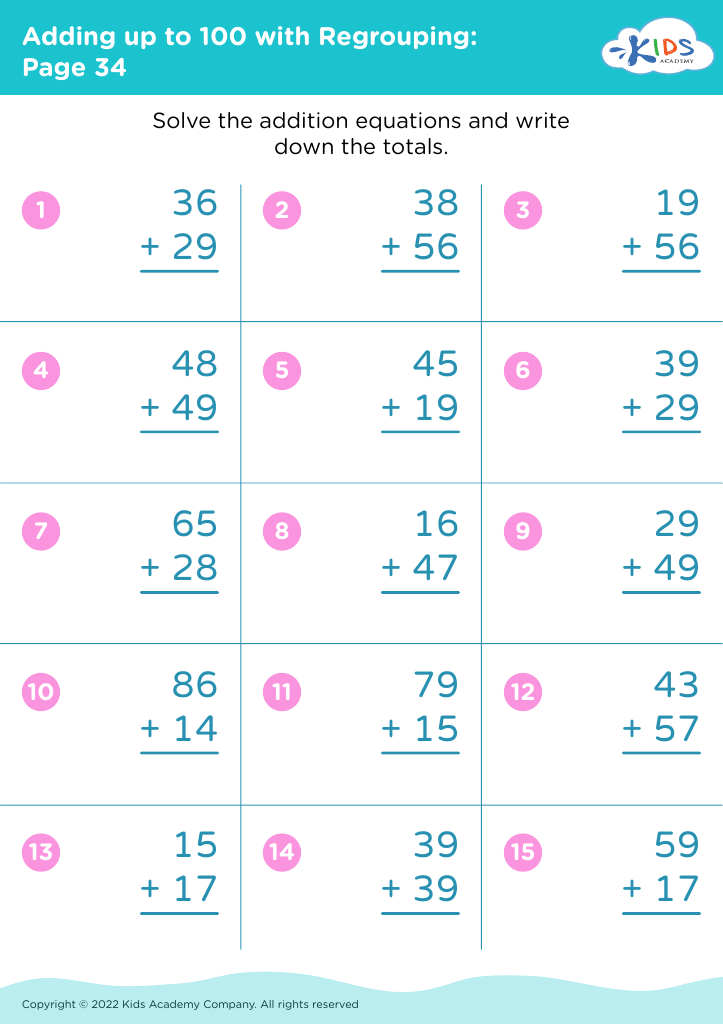
Boost your 7-year-old's math skills with our "Enhance Number Recognition Adding up to 100 Worksheets!" Designed to make learning fun, these engaging worksheets help young learners master addition within 100. Each activity combines colorful visuals and interactive exercises to strengthen number recognition and arithmetic proficiency. Perfect for classroom or home use, our worksheets provide a solid foundation in essential math concepts. Watch your child gain confidence and improve their skills through gradual challenges and exciting tasks. Explore our diverse collection and make math an enjoyable adventure! Visit Kids Academy today to download and start enhancing your child's learning experience.




%20(1).jpg)


Number recognition and the ability to add up to 100 are critical skills for 7-year-olds, forming the bedrock for more complex mathematical concepts later on. At this age, children are developing their cognitive skills at a rapid pace, and gaining proficiency in these areas can significantly boost their academic and everyday functioning.
Firstly, understanding numbers and mastering basic addition helps build confidence. When children grasp these skills early, they are more likely to feel empowered and capable in their entire approach to mathematics. Confidence in math can translate into a positive attitude towards the subject, reducing anxiety and setting a solid foundation for future learning.
Moreover, foundational math skills are essential for more intricate concepts. Without a strong grasp on number recognition and basic addition, children can struggle with more advanced topics, such as subtraction, multiplication, division, and even algebra later on.
In everyday life, these skills are practical and essential. They help children understand and manage money, time, and measurements, thus boosting their overall independence and problem-solving abilities.
Both parents and teachers play pivotal roles in providing engaging and supportive learning experiences. Active involvement and encouragement helps make math fun and relevant, ensuring that children view it as an integral, approachable part of life and learning.








