Fine Motor Skills Adding up to 100 Worksheets for 7-Year-Olds
12 filtered results
-
From - To
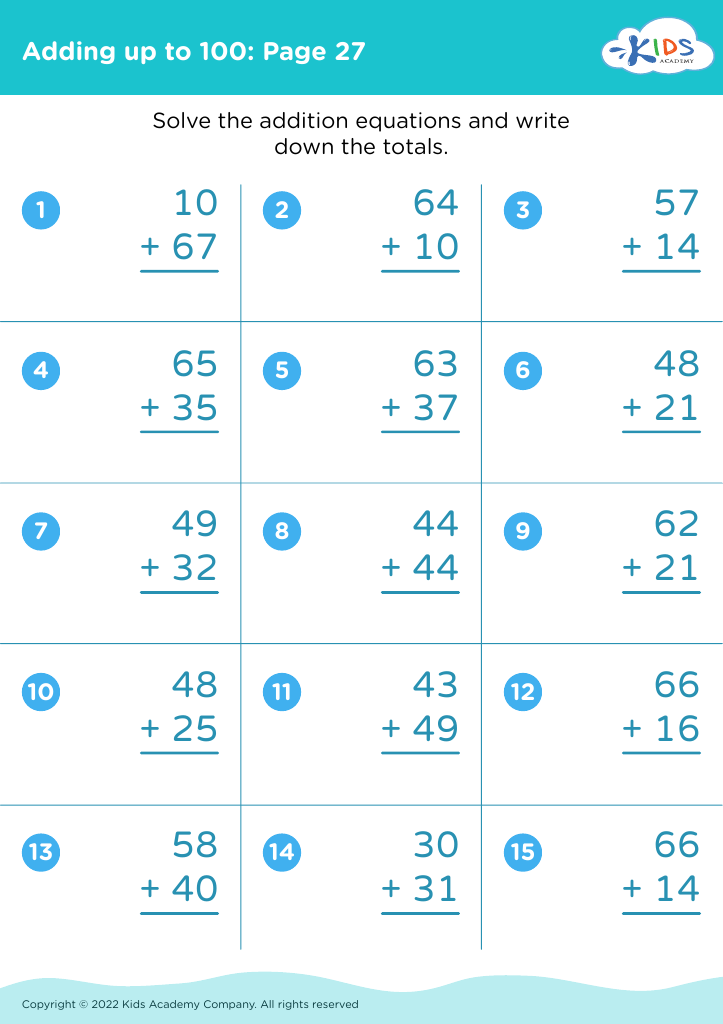
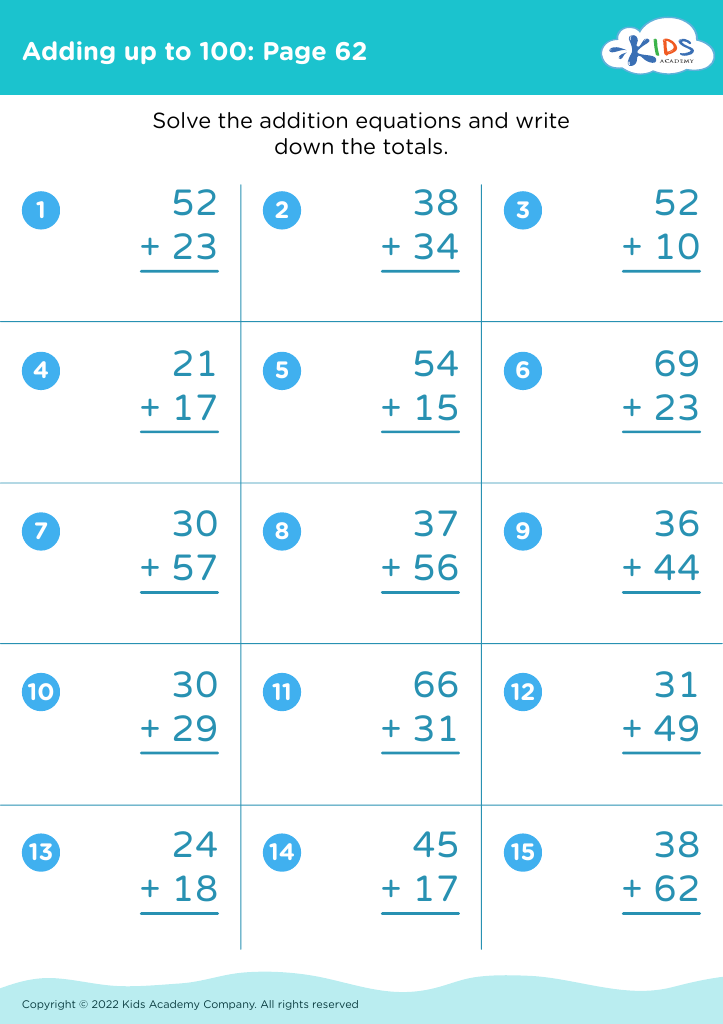
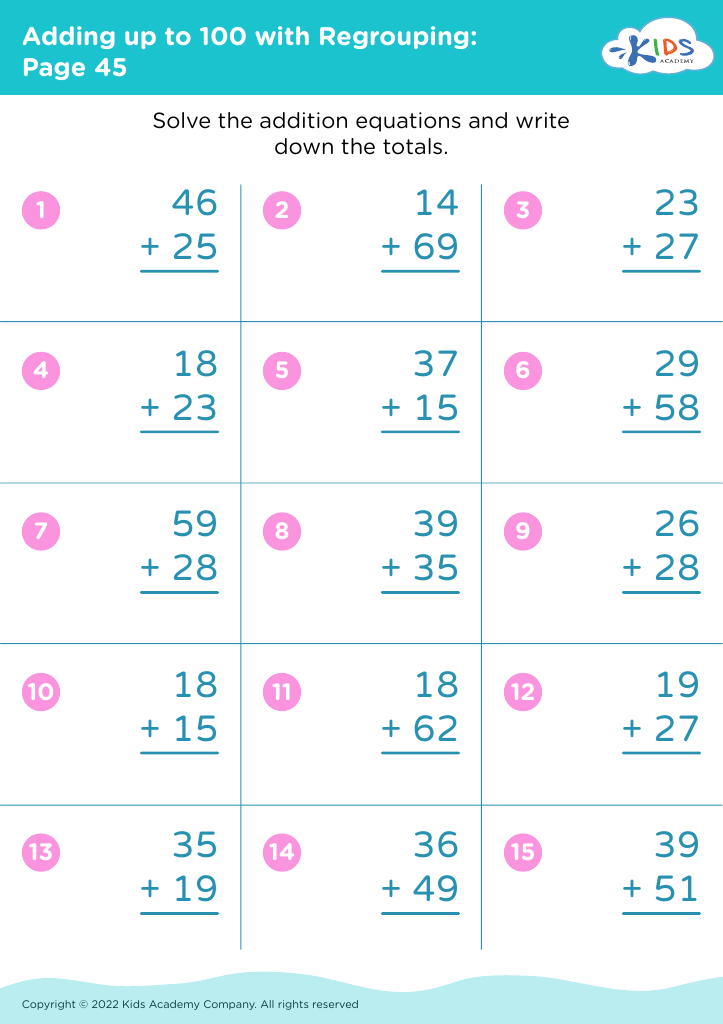
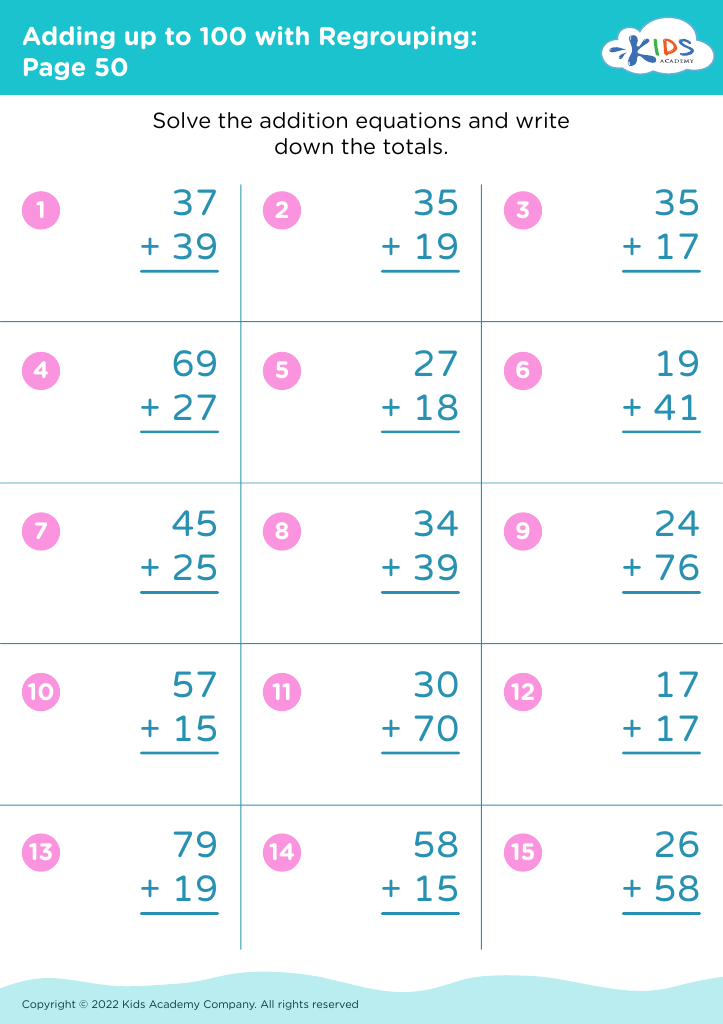
Help build your 7-year-old's fine motor skills and boost their math abilities with our "Fine Motor Skills Adding up to 100 Worksheets". Designed specifically for young learners, these engaging worksheets focus on math addition problems within 100, combining number practice with fun activities like tracing, coloring, and shape identification. Each worksheet encourages accuracy, concentration, and the development of essential fine motor abilities. Perfect for both classroom and home use, these printables are a helpful resource for parents and educators who aim to support children's mathematical growth and dexterity in an enjoyable, interactive way.
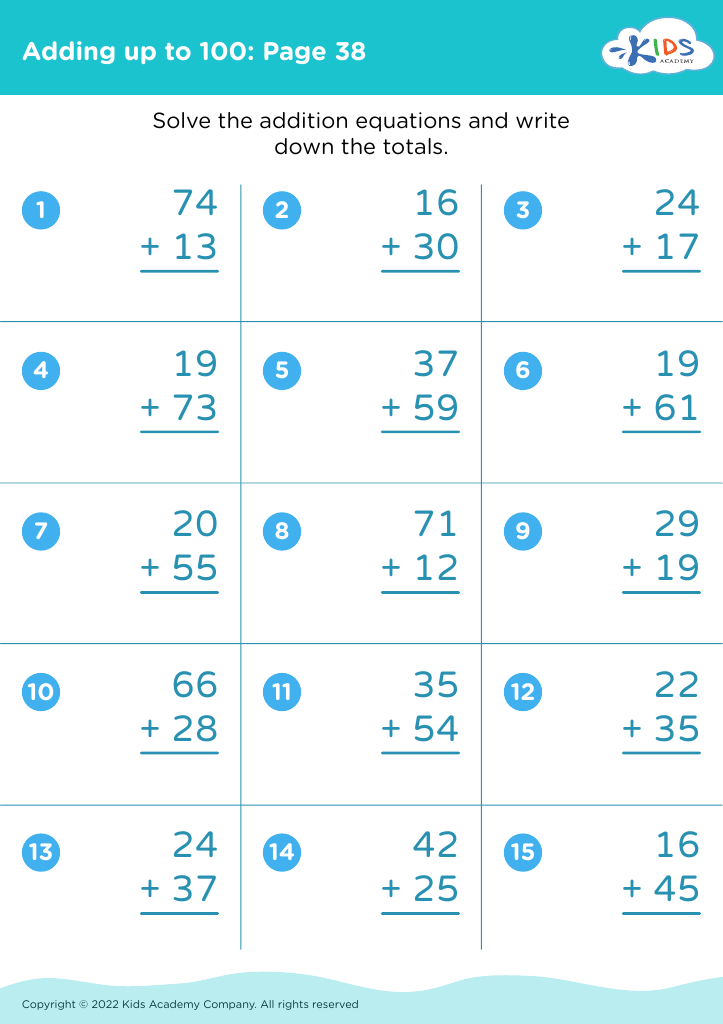
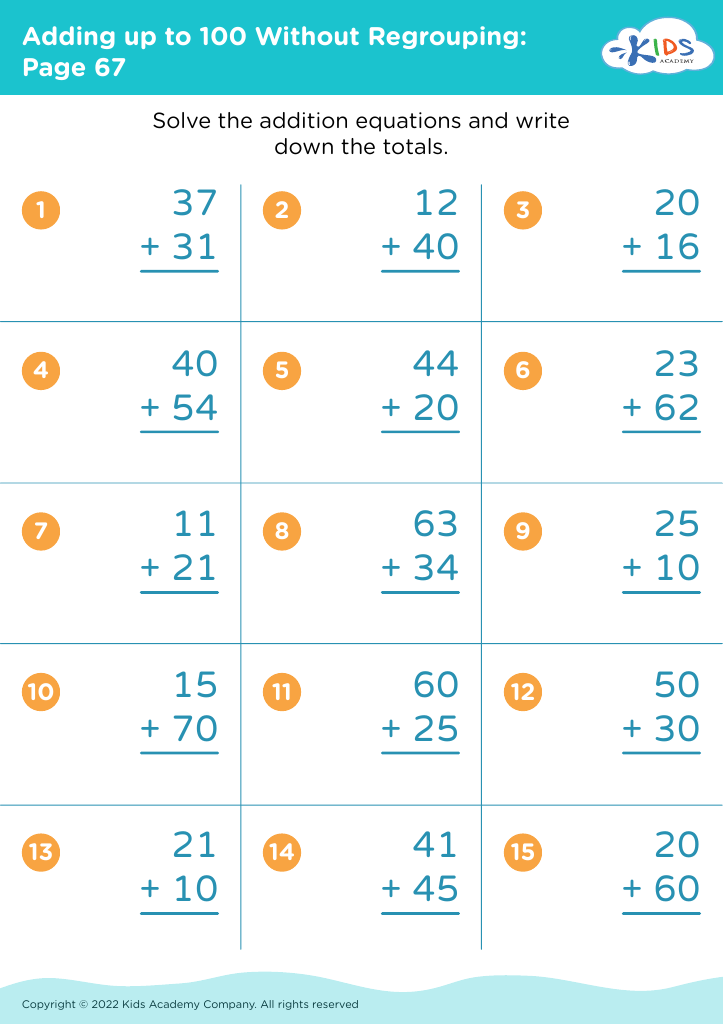
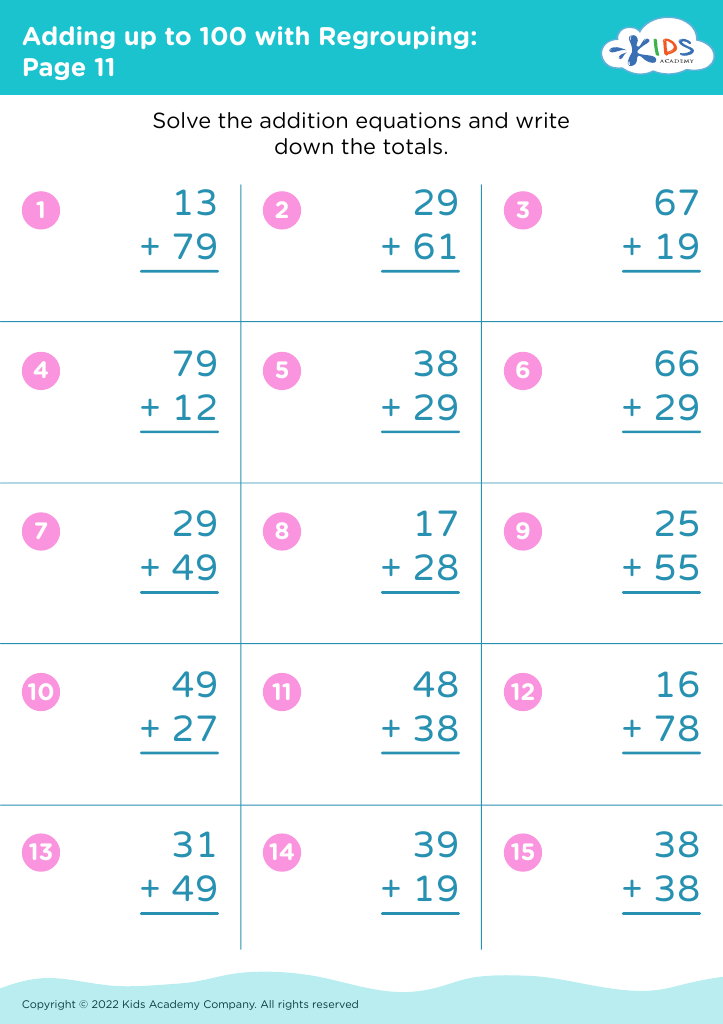
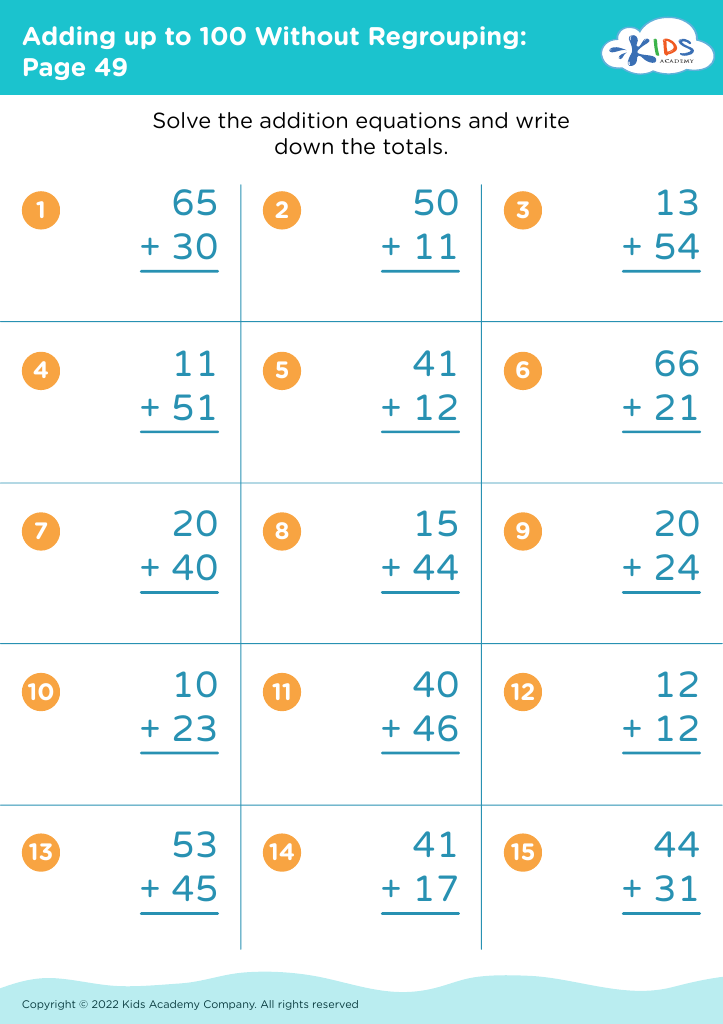
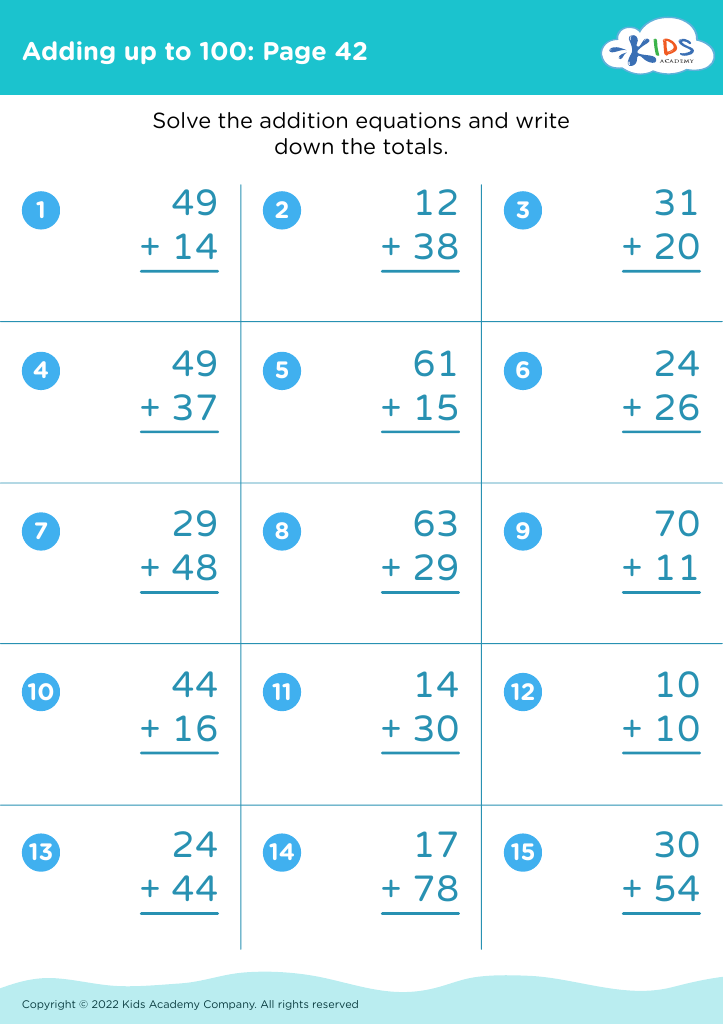
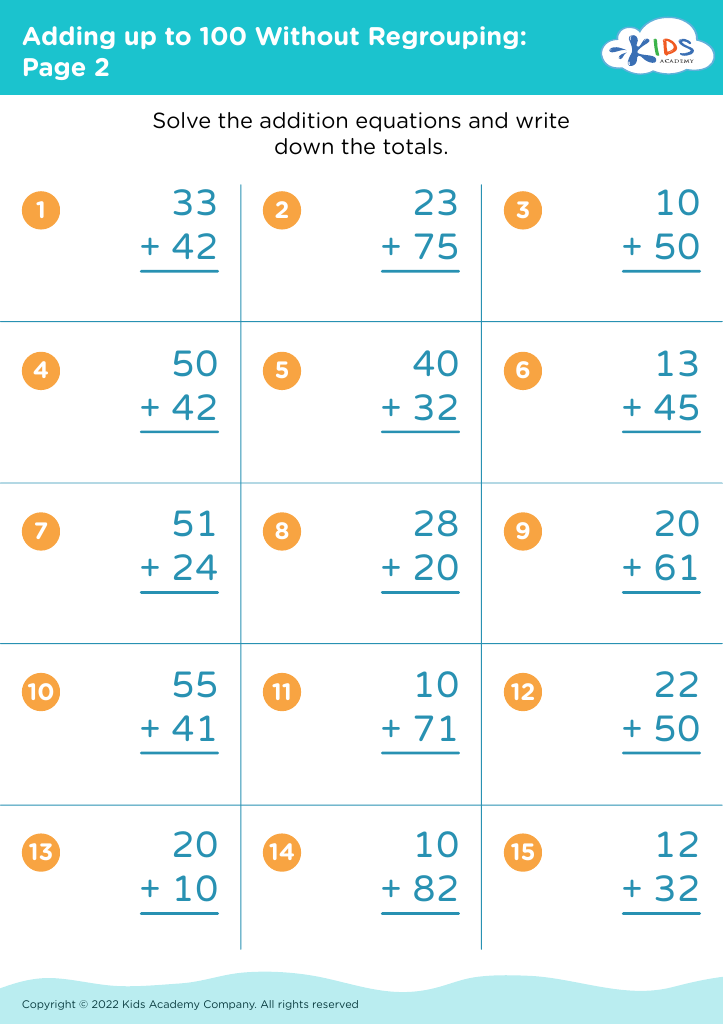
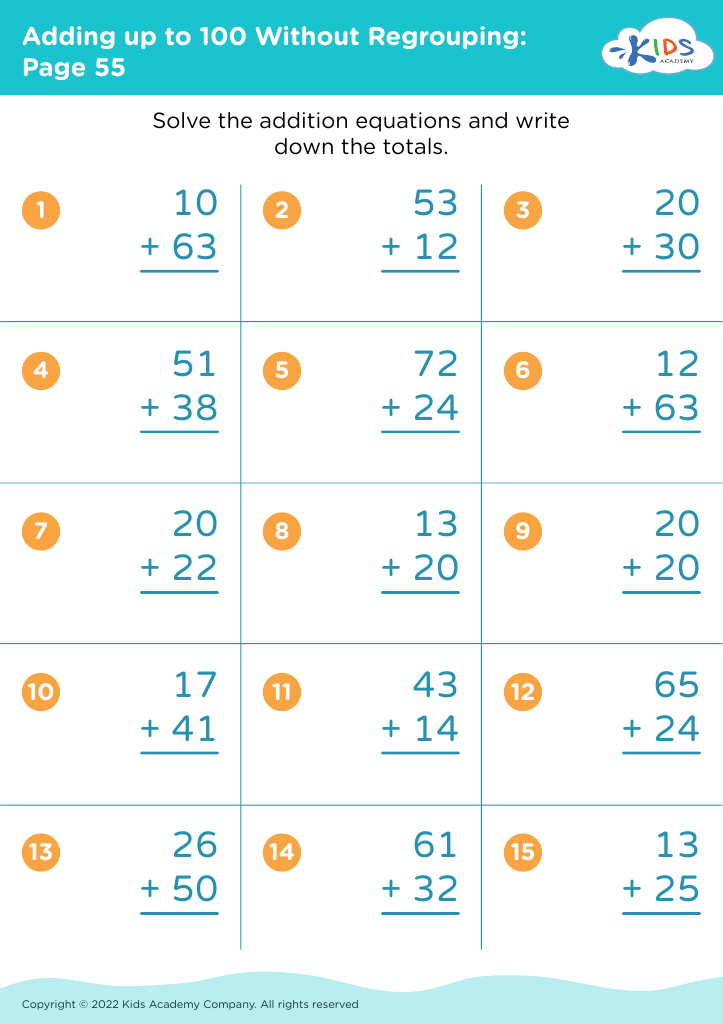
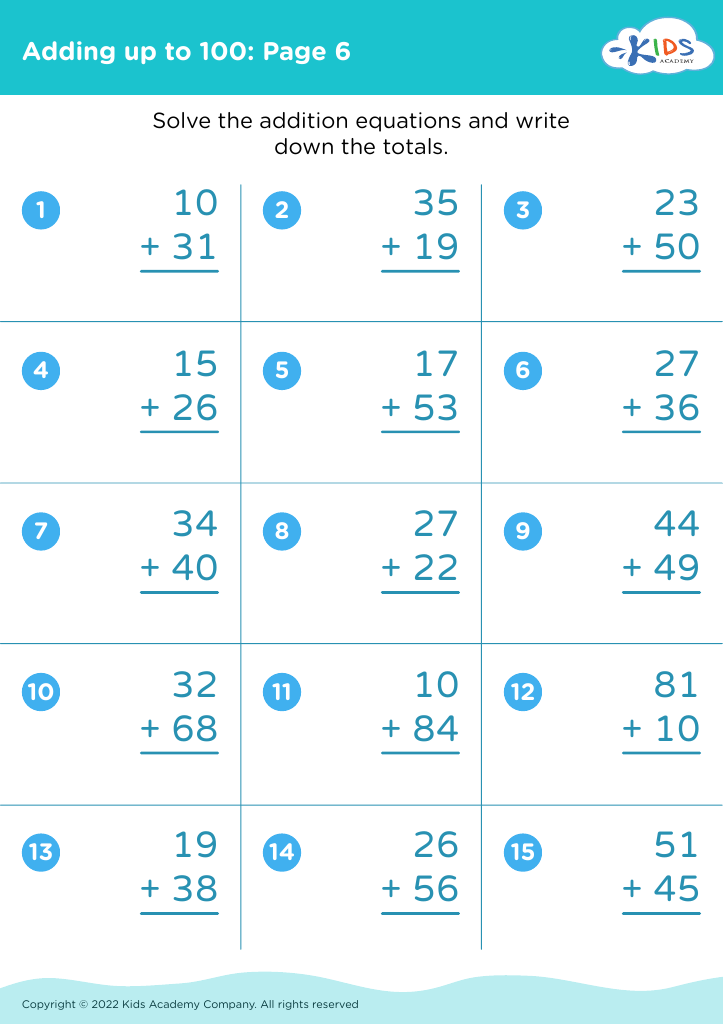


%20(1).jpg)




Fine motor skills are crucial for 7-year-old children as they form the foundation for many essential tasks and academic achievements. Specifically, being able to add up to 100 involves not just cognitive skill but also fine motor development. When children engage in activities like writing numbers, solving math problems, or using educational manipulatives, they practice precision, hand-eye coordination, and control that are all essential fine motor skills. These activities help strengthen the small muscles in their hands and fingers necessary for everyday tasks such as buttoning clothes, tying shoelaces, and using utensils.
Furthermore, fine motor proficiency directly impacts a child's ability to perform in school. For example, legible handwriting and the ability to complete written tasks efficiently can reduce frustration and increase self-confidence. Poor fine motor skills can lead to challenges in learning as children might struggle to keep up with written assignments, adversely affecting their overall academic performance and enthusiasm for learning.
Also, these skills are linked to brain development. Activities that require fine motor skills engage different parts of the brain that are responsible for planning, attention, and organization. By supporting fine motor development through activities that build up to adding numbers to 100, parents and teachers contribute to a child's comprehensive cognitive growth, setting a crucial foundation for future learning and everyday life skills.








