Hand-eye Coordination Adding up to 100 Worksheets for 7-Year-Olds
3 filtered results
-
From - To
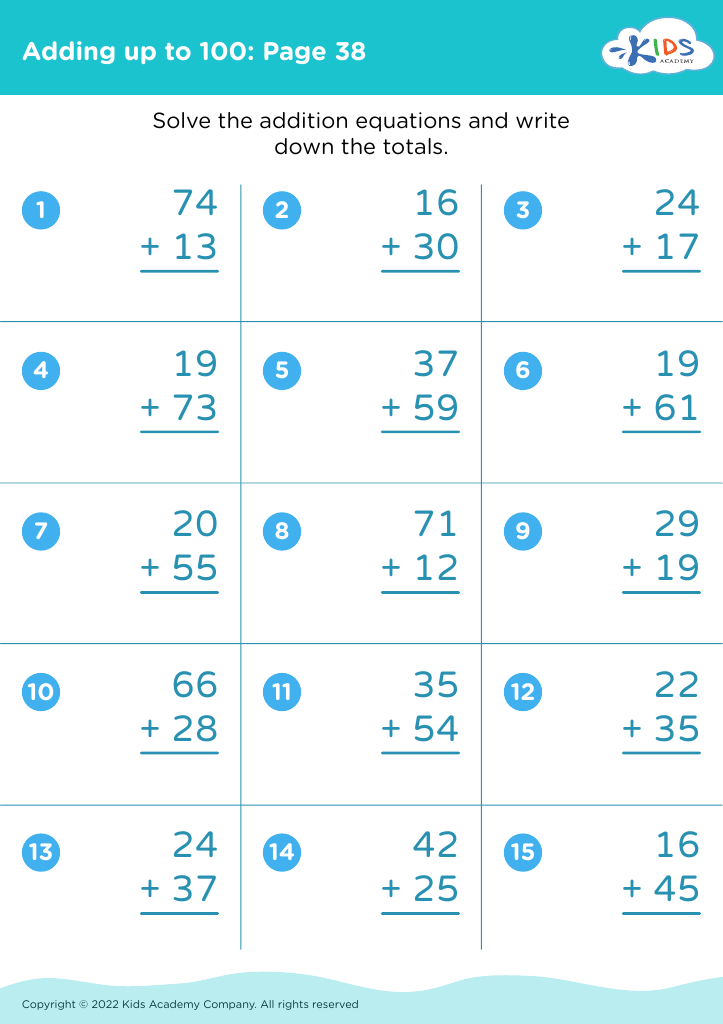
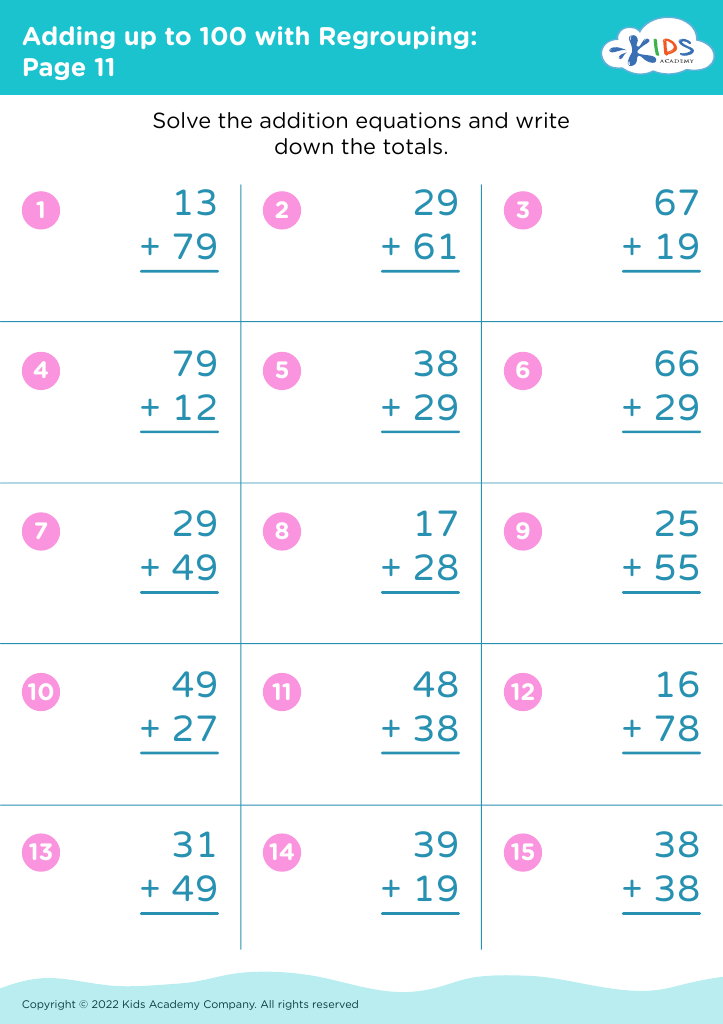
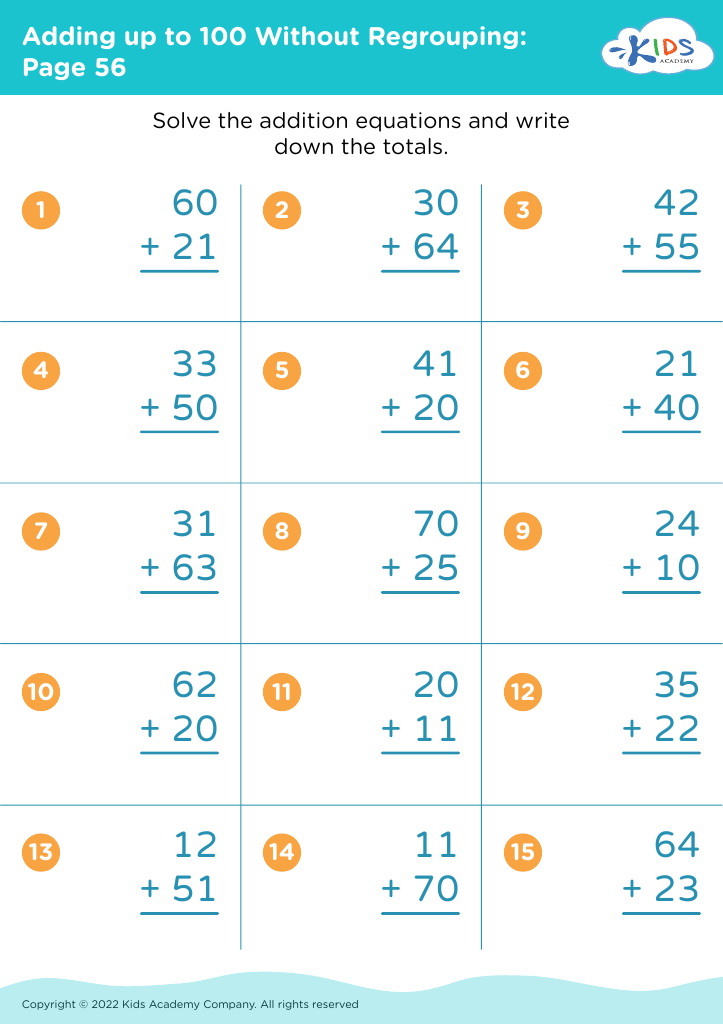
Enhance your child's hand-eye coordination while mastering addition with our "Hand-eye Coordination Adding up to 100 Worksheets" designed specifically for 7-year-olds. This engaging set of printable activities combines fun and education, allowing young learners to develop essential math skills and motor abilities simultaneously. As they practice adding numbers to reach 100, children will also refine their coordination through various interactive tasks. Perfect for at-home learning or classroom settings, these worksheets provide a holistic approach to learning that nurtures both cognitive and physical development. Unlock your child's potential with these educational tools today!


%20(1).jpg)




Hand-eye coordination is a crucial skill for 7-year-olds as it significantly impacts their learning, development, and everyday activities. This age is pivotal for developing fine motor skills, which are essential for tasks such as writing, drawing, and playing sports. Enhanced hand-eye coordination allows children to perform these tasks with greater accuracy and confidence, promoting a positive learning experience.
Moreover, practicing tasks that require hand-eye coordination, such as games involving the concept of "adding up to 100," can reinforce mathematical skills in a fun and engaging way. These activities help children develop their cognitive abilities through pattern recognition, problem-solving, and critical thinking.
Additionally, improved hand-eye coordination contributes to a child’s social skills as they engage in group activities, fostering teamwork and cooperation. Parents and teachers who focus on these skills can also recognize behavioral improvements; as children's confidence in their abilities grows, they often exhibit better focus and motivation in both academic and play situations.
Ultimately, caring about enhancing hand-eye coordination supports holistic development, making it a vital consideration for parents and educators alike. Any effort invested in these skills today sets a solid foundation for future learning and life skills.








