Identifying equivalent fractions Adding up to 100 Worksheets for 7-Year-Olds
5 filtered results
-
From - To
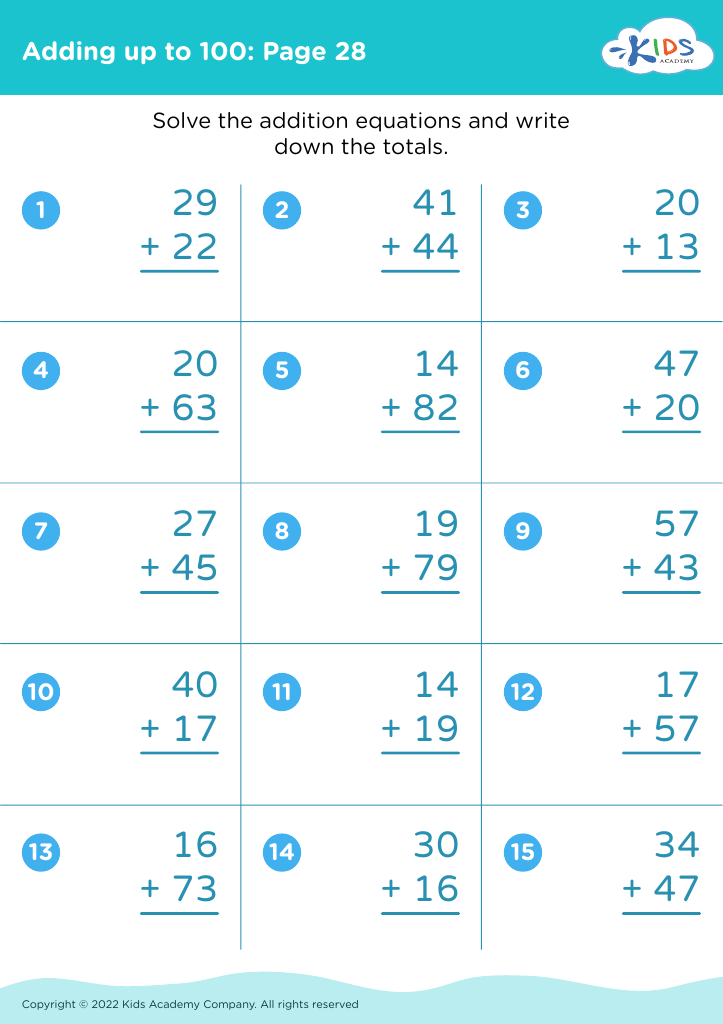
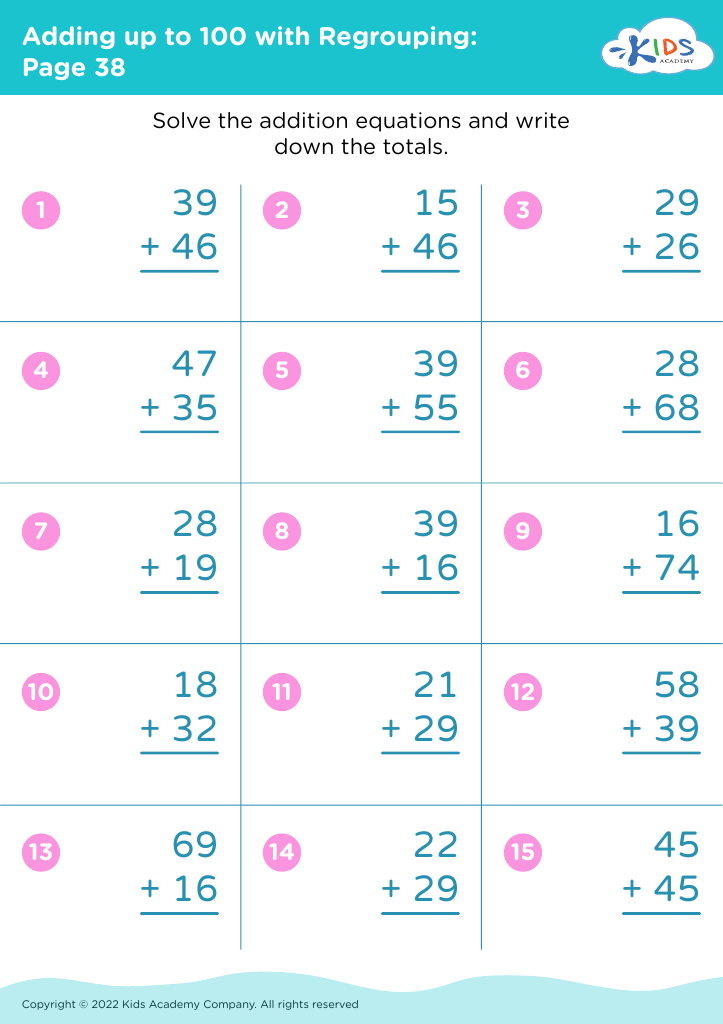
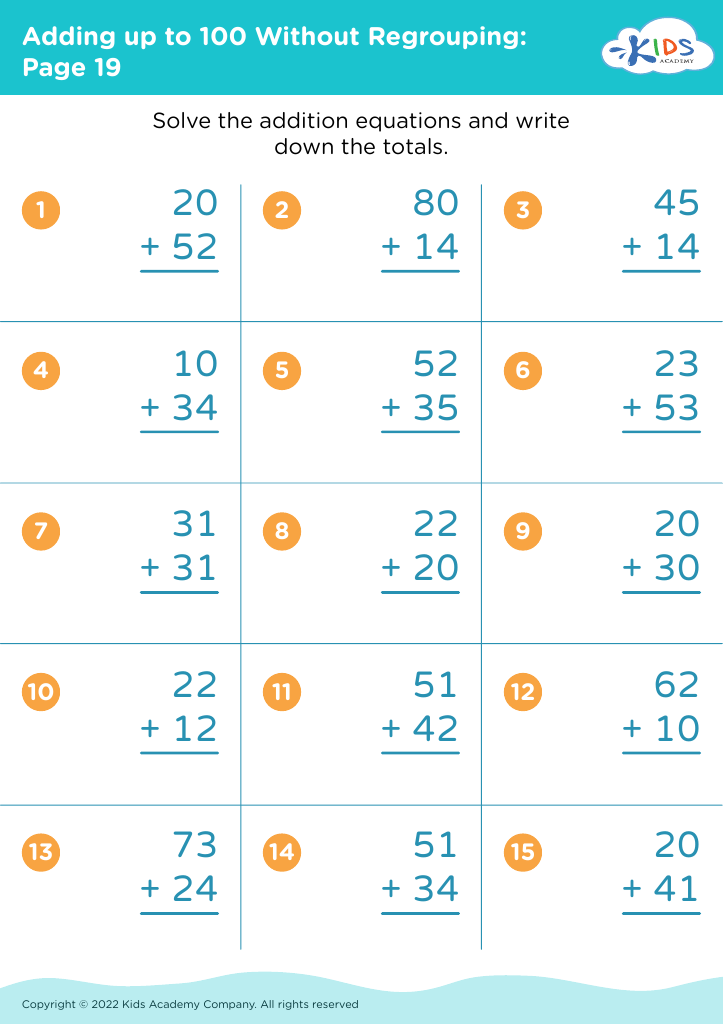
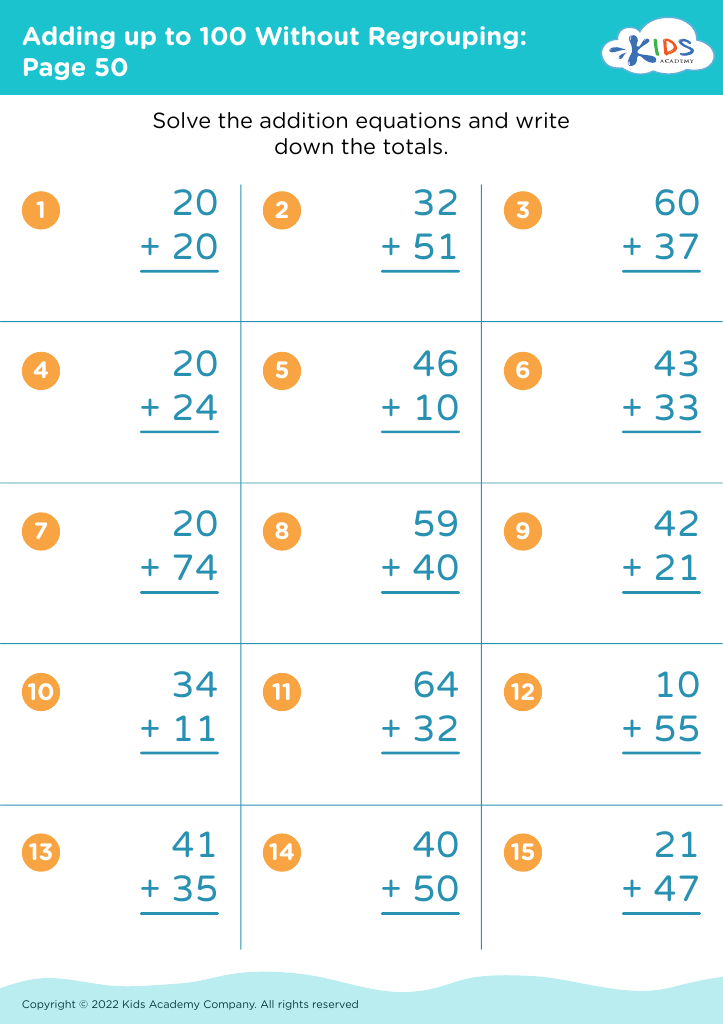
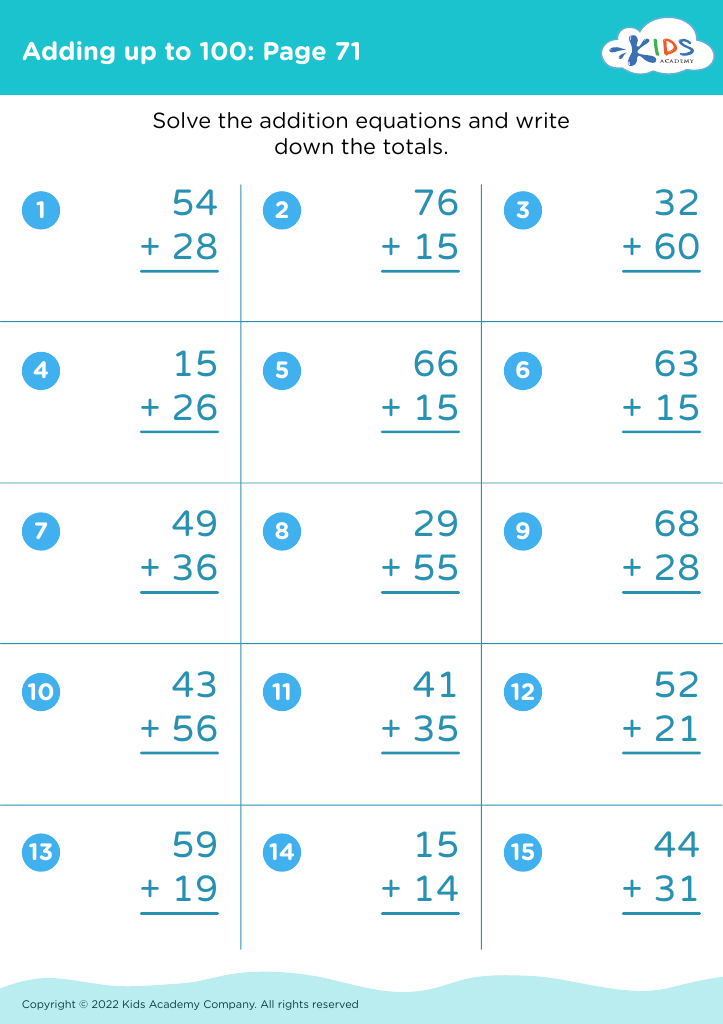
Explore our fun and engaging "Identifying Equivalent Fractions Adding Up to 100 Worksheets" designed specifically for 7-year-olds! These printable worksheets offer a vibrant and interactive approach to learning equivalent fractions. Children will enhance their math skills by recognizing fractions that represent the same value while connecting their knowledge to the concept of numbers that add up to 100. Ideal for classroom or home use, these exercises encourage problem-solving and reinforce fraction understanding in a playful, supportive environment. Empower your young learners with our carefully crafted resources, making math an enjoyable adventure! Download now and watch their math confidence grow!


%20(1).jpg)




Identifying equivalent fractions and understanding how they can add up to 100 are crucial skills for 7-year-olds, laying a strong foundation for their future in mathematics. At this age, children start to build their number sense, and grasping the concept of fractions fosters critical thinking and problem-solving skills.
By particularly focusing on identifying equivalent fractions, parents and teachers help children see the relationships between numbers. This understanding is key when they progress to more complex math concepts, like addition, subtraction, and even algebra. Learning that fractions can represent the same amount fosters flexibility in mathematical thinking.
Furthermore, connecting fractions to adding up to 100 engages children's ability to make comparisons and understand part-whole relationships. It ties in nicely with real-life scenarios, such as budgeting allowances or sharing treats, reinforcing a sense of functionality in what they learn.
Finally, developing a proficiency in identifying equivalent fractions aids in boosting children's confidence in math. By mastering these concepts early on, they will be better prepared to tackle upcoming challenges in math and develop a positive attitude towards the subject. Overall, teaching these skills benefits children's cognitive development and their engagement with math-related activities.








