Improve reading skills Adding up to 100 Worksheets for 7-Year-Olds
5 filtered results
-
From - To
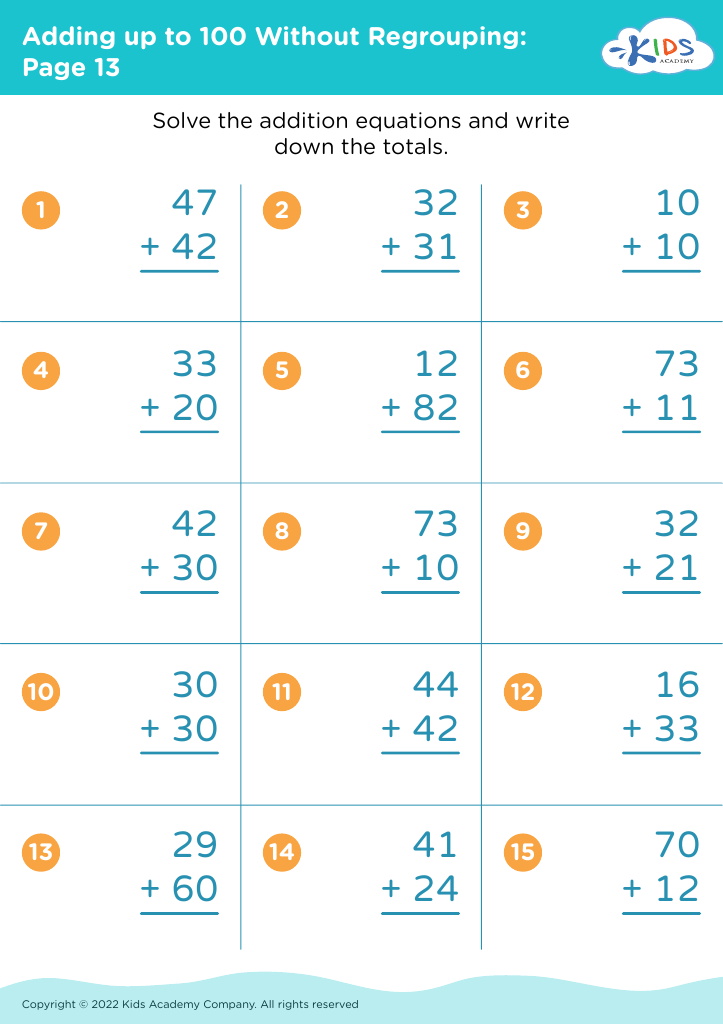
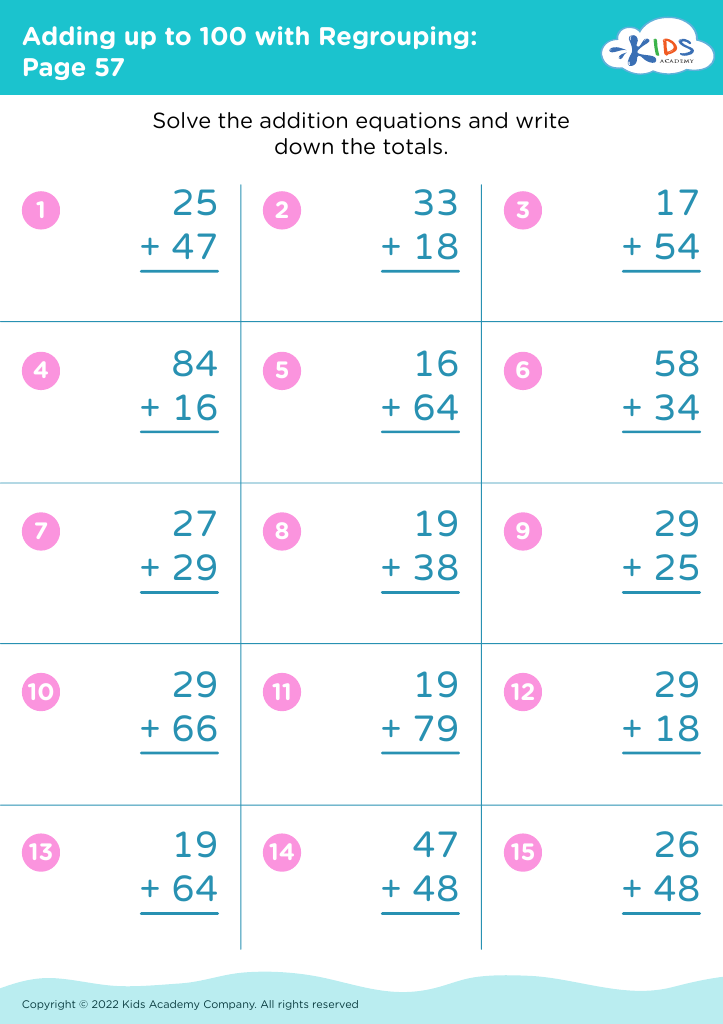
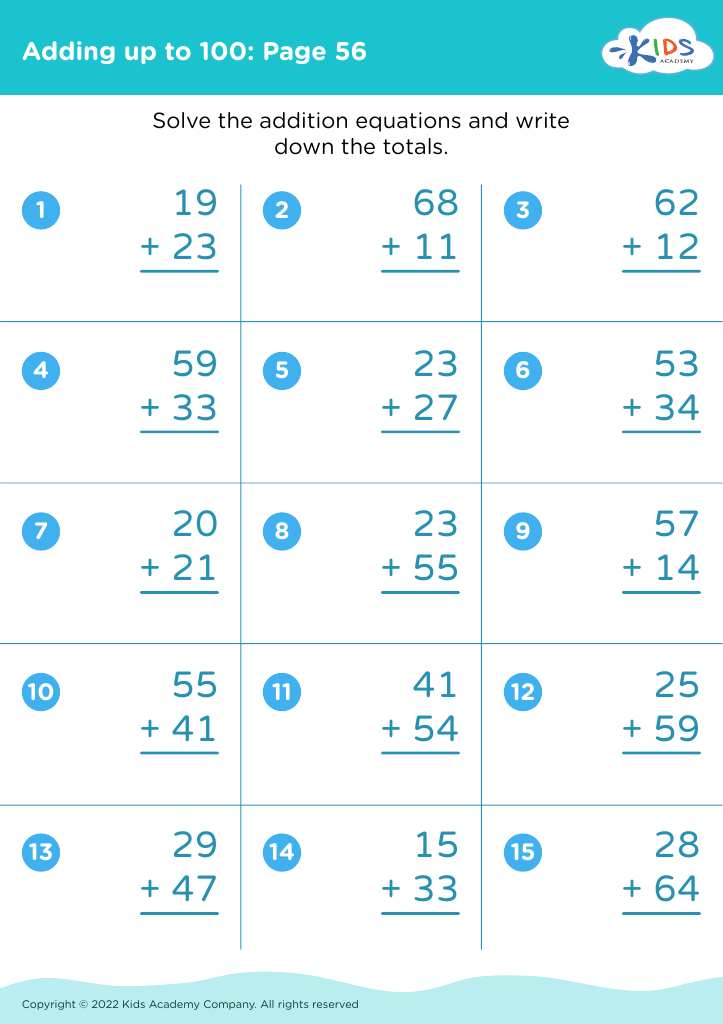
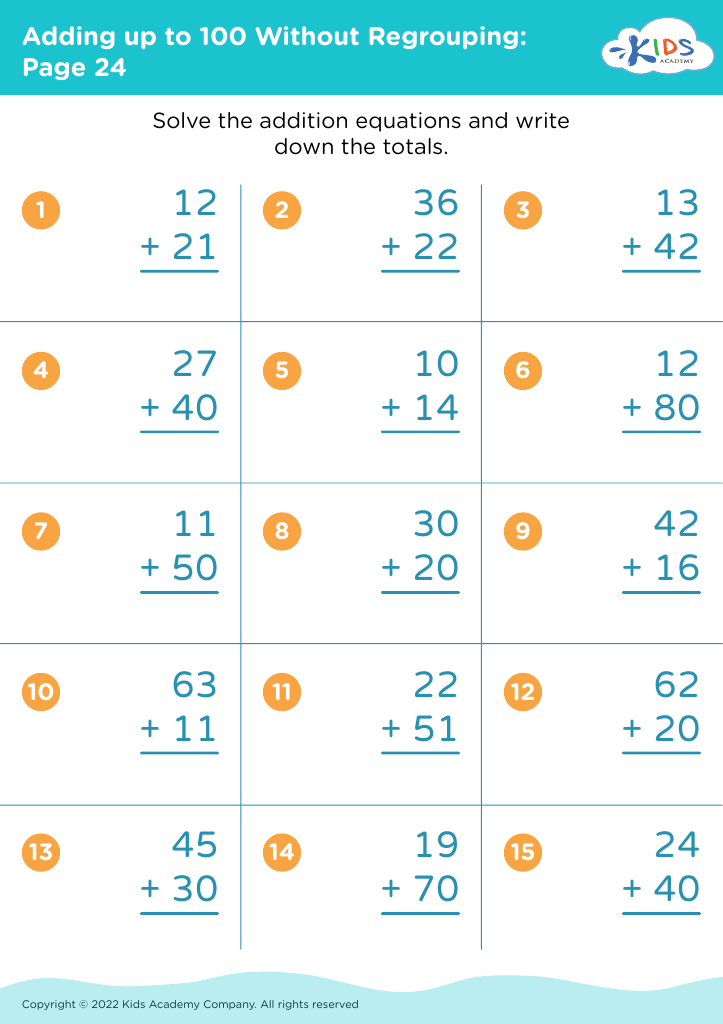
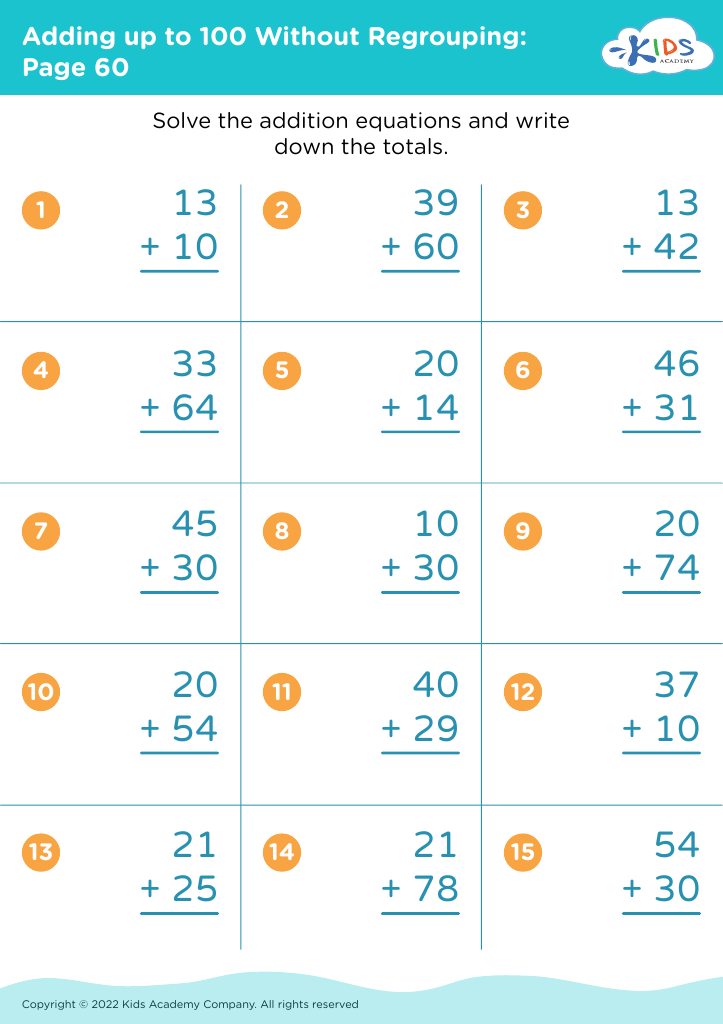
Boost your child's reading confidence with our "Improve Reading Skills: Adding up to 100 Worksheets for 7-Year-Olds." This engaging resource combines fun math practice with essential reading development. Designed specifically for first graders, these worksheets encourage comprehension and word recognition while reinforcing addition skills. Your child will enjoy interactive activities that challenge them to read instructions, solve problems, and strengthen language abilities. With a variety of exercises, each worksheet serves as a stepping stone towards greater literacy proficiency. Foster your child's love for learning and watch them thrive as they master both math and reading in a seamless, enjoyable way!






%20(1).jpg)
Improving reading skills and math comprehension, like adding up to 100, is crucial for 7-year-olds as these foundational abilities significantly influence their overall academic success and cognitive development. At this age, children are transitioning from learning basic concepts to applying them in more complex ways. Strong reading skills enhance literacy, allowing children to access knowledge, develop critical thinking, and engage in discussions that foster communication skills.
Furthermore, mastering math skills such as addition sets the groundwork for understanding broader mathematical concepts, ensuring students feel confident and capable in their abilities. This confidence can motivate them to tackle new learning challenges enthusiastically, creating a positive feedback loop that promotes continuous improvement.
Additionally, reading empowers creativity and imagination, helping children explore stories and ideas, which is essential for their emotional and social growth. Teachers and parents play pivotal roles in this developmental phase, serving as guides and supporters in fostering a love for reading and math. By prioritizing these skills, they help children become well-rounded learners who are prepared for future academic pursuits and everyday problem-solving, laying the groundwork for lifelong learning. Emphasizing these skills ultimately supports children’s overall educational journey, setting the stage for future success.








