Mathematical reasoning Adding up to 100 Worksheets for 7-Year-Olds
3 filtered results
-
From - To
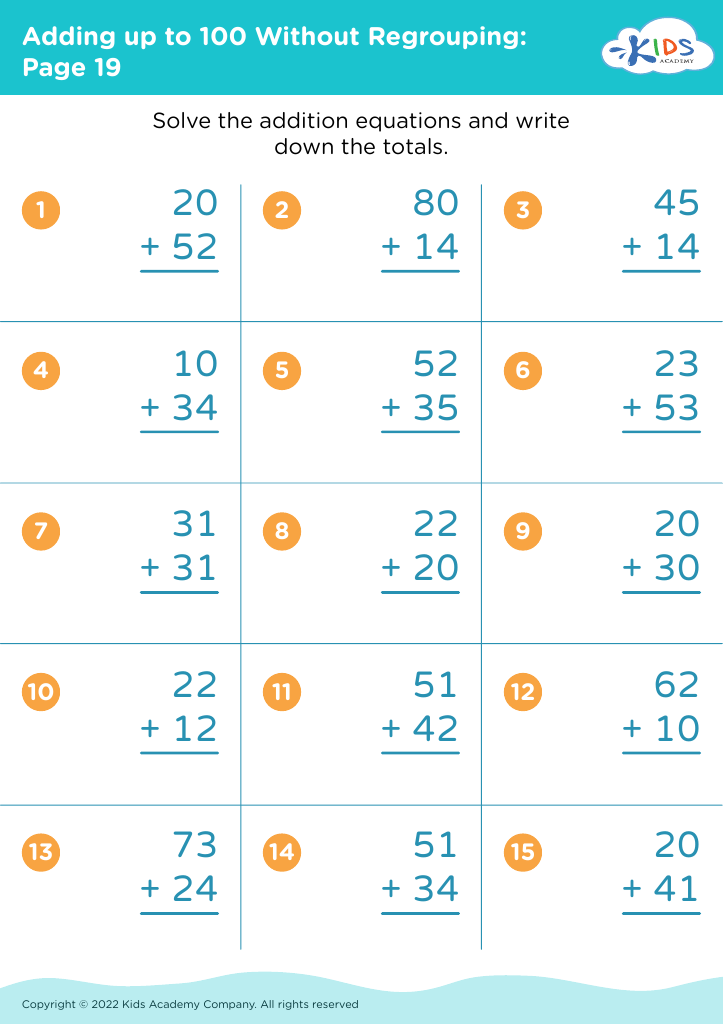
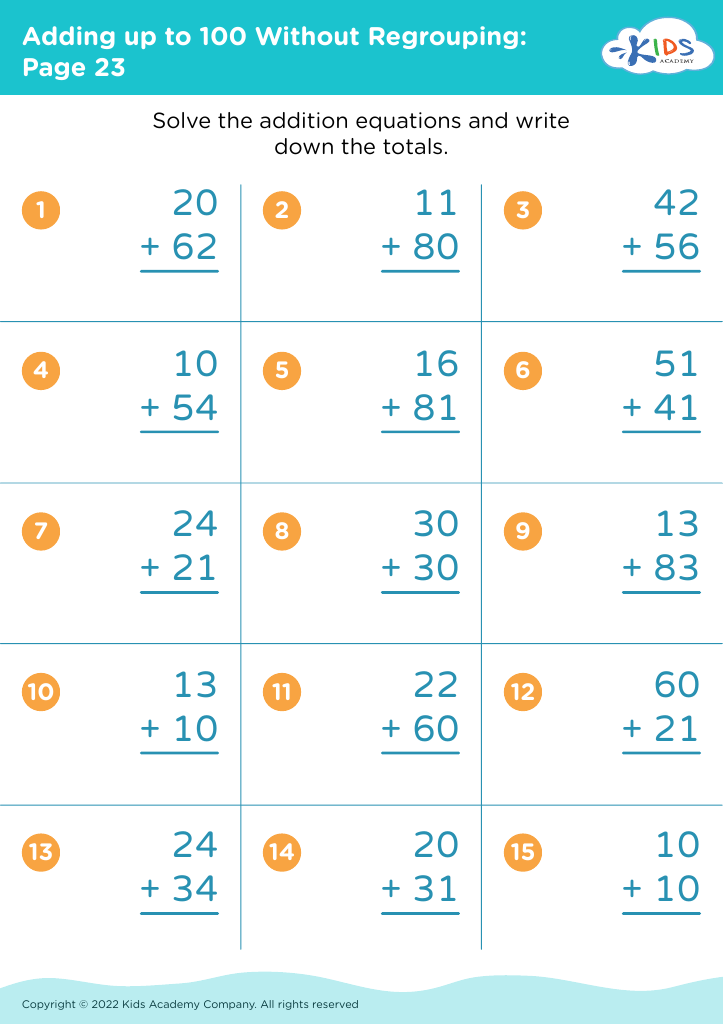
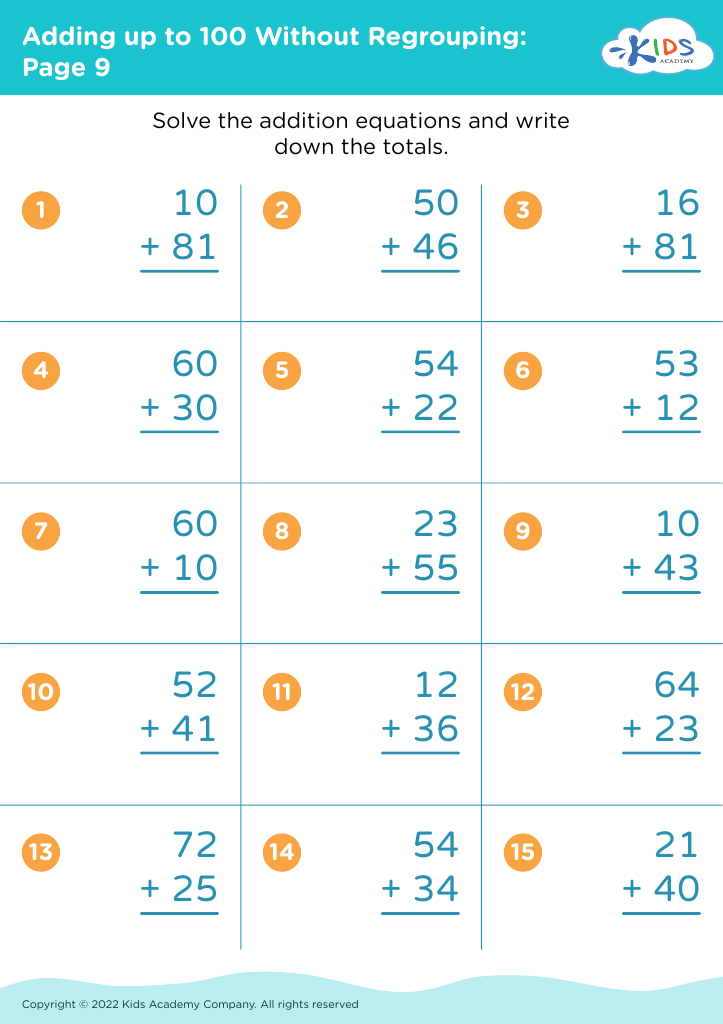
Explore our engaging "Mathematical Reasoning Adding Up to 100 Worksheets" designed specifically for 7-year-olds! These interactive worksheets help young learners develop essential math skills by encouraging them to solve addition problems that total up to 100. Each worksheet focuses on reinforcing mathematical reasoning through fun, challenging activities that promote critical thinking and problem-solving abilities. With vibrant illustrations and a variety of exercises, children will enjoy practicing their addition skills while exploring different strategies. Perfect for home or classroom use, these worksheets are a valuable resource for strengthening number sense and boosting confidence in young mathematicians. Start your learning journey today!


%20(1).jpg)




Mathematical reasoning, particularly the ability to understand how to add up to 100, is crucial for 7-year-olds as it lays the foundation for their overall numerical competence. At this age, children begin to transition from concrete operations to more abstract mathematical concepts. Understanding how to strategically build up to 100 helps them develop critical thinking skills, problem-solving abilities, and number sense—key components of mathematical proficiency.
By encouraging proficiency in reaching 100, parents and teachers can help students recognize patterns in numbers, such as the relationship between tens and ones, and the significance of place value. This understanding also promotes mental math skills, essential for faster calculations in everyday situations.
Moreover, mastering addition up to 100 boosts a child's confidence in their mathematical abilities, fostering a positive attitude toward learning. When children feel successful in managing numbers, they are more likely to engage in class activities and pursue higher-level math concepts in the future. Ensuring that 7-year-olds have strong mathematical reasoning skills enhances their overall academic performance and prepares them for more complex math applications, making it imperative for parents and teachers to prioritize this area of learning.








