Practice problem-solving Adding up to 100 Worksheets for 7-Year-Olds
3 filtered results
-
From - To
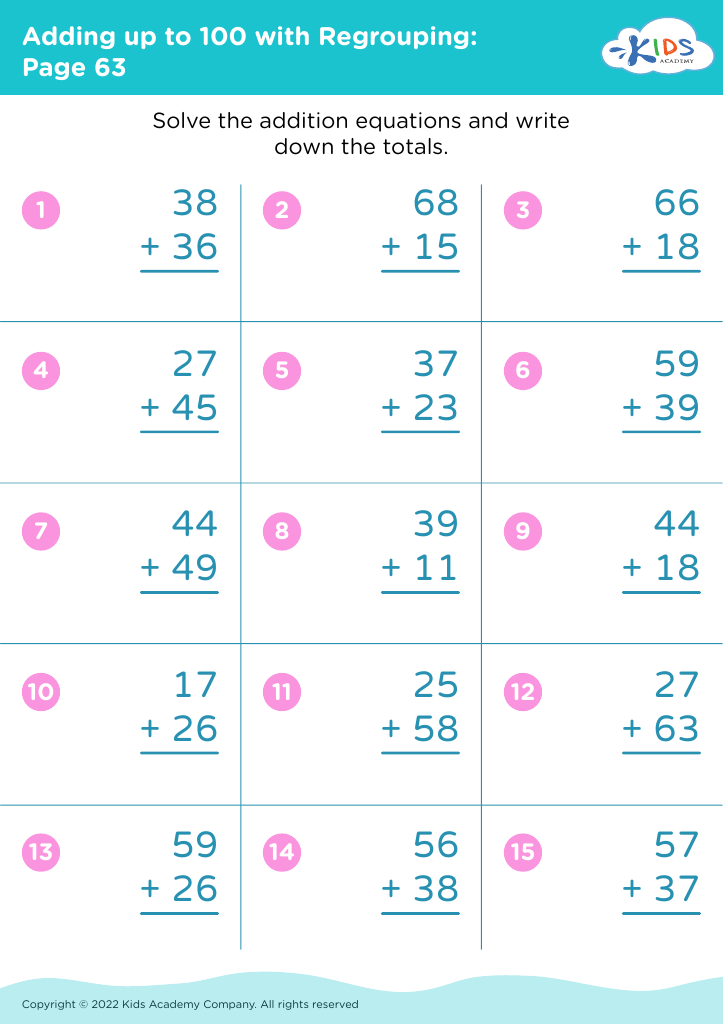
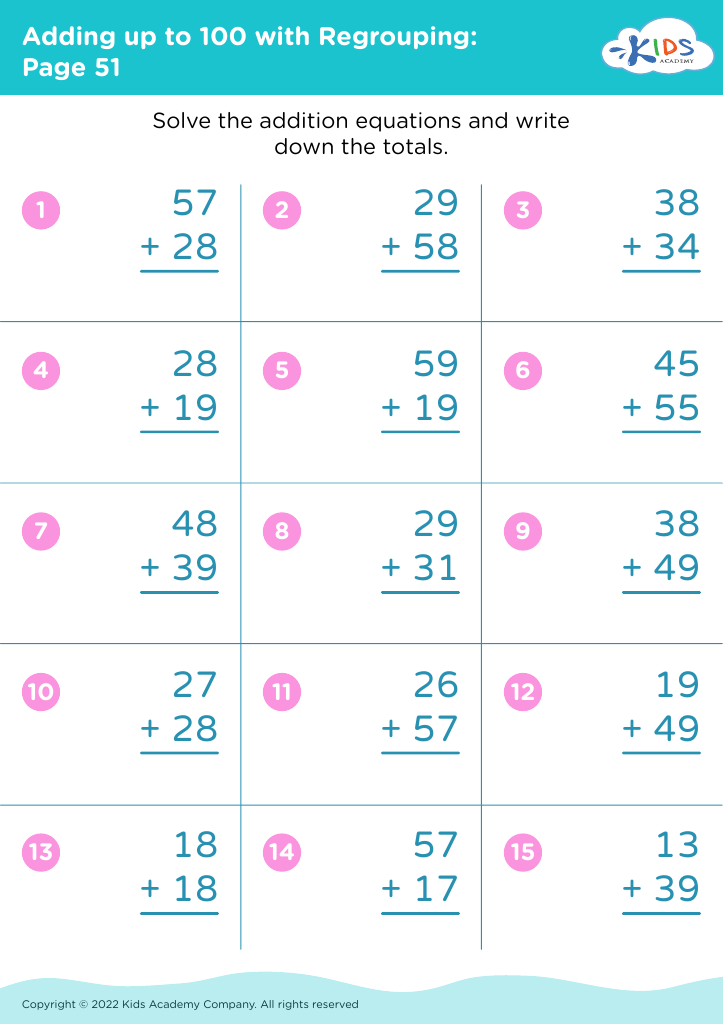
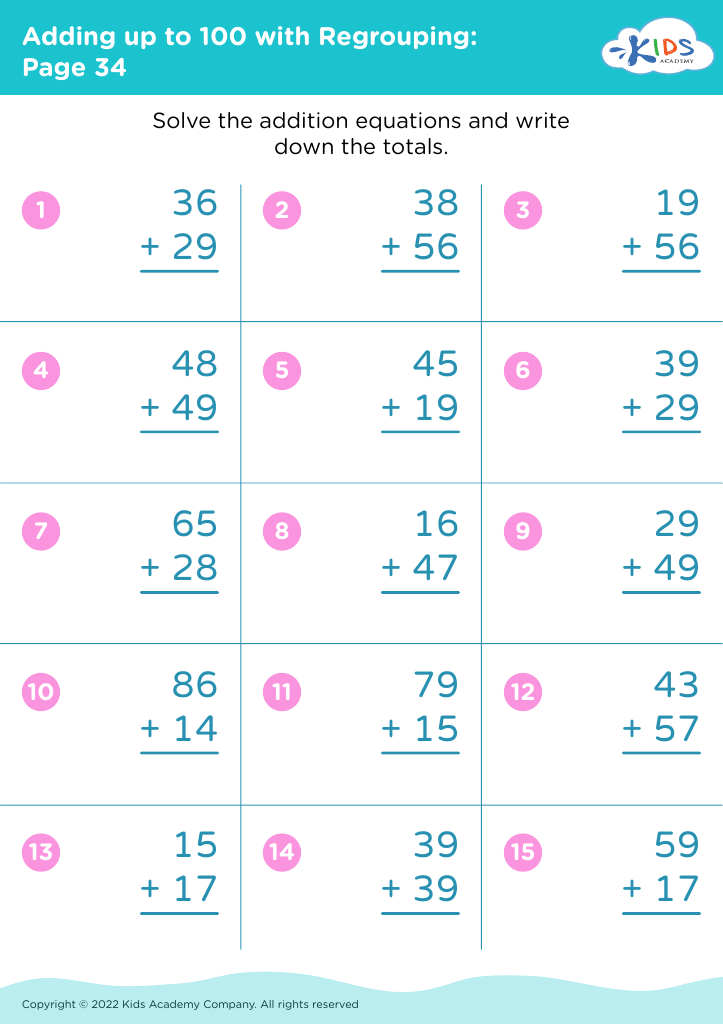
Enhance your 7-year-old's math skills with our "Practice Problem-Solving Adding up to 100 Worksheets". Specially designed to make learning fun, these worksheets help children master addition up to 100 while boosting their problem-solving abilities. Each worksheet features engaging activities like puzzles, word problems, and interactive exercises, ensuring that practice feels like play. Perfect for students in 2nd grade, these worksheets build confidence, foster a love for math, and support classroom learning. Download today to give your child the tools they need to excel in math. Your little one will be solving problems with ease in no time!


%20(1).jpg)




Parents and teachers should care about practice problem-solving with adding up to 100 for 7-year-olds because it lays essential groundwork for numeracy skills that are vital in everyday life and future academics. At this young age, children are developing their foundational mathematics skills, and understanding how to add numbers up to 100 helps them grasp key concepts such as place value, number sense, and arithmetic operations.
Engaging in these practice exercises cultivates critical thinking and problem-solving abilities. It encourages children to explore different strategies for finding solutions, fostering a deeper understanding of mathematical principles. Additionally, regular practice aids in improving concentration, attention to detail, and memory, which are crucial skills both inside and outside the classroom.
Furthermore, building confidence in mathematics through problem-solving experiences has a lasting impact on a child’s attitude towards the subject. It helps to dispel any early fears or misconceptions about math being difficult or unapproachable. By mastering these basic skills early on, children are better prepared for more advanced mathematical concepts and operations in the future.
In essence, support and encouragement in solving adding up to 100 ensure that children develop a solid mathematical foundation, promoting their academic success and equipping them with critical life skills.








