Recognizing Patterns Adding up to 100 Worksheets for 7-Year-Olds
5 filtered results
-
From - To
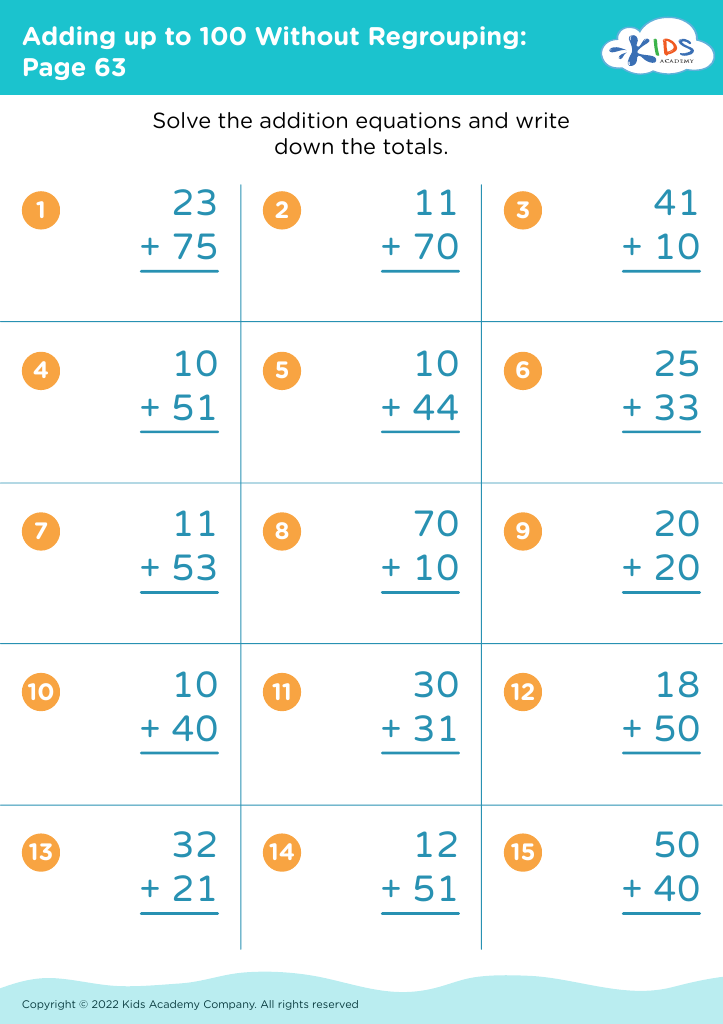
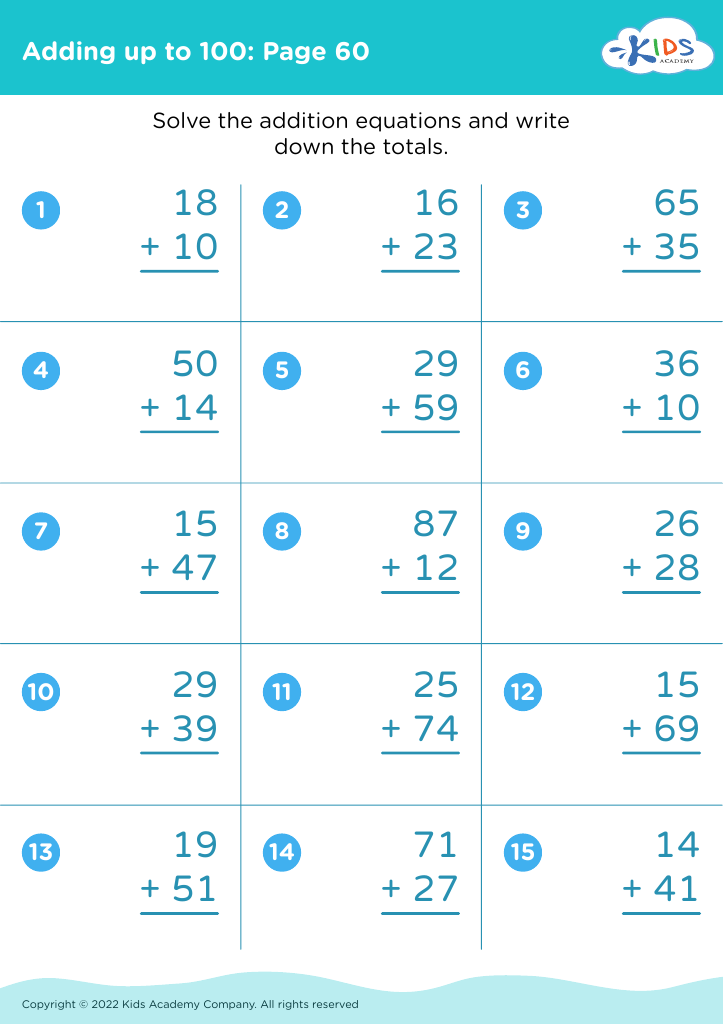
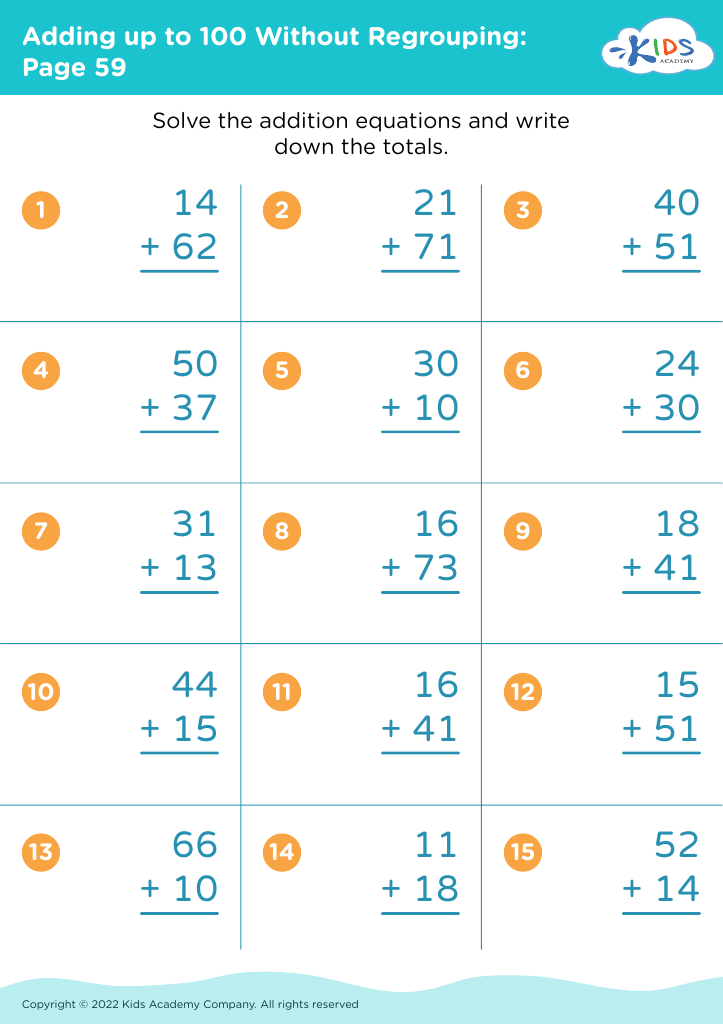
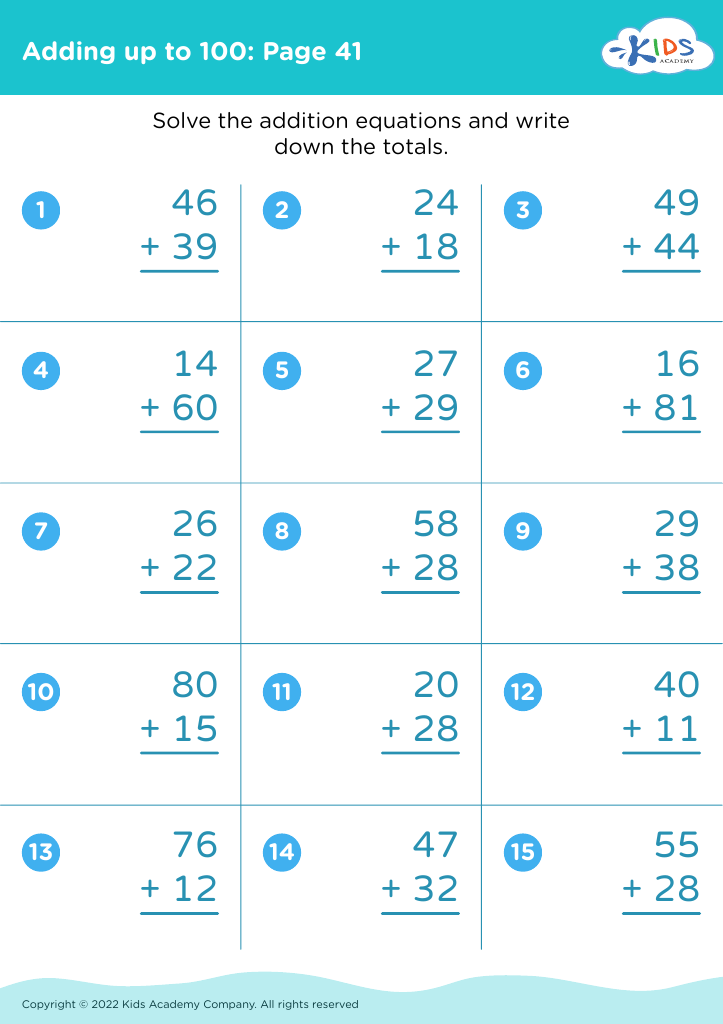
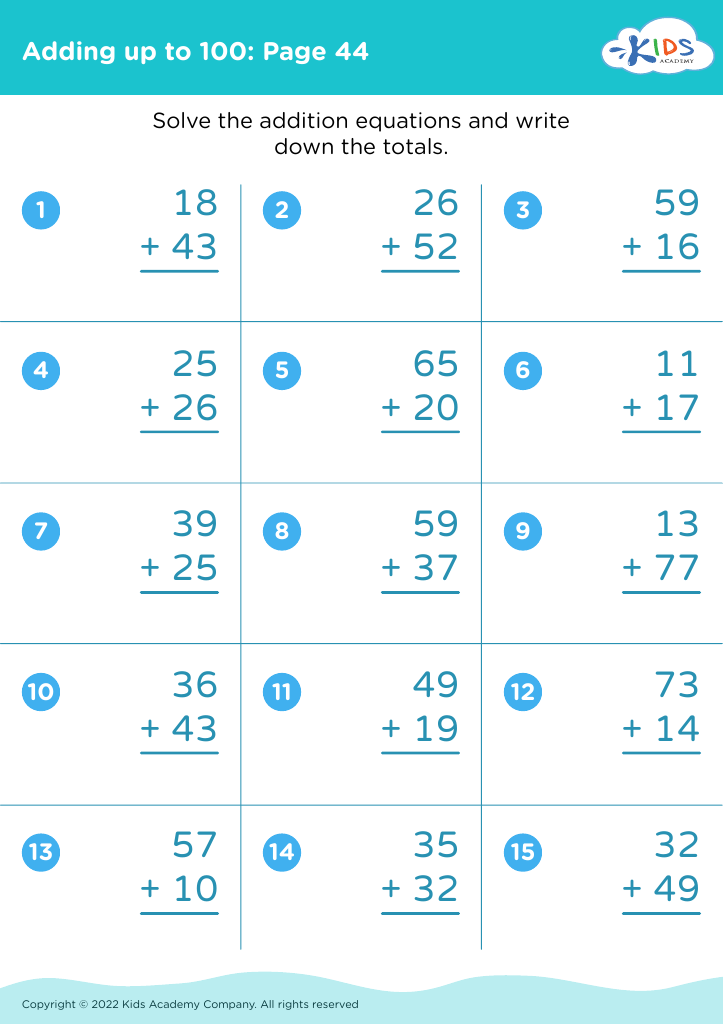
Explore our engaging "Recognizing Patterns Adding up to 100 Worksheets" designed specifically for 7-year-olds! These worksheets are perfect for young learners to enhance their math skills while recognizing numerical patterns that sum to 100. Each worksheet features fun and interactive exercises, allowing kids to identify relationships between numbers visually and numerically. By practicing these vital skills, children develop a solid foundation in addition and critical thinking. Perfect for classroom use or at-home learning, our worksheets encourage playful yet meaningful learning experiences. Help your child build confidence in math as they discover the joy of recognizing patterns with our carefully crafted activities!


%20(1).jpg)




Recognizing patterns, especially in the context of adding up to 100, is a critical skill for 7-year-olds that significantly contributes to their mathematical foundation. At this age, children are transitioning from basic arithmetic to more complex problem-solving. Understanding patterns in numbers helps them grasp essential concepts, such as the relationship between addition and subtraction and multiplication and division.
When children can recognize patterns, they develop stronger number sense, which enhances their ability to make calculations mentally and more efficiently. For example, recognizing that 70 + 30 equals 100 can be derived from understanding how numbers can be manipulated, which introduces them to patterns in addition that extend beyond basic math.
Moreover, this skill fosters critical thinking and encourages perseverance, as children learn to look for relationships and develop strategies for solving problems. Parents and teachers play a pivotal role in guiding this learning process through engaging activities, such as games and puzzles that encourage pattern recognition.
Incorporating pattern recognition into everyday learning not only builds confidence and competence in math but also prepares children for future mathematical challenges. Thus, investing time in this foundational skill ensures that children are well-equipped for their academic journeys ahead.








