Shape identification Adding up to 100 Worksheets for 7-Year-Olds
3 filtered results
-
From - To
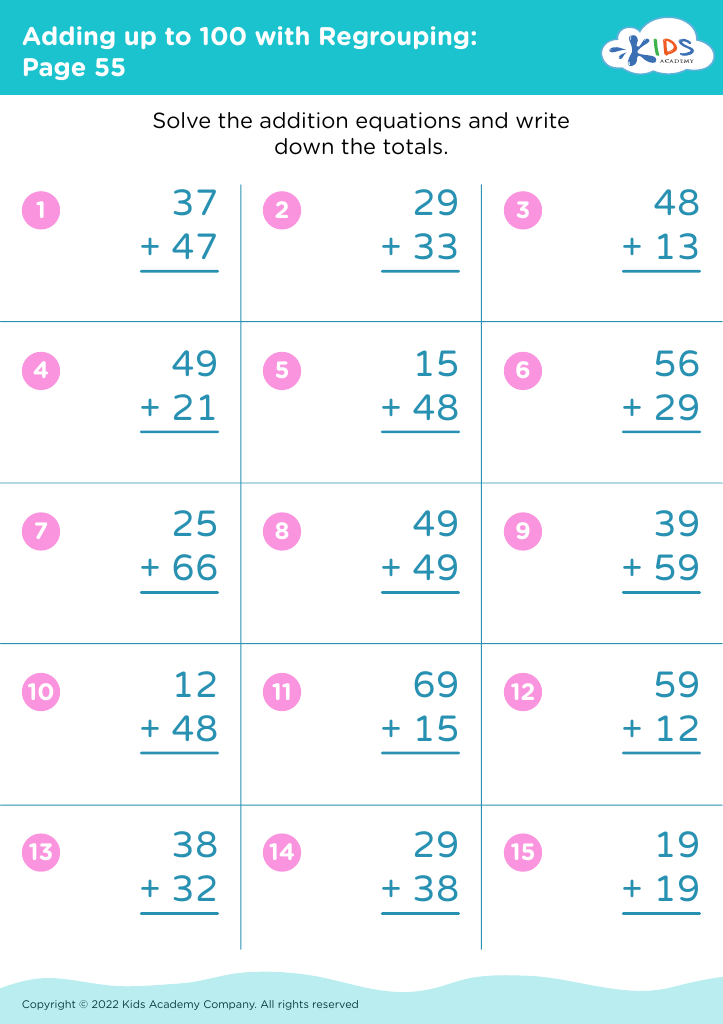
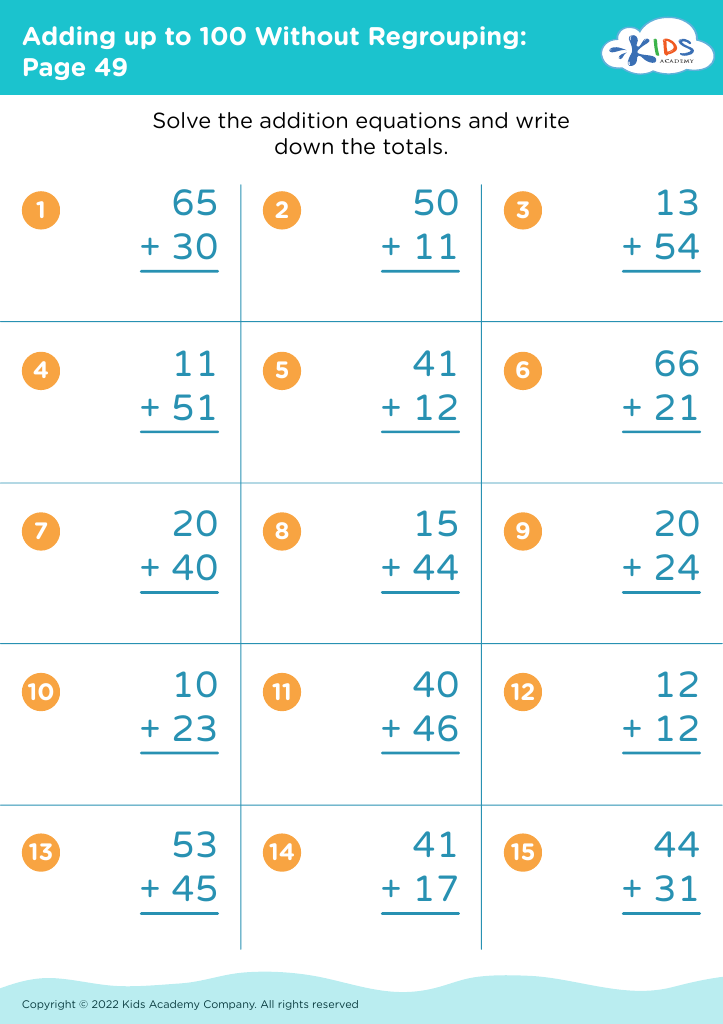
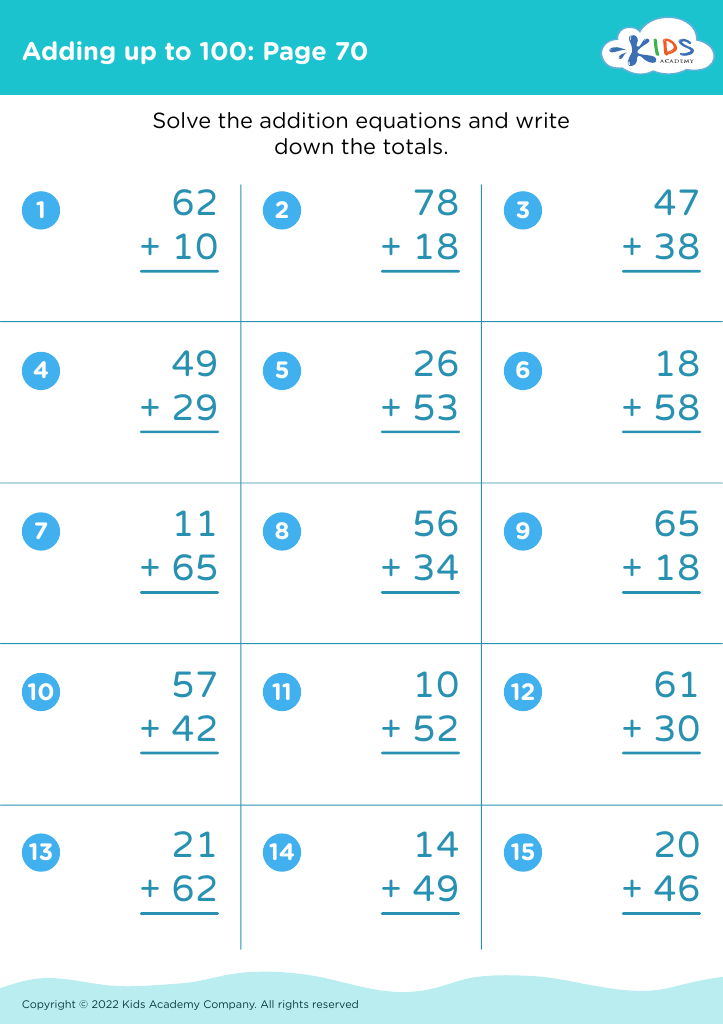
Enhance your child's math and geometry skills with our "Shape Identification Adding up to 100 Worksheets for 7-Year-Olds." Designed to blend fundamental math concepts and shape recognition, these worksheets are perfect for young learners aiming to improve their addition skills while identifying basic shapes. Each engaging activity is specially curated for 7-year-olds, encouraging hands-on learning and problem-solving. Available to download and print, these worksheets provide a fun, interactive way to practice adding numbers up to 100, helping students gain confidence and mastery in both arithmetic and geometry. Explore the collection and turn learning into an adventure!


%20(1).jpg)




Shape identification and adding up to 100 are crucial skills for 7-year-olds, offering significant developmental benefits. Shape identification aids in cognitive development by teaching children to recognize patterns, sort objects, and understand spatial relationships. This foundation in geometry supports problem-solving skills and critical thinking, which are essential across various subjects. Moreover, it enhances visual-spatial intelligence, which can benefit reading comprehension and writing, as well as everyday tasks like navigating environments.
Adding up to 100, on the other hand, builds fundamental arithmetic skills that are essential for more complex math problems in the future. Proficiency in basic addition promotes numerical fluency, allowing children to process calculations quickly and accurately. This skill is closely linked to their ability to understand the concepts of place value and number sense, which are key components in higher-level mathematics. Additionally, the confidence gained from mastering these skills often translates into a positive attitude towards learning, fostering a lifelong interest in mathematics.
Incorporating these skills in early education not only meets curriculum standards but also supports overall intellectual growth, forming a strong academic foundation. Both parents and teachers should care about fostering these abilities to ensure well-rounded, capable, and confident learners who are prepared for future challenges.








