Understanding Sequences Adding up to 100 Worksheets for 7-Year-Olds
5 filtered results
-
From - To
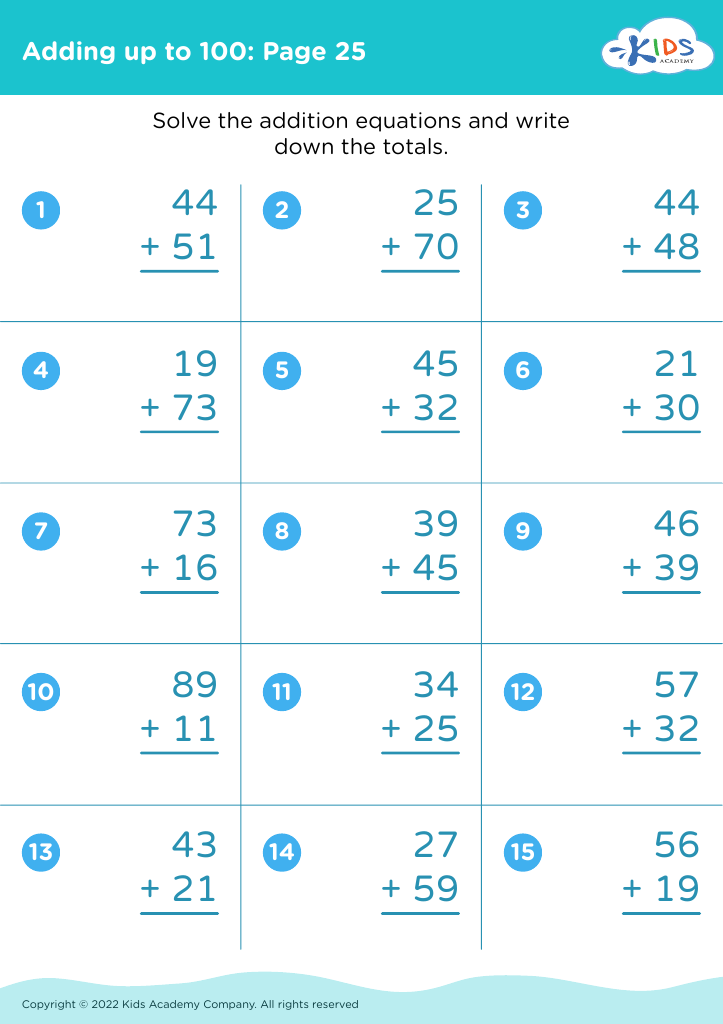
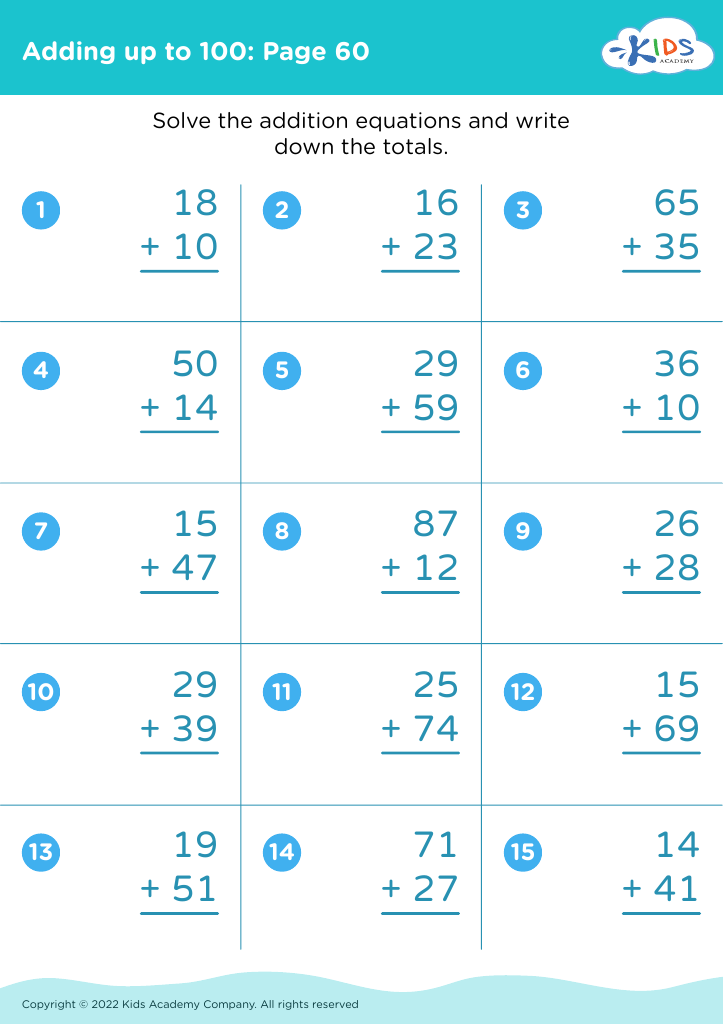
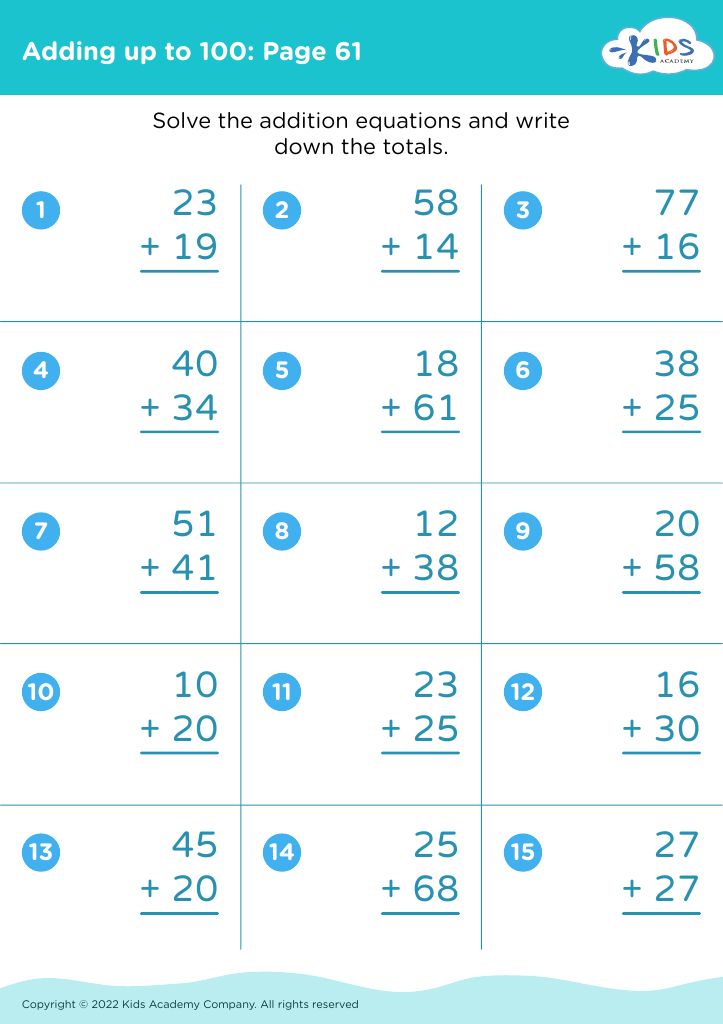
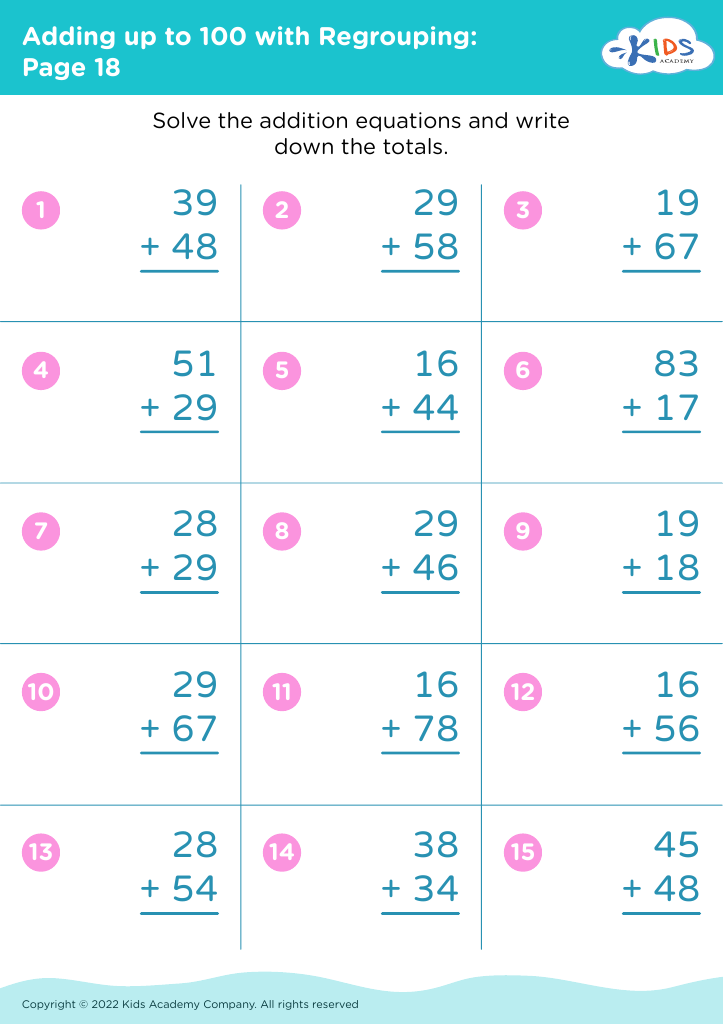
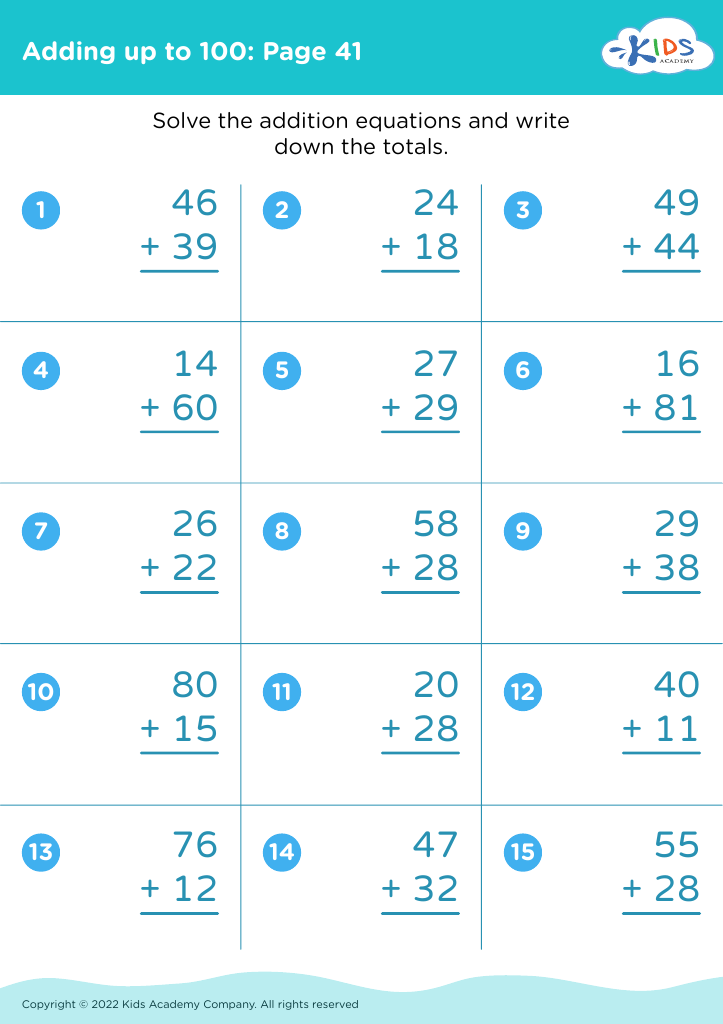
Enhance your 7-year-old's math skills with our "Understanding Sequences Adding up to 100" worksheets. These engaging printables focus on developing a solid grasp of number sequences and their sum. Perfect for early learners, these activities make math fun by combining sequencing and addition, helping children practice and understand how numbers work together to reach total of 100. Our worksheets offer a variety of exercises that cater to different learning styles, ensuring that children remain interested and motivated. Foster your child's mathematical confidence and a firm foundation with these carefully designed educational resources.



%20(1).jpg)



Understanding sequences that add up to 100 is crucial for 7-year-olds as it lays a strong foundation for essential mathematical skills and problem-solving abilities. Parents and teachers should care about this concept because it enhances children's number sense, helping them recognize numerical patterns and relationships. For example, if a child can figure out which combinations of numbers sum to 100, they are more likely to excel in addition, subtraction, and mental math.
Moreover, this understanding promotes logical thinking and boosts confidence with numbers. When kids practice these sequences, they develop a deeper intuition for math, making future concepts like multiplication, division, and place value easier to grasp. Additionally, it introduces them to critical thinking and perseverance, as figuring out sequences requires concentration and strategizing.
Incorporating these sequences into fun activities and games can make learning engaging and enjoyable, further reinforcing positive attitudes toward math. Essentially, by focusing on sequences adding up to 100, parents and teachers provide children with a robust mathematical framework, ensuring their academic success and fostering a lifelong appreciation for learning.








