Understanding symmetry Adding up to 100 Worksheets for 7-Year-Olds
5 filtered results
-
From - To
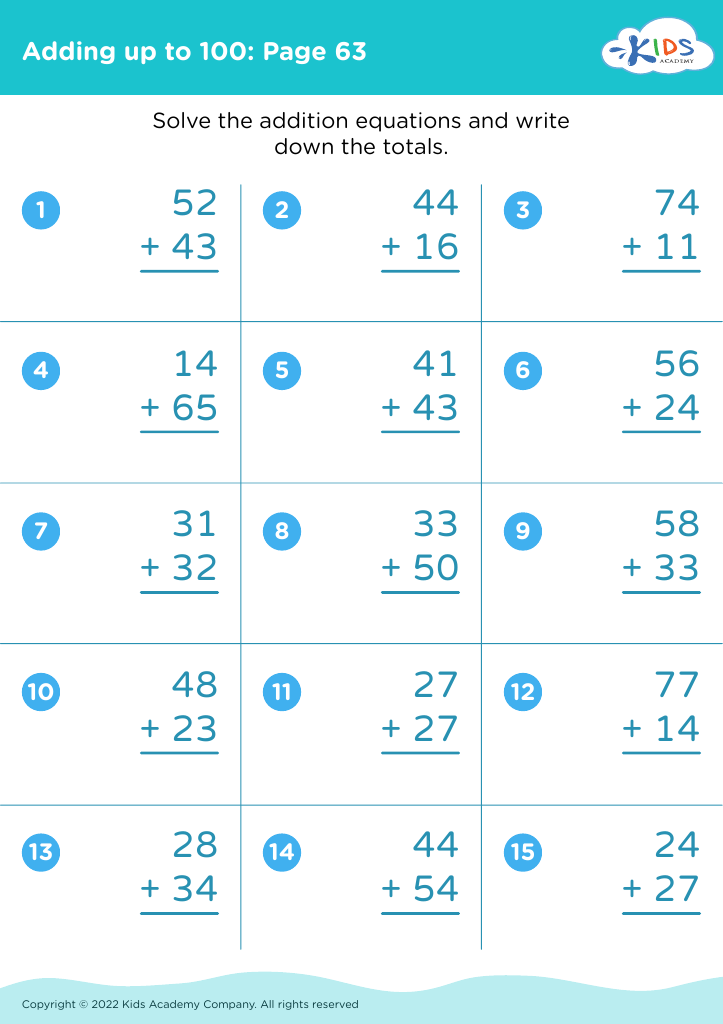
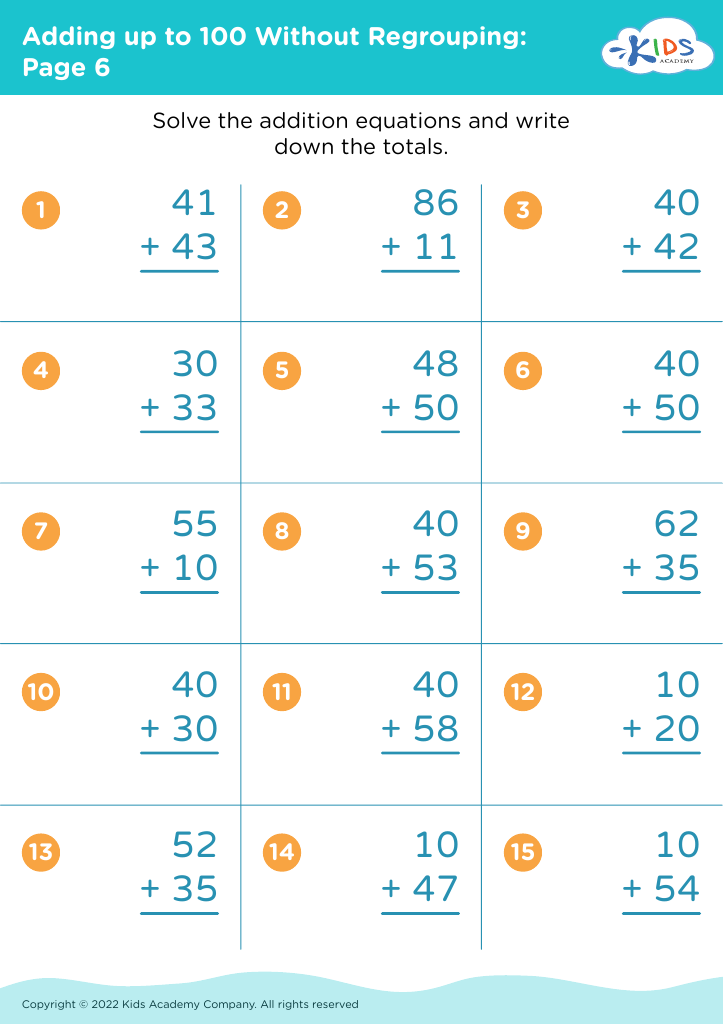
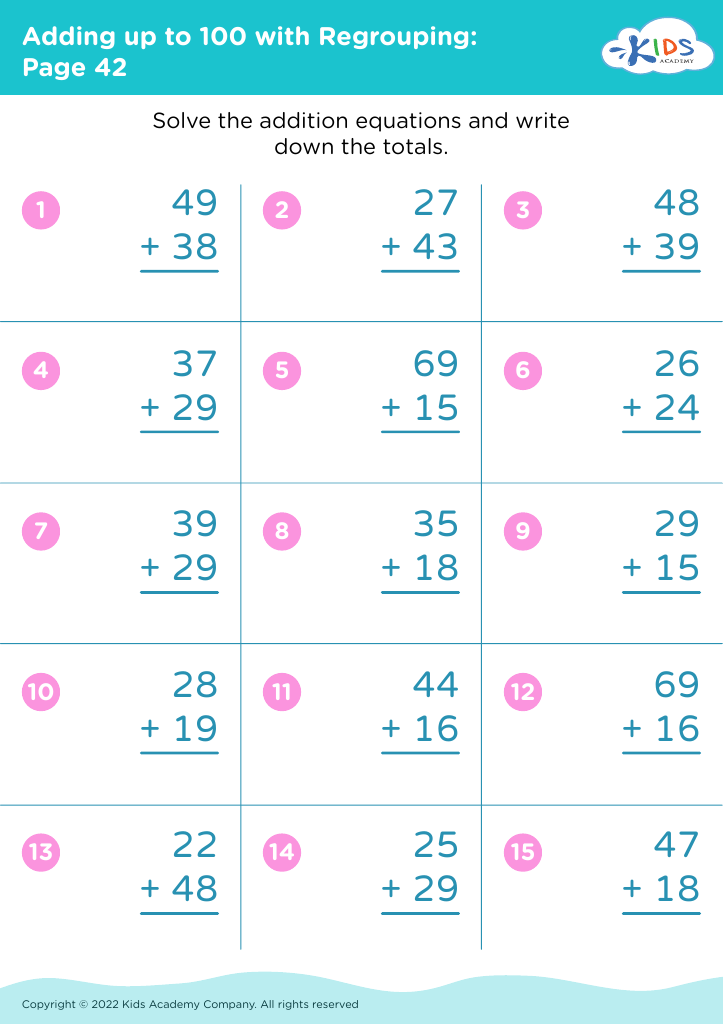
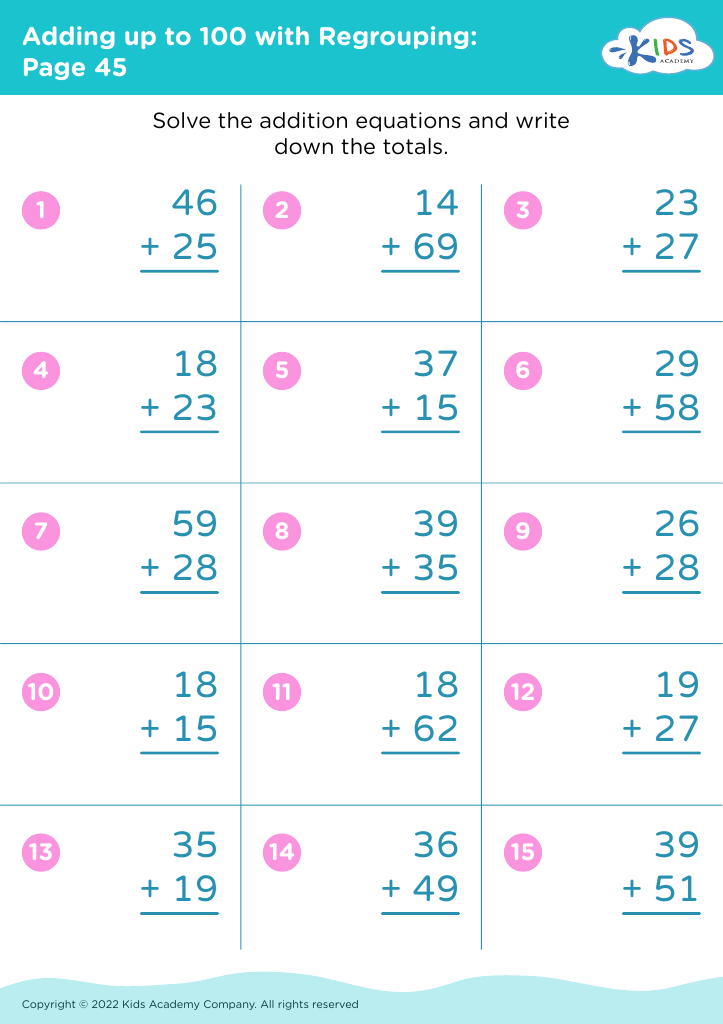
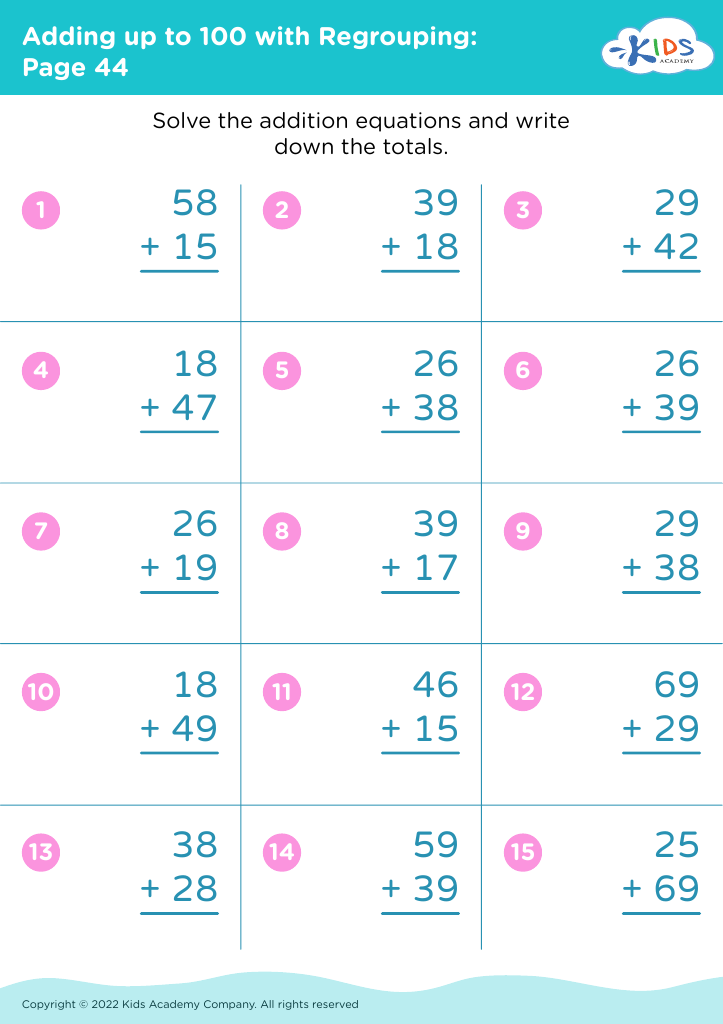
Welcome to our "Understanding Symmetry Adding up to 100 Worksheets" designed specifically for 7-year-olds! These engaging and educational worksheets help young learners explore the concept of symmetry while mastering addition skills. Each activity combines fun illustrations and exercises that encourage children to identify symmetrical patterns and apply their knowledge of adding numbers up to 100. Through hands-on practice, students will strengthen their mathematical foundation while developing critical thinking and spatial awareness. Perfect for home or classroom use, these worksheets make learning symmetry and addition enjoyable and interactive. Start your child's journey into the world of mathematics today!





%20(1).jpg)

Understanding symmetry and the concept of adding up to 100 are crucial for 7-year-olds as they help lay a strong foundation for more complex mathematical concepts. At this age, children are developing their critical thinking and problem-solving skills, and recognizing symmetry plays a vital role in engaging their visual and spatial reasoning. Activities that involve symmetry, such as folding paper or drawing symmetrical shapes, enhance creativity while also teaching them about balance and equality.
Moreover, introducing the concept of adding up to 100 helps children grasp the importance of number sense and foundational arithmetic. Mastery of addition and subtraction within this range can improve their ability to handle real-life situations, such as managing money or understanding quantities. It fosters confidence and fluency in their math skills, making further learning more accessible.
For parents and teachers, focusing on these concepts not only supports academic growth but also encourages a love for learning. Engaging children in fun, interactive symmetry and addition activities fosters a supportive learning environment. By prioritizing these skills, caregivers promote development not just in math, but in overall cognitive abilities, preparing children for future academic success.








