Enhance comprehension Adding up to 50 Worksheets for 7-Year-Olds
5 filtered results
-
From - To
Boost your child's math skills with our "Enhance Comprehension: Adding up to 50 Worksheets for 7-Year-Olds." Specially designed for first graders, these worksheets focus on improving addition fluency and understanding. Each activity encourages young learners to solve addition problems, promote critical thinking, and reinforce classroom learning. Engaging and educational, our worksheets provide the perfect practice for mastering addition within 50, ensuring kids gain confidence in their math abilities. Ideal for supplementing school assignments or homeschooling, help your child develop a solid foundation in math with these expertly crafted resources from Kids Academy.
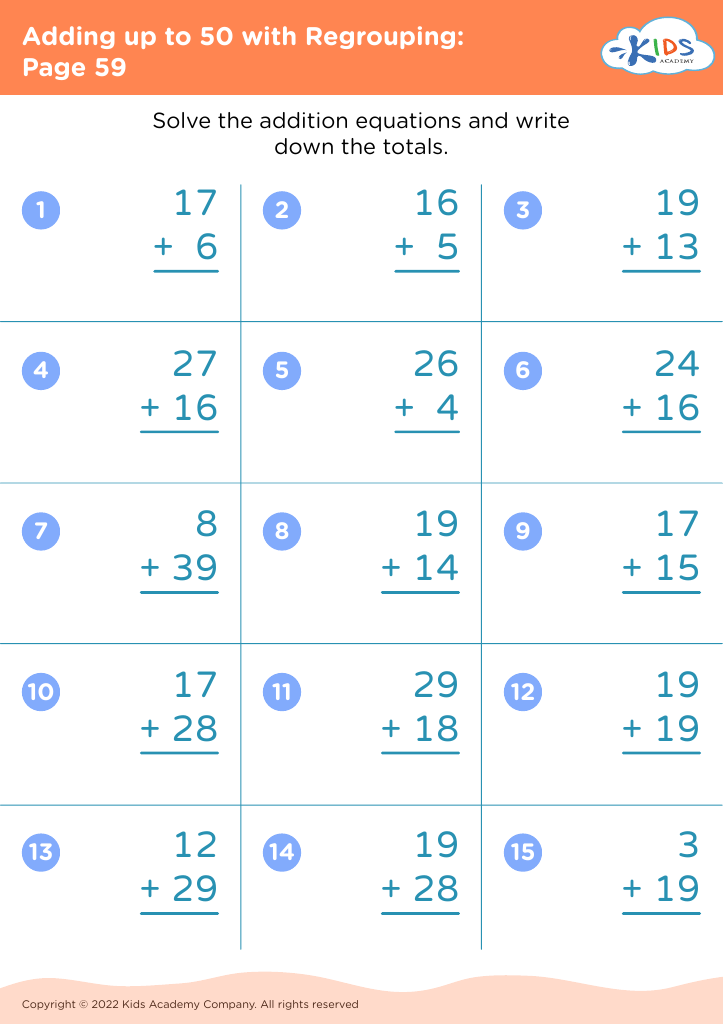
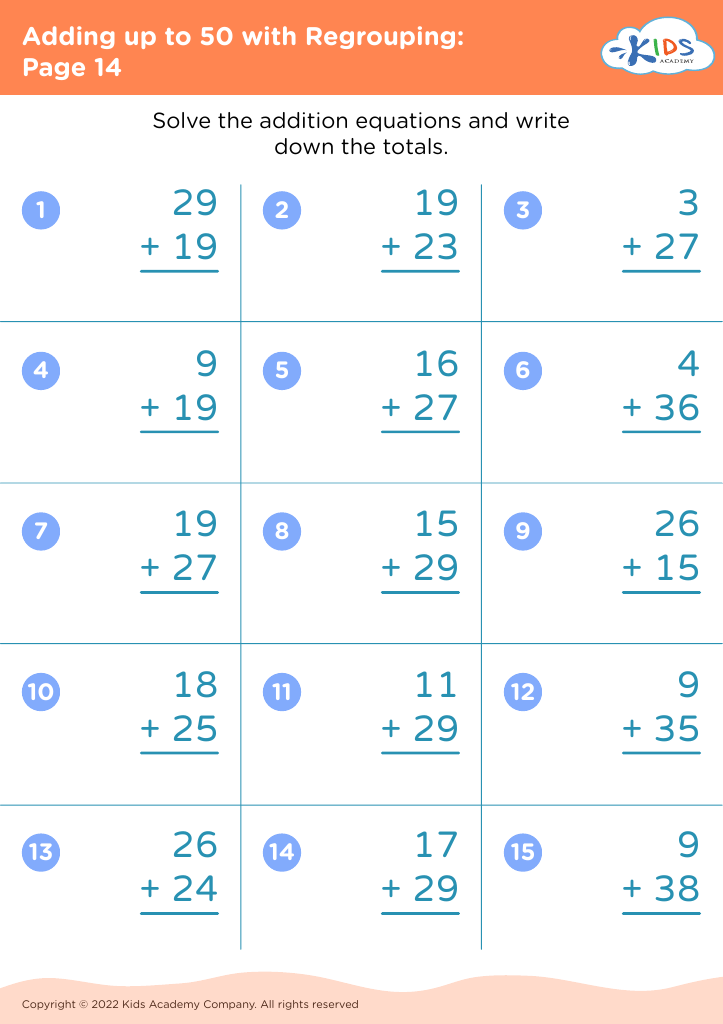
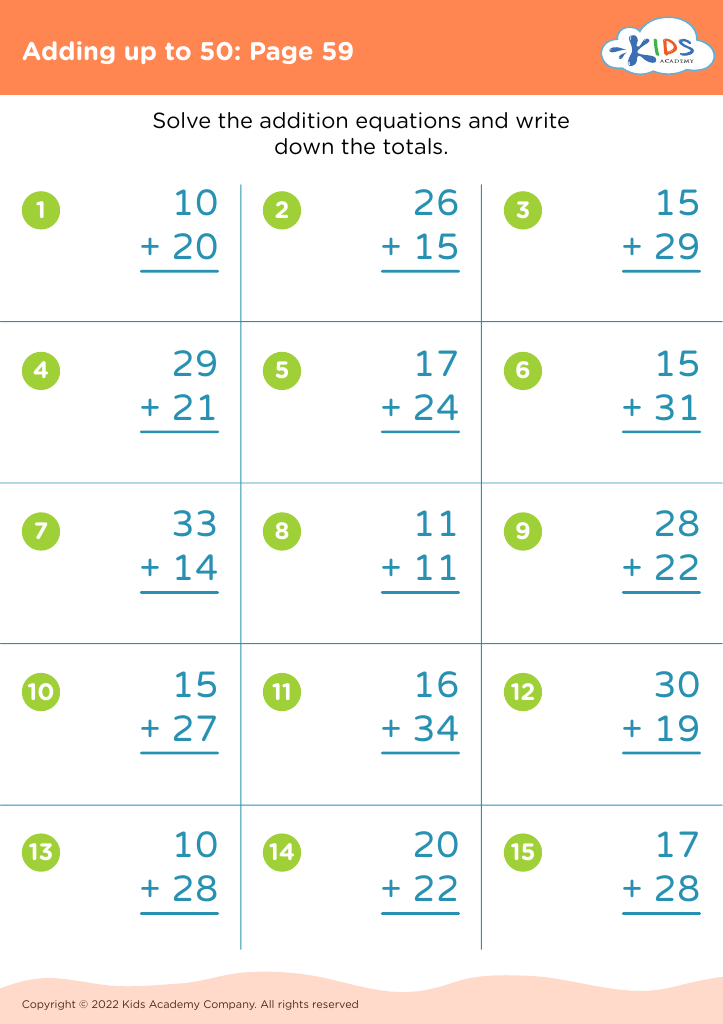
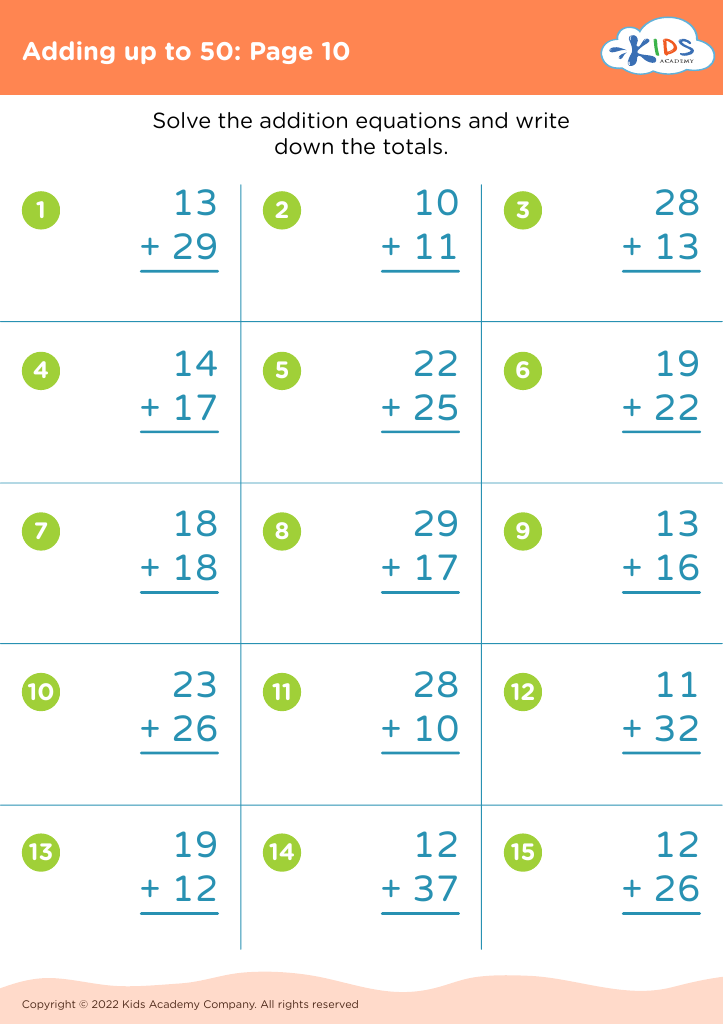
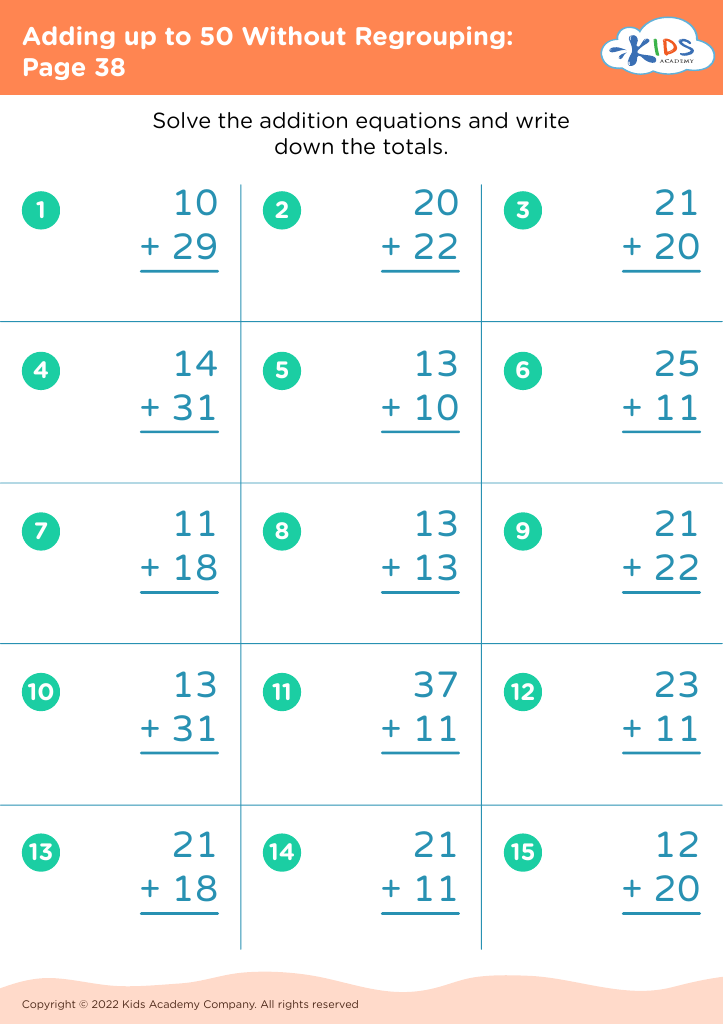




Parents and teachers should prioritize enhancing comprehension and arithmetic skills, especially focusing on adding up to 50 for 7-year-olds for several core reasons. First and foremost, this foundational math skill is critical for academic success. Being proficient in adding numbers up to 50 lays the groundwork for more advanced mathematical concepts such as subtraction, multiplication, division, and problem-solving which will be introduced in later grades.
Additionally, it bolsters cognitive development. When children practice addition, they enhance their ability to concentrate, remember, and understand various patterns and relationships in numbers. These skills are beneficial not just in mathematics but in all areas of learning, helping to foster critical thinking and logical reasoning.
In practice, proficient arithmetic skills contribute to greater confidence and independence in everyday life. Simple tasks such as time management, budgeting, and understanding quantities become easier when a child comfortably understands basic addition.
Moreover, achieving competence in these early mathematical tasks can also influence a child's attitude towards learning. A positive experience with math at a young age can lead to a love for the subject and reduce anxiety surrounding math-related tasks later in life. In sum, effective learning and practice of addition skills are indispensable and can greatly influence a child’s future learning trajectory and overall academic confidence.








