Recognizing Patterns Adding up to 50 Worksheets for 7-Year-Olds
7 filtered results
-
From - To
Our "Recognizing Patterns Adding up to 50 Worksheets for 7-Year-Olds" are designed to make learning math fun and engaging. These printable worksheets help young learners understand number patterns and addition up to 50 through a series of playful exercises. Perfect for classroom and home use, they boost children’s mathematical skills, critical thinking, and problem-solving abilities. Each worksheet provides a variety of activities, including number games and puzzles, ensuring kids stay interested and motivated. Ideal for 7-year-olds, these resources build a strong foundation in math while keeping learning exciting! Build up your child's early math success today.
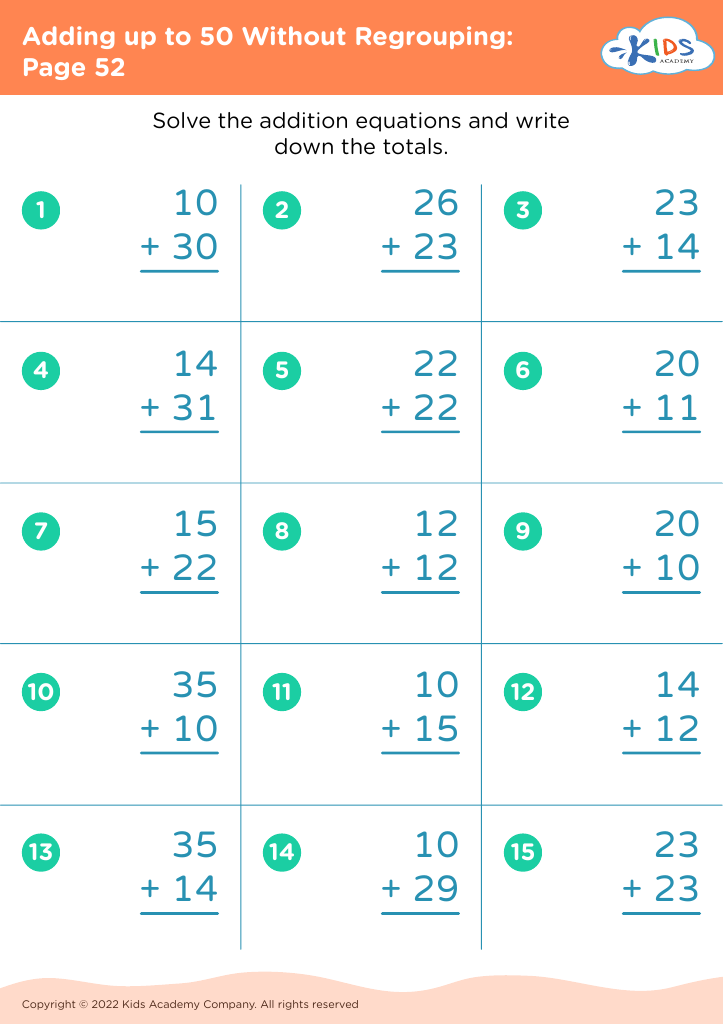
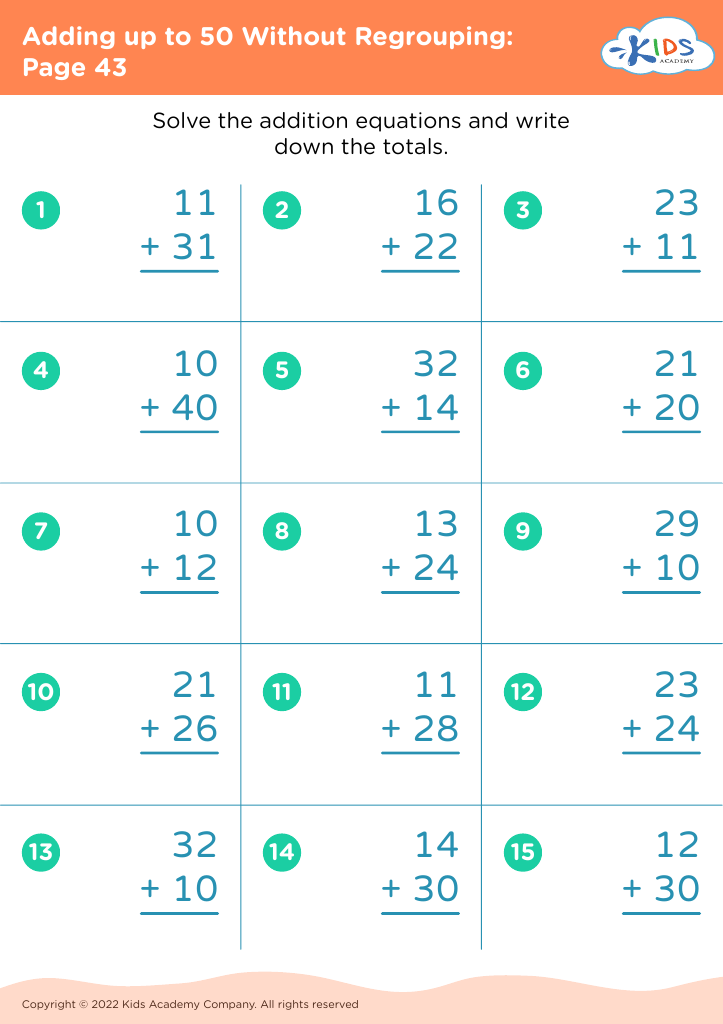
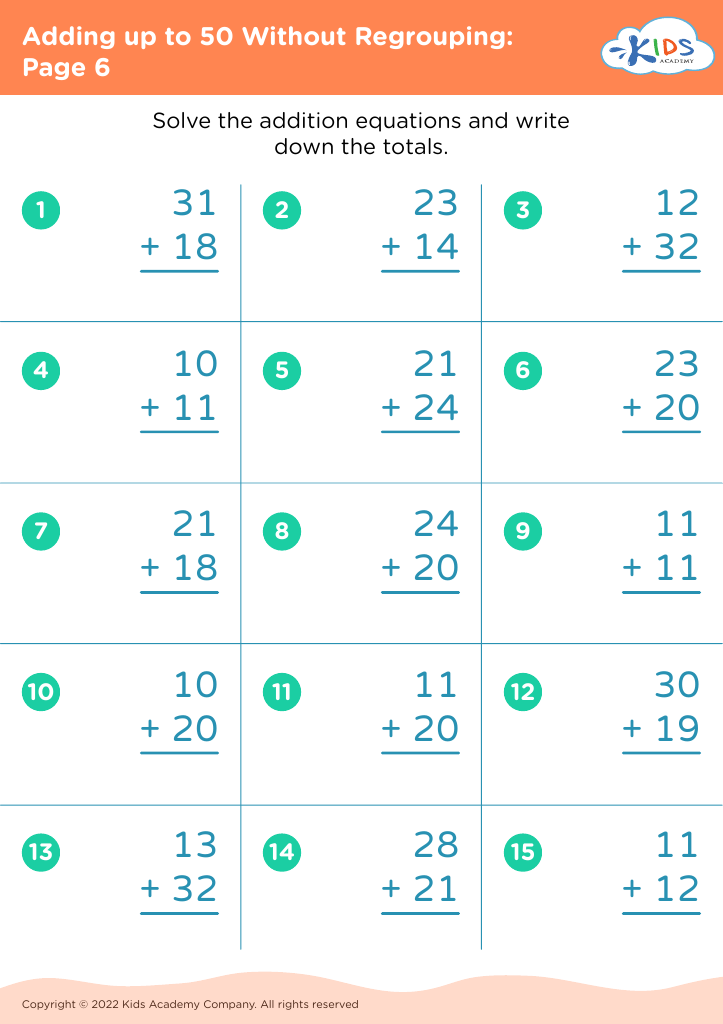
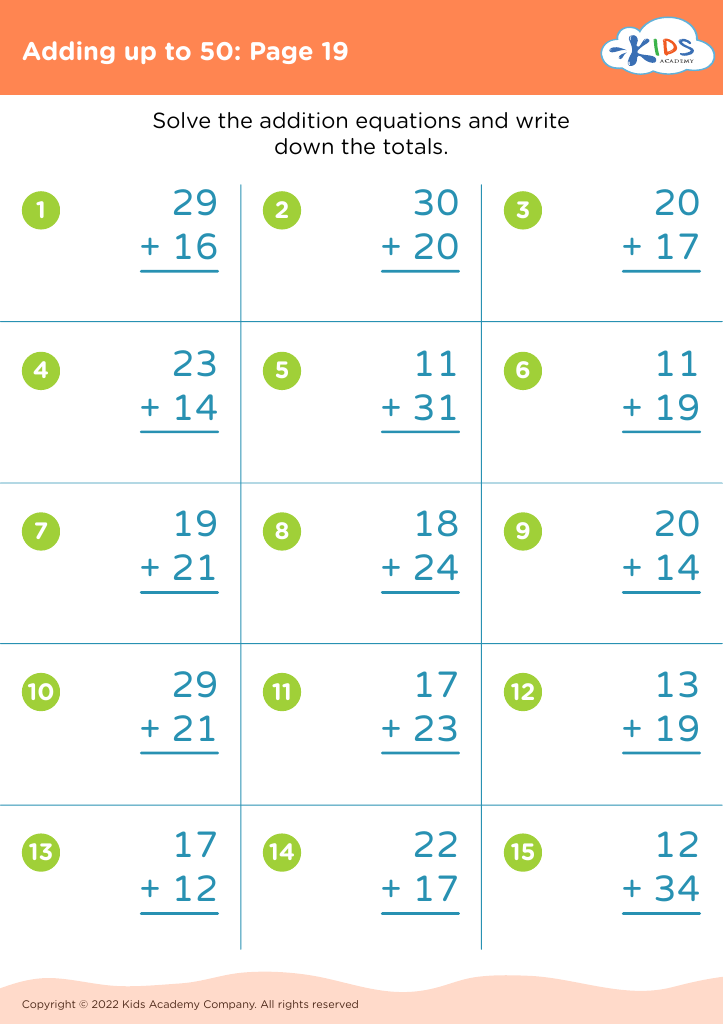
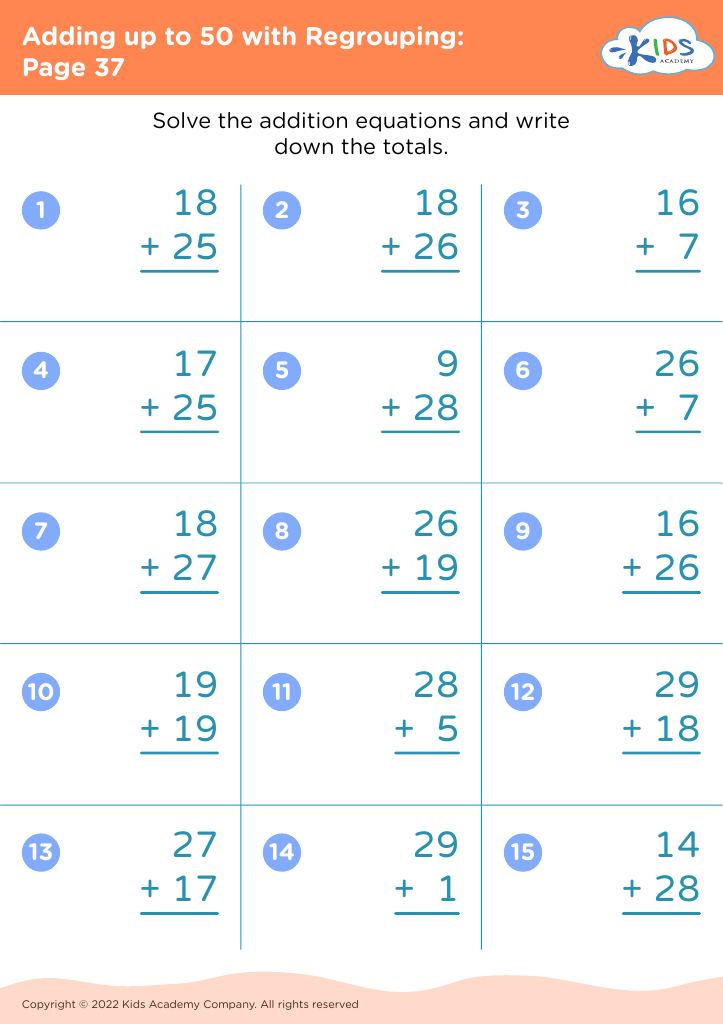
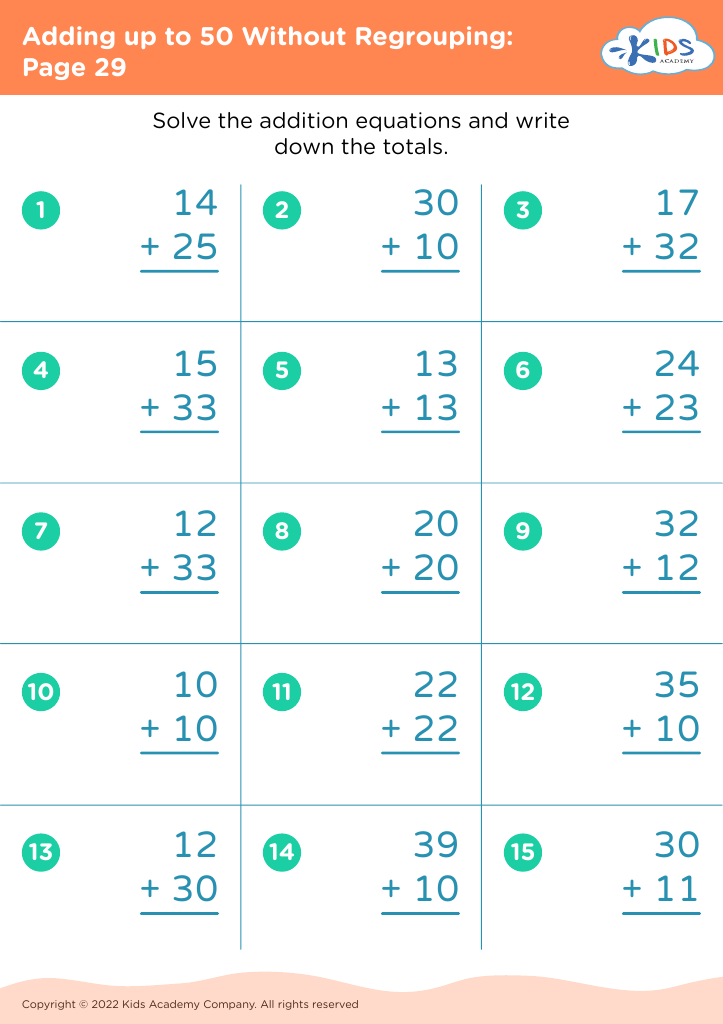
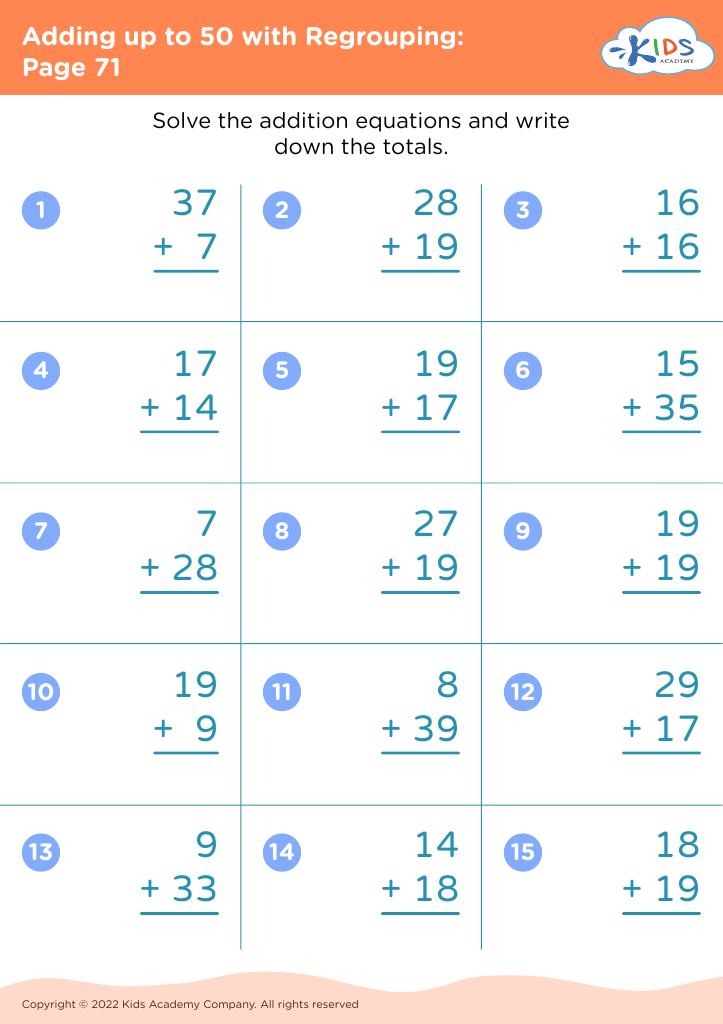




Recognizing patterns and mastering addition up to 50 are essential milestones for 7-year-olds as they form the bedrock of their future success in mathematics. At this age, children's cognitive development allows them to comprehend patterns more readily, which is crucial since recognizing patterns enhances problem-solving skills and logical thinking. Through identifying and extending numerical patterns, children develop an intuitive sense of numbers and their relationships.
When children practice adding numbers up to 50, they not only strengthen their basic arithmetic skills but also enhance their number sense, which is the ability to understand and work with numbers flexibly. This groundwork is foundational for more complex mathematical operations such as subtraction, multiplication, and division that they will encounter in higher grades.
For parents and teachers, fostering these skills early ensures that children build confidence in their math abilities. An engaging exposure to patterns and addition up to 50 can transform math into an enjoyable and stimulating subject rather than a daunting one. Incorporating games, visual aids, and interactive activities tailored to their interests can make learning enjoyable while optimizing brain development and cognitive functions. Overall, emphasizing these mathematical concepts helps establish a robust academic framework that supports continued educational achievement.








