Filters

47 filtered results

Clear all filters
Favorites
With answer key
Interactive

47 filtered results

Difficulty Level

Grade


Check out this FREE Trial Lesson on Adding up to 50 for age 7!

H

Favorites
With answer key
Interactive
  • 7
  • Understanding fractions
  • Adding up to 50
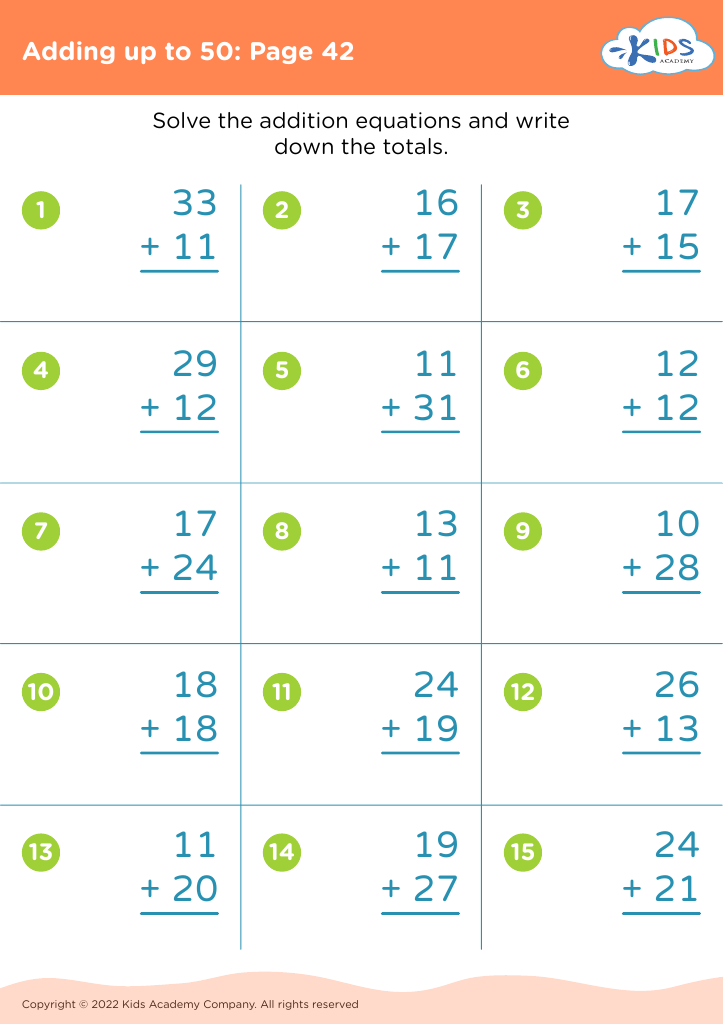
Adding up to 50: Page 42

Adding up to 50: Page 42

Adding up to 50: Page 42
Worksheet
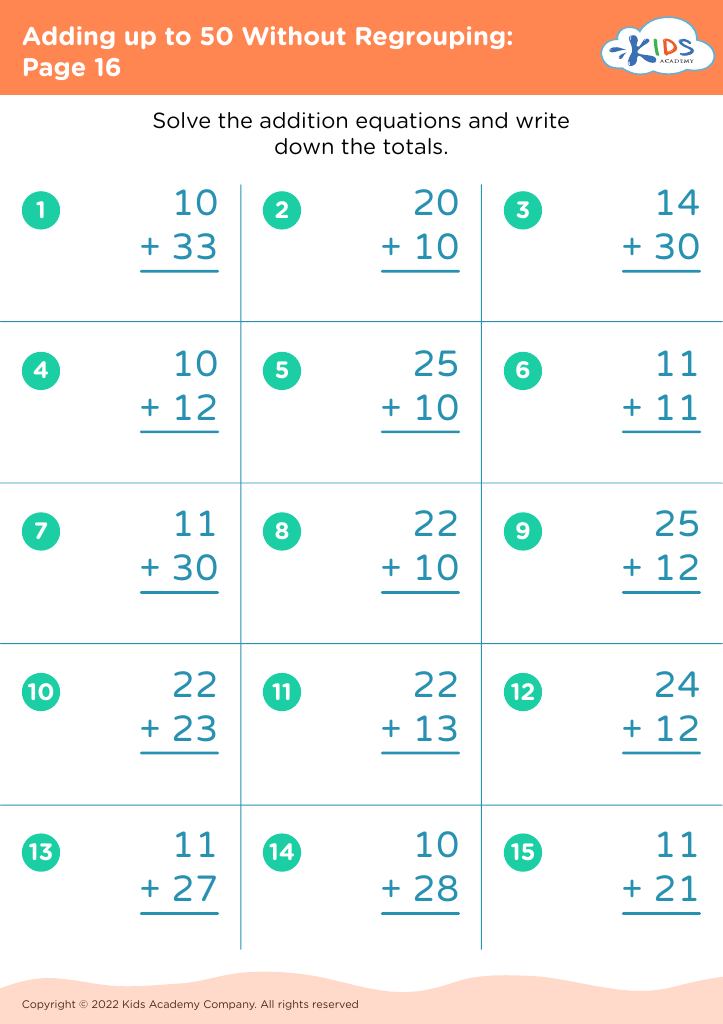
Adding up to 50 Without Regrouping: Page 16
Worksheet
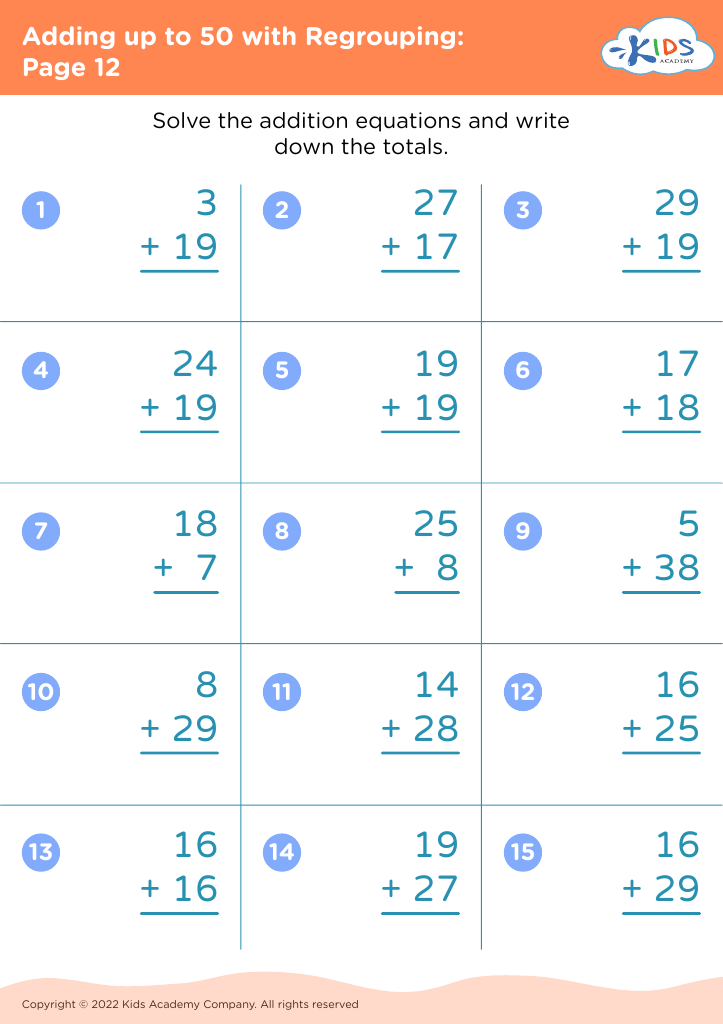
Adding up to 50 with Regrouping: Page 12
Worksheet
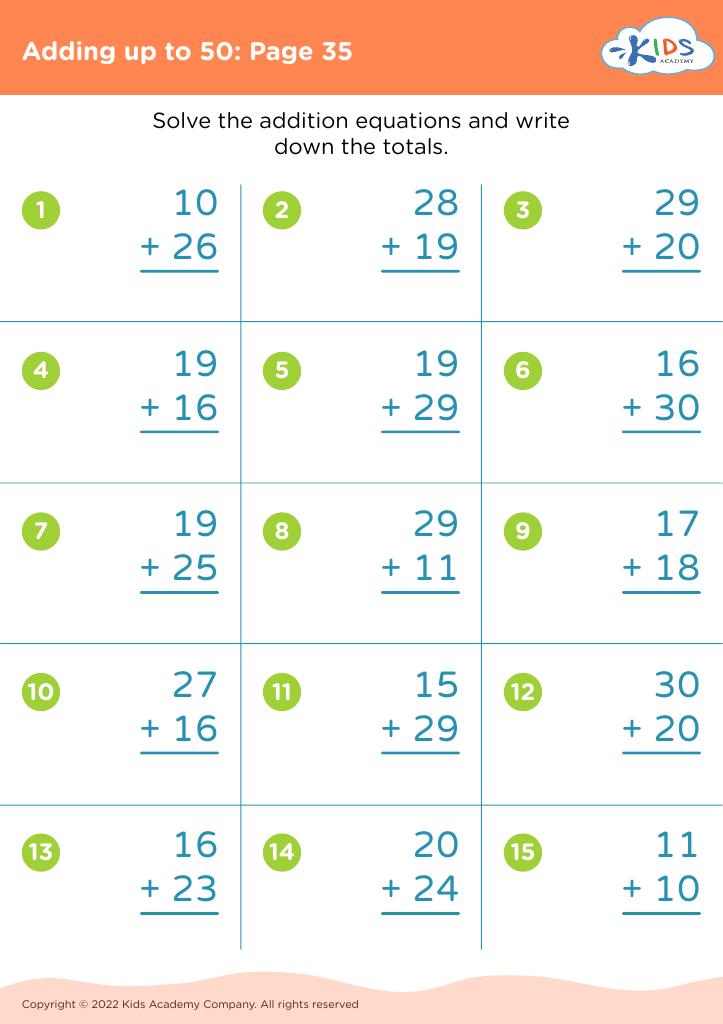
Adding up to 50: Page 35

Adding up to 50: Page 35

Adding up to 50: Page 35
Worksheet
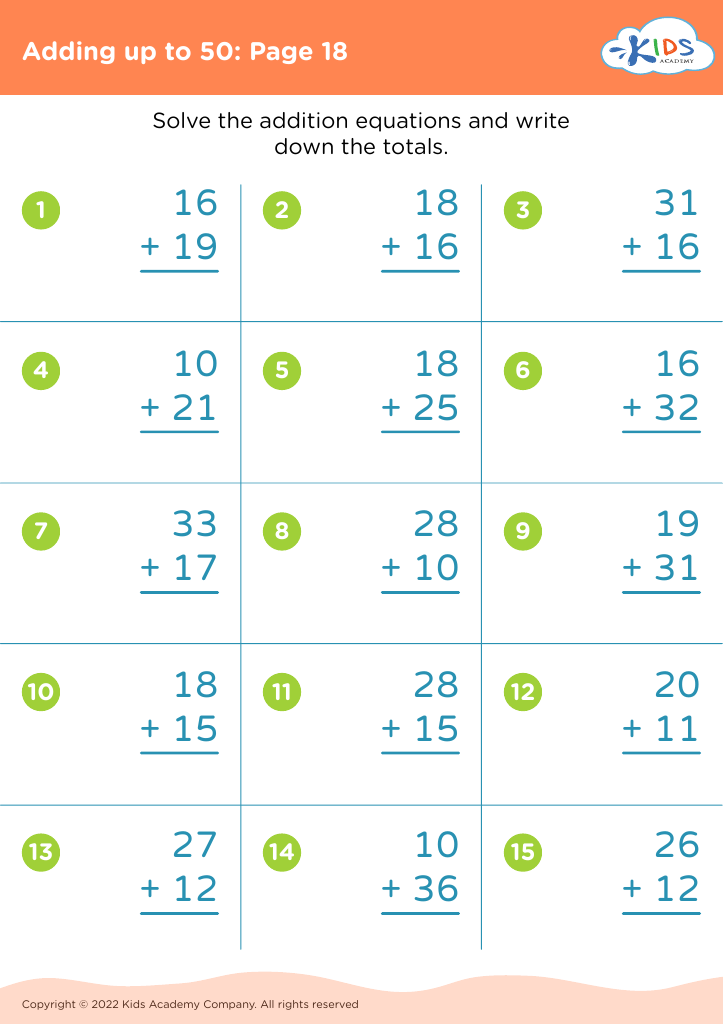
Adding up to 50: Page 18

Adding up to 50: Page 18

Adding up to 50: Page 18
Worksheet
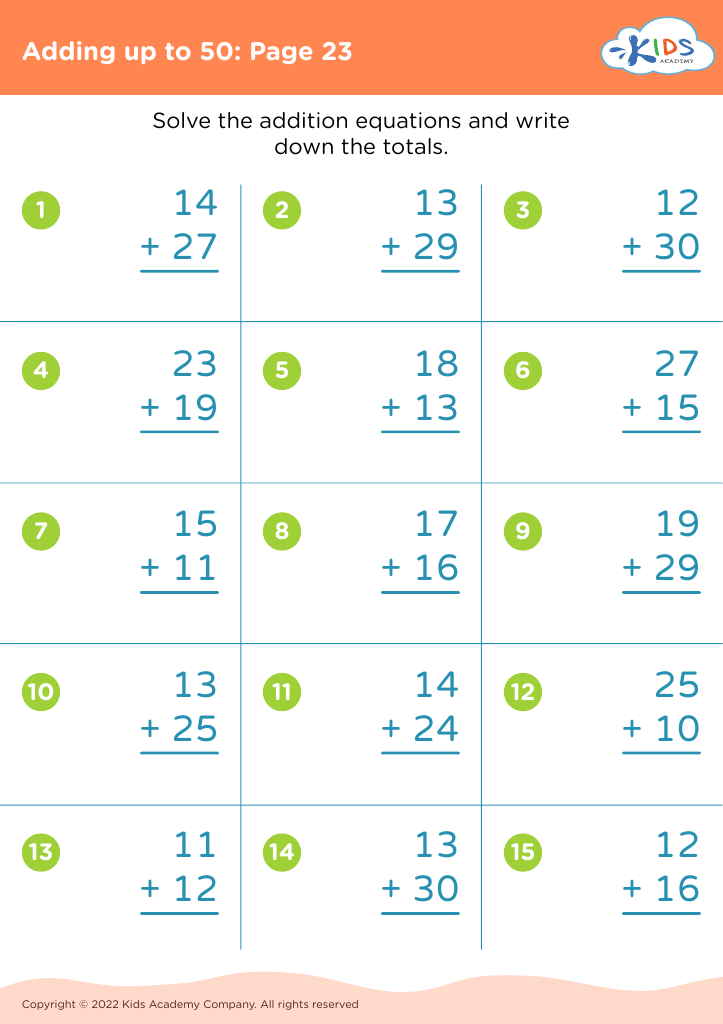
Adding up to 50: Page 23

Adding up to 50: Page 23

Adding up to 50: Page 23
Worksheet
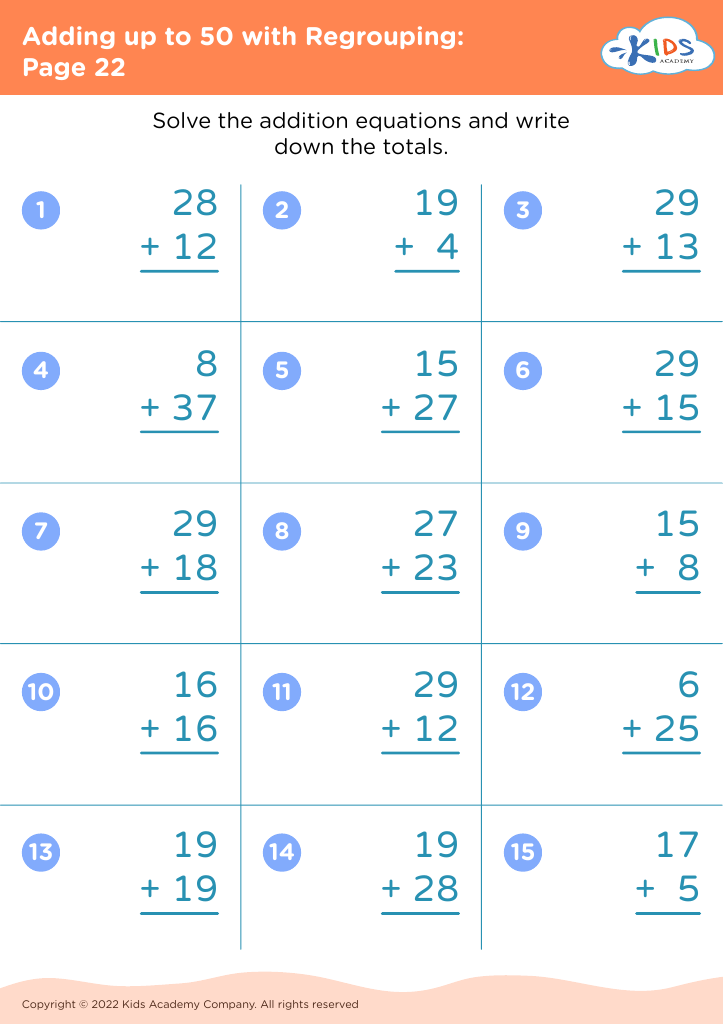
Adding up to 50 with Regrouping: Page 22
Worksheet
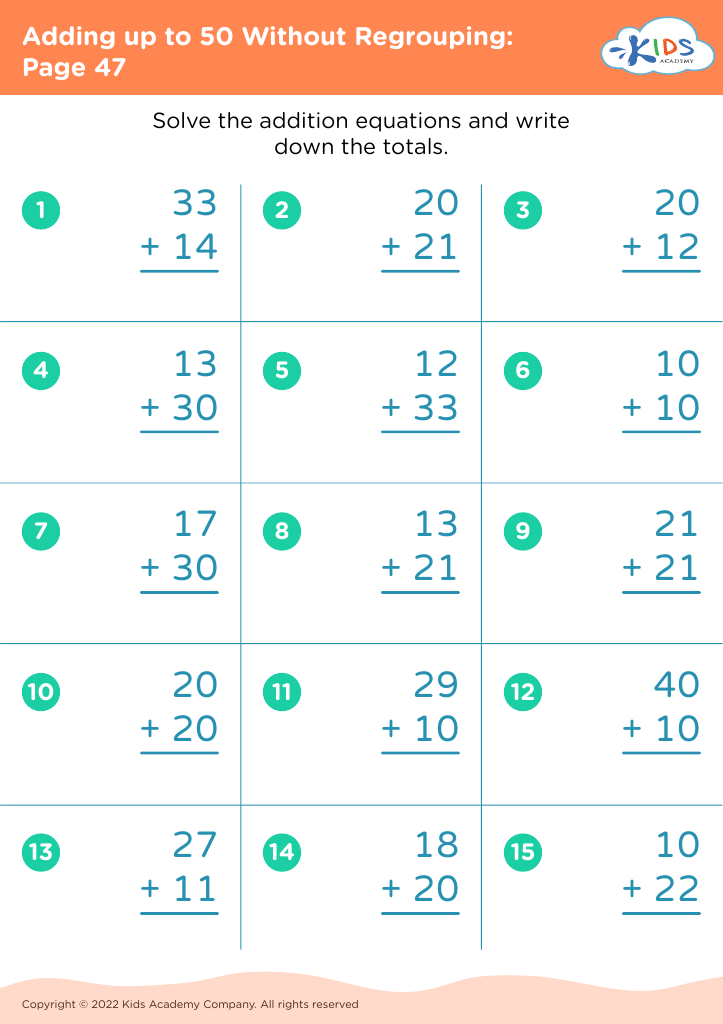
Adding up to 50 Without Regrouping: Page 47
Worksheet
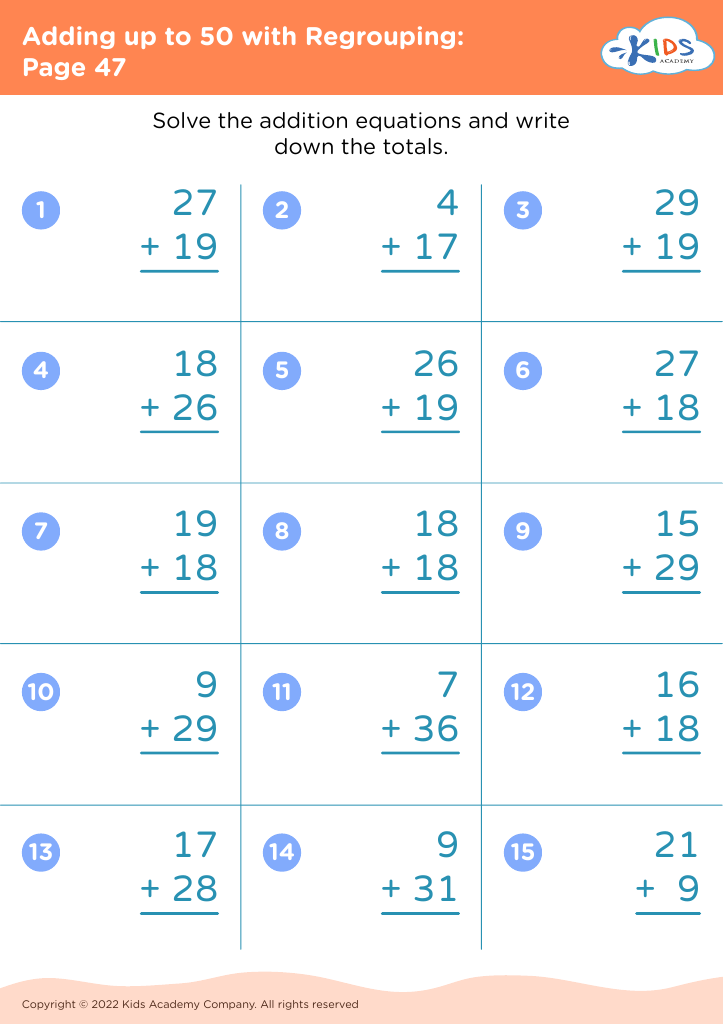
Adding up to 50 with Regrouping: Page 47
Worksheet
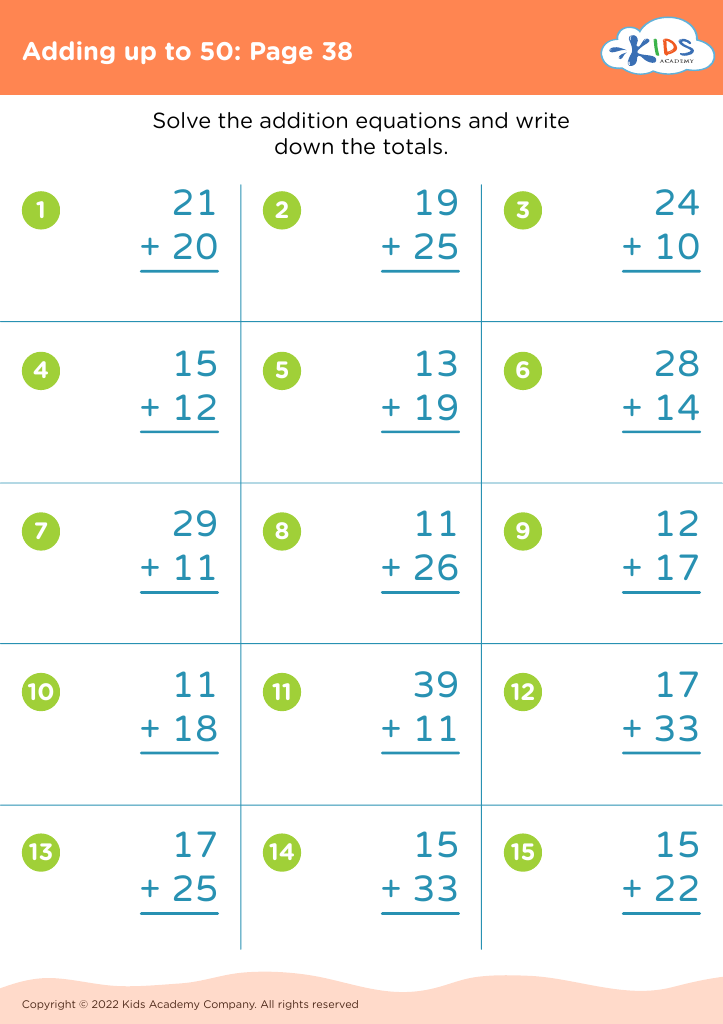
Adding up to 50: Page 38

Adding up to 50: Page 38

Adding up to 50: Page 38
Worksheet
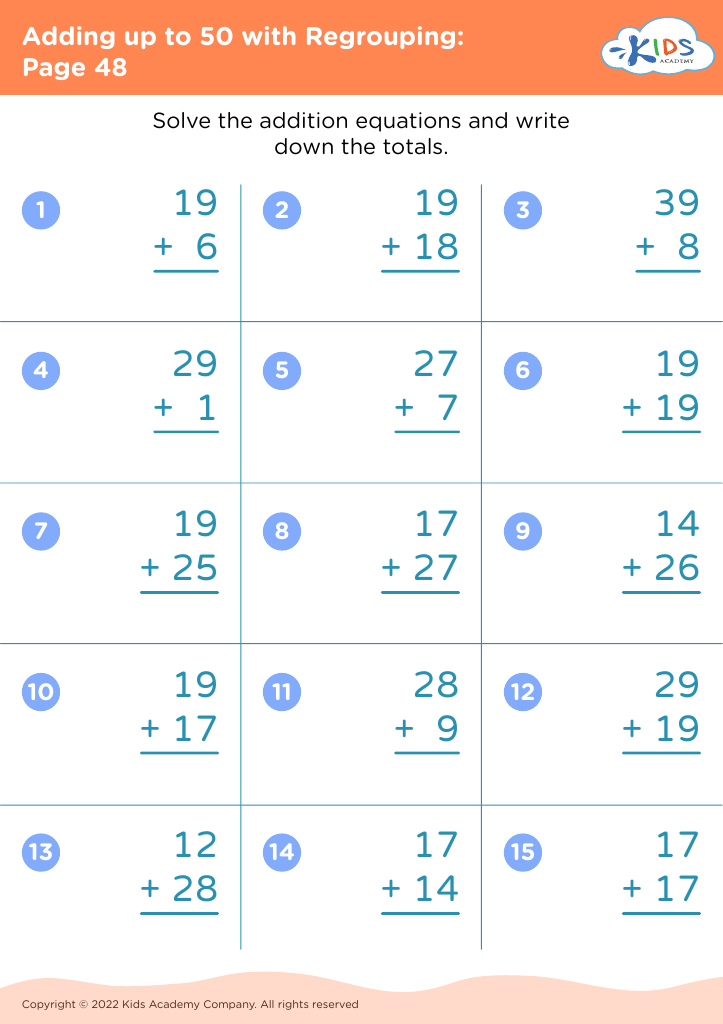
Adding up to 50 with Regrouping: Page 48
Worksheet
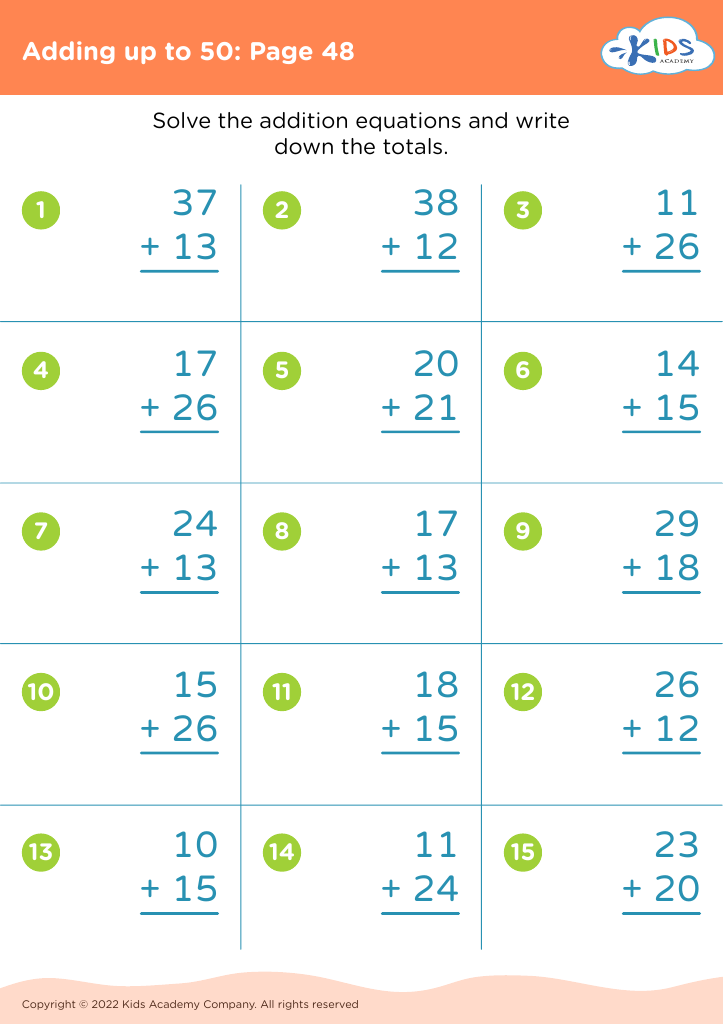
Adding up to 50: Page 48

Adding up to 50: Page 48

Adding up to 50: Page 48
Worksheet
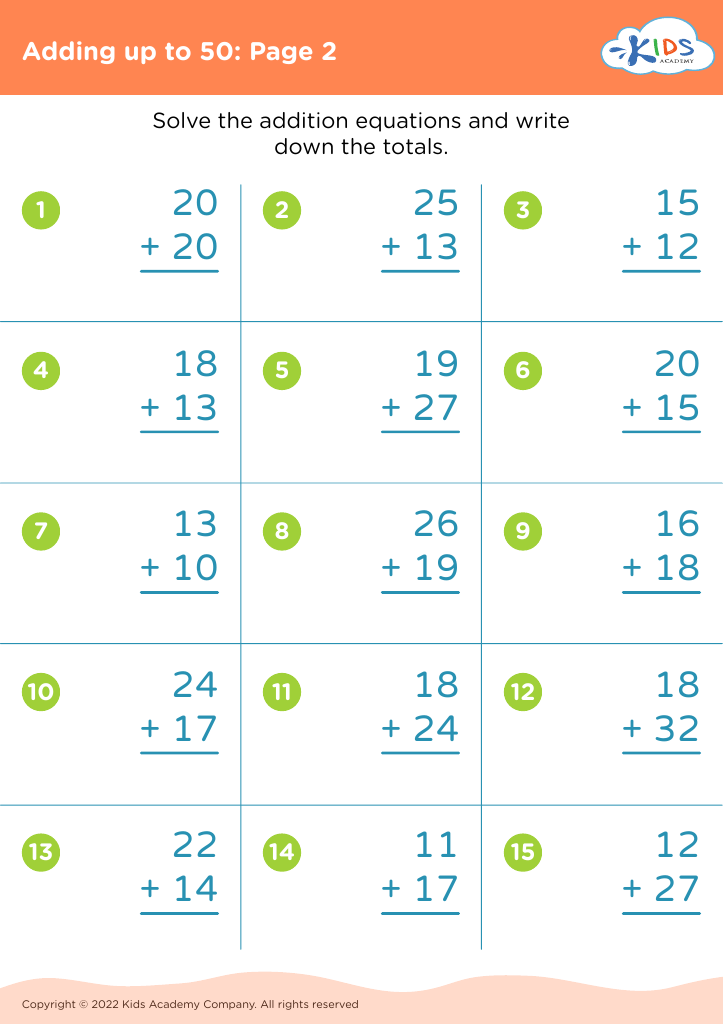
Adding up to 50: Page 2

Adding up to 50: Page 2

Adding up to 50: Page 2
Worksheet
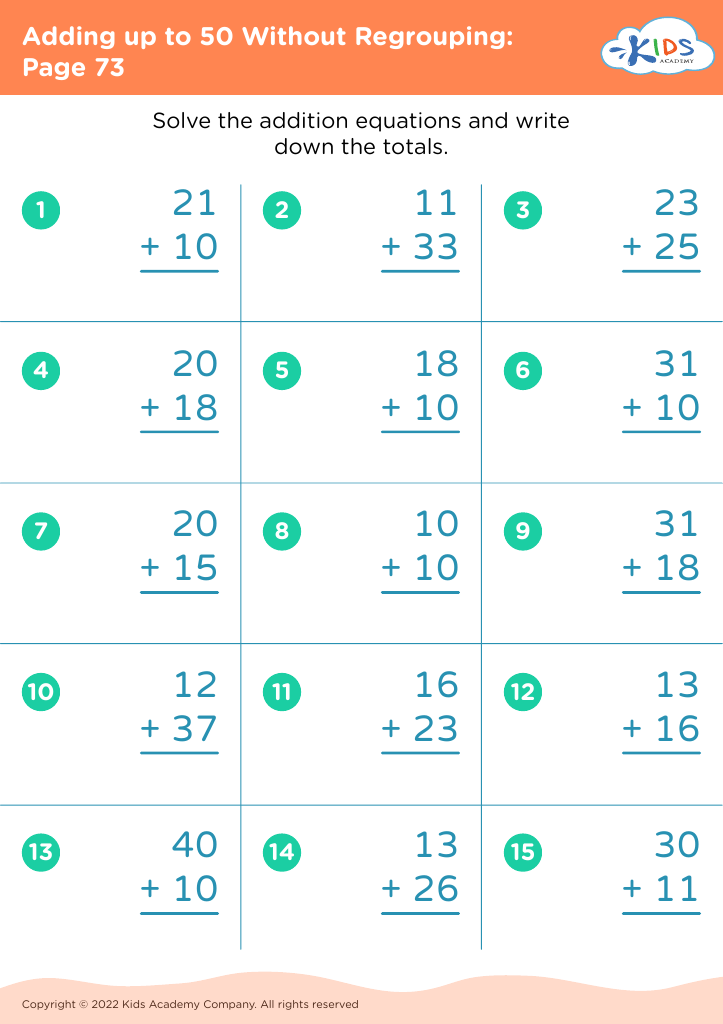
Adding up to 50 Without Regrouping: Page 73
Worksheet
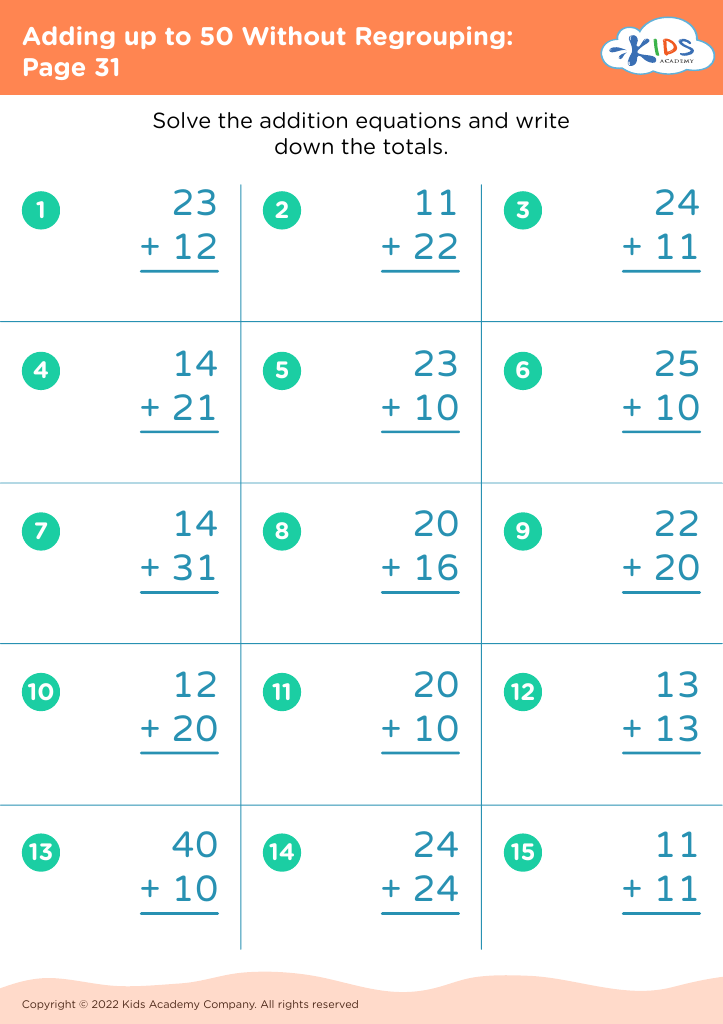
Adding up to 50 Without Regrouping: Page 31
Worksheet
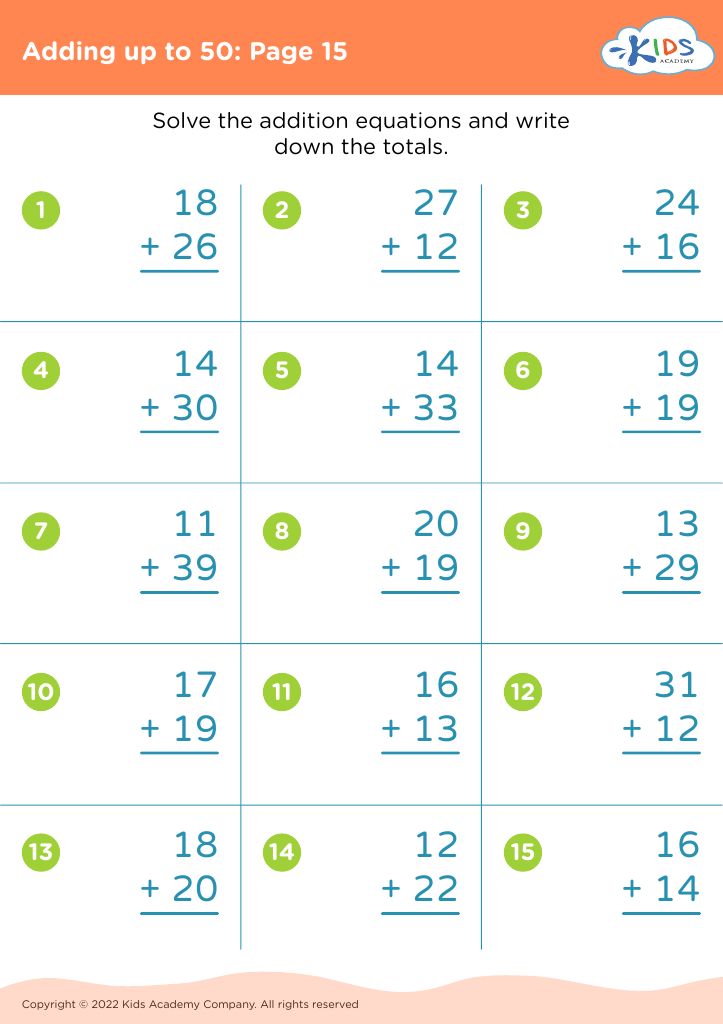
Adding up to 50: Page 15

Adding up to 50: Page 15

Adding up to 50: Page 15
Worksheet
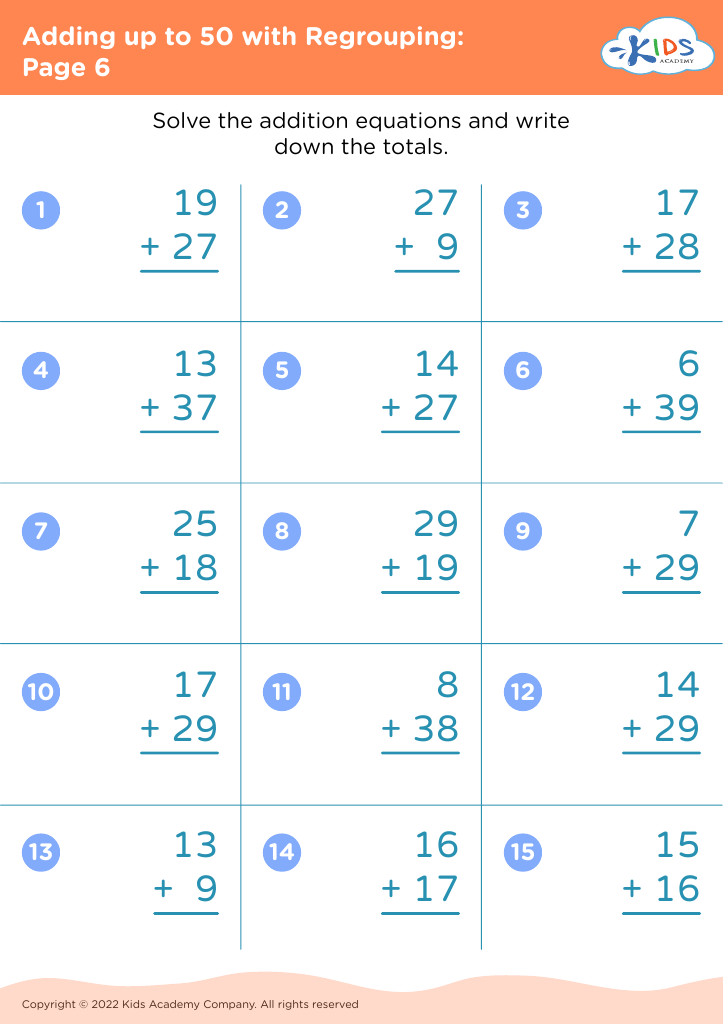
Adding up to 50 with Regrouping: Page 6
Worksheet
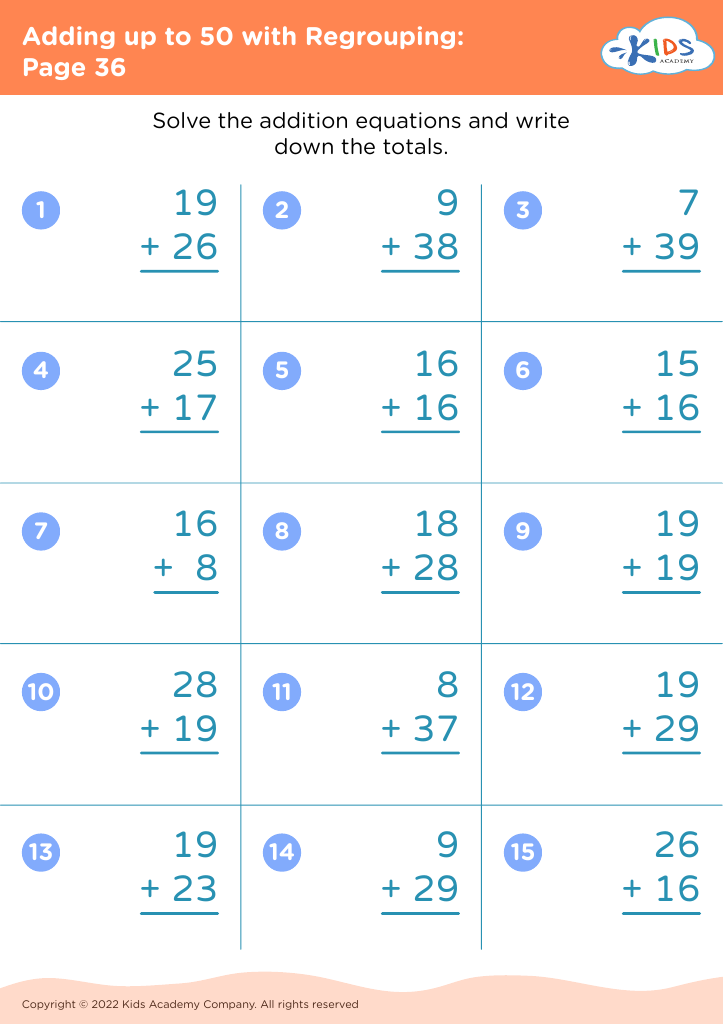
Adding up to 50 with Regrouping: Page 36
Worksheet
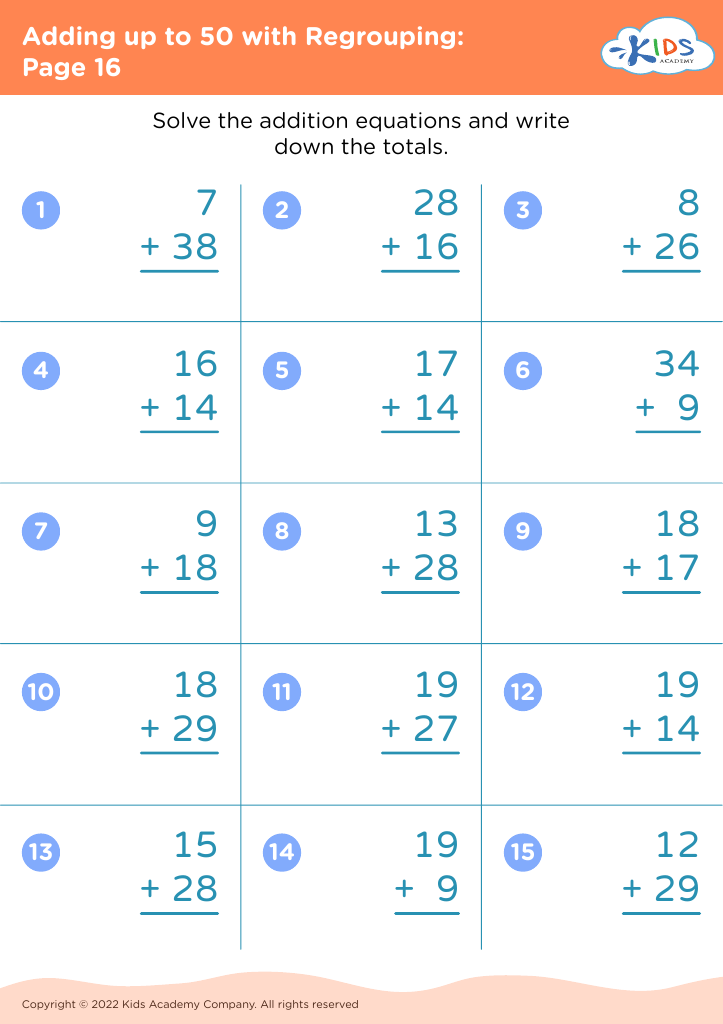
Adding up to 50 with Regrouping: Page 16
Worksheet
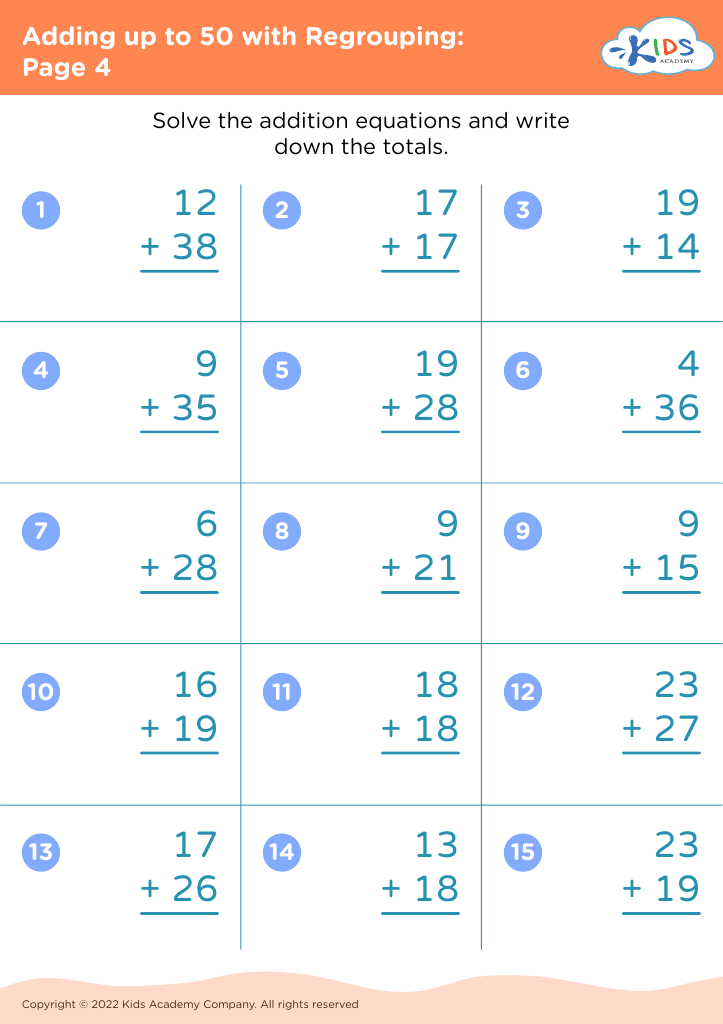
Adding up to 50 with Regrouping: Page 4
Worksheet
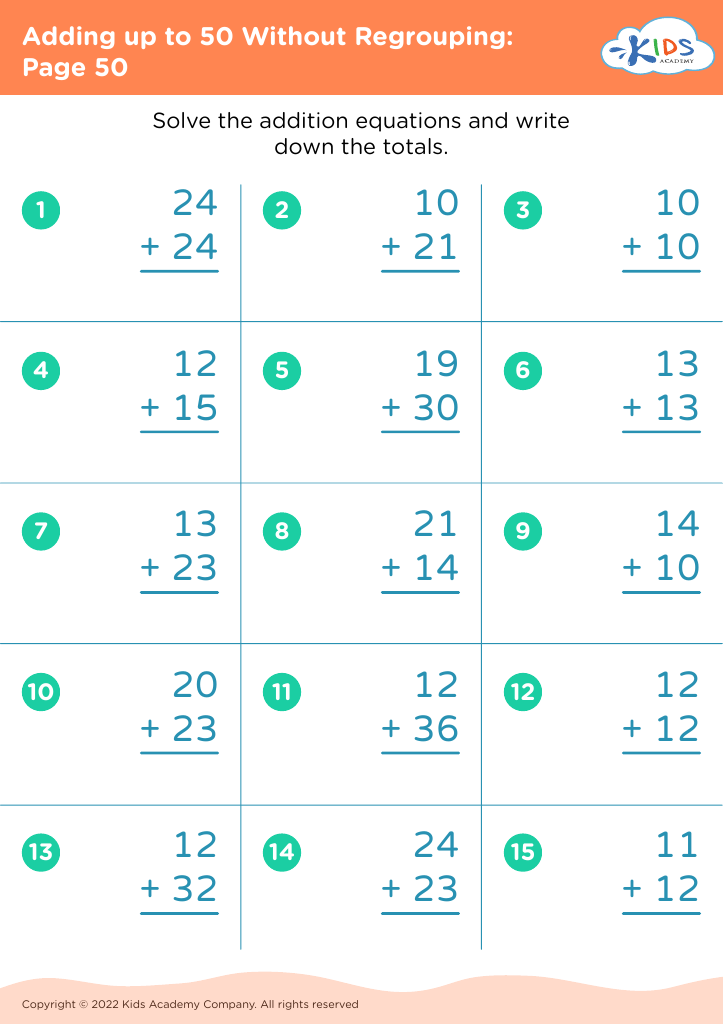
Adding up to 50 Without Regrouping: Page 50
Worksheet
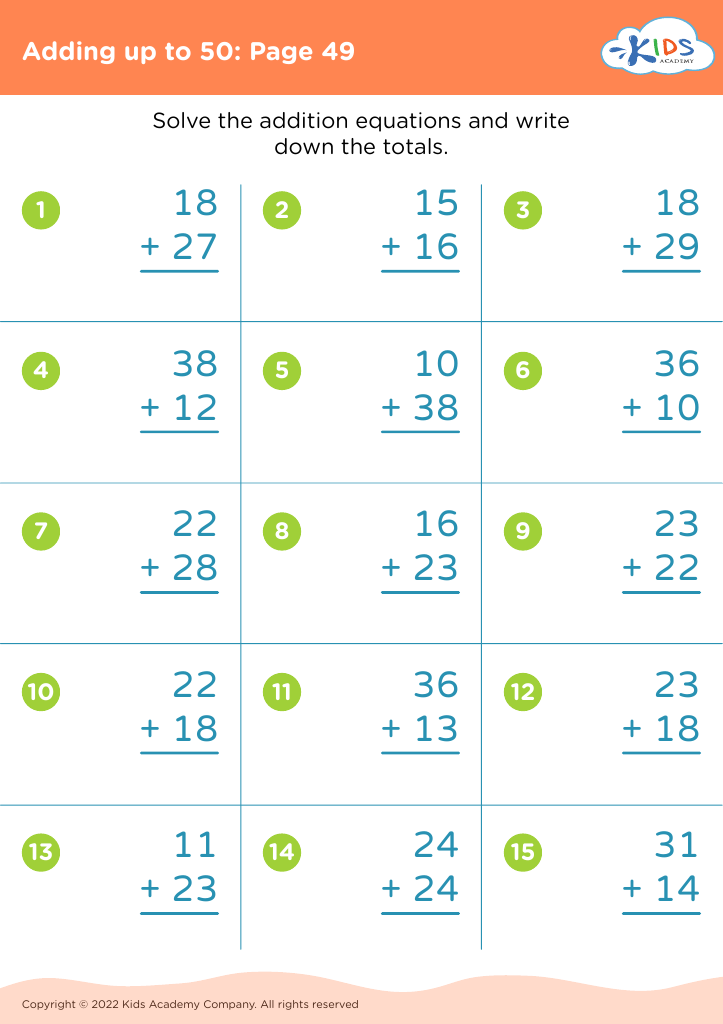
Adding up to 50: Page 49

Adding up to 50: Page 49

Adding up to 50: Page 49
Worksheet
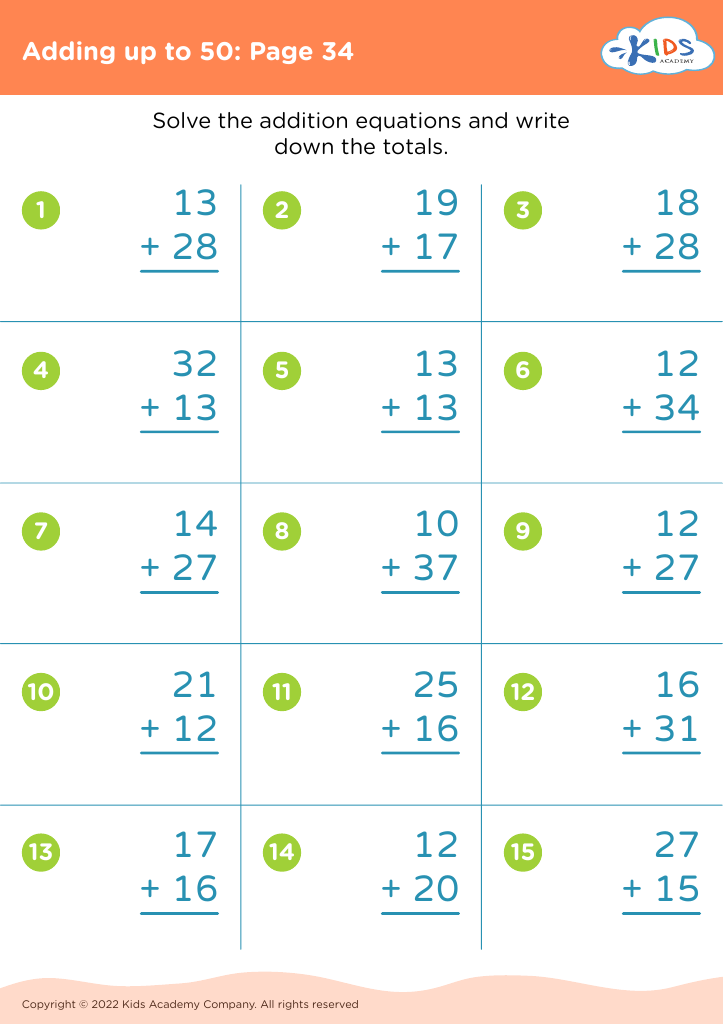
Adding up to 50: Page 34

Adding up to 50: Page 34

Adding up to 50: Page 34
Worksheet


Understanding fractions and adding up to 50 are important mathematical skills for 7-year-olds as these foundational concepts will support their continued success and confidence in more advanced math. Mastering fractions helps children develop a better grasp of how parts make up a whole, which is pivotal for their comprehension of more complex topics in the future, such as percentages, ratios, and algebra.

Additionally, knowing how to add up to 50 teaches young learners fundamental arithmetic skills. These skills don’t just prepare them for future math problems, they also improve cognitive abilities like problem-solving, logical thinking, and decision-making. This arithmetic knowledge is essential in everyday situations, like counting money, measuring ingredients in a recipe, or even determining time.

Fostering a strong mathematical foundation early on encourages a positive attitude towards math, demystifying these concepts and reducing the potential for math-related anxiety. By caring about and actively participating in their child’s learning, parents and teachers show that math is not just a subject in school but a valuable life skill. Prioritizing these early math skills will enable young students to build their academic confidence and lay the groundwork for long-term educational success and awareness.