Understanding symmetry Adding up to 50 Worksheets for 7-Year-Olds
9 filtered results
-
From - To
Explore our engaging "Understanding Symmetry: Adding Up to 50 Worksheets" designed specifically for 7-year-olds! These worksheets provide a fun way to learn symmetry while practicing addition skills up to 50. Each activity encourages young learners to recognize symmetrical patterns and incorporate math concepts in a hands-on approach. Perfect for enhancing critical thinking and problem-solving skills, this resource fosters creativity and confidence in young mathematicians. Ideal for classroom or home use, these worksheets are filled with colorful graphics and interactive challenges that make learning enjoyable. Support your child’s math journey and help them discover the beauty of symmetry today!
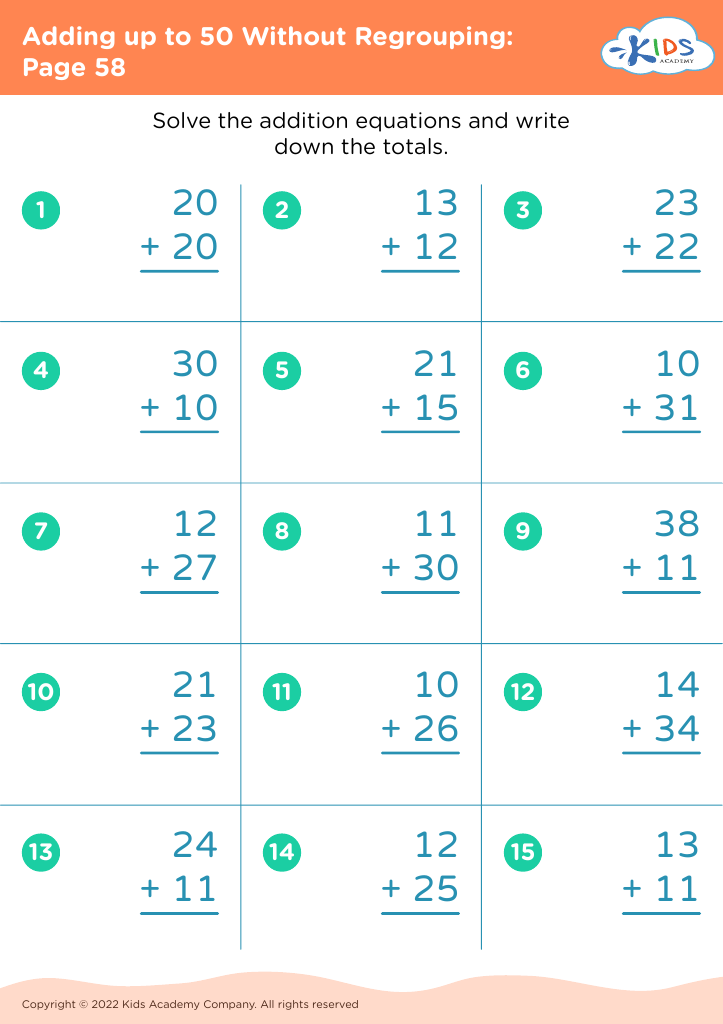
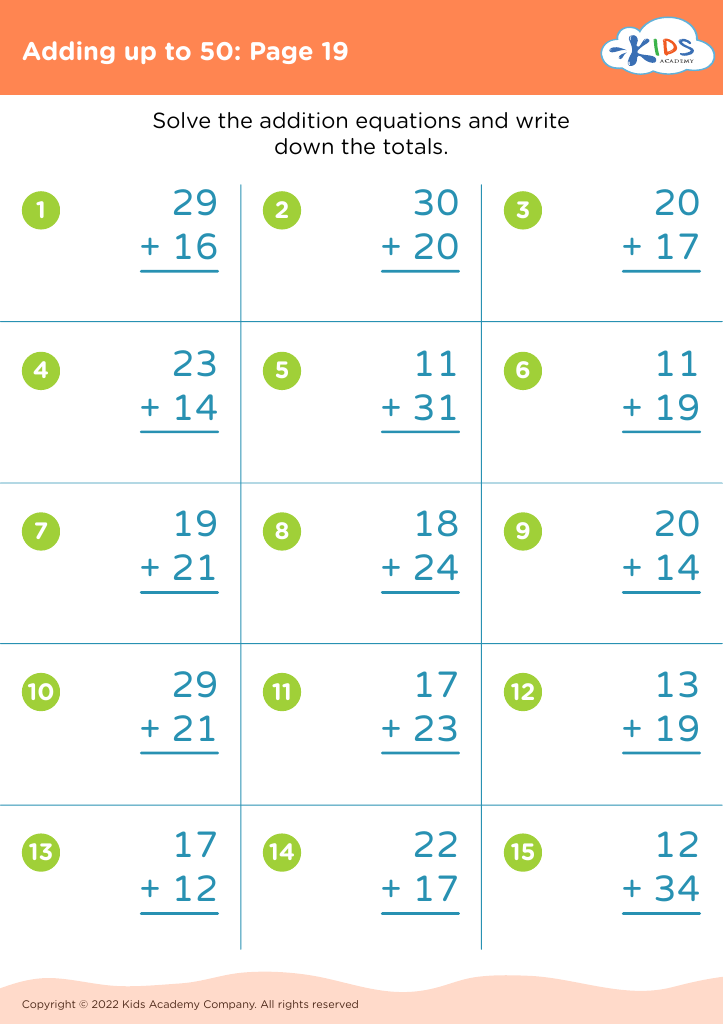
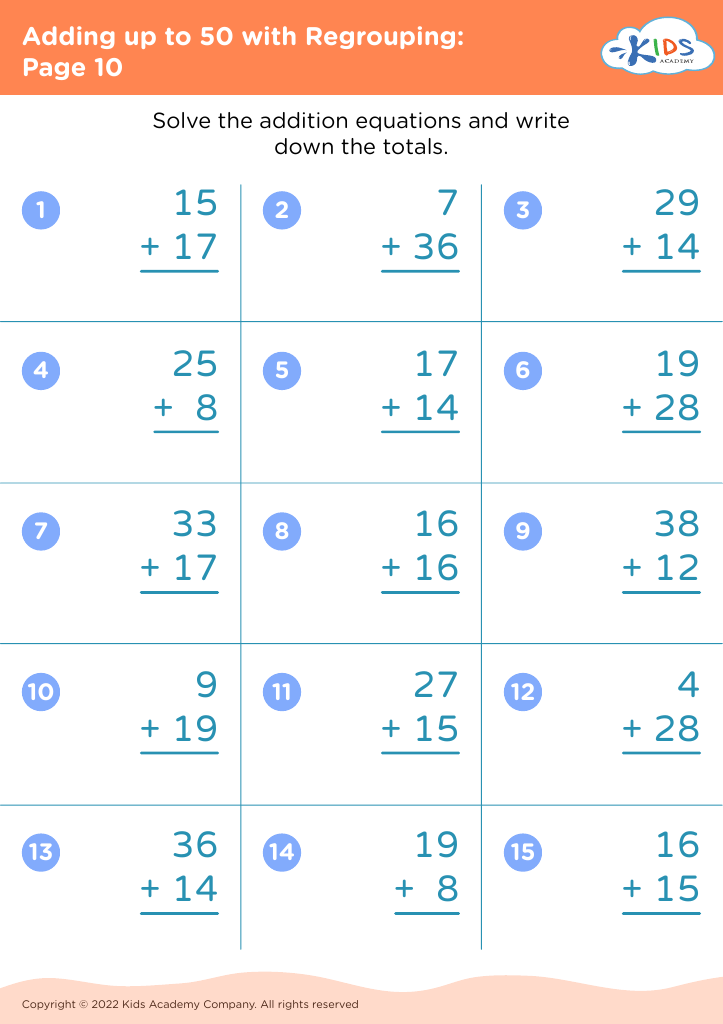
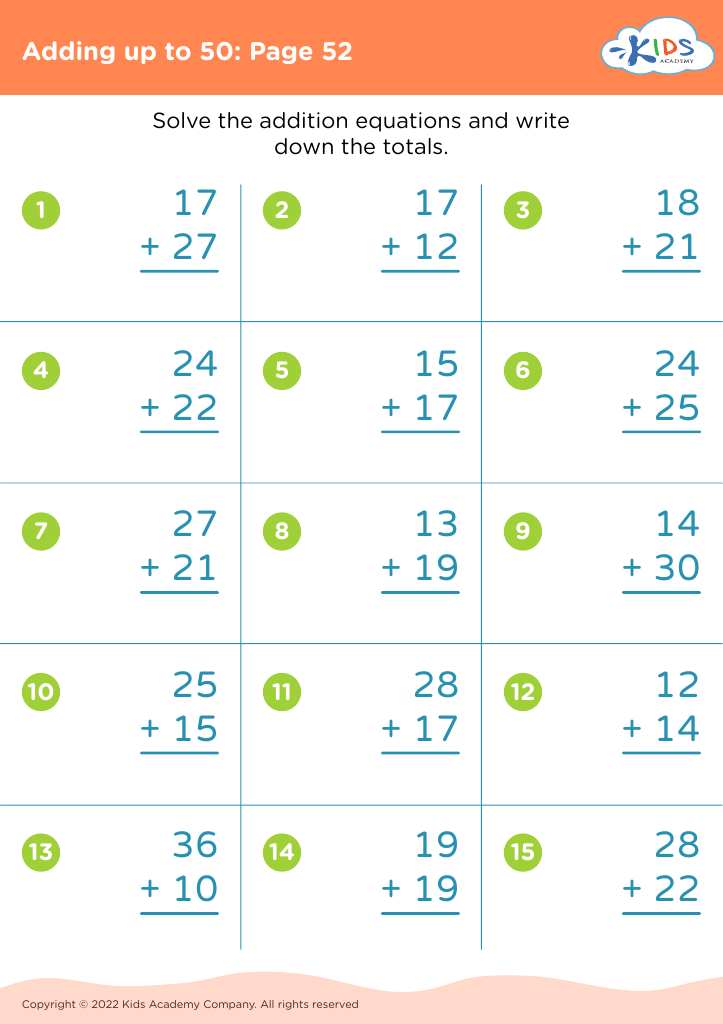
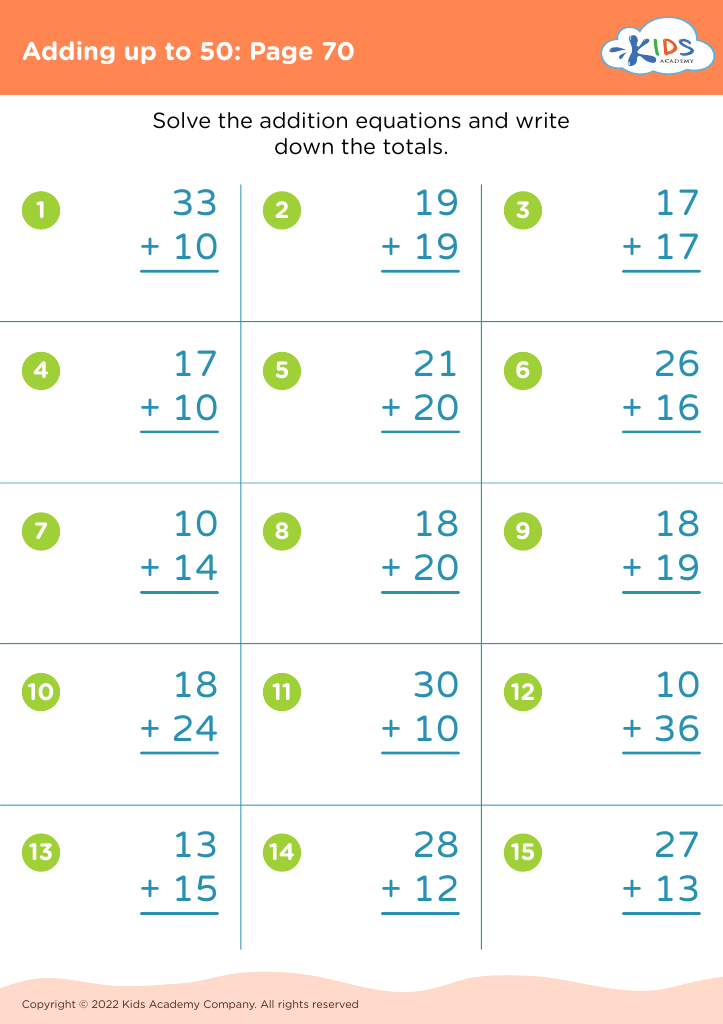
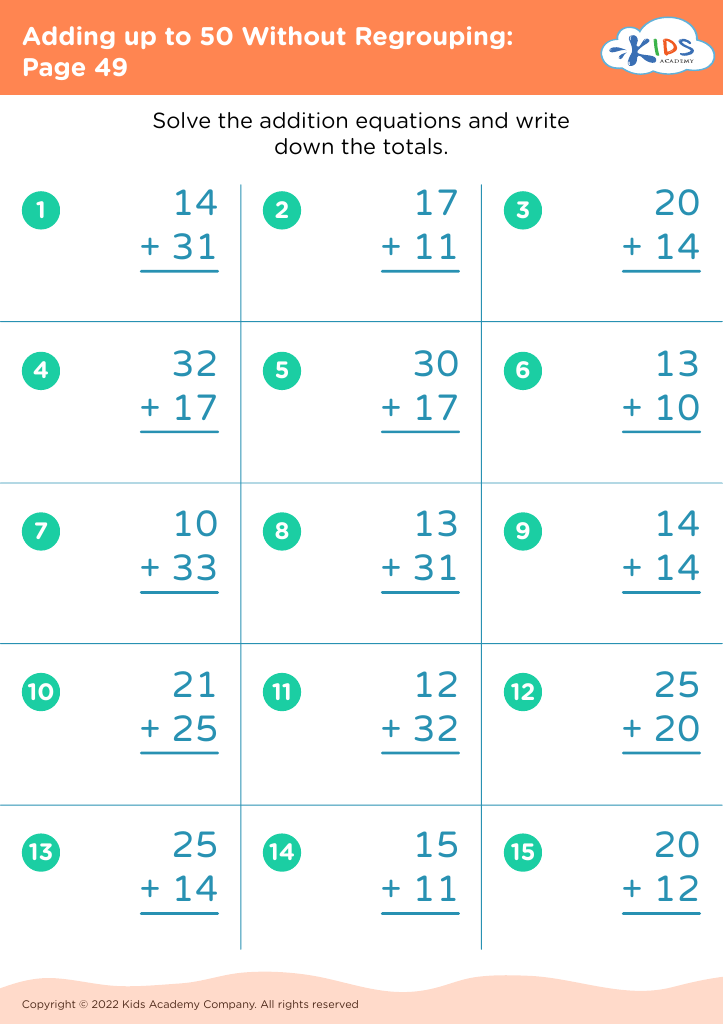
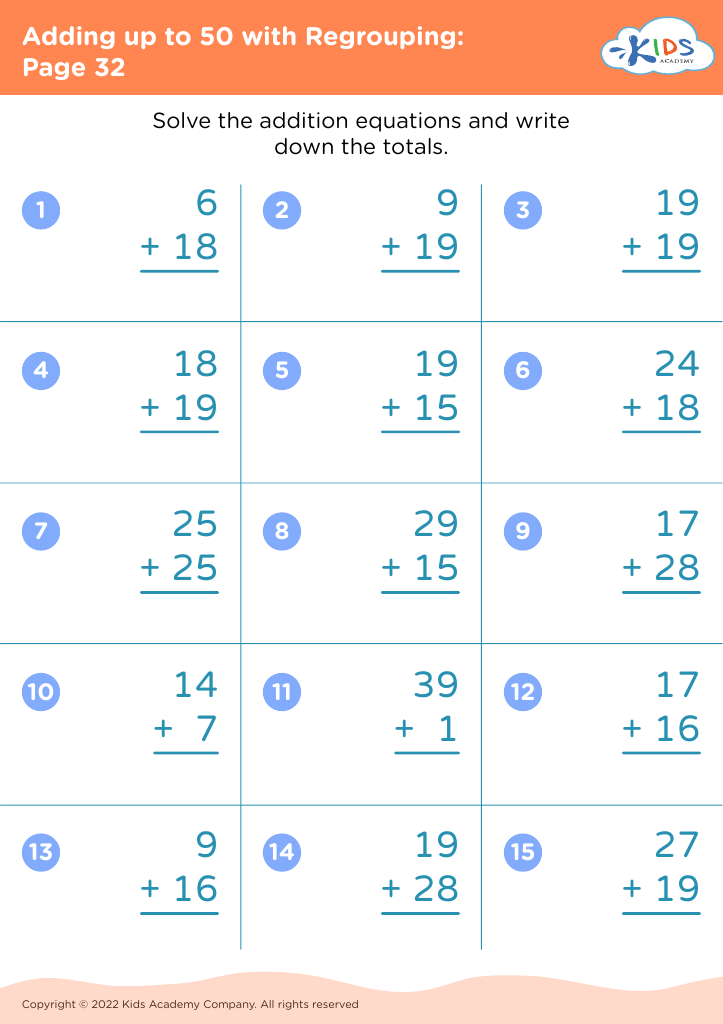
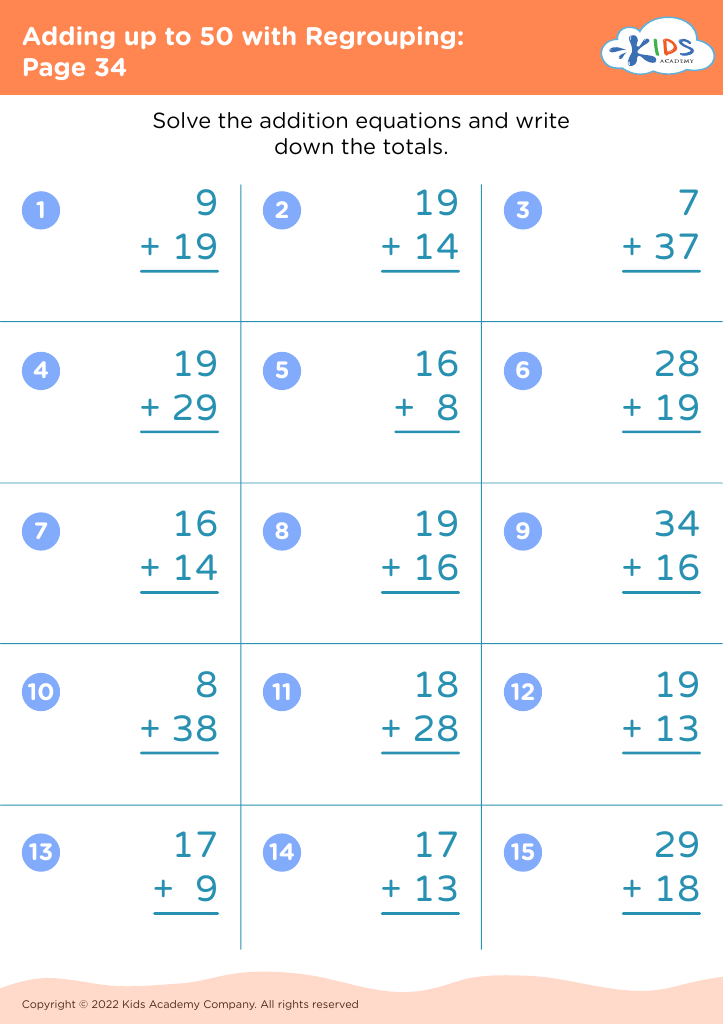
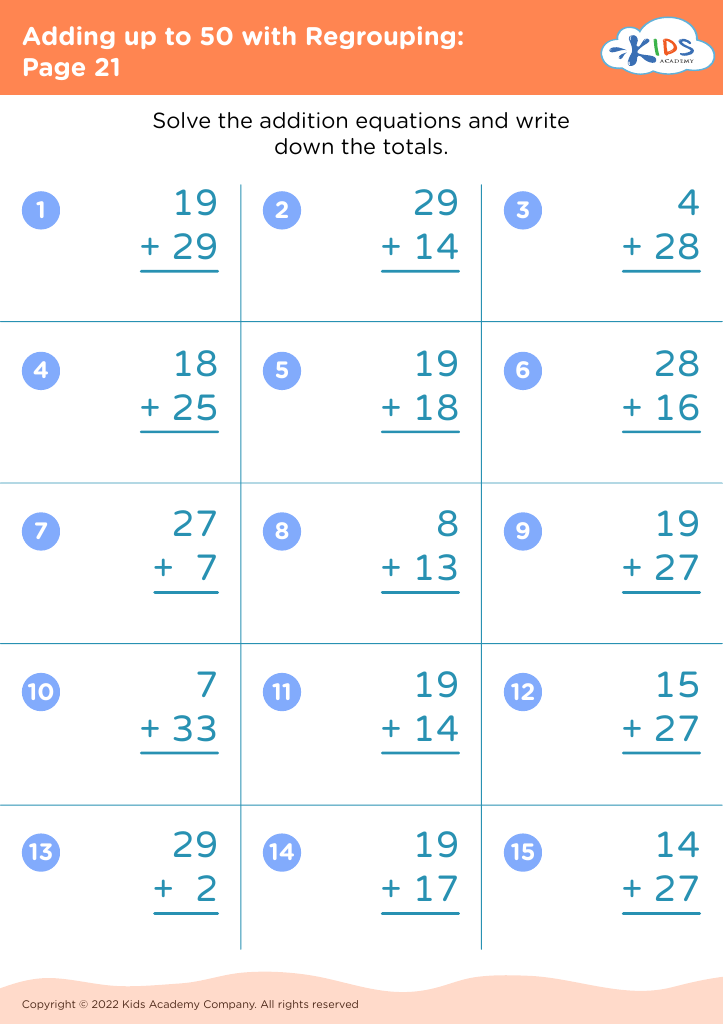




Understanding symmetry and the concept of adding up to 50 are vital skills for 7-year-olds, and both foster foundational mathematical abilities. Symmetry, encountered in shapes and patterns, enhances critical thinking and spatial awareness. When children recognize symmetrical elements, they develop observational skills that aid in geometry and everyday problem-solving. This understanding can spark creativity, as students explore art and nature through a mathematical lens, making learning engaging and fun.
On the other hand, adding numbers to reach 50 cultivates essential arithmetic skills. Mastering this concept allows children to grasp addition and subtraction, instilling confidence in their mathematical capabilities. Moreover, understanding how different numbers combine to form 50 lays the groundwork for more complex calculations and number relationships. It also reinforces the idea of mathematical relationships, which is crucial as they progress in their academic journey.
When parents and teachers support these concepts, they not only enhance a child's academic proficiency but also unleash a passion for math that extends beyond the classroom. Equipped with these skills, children are better prepared to approach future mathematical challenges, ensuring a strong foundation and encouraging a lifelong love of learning in mathematics.








