Visual Learning Addition and Subtraction Word Problems Worksheets for 7-Year-Olds
5 filtered results
-
From - To
Enhance your child’s math skills with our captivating "Visual Learning Addition and Subtraction Word Problems Worksheets for 7-Year-Olds". These expertly designed materials utilize bright images and easy-to-understand scenarios to strengthen problem-solving abilities. Perfect for visual learners, these engaging worksheets make mastering addition and subtraction enjoyable. They also cultivate critical thinking and calculation skills. Ideal for home or classroom use, our printable worksheets offer diverse challenges suitable for young mathematicians. Help your child gain confidence in math through interactive, visual exercises, and watch their understanding and love for numbers grow! Start today with Kids Academy!
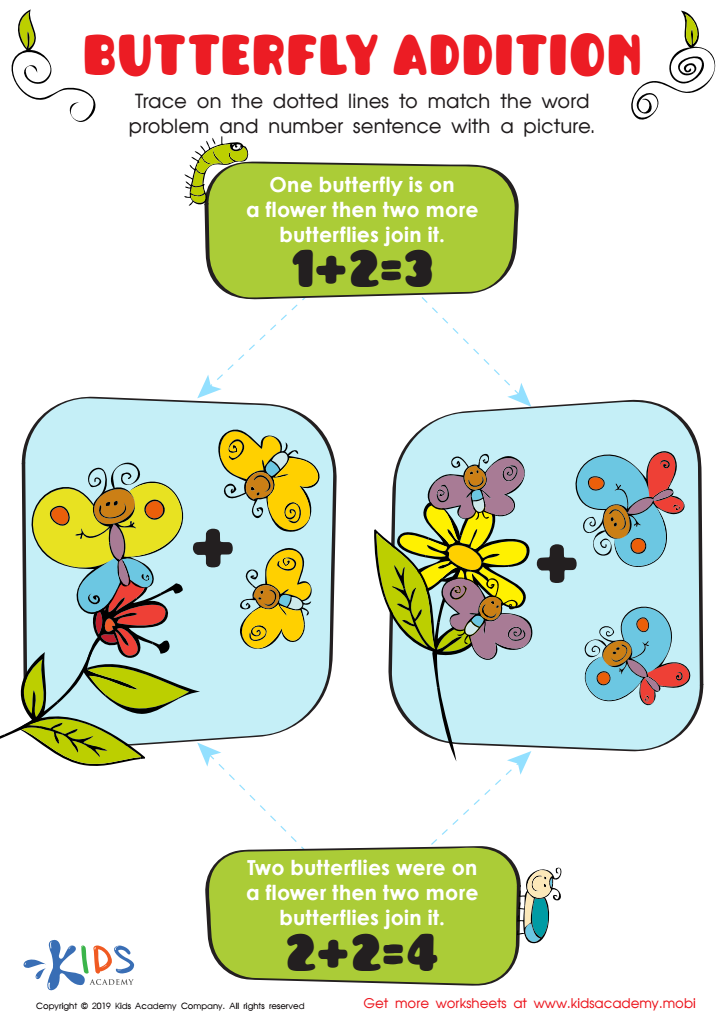
Butterfly Addition Worksheet
 Assign to My Students
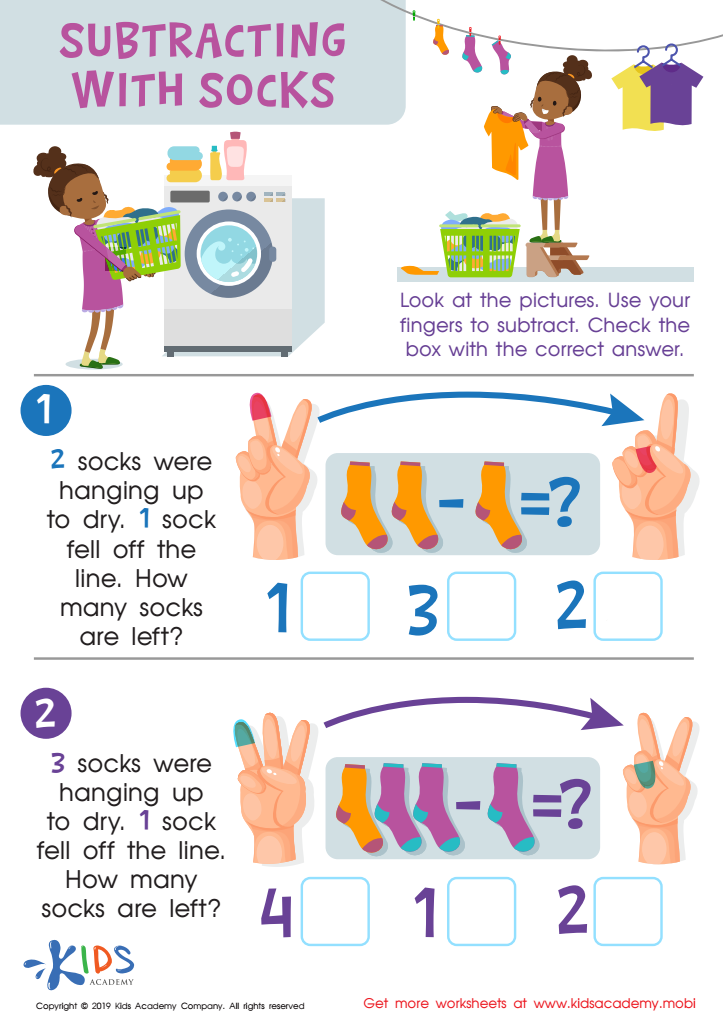
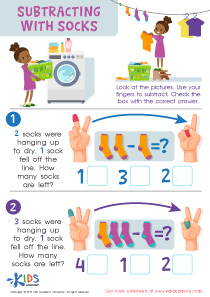
Subtracting Socks Worksheet
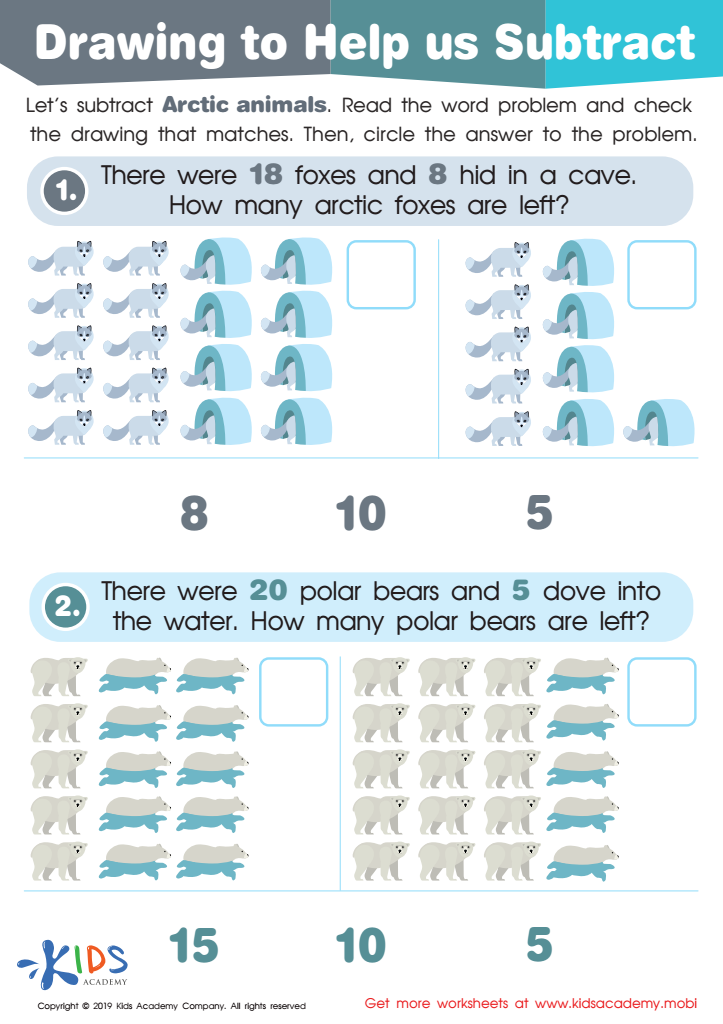
Drawing to Help Us Subtract Worksheet
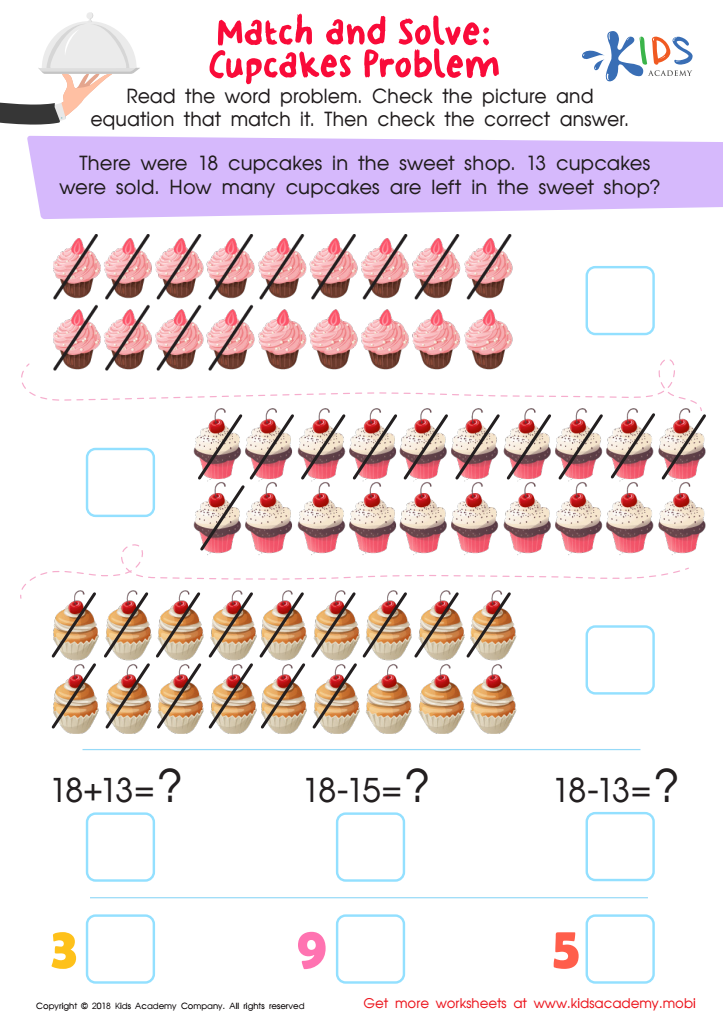
Match and Solve: Cupcakes Problem Worksheet
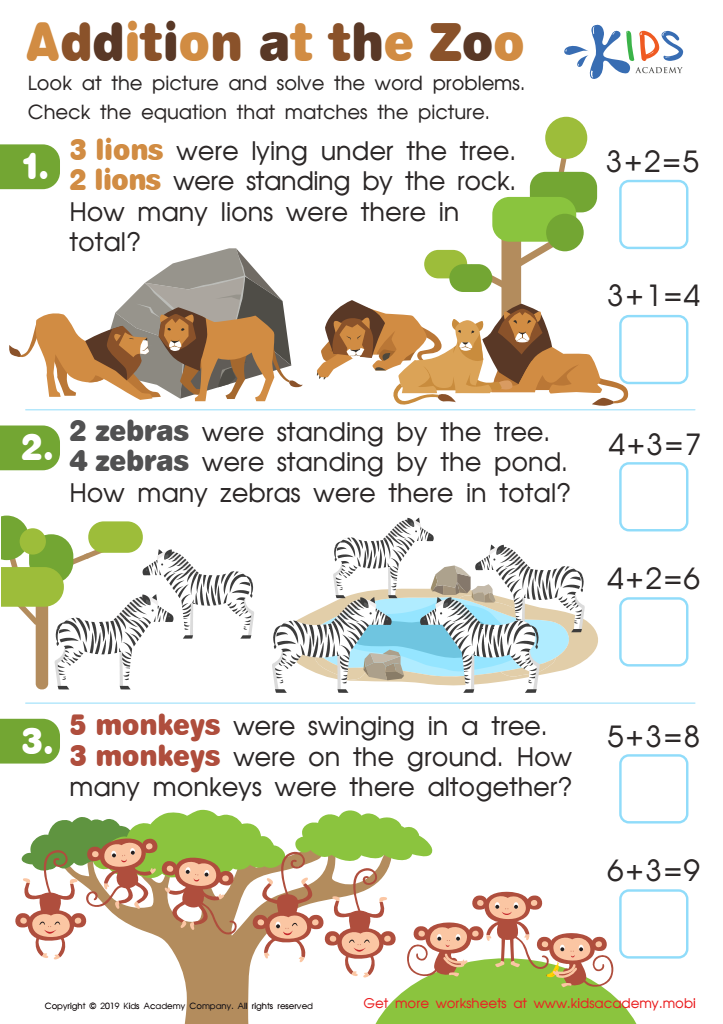
Addition at the Zoo Worksheet








Parents and teachers should care about Visual Learning Addition and Subtraction Word Problems for 7-year-olds because these methods are highly effective in building foundational math skills. At this age, children are transitioning from concrete to more abstract thinking. Visual learning uses images, diagrams, and objects to represent mathematical concepts, allowing kids to see the relationships between numbers and operations. This helps learners better understand and solve word problems by making abstract ideas more concrete and relatable.
When young students see a math problem visually, they're more likely to comprehend what's being asked and less likely to feel intimidated. Visual aids like number lines, grids, and pictorial representations enable them to break down problems into manageable parts, fostering problem-solving skills and boosting their confidence.
Moreover, visual learning caters to different learning styles and can be particularly beneficial for children who struggle with traditional text-based methods. It supports cognitive development by engaging multiple senses, aiding in memory retention and understanding. Early exposure to these visual strategies equips kids with essential skills they will use in more advanced math and develops critical thinking, making it easier for them to tackle complex problems in the future. Therefore, integrating visual learning into teaching practices is crucial for nurturing enthusiastic and proficient young mathematicians.