Basic Addition Skills Addition & Subtraction Worksheets for 7-Year-Olds - Page 2
26 filtered results
-
From - To
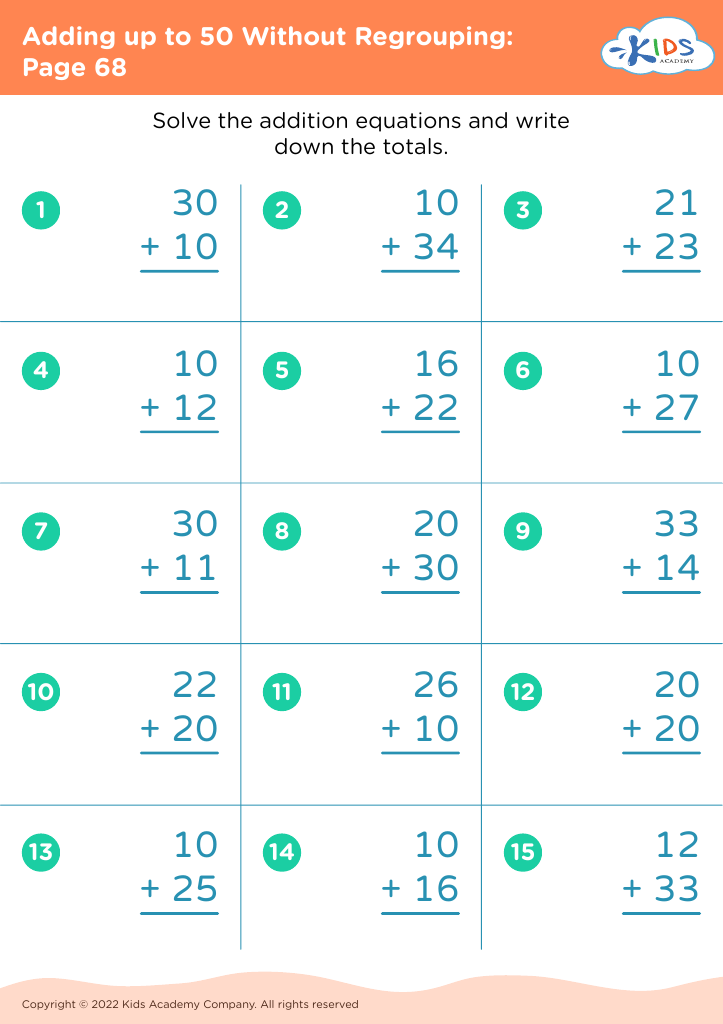
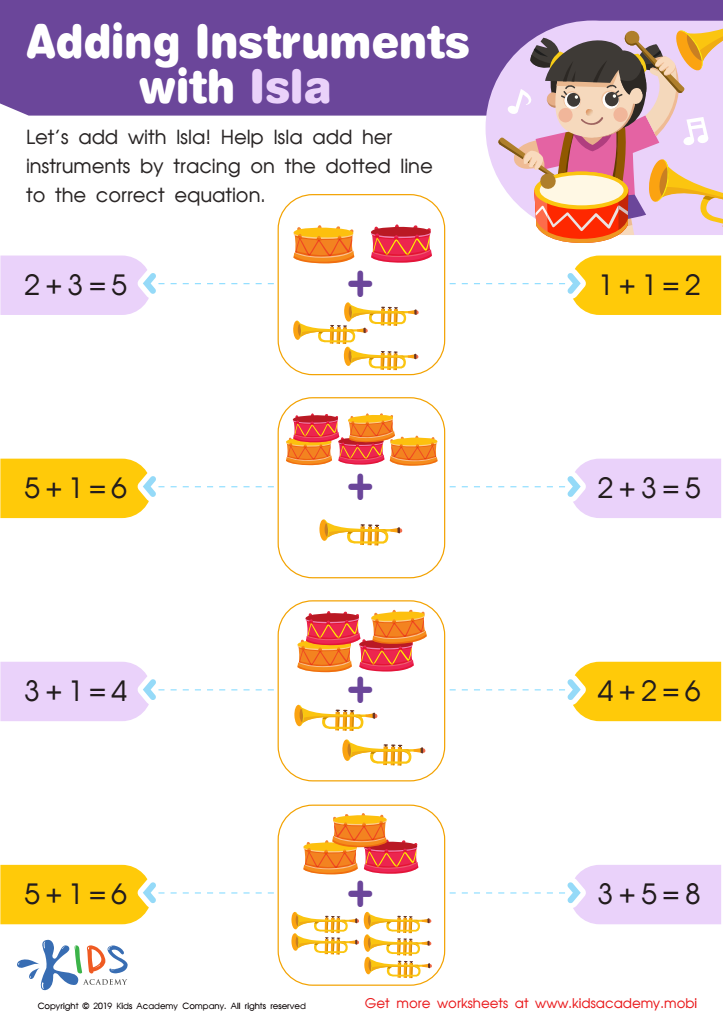
Adding Instruments with Isla Worksheet
 Assign to My Students








Basic addition and subtraction skills are crucial for 7-year-olds because they form the foundation for all future mathematical learning and problem-solving abilities. At this developmental stage, children are not just learning to count but also beginning to understand the concepts of quantity, comparison, and part-whole relationships. Mastering these skills is essential for their cognitive development, as math teaches critical thinking, logical reasoning, and pattern recognition.
For parents and teachers, ensuring that children grasp these fundamental arithmetic skills is important for several reasons. First, it boosts the child's confidence in handling more complex mathematical concepts as they advance in school. Second, proficiency in basic math skills enhances a child's ability to perform everyday tasks, from managing time to understanding money, thereby improving their overall life skills. Third, these skills are closely linked with academic achievements in other subjects, such as science and technology, making them indispensable for holistic educational development.
Moreover, early competence in addition and subtraction can foster an enjoyment of math, reducing anxiety and promoting a positive attitude towards the subject. When parents and teachers invest time in nurturing these early skills, they are setting children up for long-term academic success and a lifelong appreciation for learning.








