
Critical thinking development Addition & Subtraction Worksheets for 7-Year-Olds
3 filtered results
Difficulty Level
Grade
Age
-
From - To
Subject
Activity
Standards
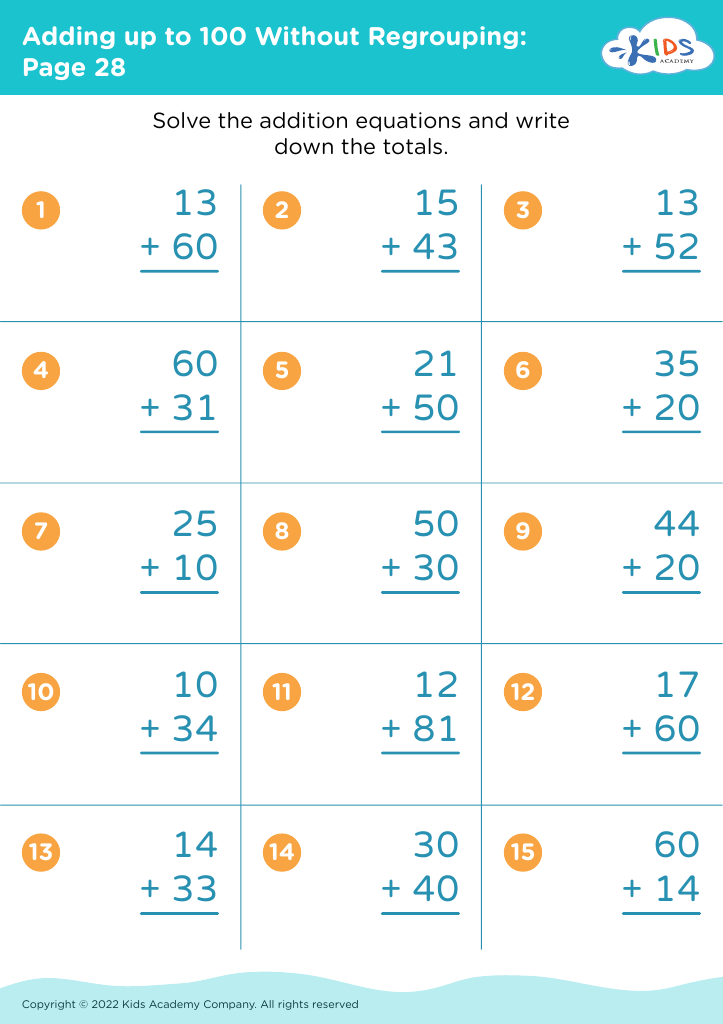
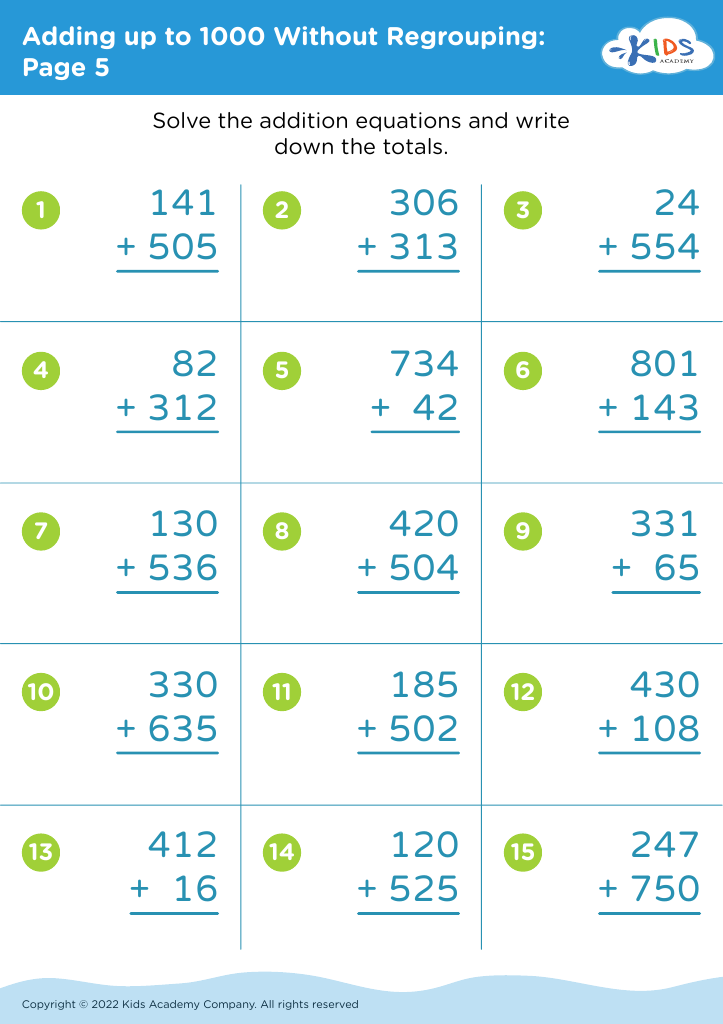
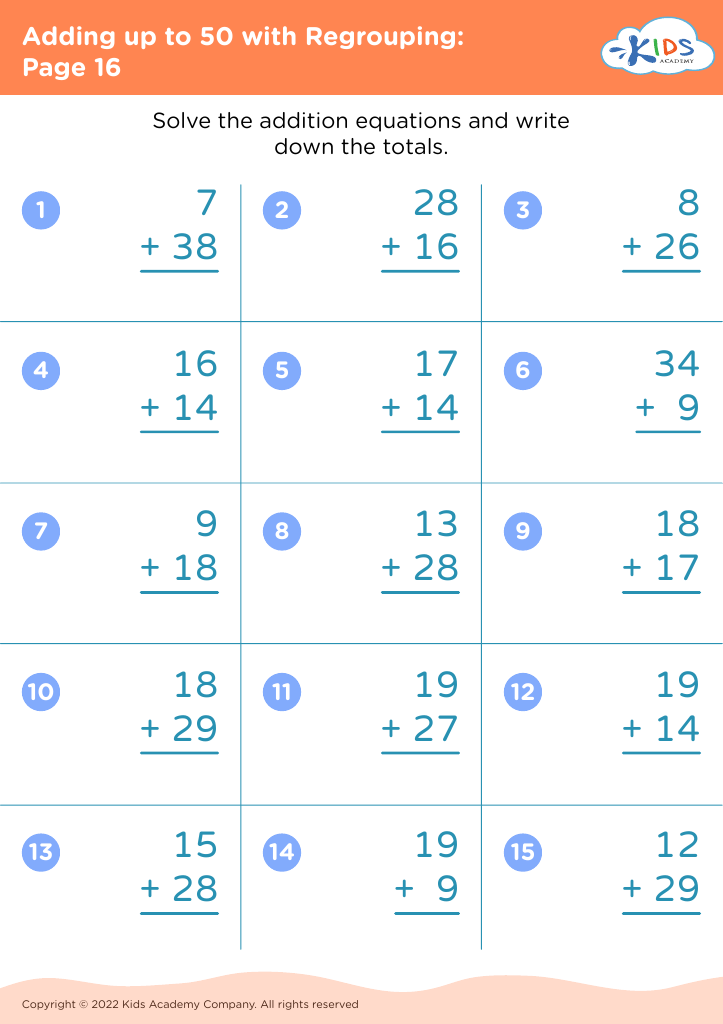
Enhance your child's math skills with our Critical Thinking Development Addition and Subtraction Worksheets designed specifically for 7-year-olds. These engaging and thoughtfully crafted worksheets encourage young learners to solve problems, think critically, and develop essential mathematical reasoning. Each activity not only promotes arithmetic fluency but also fosters a deeper understanding of number relationships and strategies for effective problem-solving. With a variety of stimulating exercises, your child will explore addition and subtraction in a fun and interactive way, making learning enjoyable and impactful. Perfect for both classroom use and at-home practice, these worksheets will pave the way for confident and capable young mathematicians.
Favorites
With answer key
Interactive
Join Kids Academy for Free
Who is primarily going to use this learning content?








Parents and teachers should prioritize the development of critical thinking in relation to addition and subtraction for 7-year-olds because these skills form the foundation for mathematical understanding and problem-solving. At this age, children transition from learning basic arithmetic to applying these skills in various contexts, making it essential to promote higher-level thinking.
Critical thinking in mathematics encourages students to analyze problems, recognize patterns, and evaluate different strategies for solving addition and subtraction tasks. Instead of merely memorizing facts and procedures, 7-year-olds learn to question "why" and "how," deepening their understanding. This approach fosters perseverance and creativity, enabling children to approach familiar or novel problems with confidence.
Moreover, developing critical thinking in early math paves the way for more advanced concepts in the future, such as geometry, fractions, and even algebra. As children grow, those who can think critically are more likely to excel academically, become lifelong learners, and adapt to challenges throughout their lives.
Supporting critical thinking in math also enhances children's ability to communicate their reasoning, collaborate with others, and apply mathematical concepts to everyday situations. This holistic approach not only builds strong mathematicians but also well-rounded individuals ready to tackle the complexities of the world.








