Develop critical thinking Addition & Subtraction Worksheets for 7-Year-Olds
11 filtered results
-
From - To
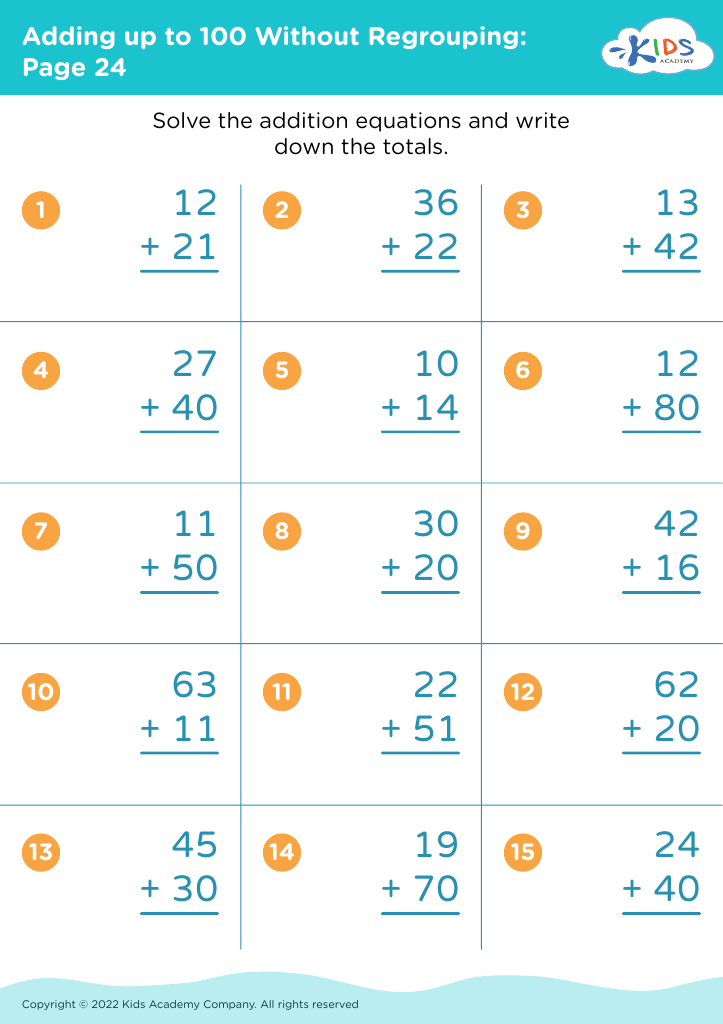
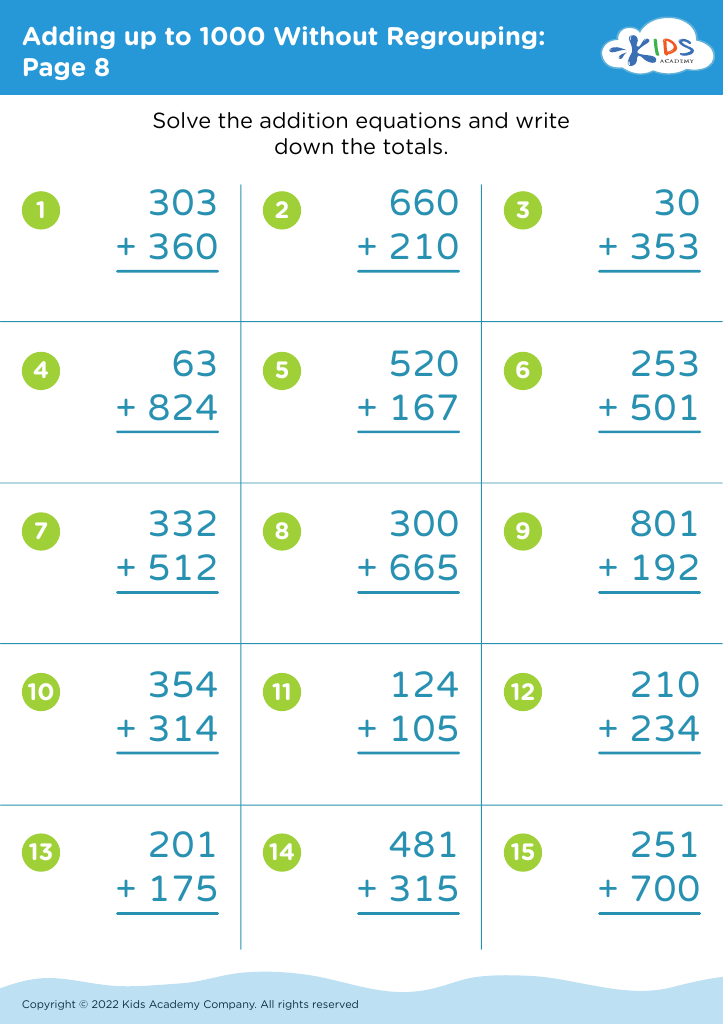
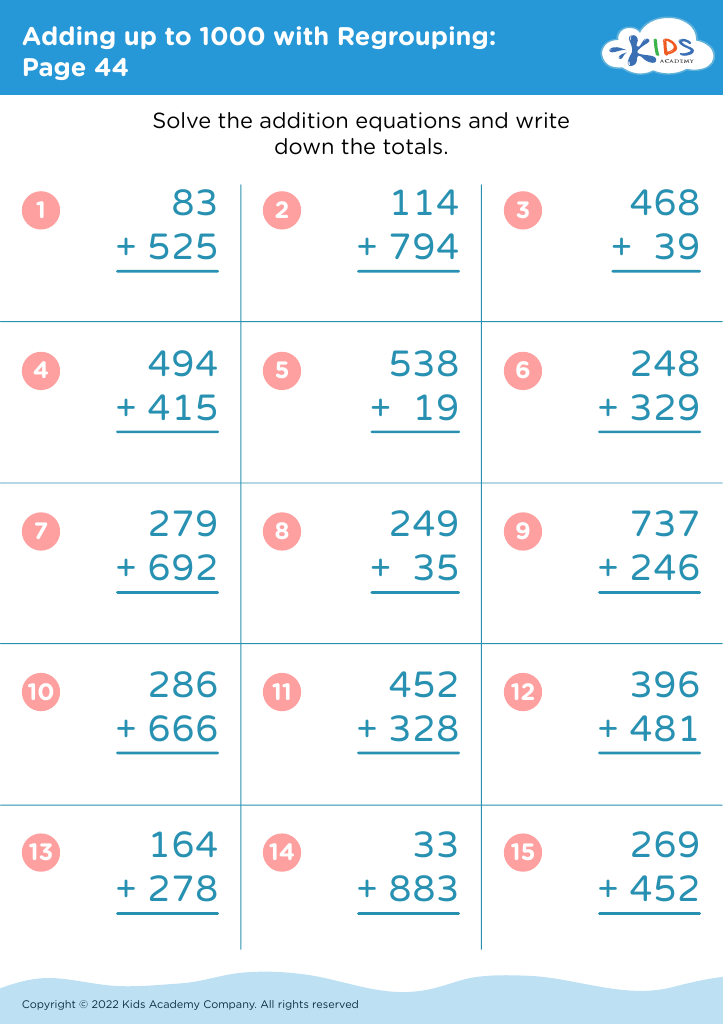
Empower your 7-year-old's math skills with our "Develop Critical Thinking Addition & Subtraction Worksheets." Designed specifically for young learners, these worksheets provide engaging and fun activities to enhance computational skills. Beyond rote learning, they promote problem-solving and critical thinking, offering varied and challenging exercises. Our innovative approach ensures children grasp foundational concepts while fostering a love for math. Perfect for home or classroom settings, these worksheets will build your child’s confidence and prepare them for more advanced math concepts. Download now to start your child’s journey towards mathematical proficiency and critical thinking excellence.
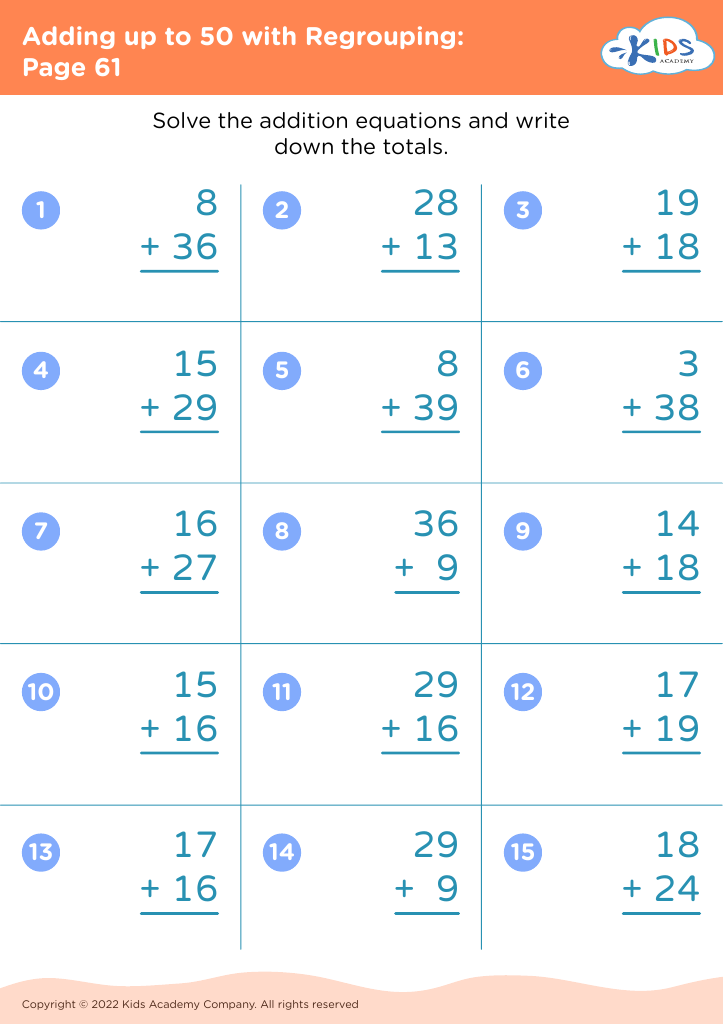
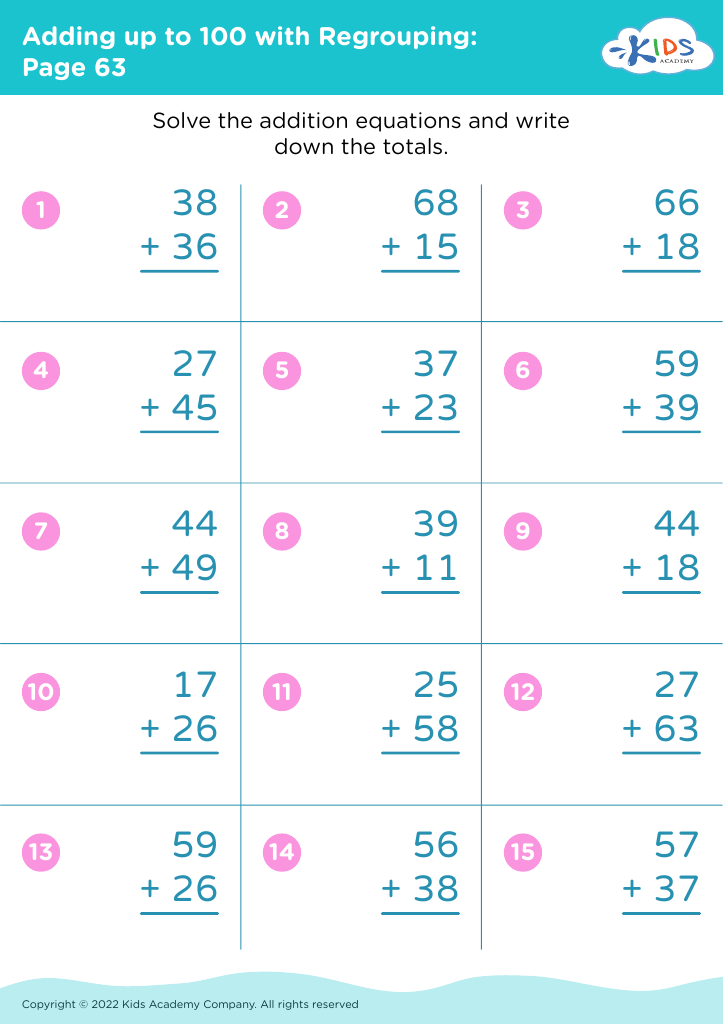
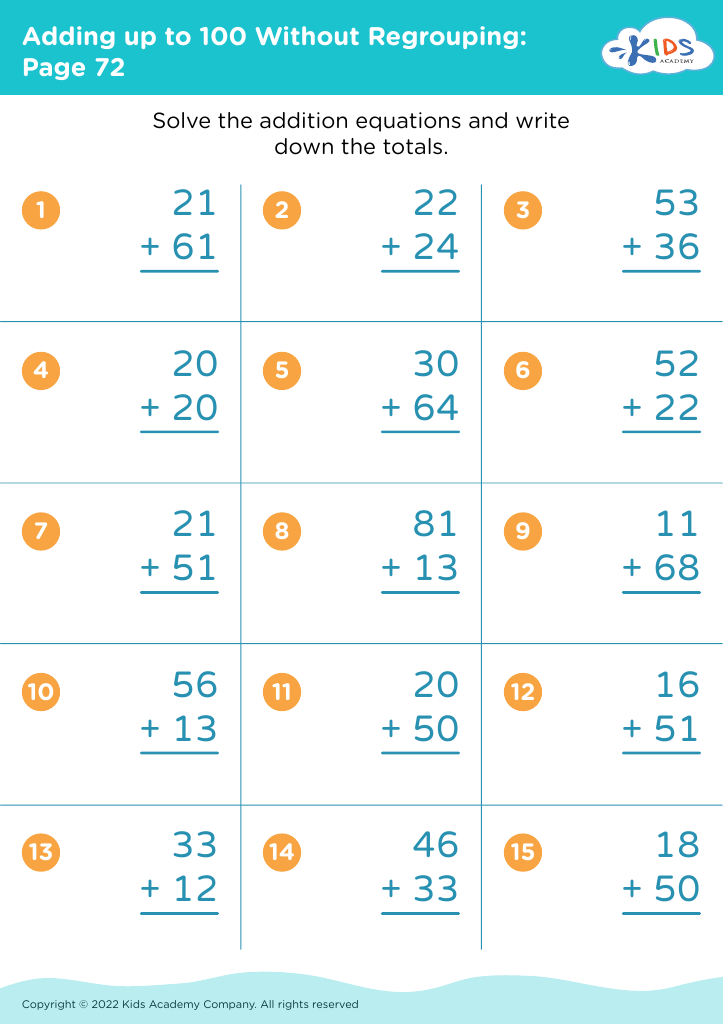
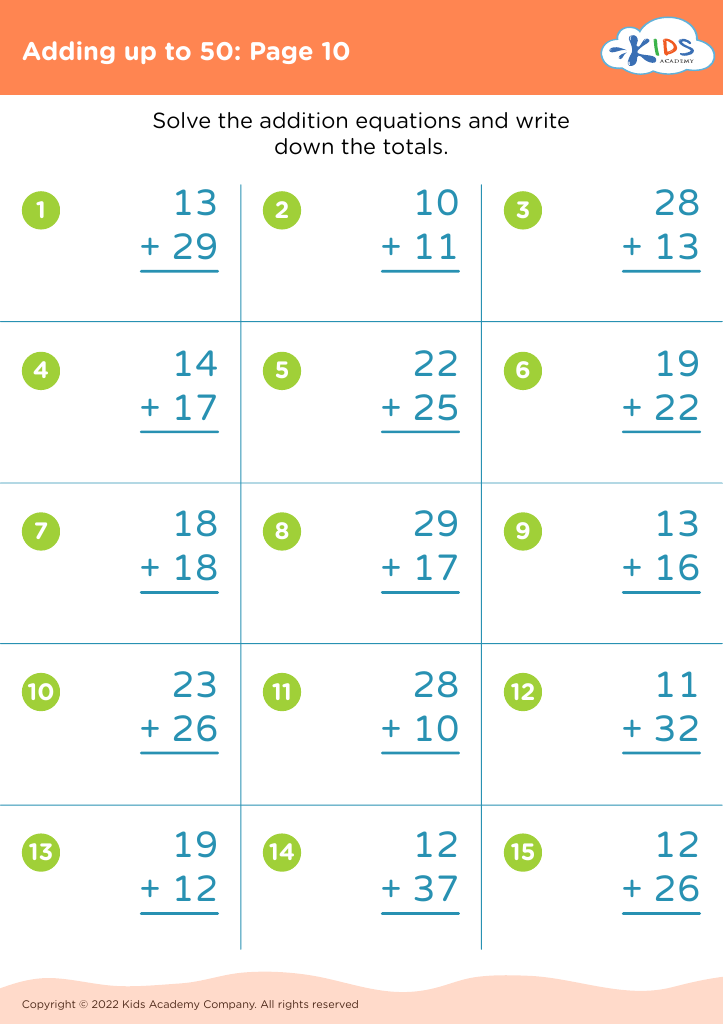
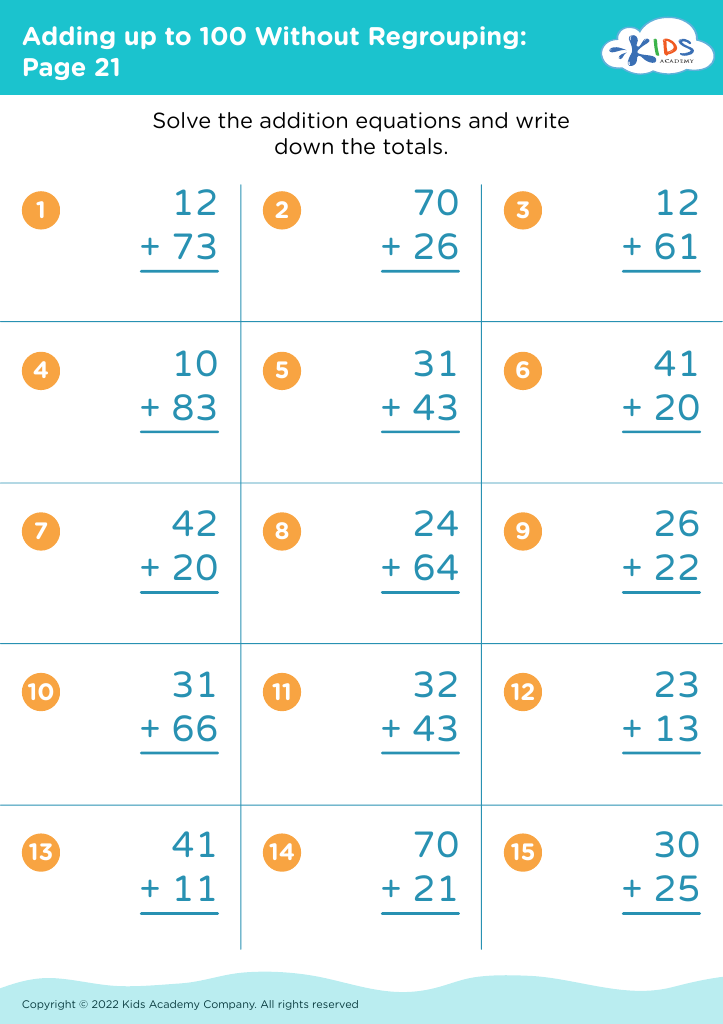
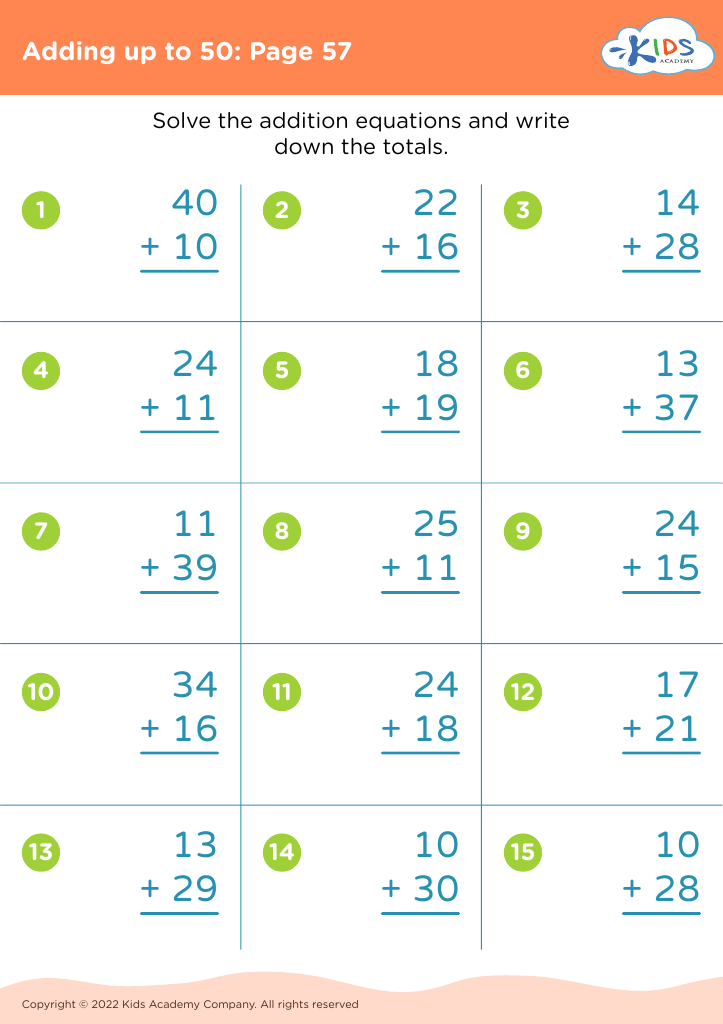
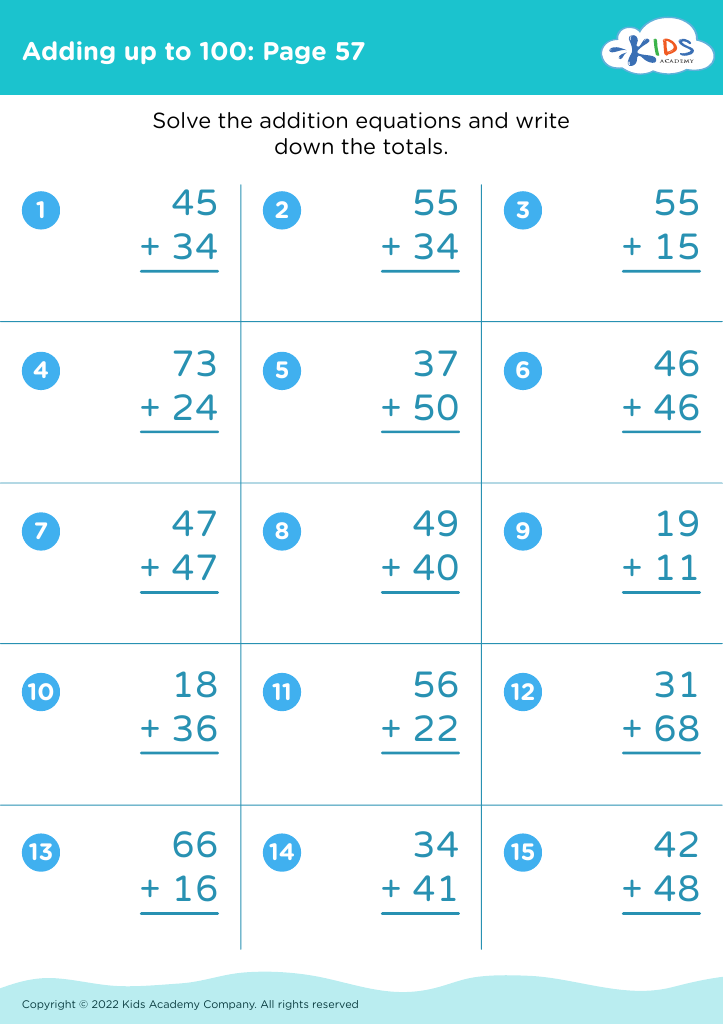
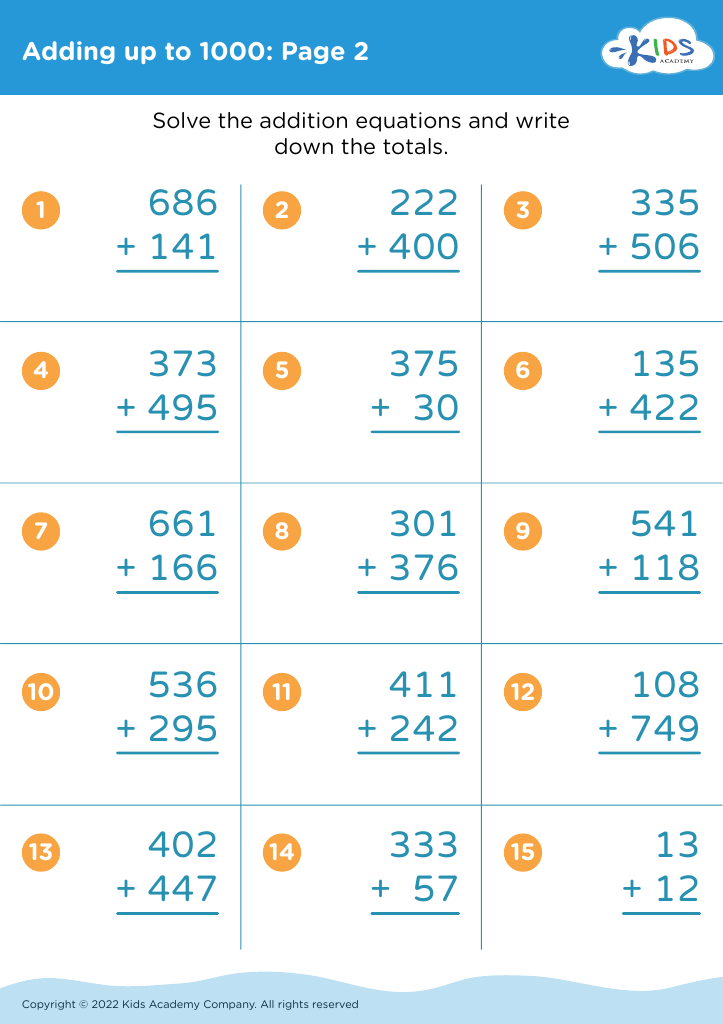








Developing critical thinking skills alongside addition and subtraction for 7-year-olds is crucial for several reasons. At this age, children are not just learning to perform arithmetic operations; they are also building a foundation for future problem-solving skills. Understanding the "why" and "how" behind addition and subtraction instills a deeper comprehension rather than rote memorization. This critical thinking ability helps children make connections between different concepts, fostering mental flexibility.
When children learn to think critically about mathematical problems, they learn to question, analyze, and evaluate information effectively. For instance, recognizing patterns in addition and subtraction can support their learning of multiplication and division later on. Moreover, critical thinking in this context encourages perseverance, as children explore multiple ways to solve a problem and learn from their mistakes.
For parents and teachers, emphasizing critical thinking ensures that the child can apply mathematical reasoning in real-world situations. Whether it’s making change in a store, dividing a treat among friends, or planning out soccer practice drills, such skills are invaluable.
Enthusiastically engaging children in critical thinking through addition and subtraction also nurtures curiosity and a love for learning. These habits benefit academic growth beyond mathematics, influencing reading comprehension, scientific inquiry, and overall cognitive development. Providing this holistic educational foundation prepares children for future academic challenges and everyday decision-making.








